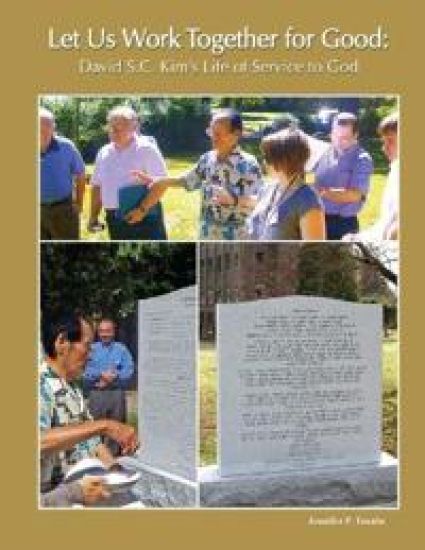
The speeches and writings of Dr. David Sang Chul Kim, early member of Reverend Sun Myung Moon's Unification Church, collected and edited by Jennifer P. Tanabe.
This volume is the third in a series on the life of David S.C. Kim, early follower of Reverend Sun Myung Moon. It is a historical record of his activities in service to God.
The book ""Life and Times of David: Miscellaneous Writings of C.H. Mackintosh V6"" is a collection of writings by Charles Henry Mackintosh that focus on the life and times of the biblical figure David. The book is the sixth volume in a series of Mackintosh's writings and provides a detailed look at David's life, from his early days as a shepherd to his reign as king of Israel. The book includes various essays and articles on David's character, his relationship with God, his triumphs and failures, and his impact on Israel's history. Mackintosh's writing style is clear and concise, making the book accessible to readers of all levels of biblical knowledge. The book is a valuable resource for those interested in studying the life of David and its relevance to contemporary Christian life. It provides a comprehensive overview of David's life and teachings, and offers valuable insights into the nature of faith, leadership, and obedience to God. Overall, ""Life and Times of David: Miscellaneous Writings of C.H. Mackintosh V6"" is a must-read for anyone interested in biblical studies and the life of David.In Six Volumes. Volume 1, The All Sufficiency Of Christ; Volume 2, The Lord's Coming; Volume 3, The Assembly Of God; Volume 4, The Great Commission; Volume 5, Elijah The Tishbite; Volume 6, Life And Times Of David.This scarce antiquarian book is a facsimile reprint of the old original and may contain some imperfections such as library marks and notations. Because we believe this work is culturally important, we have made it available as part of our commitment for protecting, preserving, and promoting the world's literature in affordable, high quality, modern editions, that are true to their original work.
After growing up in Mississippi, Richardson attended the Naval Academy, where he was on the boxing team. Following his graduation in 1936, he served as a junior officer in the battleship USS Tennessee (BB-43), and was on board when she went aground in San Francisco in 1937. He completed flight training in 1940 and reported to Fighting Squadron Five; the squadron was at times in USS Saratoga (CV-3), USS Ranger (CV-4), USS Yorktown (CV-5), and USS Wasp (CV-7). He flew F3Fs and F4Fs, including combat in the latter during the Guadalcanal campaign in 1942. Later in the war he was involved in tactical aviation training in Florida and carrier group readiness training in Hawaii. After the war Richardson studied at the Royal Navy Staff College in London, later at the U.S. Naval War College, where he helped write analyses of wartime battles. He commanded Carrier Air Group 13 in the USS Princeton (CV-37), helped plan for the NATO military structure, and then was XO of the escort carrier USS Badoeng Strait (CVE-116) off Korea. After duty in aviation planning for ComAirPac and OP-05, he was on the CinCSouth staff in Naples, then commanded the oiler USS Cimarron (AO-22) and ASW carrier USS Hornet (CVS-12). He had a tour from 1961 to 1964 in the OP-06 organization in OpNav, then served as Commander Fleet Air Norfolk during his first flag tour. In 1966 Admiral David McDonald, the CNO, chose Richardson to command Task Force 77 during carrier air strikes against North Vietnam. In that billet, Richardson did much to integrate intelligence, planning, and operations. After a tour as Assistant DCNO (Air), he served as Commander Sixth Fleet in the Mediterranean, 1968-70. That tour was notable for Richardson's role in creating the Ocean Surveillance Information System to monitor Soviet naval operations. His final active tour was as Deputy CinCPacFlt prior to his retirement in 1972. Since that time he has remained quite active in various roles in connection with the naval intelligence community.
After growing up in Mississippi, Richardson attended the Naval Academy, where he was on the boxing team. Following his graduation in 1936, he served as a junior officer in the battleship USS Tennessee (BB-43), and was on board when she went aground in San Francisco in 1937. He completed flight training in 1940 and reported to Fighting Squadron Five; the squadron was at times in USS Saratoga (CV-3), USS Ranger (CV-4), USS Yorktown (CV-5), and USS Wasp (CV-7). He flew F3Fs and F4Fs, including combat in the latter during the Guadalcanal campaign in 1942. Later in the war he was involved in tactical aviation training in Florida and carrier group readiness training in Hawaii. After the war Richardson studied at the Royal Navy Staff College in London, later at the U.S. Naval War College, where he helped write analyses of wartime battles. He commanded Carrier Air Group 13 in the USS Princeton (CV-37), helped plan for the NATO military structure, and then was XO of the escort carrier USS Badoeng Strait (CVE-116) off Korea. After duty in aviation planning for ComAirPac and OP-05, he was on the CinCSouth staff in Naples, then commanded the oiler USS Cimarron (AO-22) and ASW carrier USS Hornet (CVS-12). He had a tour from 1961 to 1964 in the OP-06 organization in OpNav, then served as Commander Fleet Air Norfolk during his first flag tour. In 1966 Admiral David McDonald, the CNO, chose Richardson to command Task Force 77 during carrier air strikes against North Vietnam. In that billet, Richardson did much to integrate intelligence, planning, and operations. After a tour as Assistant DCNO (Air), he served as Commander Sixth Fleet in the Mediterranean, 1968-70. That tour was notable for Richardson's role in creating the Ocean Surveillance Information System to monitor Soviet naval operations. His final active tour was as Deputy CinCPacFlt prior to his retirement in 1972. Since that time he has remained quite active in various roles in connection with the naval intelligence community.
Bachelorarbeit aus dem Jahr 2021 im Fachbereich Philosophie - Philosophie der Gegenwart, Note: 1,7, Ludwig-Maximilians-Universit t M nchen (Fakult t f r Philosophie), Sprache: Deutsch, Abstract: Die Frage nach dem Wesen des Bewusstseins ist eine der zentralen und auch verbl ffendsten Fragen der Menschheit, die wahrscheinlich seit der Zeit gestellt wird, als der Geist im Menschen erwacht ist und nach Erkenntnis rief. In der t glichen Erfahrung ist das Bewusstsein allgegenw rtig und subjektive Erlebnisse sind auf so einer direkten Art und Weise gegeben, dass niemand unter normalen Umst nden deren Existenz in Frage stellen w rde. Die Neurowissenschaften versuchen seit langer Zeit erfolglos, ein Korrelat des Bewusstseins im menschlichen Gehirn zu finden, und es ist fraglich, ob das jemals gelingen kann. Ren Descartes, sah das Bewusstsein gar nicht im Gehirn verortet, sondern postulierte eine res cogitans, eine eigene Substanz des denkenden Geistes, unabh ngig von der res extensa, der K rperwelt. David J. Chalmers, mit dessen 1996 erschienenen Buch "The Conscious Mind - In Search of a Fundamental Theory" diese Bachelorarbeit sich haupts chlich besch ftigt, fragt nach dem subjektiven Charakter des Bewusstseins und dessen Status in einer vor allem naturwissenschaftlich, physikalisch gepr gten Welt. Im Verlauf dieser Arbeit wird sich zeigen, dass die Existenz des Bewusstseins von Chalmers nicht in Frage gestellt wird, aber es schwierig ist, Bewusstsein zu fassen, da es eben nicht aus der Perspektive der dritten Person erkl rt werden kann. Mit Hilfe u. a. des Zombiearguments zeigt er, dass consciousness nicht global logisch ber dem Physikalischen superveniert, nicht auf das Physikalische reduzierbar ist und das der Physikalismus falsch ist. Er beschreibt einen "Naturalistic dualism", einen speziellen Eigenschaftsdualismus der consciousness als grundlegendes Prinzip "over and above" des Physikalismus betrachtet. Die Darstellung von David Chalmers negativer Theorie im Te
Life and Times of David. Miscellaneous Writings of C. H. Mackintosh, vol. VI, has been regarded as significant work throughout human history, and in order to ensure that this work is never lost, we have taken steps to ensure its preservation by republishing this book in a contemporary format for both current and future generations. This entire book has been retyped, redesigned, and reformatted. Since these books are not made from scanned copies, the text is readable and clear.
The 18th century was a wealth of knowledge, exploration and rapidly growing technology and expanding record-keeping made possible by advances in the printing press. In its determination to preserve the century of revolution, Gale initiated a revolution of its own: digitization of epic proportions to preserve these invaluable works in the largest archive of its kind. Now for the first time these high-quality digital copies of original 18th century manuscripts are available in print, making them highly accessible to libraries, undergraduate students, and independent scholars.Delve into what it was like to live during the eighteenth century by reading the first-hand accounts of everyday people, including city dwellers and farmers, businessmen and bankers, artisans and merchants, artists and their patrons, politicians and their constituents. Original texts make the American, French, and Industrial revolutions vividly contemporary.++++The below data was compiled from various identification fields in the bibliographic record of this title. This data is provided as an additional tool in helping to insure edition identification: ++++Bodleian Library (Oxford)T175906With a half-title.London: printed for the author; and sold by J. Murray; and W. Creech, Edinburgh, 1789. viii,189, 1]p.; 8
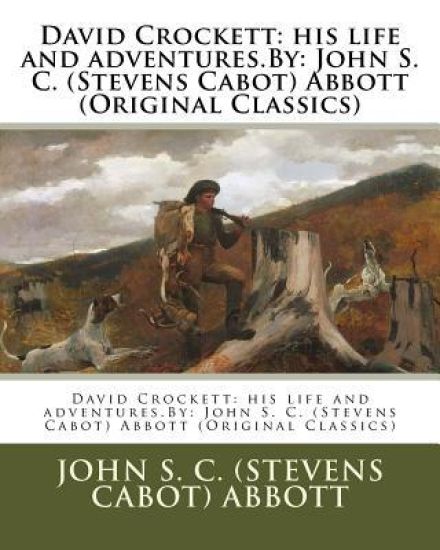
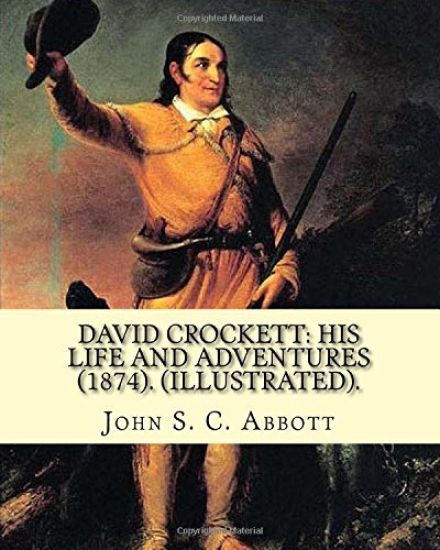
John Stevens Cabot Abbott (September 19, 1805 - June 17, 1877), an American historian, pastor, and pedagogical writer, was born in Brunswick, Maine to Jacob and Betsey Abbott. Early life: He was a brother of Jacob Abbott, and was associated with him in the management of Abbott's Institute, New York City, and in the preparation of his series of brief historical biographies. Dr. Abbott graduated at Bowdoin College in 1825, prepared for the ministry at Andover Theological Seminary, and between 1830 and 1844, when he retired from the ministry in the Congregational Church, preached successively at Worcester, Roxbury and Nantucket, all in Massachusetts. Literary career: Owing to the success of a little work, The Mother at Home, he devoted himself, from 1844 onwards, to literature. He was a voluminous writer of books on Christian ethics, and of popular histories, which were credited with cultivating a popular interest in history. He is best known as the author of the widely popular History of Napoleon Bonaparte (1855), in which the various elements and episodes in Napoleon's career are described. Abbott takes a very favourable view towards his subject throughout. Also among his principal works are: History of the Civil War in America (1863-1866), and The History of Frederick II, Called Frederick the Great (New York, 1871). He also did a forward to a book called Life of Boone by W.M. Bogart, about Daniel Boone in 1876. In general, except that he did not write juvenile fiction, his work in subject and style closely resembles that of his brother, Jacob Abbott.... David "Davy" Crockett (August 17, 1786 - March 6, 1836) was a 19th-century American folk hero, frontiersman, soldier, and politician. He is commonly referred to in popular culture by the epithet "King of the Wild Frontier". He represented Tennessee in the U.S. House of Representatives and served in the Texas Revolution. Crockett grew up in East Tennessee, where he gained a reputation for hunting and storytelling. He was made a colonel in the militia of Lawrence County, Tennessee and was elected to the Tennessee state legislature in 1821. In 1825, he was elected to the U.S. Congress where he vehemently opposed many of the policies of President Andrew Jackson, most notably the Indian Removal Act. Crockett's opposition to Jackson's policies led to his defeat in the 1831 elections. He won again in 1833, then narrowly lost in 1835, prompting his angry departure to Texas (then the Mexican state of Tejas) shortly thereafter. In early 1836, he took part in the Texas Revolution and was killed at the Battle of the Alamo in March. Crockett became famous in his own lifetime for larger-than-life exploits popularized by stage plays and almanacs. After his death, he continued to be credited with acts of mythical proportion. These led in the 20th century to television and movie portrayals, and he became one of the best-known American folk heroes................
John Stevens Cabot Abbott (September 19, 1805 - June 17, 1877), an American historian, pastor, and pedagogical writer, was born in Brunswick, Maine to Jacob and Betsey Abbott.He was a brother of Jacob Abbott, and was associated with him in the management of Abbott's Institute, New York City, and in the preparation of his series of brief historical biographies. Dr. Abbott graduated at Bowdoin College in 1825, prepared for the ministry at Andover Theological Seminary, and between 1830 and 1844, when he retired from the ministry in the Congregational Church, preached successively at Worcester, Roxbury and Nantucket, all in Massachusetts