Nine essays, written between 1922 and 1941, on Paracelsus, Freud, Picasso, the sinologist Richard Wilhelm, Joyce's Ulysses, artistic creativity generally, and the source of artistic creativity in archetypal structures.
This volume has become known as perhaps the best introduction to Jung's work. In these famous essays. "The Relations between the Ego and the Unconscious" and "On the Psychology of the Unconscious," he presented the essential core of his system. Historically, they mark the end of Jung's intimate association with Freud and sum up his attempt to integrate the psychological schools of Freud and Adler into a comprehensive framework. This is the first paperback publication of this key work in its revised and augmented second edition of 1966. The earliest versions of the Two Essays, "New Paths in Psychology" (1912) and "The Structure of the Unconscious" (1916), discovered among Jung's posthumous papers, are published in an appendix, to show the development of Jung's thought in later versions. As an aid to study, the index has been comprehensively expanded.
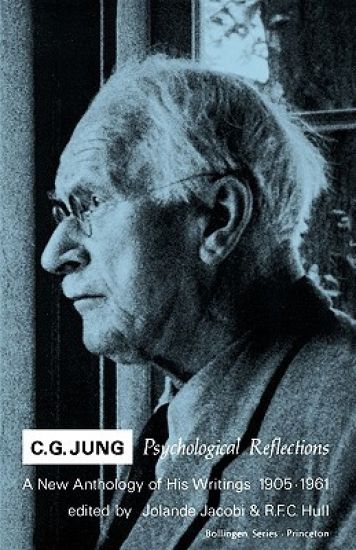
Carl Gustav Jung, the great Swiss psychologist, who died in 1961 in his eighty-sixth year, was a profound thinker of extraordinary creativity. In the course of his medical practice he reflected deeply on human nature and human problems, and his prolific writings bear witness to his great wisdom and insight. For this completely revised edition, selections from publications of the years 1945-1961, the last fruitful years of Jung's life, have been added, and the book has been reset in a new compact format. The selections are arranged thematically under four main headings: The Nature and Activity of the Psyche, Man in His Relation to Others, The World of Values, and On Ultimate Things.Jung's reflections frequently have a penetrating relevance to today's (and tomorrow's) problems. On prejudice: "Our unwillingness to see our own faults and the projection of them is the beginning of most quarrels, and is the strongest guarantee that injustice, animosity, and persecution are not ready to die out." On sex: "We are not yet far enough advanced to distinguish between moral and immoral behavior in the realm of free sexual activity." On religion: "No one can know what the ultimate things are. We must therefore take them as we experience them. And if such experience helps to make life healthier, more beautiful, more complete, and more satisfactory to yourself and to those you love, you may safely say: 'This was the grace of God.'"
One of the most important of Jung's longer works, and probably the most famous of his books, Psychological Types appeared in German in 1921 after a "fallow period" of eight years during which Jung had published little. He called it "the fruit of nearly twenty years' work in the domain of practical psychology," and in his autobiography he wrote: "This work sprang originally from my need to define the ways in which my outlook differed from Freud's and Adler's. In attempting to answer this question, I came across the problem of types; for it is one's psychological type which from the outset determines and limits a person's judgment. My book, therefore, was an effort to deal with the relationship of the individual to the world, to people and things. It discussed the various aspects of consciousness, the various attitudes the conscious mind might take toward the world, and thus constitutes a psychology of consciousness regarded from what might be called a clinical angle." In expounding his system of personality types Jung relied not so much on formal case data as on the countless impressions and experiences derived from the treatment of nervous illnesses, from intercourse with people of all social levels, "friend and foe alike," and from an analysis of his own psychological nature. The book is rich in material drawn from literature, aesthetics, religion, and philosophy. The extended chapters that give general descriptions of the types and definitions of Jung's principal psychological concepts are key documents in analytical psychology.
The great psychologist provides a detailed account of the problems of philosophical alchemy and its central endeavor and symbols, relating them to his own psychological discoveries
Over one hundred forty items, representative of Jung's interests and professional activities and spanning sixty years, include lectures, forewords, reviews, articles, and letters
Essays on aspects of analytical therapy, specifically the transference, abreaction, and dream analysis. Contains an additional essay, "The Realities of Practical Psychotherapy," found among Jung's posthumous papers.
In exploring the manifestations of human spiritual experience both in the imaginative activities of the individual and in the formation of mythologies and of religious symbolism in various cultures, C. G. Jung laid the groundwork for a psychology of the spirit. The excerpts here illuminate the concept of the unconscious, the central pillar of his work, and display ample evidence of the spontaneous spiritual and religious activities of the human mind. This compact volume will serve as an ideal introduction to Jung's basic concepts. Part I of this book, "On the Nature and Functioning of the Psyche," contains material from four works: "Symbols of Transformation," "On the Nature of the Psyche," "The Relations between the Ego and the Unconscious," and "Psychological Types." Also included in Part I are "Archetypes of the Collective Unconscious" and "Psychological Aspects of the Mother Archetype." Part II, "On Pathology and Therapy," includes "On the Nature of Dreams," "On the Pathogenesis of Schizophrenia," and selections from "Psychology of the Transference." In Part III appear "Introduction to the Religious and Psychological Problems of Alchemy" and two sections of "Psychology and Religion." Part IV, called "On Human Development," consists of the essay "Marriage as a Psychological Relationship."
The archetypes of human experience which derive from the deepest unconscious mind and reveal themselves in the universal symbols of art and religion as well as in the individual symbolic creations of particular people are, for C. G. Jung, the key to the cure of souls, the cornerstone of his therapeutic work. This volume explains the function and origin of these symbols. Here the reader will find not only a general orientation to Jung's point of view but extensive studies of the symbolic process and its integrating function in human psychology as it is reflected in the characteristic spiritual productions of Europe and Asia. Violet de Laszlo has selected for inclusion in Psyche and Symbol five selections from Aion: The Ego, The Shadow, The Syzygy: Anima and Animus, The Self, and Christ, A Symbol of the Self. The book continues with The Phenomenology of the Spirit in Fairy Tales, The Psychology of the Child Archetype, and Transformation Symbolism in the Mass. Also included are the foreword to the Cary Banes translation of the I Ching, two chapters from Synchronicity: An Acausal Connecting Principle, Psychological Commentary on The Tibetan Book of the Dead, and Commentary on The Secret of the Golden Flower.
Beginning with Jung's earliest correspondence to associates of the psychoanalytic period and ending shortly before his death, the 935 letters selected for these two volumes offer a running commentary on his creativity. The recipients of the letters include Mircea Eliade, Sigmund Freud, Esther Harding, James Joyce, Karl Kernyi, Erich Neumann, Maud Oakes, Herbert Read, Upton Sinclair, and Father Victor White.
An investigation of the symbolism of the self Aion, originally published in German in 1951, is one of the major works of Jung's later years. The central theme of the volume is the symbolic representation of the psychic totality through the concept of the Self, whose traditional historical equivalent is the figure of Christ. Jung demonstrates his thesis by an investigation of the Allegoria Christi, especially the fish symbol, but also of Gnostic and alchemical symbolism, which he treats as phenomena of cultural assimilation. The first three chapters--on the ego, the shadow, and the anima and animus--provide a valuable summation of these key concepts in Jung's system of psychology.
Five long essays that trace Jung's developing interest in alchemy from 1929 onward. An introduction and supplement to his major works on the subject, illustrated with 42 patients' drawings and paintings.
A collection of some of Jung's most important essays on the archetypes and the collective unconscious The Archetypes and the Collective Unconscious features many of Jung's most important essays describing and elaborating on these two central, related concepts. The contents are: Archetypes of the Collective Unconscious (1934)The Concept of the Collective Unconscious (1936)Concerning the Archetypes, with Special Reference to the Anima Concept (1936)Psychological Aspects of the Mother Archetype (1938)Concerning Rebirth (1939)The Psychology of the Child Archetype (1940)The Psychological Aspects of the Kore (1941)The Phenomenology of the Spirit in Fairytales (1945)On the Psychology of the Trickster-Figure (1954)Conscious, Unconscious, and Individuation (1939)A Study in the Process of Individuation (1933)Concerning Mandala Symbolism (1950)
An authoritative collection of Jung's writings on contemporary events, including The Undiscovered Self and Flying Saucers Civilization in Transition features Jung's writings on contemporary events, especially the relation between the individual and society. In the earliest essay, "The Role of the Unconscious" (1918), Jung advanced the theory that World War I was a psychological crisis originating in the collective unconscious of individuals. In other essays included here, he pursued this theory in the 1920s and 1930s, focusing on the upheaval in Germany, and he gave it a much wider application in two major works of his last years, also featured here--Flying Saucers, which is about the birth of a myth that Jung regarded as a reaction to the scientific trends of a technological era, and The Undiscovered Self.
The authoritative edition of Jung's essential writings for understanding his early enthusiasm for--and later split with--Freud and psychoanalysis Freud and Psychoanalysis gathers Jung's writings on Freud and psychoanalysis published between 1906 and 1916, along with two later, related papers. The book covers the period of the enthusiastic collaboration between the two pioneers of psychology through the years when Jung's growing appreciation of religious experience, his criticism of Freud's emphasis on pathology, and other differences led to Jung's formal break with his mentor. Part I features brief studies of Freud's theory of hysteria, dream analysis, the psychology of rumor, and other subjects. Parts II and III contain the essentials of the criticism that led to Jung's rupture with Freud, the most important of which is "The Theory of Psychoanalysis." Part IV presents "The Significance of the Father in the Destiny of the Individual." The book's final two pieces, "Freud and Jung: Contrasts" and the introduction to a book by W. M. Kranefeldt, further illuminate Jung's reassessment of psychoanalysis.
Essays on aspects of analytical therapy, specifically the transference, abreaction, and dream analysis. Contains an additional essay, "The Realities of Practical Psychotherapy," found among Jung's posthumous papers.
Over one hundred forty items, representative of Jung's interests and professional activities and spanning sixty years, include lectures, forewords, reviews, articles, and letters