Kirjojen hintavertailu. Mukana 11 710 218 kirjaa ja 12 kauppaa.

Kirjahaku

Etsi kirjoja tekijän nimen, kirjan nimen tai ISBN:n perusteella.

1000 tulosta hakusanalla Calvin Murarius

Calvin

Calvin

Dalton Kosak

Lulu.com
2021
pokkari
Calvin Maverick Evans II is just like any ordinary seventeen-year-old teenager. He has hopes and dreams. But, dealing with an abusive father and noticing his mother working two jobs breaks his heart. After a long conversation with his younger sister, Calvin realizes that the time to step up and become a man is now How will Calvin transition from a boy into a young man with newfound inspiration? Author Dalton Kosak returns with this new and improved deluxe edition that will touch the hearts of those who read the tragic tale of a teenager who only wants what's best for his sister. Calvin is a reminder that life is a mystery. Anything can happen when you least expect it, even at home. Now including the bonus content titled, Unfinished Business. The author takes you behind the scenes of his origins and what led him to publish Calvin after experiencing personal tragedy and multiple setbacks.
Calvin

Calvin

Jon Kerr

Wisdom Editions
2023
pokkari
Calvin: Baseball's Last Dinosaur is the story of Calvin Griffith, who was rescued from poverty and adopted by his uncle (Hall of Famer Clark Griffith) and went on to become owner of the Washington Senators and Minnesota Twins. Calvin's life included friendships with many greats of the game and figures in American history from the 1920s through the 1980s. The Griffith family operation would see many highs and lows, finally succumbing to the corporate-driven economic realities of modern sports. But Calvin, in his typically unvarnished fashion and with Jon Kerr's help, wouldn't go without giving his version of how baseball and the world changed.
Calvin

Calvin

Jr Ford; Vanessa Ford

Vombat Förlag
2022
sidottu
Jag har alltid trott att jag var en pojke säger flickan i början av boken. Sedan får läsaren följa med på en resa som innebär en transformering från flicka till pojke. En komplicerad process gestaltas i denna barnbok som en självklar dialog där det är individen som definierar sig själv, och här är det Calvin som är huvudperson. Boken har ett positivt och kärleksfullt förhållningssätt som stärker läsaren i en ibland svårt tankeprocess.
Calvin, the Bible, and History

Calvin, the Bible, and History

Barbara Pitkin

Oxford University Press Inc
2020
sidottu
John Calvin was known foremost for his powerful impact on the fundamental doctrines of Protestantism, and his biblical interpretation continues to attract interest and inquiry. Calvin, the Bible, and History investigates Calvin's exegesis of the Bible through the lens of one of its most distinctive and distinguishing features: his historicizing approach to scripture. Barbara Pitkin here explores how historical consciousness affected Calvin's interpretation of the Bible, sometimes leading him to unusual, unprecedented, and occasionally controversial exegetical conclusions. Through several case studies, Pitkin explores the multi-faceted ways that historical consciousness was interlinked with Calvin's interpretation of biblical books, authors, and themes, analyzing the centrality of history in his engagement with scripture from the Pentateuch to his reception of the apostle Paul. First establishing the relevant intellectual and cultural contexts, Pitkin situates Calvin's readings within broader cultural trends and historical developments, demonstrating the expansive impact of Calvin's concept of history on his reading of the Bible. Calvin, the Bible, and History reveals the significance of his efforts to relate the biblical past to current historical conditions, reshaping an earlier image of Calvin as a forerunner of modern historical criticism by viewing his deep historical sensibility and distinct interpretive approach within their early modern context.
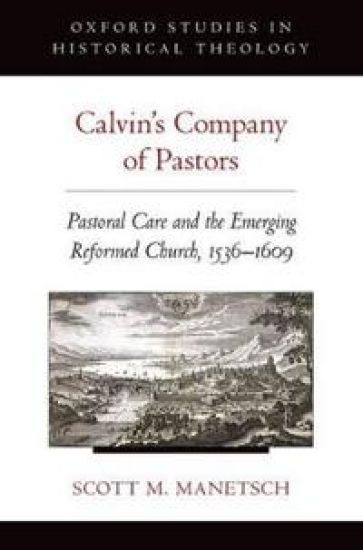
Calvin's Company of Pastors

Calvin's Company of Pastors

Scott M. Manetsch

Oxford University Press Inc
2015
nidottu
In Calvin's Company of Pastors, Scott Manetsch examines the pastoral theology and practical ministry activities of Geneva's reformed ministers from the time of Calvin's arrival in Geneva until the beginning of the seventeenth century. During these seven decades, more than 130 men were enrolled in Geneva's Venerable Company of Pastors (as it was called), including notable reformed leaders such as Pierre Viret, Theodore Beza, Simon Goulart, Lambert Daneau, and Jean Diodati. Aside from these better-known epigones, Geneva's pastors from this period remain hidden from view, cloaked in Calvin's long shadow, even though they played a strategic role in preserving and reshaping Calvin's pastoral legacy. Making extensive use of archival materials, published sermons, catechisms, prayer books, personal correspondence, and theological writings, Manetsch offers an engaging and vivid portrait of pastoral life in sixteenth- and early seventeenth-century Geneva, exploring the manner in which Geneva's ministers conceived of their pastoral office and performed their daily responsibilities of preaching, public worship, moral discipline, catechesis, administering the sacraments, and pastoral care. Manetsch demonstrates that Calvin and his colleagues were much more than ivory tower theologians or "quasi-agents of the state," concerned primarily with dispensing theological information to their congregations or enforcing magisterial authority. Rather, they saw themselves as spiritual shepherds of Christ's Church, and this self-understanding shaped to a significant degree their daily work as pastors and preachers.
Calvin, Participation, and the Gift

Calvin, Participation, and the Gift

J. Todd Billings

Oxford University Press
2007
sidottu
Is the God of Calvin a fountain of blessing, or a forceful tyrant? Is Calvin's view of God coercive, leaving no place for the human qua human in redemption? These are perennial questions about Calvin's theology which have been given new life by Gift theologians such as John Milbank, Graham Ward, and Stephen Webb. J. Todd Billings addresses these questions by exploring Calvin's theology of `participation in Christ'. He argues that Calvin's theology of `participation' gives a positive place to the human, such that grace fulfils rather than destroys nature, affirming a differentiated union of God and humanity in creation and redemption. Calvin's trinitarian theology of participation extends to his view of prayer, sacraments, the law, and the ecclesial and civil orders. In light of Calvin's doctrine of participation, Billings reframes the critiques of Calvin in the Gift discussion and opens up new possibilities for contemporary theology, ecumenical theology, and Calvin scholarship as well.
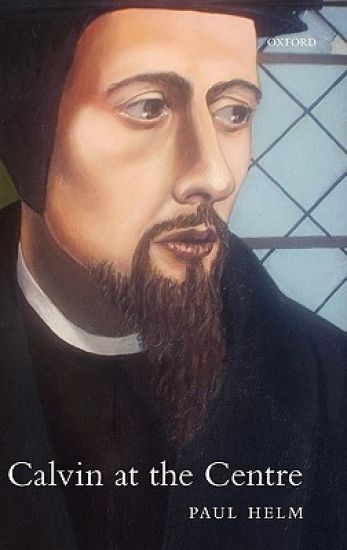
Calvin at the Centre

Calvin at the Centre

Paul Helm

Oxford University Press
2009
sidottu
Calvin at the Centre explores the consequences of various ideas in the thought of John Calvin, and the influence of his ideas on later theologians. The book sets to one side the assumption that Calvin's views are purely biblical and unaffected by the particular intellectual circumstances in which he lived. The emphasis is on philosophical ideas within Calvin's theology, and the chapters are organised to reflect this, dealing in turn with epistemological, metaphysical, and ethical issues. Paul Helm highlights some of the complexities in the relation between Calvin and Calvinism. Like the author's study John Calvin's Ideas (2004), the volume focuses on the coincidence of ideas between Calvin and other thinkers rather than offering an historical account of how such influences were transmitted. Among the topics are: the knowledge of God and of ourselves, Scripture and reason, the visibility of God, providence and predestination, compatibilism, and the intermediate state. The chapters range over thinkers as different as Pierre Bayle and Karl Barth. This illuminating study is relevant to anyone with an interest in Reformation thought, systematic theology, or the philosophy of religion. Helm's approach provides a fresh perspective on Calvin's theological context and legacy.
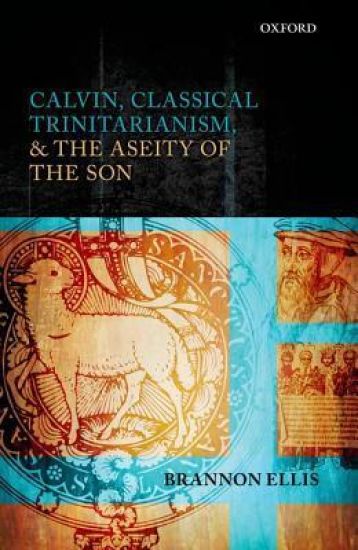
Calvin, Classical Trinitarianism, and the Aseity of the Son
For much of his career as a Reformer John Calvin was involved in trinitarian controversy. Not only did these controversies span his career, but his opponents ranged across the spectrum of theological approaches-from staunch traditionalists to radical antitrinitarians. Remarkably, the heart of Calvin's argument, and the heart of others' criticism, remained the same throughout: Calvin claimed that the only-begotten Son of the Father is also, as the one true God, 'of himself'. Brannon Ellis investigates the various Reformation and post-Reformation responses to Calvin's affirmation of the Son's aseity (or essential self-existence), a significant episode in the history of theology that is often ignored or misunderstood. Calvin neither rejected eternal generation, nor merely toed the line of classical exposition. As such, these debates turned on the crucial pivot between simple unity and ordered plurality-the relationship between the processions and consubstantiality-at the heart of the doctrine of the Trinity. Ellis's aim is to explain the historical significance and explore the theological implications of Calvin's complex solidarity with the classical tradition in his approach to thinking and speaking of the Triune God. He contends that Calvin's approach, rather than an alternative to classical trinitarianism, is actually more consistent with this tradition's fundamental commitments regarding the ineffable generation of God from God than its own received exposition.
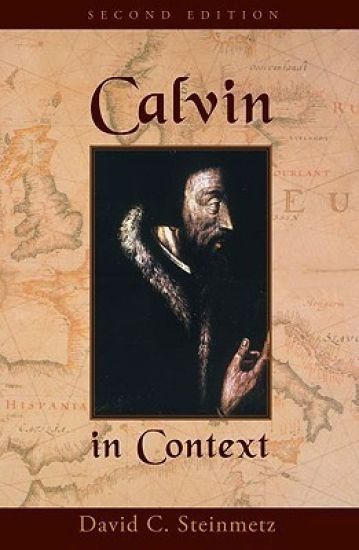
Calvin in Context

Calvin in Context

David Steinmetz

Oxford University Press Inc
2010
nidottu
The book illuminates Calvin's thought by placing it in the context of the theological and exegetical traditions - ancient, medieval, and contemporary - that formed it and contributed to its particular texture. Steinmetz addresses a range of issues almost as wide as the Reformation itself, including the knowledge of God, the problem of iconoclasm, the doctrines of justification and predestination, and the role of the state and the civil magistrate. Along the way, Steinmetz also clarifies the substance of Calvin's quarrels with Lutherans, Catholics, Anabaptists, and assorted radicals from Ochino to Sozzini. For the new edition he has added a new Preface and four new chapters based on recent published and unpublished essays. An accessible yet authoritative general introduction to Calvin's thought, Calvin in Context engages a much wider range of primary sources than the standard introductions. It provides a context for understanding Calvin not from secondary literature about the later middle ages and Renaissance, but from the writings of Calvin's own contemporaries and the rich sources from which they drew.
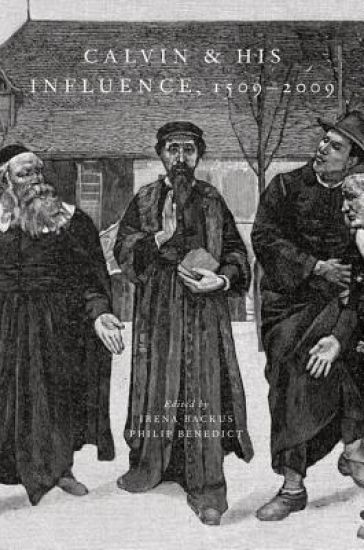
Calvin and His Influence, 1509-2009

Calvin and His Influence, 1509-2009

Oxford University Press Inc
2011
sidottu
The year 2009 marked Calvin's 500th birthday. This volume collects papers initially written as the plenary addresses for the largest international scholarly conference held in connection with this anniversary, organized in Geneva by the Institute of Reformation History. The organizers chose as theme for the conference ''Calvin and His Influence 1509-2009,'' hoping to stimulate reflection about what Calvin's ideas and example have meant across the five centuries since his lifetime, as well as about how much validity the classic interpretations that have linked his legacy to fundamental features of modernity such as democracy, capitalism, or science still retain. In brief, the story that emerges from the book is as follows: In the generations immediately after Calvin's death, he became an authority whose writings were widely cited by leading ''Calvinist'' theologians, but he was in fact just one of several Reformed theologians of his generation who were much appreciated by these theologians. In the eighteenth century, his writings began to be far less frequently cited. Even in Reformed circles what was now most frequently recalled was his action during the Servetus affair, so that he now started to be widely criticized in those quarters of the Reformed tradition that were now attached to the idea of toleration or the ideal of a free church. In the nineteenth century, his theology was recovered again in a variety of different contexts, while scholars established the monument to his life and work that was the Opera Calvini and undertook major studies of his life and times. Church movements now claimed the label ''Calvinist'' for themselves with increasing insistence and pride. (The term had largely been a derogatory label in the sixteenth and seventeenth centuries.) The movements that identified themselves as Calvinist or were identified as such by contemporaries nonetheless varied considerably in the manner in which they drew upon and understood Calvin's thought. Calvin and His Influence should become the starting point for further scholarly reflection about the history of Calvinism, from its origin to the present.
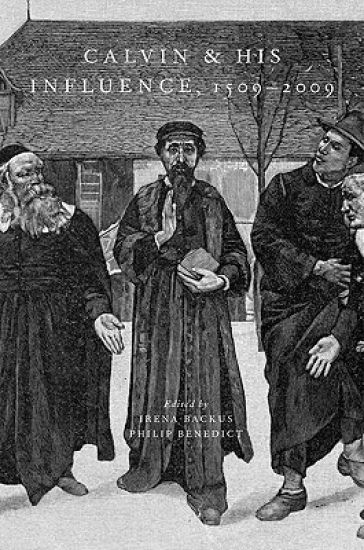
Calvin and His Influence, 1509-2009

Calvin and His Influence, 1509-2009

Oxford University Press Inc
2011
nidottu
The year 2009 marked Calvin's 500th birthday. This volume collects papers initially written as the plenary addresses for the largest international scholarly conference held in connection with this anniversary, organized in Geneva by the Institute of Reformation History. The organizers chose as theme for the conference ''Calvin and His Influence 1509-2009,'' hoping to stimulate reflection about what Calvin's ideas and example have meant across the five centuries since his lifetime, as well as about how much validity the classic interpretations that have linked his legacy to fundamental features of modernity such as democracy, capitalism, or science still retain. In brief, the story that emerges from the book is as follows: In the generations immediately after Calvin's death, he became an authority whose writings were widely cited by leading ''Calvinist'' theologians, but he was in fact just one of several Reformed theologians of his generation who were much appreciated by these theologians. In the eighteenth century, his writings began to be far less frequently cited. Even in Reformed circles what was now most frequently recalled was his action during the Servetus affair, so that he now started to be widely criticized in those quarters of the Reformed tradition that were now attached to the idea of toleration or the ideal of a free church. In the nineteenth century, his theology was recovered again in a variety of different contexts, while scholars established the monument to his life and work that was the Opera Calvini and undertook major studies of his life and times. Church movements now claimed the label ''Calvinist'' for themselves with increasing insistence and pride. (The term had largely been a derogatory label in the sixteenth and seventeenth centuries.) The movements that identified themselves as Calvinist or were identified as such by contemporaries nonetheless varied considerably in the manner in which they drew upon and understood Calvin's thought. Calvin and His Influence should become the starting point for further scholarly reflection about the history of Calvinism, from its origin to the present.
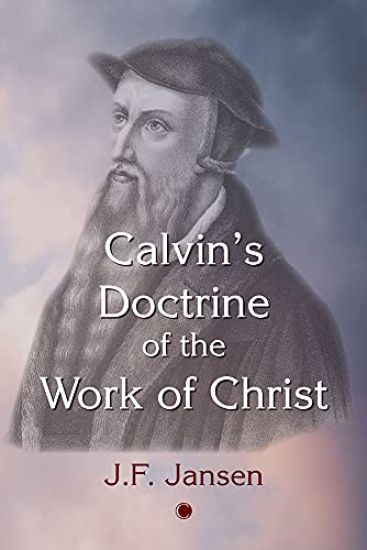
Calvin's Doctrine of the Work of Christ

Calvin's Doctrine of the Work of Christ

John Frederick Jansen

James Clarke Co Ltd
2022
nidottu
The revival of interest in the Protestant Reformation in the mid-twentieth century was marked by several studies of John Calvin. J.F. Jansen, however, noted that these had shed new light on almost every aspect of his thought except that which lies at the heart of his theology - the doctrine of Christ's work. In Calvin's Doctrine of the Work of Christ, Jansen corrects this omission, providing a fresh study of Calvin's work in this area with special reference to his exegetical writings. Besides critiquing Calvin's development of the doctrine, he also examines the traditional theological formula of the three offices of Christ as prophet, priest and king. Reacting against the return to this formula by contemporary theologians such as Emil Brunner, he shows that an alternative conception of Christ's work is possible.
Calvin on the Death of Christ

Calvin on the Death of Christ

Paul Hartog

JAMES CLARKE CO LTD
2023
nidottu
John Calvin's understanding of the extent of the atonement achieved in Christ's death is one of the most contested questions in historical theology. In common thought, Calvin's name is closely associated with the 'limited atonement' stance canonized within the 'TULIP' acronym, but Calvin's personal endorsement of a strictly particularist view, whereby Christ died for the elect alone, is debateable. In Calvin on the Death of Christ, Paul Hartog re-examines Calvin's writing on the subject, traces the various resulting historical trajectories, and engages with the full spectrum of more recent scholarship. In so doing, he makes clear that, while Calvin undoubtedly believed in unconditional election, he also repeatedly spoke of Christ dying for 'all' or for 'the world'. These phrases must be held central if we are to discover Calvin's own view of the subject. Hartog's conclusions will surprise some, and may hold significant implications for the Calvinist tradition today. Throughout, however, they are cogently articulated and sensitively pitched.
Calvin Coconut #9: Extra Famous

Calvin Coconut #9: Extra Famous

Graham Salisbury

Random House Inc
2014
pokkari
There are zombies at Kailua beach Well, kind of. Fourth-grader Calvin Coconut and his friends have been recruited by Benny Obi (the boy from Kung Fooey who liked to tell crazy stories and ate bugs) to be extras in his uncle's movie: Zombie Zoomba And who ends up with an actual part? Calvin's babysitter, Stella.
Calvin Coconut: Dog Heaven

Calvin Coconut: Dog Heaven

Graham Salisbury

Yearling Books
2011
nidottu
What do you want so badly that you can taste it--and can you persuade someone to give it to you? That's the subject of a fourth-grade writing assignment. Calvin wants a dog He reads what he's written to his mom to see just how persuasive he can be. No way, Mom says: Calvin is too irresponsible to care for a pet. Luckily, Mom's boyfriend, Ledward, is on Calvin's side. He takes Calvin to a place he calls dog heaven. There Calvin meets the dog of his dreams--Streak. Now Calvin's got to convince Mom he's dog-responsible, because he and Streak belong together
Calvin Coconut: Zoo Breath

Calvin Coconut: Zoo Breath

Graham Salisbury

Yearling Books
2011
nidottu
Calvin's mom says his new dog Streak smells bad. Especially her breath. Calvin's convinced that Streak's stink is a good one, but he's worried. If he doesn't solve Streak's problem soon, mom might make him give his beloved new dog back to the shelter. So when his teacher assigns his students a discovery project, Calvin decides to discover the worst stinks--and find a solution to Streak's bad breath.
Calvin Coconut: Hero of Hawaii

Calvin Coconut: Hero of Hawaii

Graham Salisbury

Random House USA Inc
2012
pokkari
Hawaii boy Calvin Coconut has come up with the best idea ever for his sister Darci's birthday party. But a huge tropical storm hits the islands and threatens everything. It rains and rains. And rains. The river next to Calvin's house rises high. When Calvin's friend Willy falls into the raging water, Calvin grabs his skiff to save him. As Willy is swept into the bay, Calvin struggles in the wild waves. What happens next shows Calvin what heroes are made of.