Title: Saint Alice, who, however, was no Saint, etc.Publisher: British Library, Historical Print EditionsThe British Library is the national library of the United Kingdom. It is one of the world's largest research libraries holding over 150 million items in all known languages and formats: books, journals, newspapers, sound recordings, patents, maps, stamps, prints and much more. Its collections include around 14 million books, along with substantial additional collections of manuscripts and historical items dating back as far as 300 BC.The GENERAL HISTORICAL collection includes books from the British Library digitised by Microsoft. This varied collection includes material that gives readers a 19th century view of the world. Topics include health, education, economics, agriculture, environment, technology, culture, politics, labour and industry, mining, penal policy, and social order. ++++The below data was compiled from various identification fields in the bibliographic record of this title. This data is provided as an additional tool in helping to insure edition identification: ++++ British Library Tainsh, Edward Campbell; 1867. 3 vol.; 8 . 12625.bbb.9.
Title: Saint Alice, who, however, was no Saint, etc.Publisher: British Library, Historical Print EditionsThe British Library is the national library of the United Kingdom. It is one of the world's largest research libraries holding over 150 million items in all known languages and formats: books, journals, newspapers, sound recordings, patents, maps, stamps, prints and much more. Its collections include around 14 million books, along with substantial additional collections of manuscripts and historical items dating back as far as 300 BC.The FICTION & PROSE LITERATURE collection includes books from the British Library digitised by Microsoft. The collection provides readers with a perspective of the world from some of the 18th and 19th century's most talented writers. Written for a range of audiences, these works are a treasure for any curious reader looking to see the world through the eyes of ages past. Beyond the main body of works the collection also includes song-books, comedy, and works of satire. ++++The below data was compiled from various identification fields in the bibliographic record of this title. This data is provided as an additional tool in helping to insure edition identification: ++++ British Library Tainsh, Edward Campbell; 1867. 3 vol.; 8 . 12625.bbb.9.
Title: Mysteries of the Unseen; or, Supernatural stories of English life.Publisher: British Library, Historical Print EditionsThe British Library is the national library of the United Kingdom. It is one of the world's largest research libraries holding over 150 million items in all known languages and formats: books, journals, newspapers, sound recordings, patents, maps, stamps, prints and much more. Its collections include around 14 million books, along with substantial additional collections of manuscripts and historical items dating back as far as 300 BC.The FICTION & PROSE LITERATURE collection includes books from the British Library digitised by Microsoft. The collection provides readers with a perspective of the world from some of the 18th and 19th century's most talented writers. Written for a range of audiences, these works are a treasure for any curious reader looking to see the world through the eyes of ages past. Beyond the main body of works the collection also includes song-books, comedy, and works of satire. ++++The below data was compiled from various identification fields in the bibliographic record of this title. This data is provided as an additional tool in helping to insure edition identification: ++++ British Library Campbell, Gilbert Edward; 1889. 143 p.; 8 . 012631.e.1.
Title: Saint Alice, who, however, was no Saint, etc.Publisher: British Library, Historical Print EditionsThe British Library is the national library of the United Kingdom. It is one of the world's largest research libraries holding over 150 million items in all known languages and formats: books, journals, newspapers, sound recordings, patents, maps, stamps, prints and much more. Its collections include around 14 million books, along with substantial additional collections of manuscripts and historical items dating back as far as 300 BC.The GENERAL HISTORICAL collection includes books from the British Library digitised by Microsoft. This varied collection includes material that gives readers a 19th century view of the world. Topics include health, education, economics, agriculture, environment, technology, culture, politics, labour and industry, mining, penal policy, and social order. ++++The below data was compiled from various identification fields in the bibliographic record of this title. This data is provided as an additional tool in helping to insure edition identification: ++++ British Library Tainsh, Edward Campbell; 1867. 3 vol.; 8 . 12625.bbb.9.
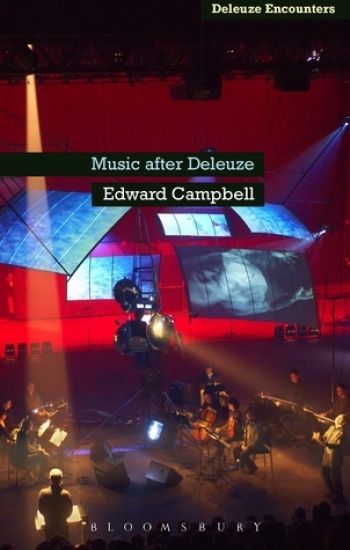
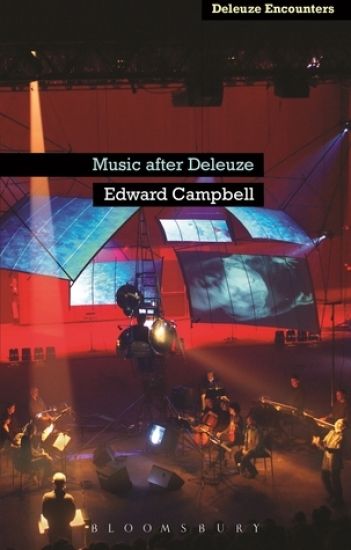
Music After Deleuze explores how Deleuzian concepts offer interesting ways of thinking about a wide range of musics. The concepts of difference, identity and repetition offer novel approaches to Western art music from Beethoven to Boulez and Bernhard Lang as well as jazz improvisation, popular and sacred music. The concepts of the ‘rhizome’, the ‘assemblage’ and the ‘refrain’ enable us to think of the specificity of musical works as the meeting of productive forces, for example in the contemporary opera of Dusapin and the experimental music theatre of Aperghis. The concepts of smooth and striated space form the starting point for musical and political reflections on pitch in Western and Eastern music. Deleuze’s notion of time as multiple illumines the distinctive conceptions of musical time found in Debussy, Messiaen, Boulez, Carter and Grisey. Finally, the innovative semiotic theory forged in Deleuze-Guattarian philosophy offers valuable insights for a semiotics capable of engaging with the innovative, molecular music of Lachenmann, Aperghis and Levinas.
Music After Deleuze explores how Deleuzian concepts offer interesting ways of thinking about a wide range of musics. The concepts of difference, identity and repetition offer novel approaches to Western art music from Beethoven to Boulez and Bernhard Lang as well as jazz improvisation, popular and sacred music. The concepts of the ‘rhizome’, the ‘assemblage’ and the ‘refrain’ enable us to think of the specificity of musical works as the meeting of productive forces, for example in the contemporary opera of Dusapin and the experimental music theatre of Aperghis. The concepts of smooth and striated space form the starting point for musical and political reflections on pitch in Western and Eastern music. Deleuze’s notion of time as multiple illumines the distinctive conceptions of musical time found in Debussy, Messiaen, Boulez, Carter and Grisey. Finally, the innovative semiotic theory forged in Deleuze-Guattarian philosophy offers valuable insights for a semiotics capable of engaging with the innovative, molecular music of Lachenmann, Aperghis and Levinas.
This book is an exploration of Apache Mesos. The author aims to help you learn how to use Apache Mesos. The first part of the book helps you learn what Apache Mesos is. The various components of Apache Mesos are discussed, along with their different purposes. You will also learn how to setup the Mesos environment before you can begin to use it. Authentication and Authorization are very important aspects in Mesos. Authentication determines the users who are able to access Mesos while Authorization determines the resources one can use when using it. This book helps you understand how these processes happen and how you can modify them to suit your needs. Apache Mesos supports the concept of use of containers. This book helps you understand how this is done. Under normal circumstances, tasks will misbehave or fail. This means that we should come up with a way of checking the health of various tasks. This book helps you understand how to do this in Apache Mesos. The concept of framework rate limiting is also explored in this book, thus, you will learn how it works. You are also guided on how to write your own Apache Mesos frameworks by the use of Java programming language. The following topics are discussed in this book: - Getting Started with Apache Mesos- Authentication and Authorization- Container Image Support in Mesos Containerizer- Task Health Checking- Framework Rate Limiting- Building an Apache Mesos Framework- Maintenance Primitive
Learn how gay men use Internet technologies to connect with others sharing their erotic desires and to forge affirming communities online! Getting It On Online: Cyberspace, Gay Male Sexuality, and Embodied Identity examines the online embodied experiences of gay men. At once scholarly and sensual, this unique book is the result of a three-year ethnographic study chronicling the activities on three distinct social scenes in the world of Internet Relay Chat (IRC)virtual spaces constructed by gay men for the erotic exploration of the male body. Examining the vital role the body plays in defining these online spaces offers insight into how gay men negotiate their identities through emerging communication technologies. The author combines a critical look at the role of the body in cyberspace with candid accounts of his own online experiences to challenge conventional views on sex, sexuality, and embodied identity. Getting It On Online provides an inside look at three specific online communitiesgaychub (a community celebrating male obesity), gaymuscle (a community formulated around images of the muscular male body), and gaymusclebears (a space representing the erotic convergence of the obese and muscular male bodies emerging out of the gay male bear subculture)in an effort to unsettle those models of beauty and the erotic depicted in more mainstream media. The book demonstrates how the social position of these men in the physical world in regards to age, race, gender, class, and physical beauty influences their online experiences. Far from a realm of bodiless exultation, Getting It On Online illustrates how the flesh remains very much present in cyberspace. Getting It On Online examines topics such as: why people chat online the history of IRC (Internet Relay Chat) how people construct their identities in cyberspace how some online spaces function like virtual gay bars the concept of online disembodiment the role the body plays in online social relations the future of online communication ethnographic research in cyberspace mediated images of the male body and the gay male beauty myth and much more!Getting It On Online: Cyberspace, Gay Male Sexuality, and Embodied Identity is an essential resource for anthropologists, sociologists, and psychologists; academics working in gender studies, queer theory, cultural studies, and cyber-culture studies; and anyone interested in gay and lesbian issues and/or cyberspace.
Learn how gay men use Internet technologies to connect with others sharing their erotic desires and to forge affirming communities online! Getting It On Online: Cyberspace, Gay Male Sexuality, and Embodied Identity examines the online embodied experiences of gay men. At once scholarly and sensual, this unique book is the result of a three-year ethnographic study chronicling the activities on three distinct social scenes in the world of Internet Relay Chat (IRC)virtual spaces constructed by gay men for the erotic exploration of the male body. Examining the vital role the body plays in defining these online spaces offers insight into how gay men negotiate their identities through emerging communication technologies. The author combines a critical look at the role of the body in cyberspace with candid accounts of his own online experiences to challenge conventional views on sex, sexuality, and embodied identity. Getting It On Online provides an inside look at three specific online communitiesgaychub (a community celebrating male obesity), gaymuscle (a community formulated around images of the muscular male body), and gaymusclebears (a space representing the erotic convergence of the obese and muscular male bodies emerging out of the gay male bear subculture)in an effort to unsettle those models of beauty and the erotic depicted in more mainstream media. The book demonstrates how the social position of these men in the physical world in regards to age, race, gender, class, and physical beauty influences their online experiences. Far from a realm of bodiless exultation, Getting It On Online illustrates how the flesh remains very much present in cyberspace. Getting It On Online examines topics such as: why people chat online the history of IRC (Internet Relay Chat) how people construct their identities in cyberspace how some online spaces function like virtual gay bars the concept of online disembodiment the role the body plays in online social relations the future of online communication ethnographic research in cyberspace mediated images of the male body and the gay male beauty myth and much more!Getting It On Online: Cyberspace, Gay Male Sexuality, and Embodied Identity is an essential resource for anthropologists, sociologists, and psychologists; academics working in gender studies, queer theory, cultural studies, and cyber-culture studies; and anyone interested in gay and lesbian issues and/or cyberspace.
In a town where doubt sparks division and faith seems lost, Jack and Lydia are at a crossroads. Their journey from confrontation to reconciliation leads them down a path of uncertainty and growth, intertwining their struggles with spirituality, environmental activism, and community building. As they navigate a landscape filled with challenges, secrets, and the weight of responsibility, they discover that sometimes the most profound transformations come from unexpected encounters and honest conversations. With the fate of a beloved meadow hanging in the balance, Jack's crisis of faith and Lydia's fervent activism collide in a tale of redemption and resilience. Together with unlikely allies like the wise trash collector Sam and the struggling Pastor Dan, they embark on a quest for truth, purpose, and connection. From facing corrupt developers to navigating personal doubts, their journey culminates in the creation of a sacred woodland chapel and the realisation that faith isn't about having all the answers - it's about embracing the next step. Join Jack, Lydia, Sam, and Pastor Dan on a heartfelt exploration of doubt and faith, community and friendship, as they delve into questions that lead them full circle to an understanding that true faith is found not in certainty but in showing up for whatever comes next.