Kirjojen hintavertailu. Mukana 11 342 296 kirjaa ja 12 kauppaa.

Kirjahaku

Etsi kirjoja tekijän nimen, kirjan nimen tai ISBN:n perusteella.

1000 tulosta hakusanalla Captain James Carson

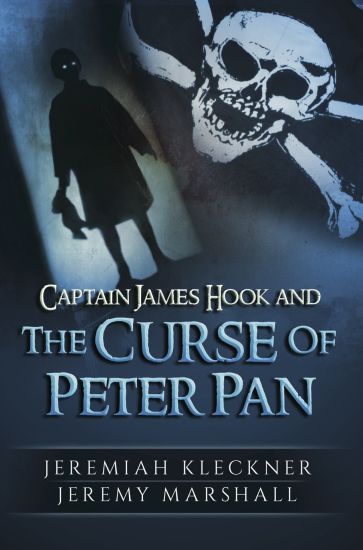
Captain James Hook and the Curse of Peter Pan

Captain James Hook and the Curse of Peter Pan

Jeremy Marshall; Jeremiah Kleckner

Createspace Independent Publishing Platform
2012
nidottu
Captain Hook has been captured by the British navy-and is soon to be hung. As Hook tells his life story to his captor, it soon becomes clear that the fearsome pirate was once a scholarly, if sickly boy-until one fateful night in Port Royal, when he meets the volatile Peter Pan ... Raise the Jolly Roger and discover the book that opened thousands of eyes to the possibility that, once upon a time, Captain Hook was not the villain we know him to be. First published in June of 2012, this original story takes you through Captain Hook's rise to piracy, including his first confrontation with Long John Silver and his service on the Queen Anne's Revenge alongside Blackbeard at the Charleston Blockade. This book is not a retelling of the events of J. M. Barrie's beloved novel. Far from it. It's a defense of the world's most famous pirate, told by the man himself. Captain Hook has reason and wit behind his hatred for Peter Pan. If only someone would listen. "Compelling from first page to last" - SFFaudio Podcast #357 "Fantastic and tightly written" - SFFaudio Podcast #357 "Peter Pan is a monster" - SFFaudio Podcast #357 "A sleeper... an undersold masterpiece" - SFFaudio Podcast #357
Captain James Cook and the Search for Antarctica

Captain James Cook and the Search for Antarctica

James C. Hamilton

Pen Sword History
2020
sidottu
Two hundred and fifty years ago Captain James Cook, during his extraordinary voyages of navigation and maritime exploration, searched for Antarctica - the Unknown Southern Continent. During parts of his three voyages in the southern Pacific and Southern Oceans, Cook narrowed the options' for the location of Antarctica. Over three summers, he completed a circumnavigation of portions of the Southern Continent, encountering impenetrable barriers of ice, and he suggested the continent existed, a frozen land not populated by a living soul. Yet his Antarctic voyages are perhaps the least studied of all his remarkable travels. That is why James Hamilton's gripping and scholarly study, which brings together the stories of Cook's Antarctic journeys into a single volume, is such an original and timely addition to the literature on Cook and eighteenth-century exploration. Using Cook's journals and the log books of officers who sailed with him, the book sets his Antarctic explorations within the context of his historic voyages. The main focus is on the Second Voyage (1772-1775), but brief episodes in the First Voyage (during 1769) and the Third Voyage (1776) are part of the story. Throughout the narrative Cook's exceptional seamanship and navigational skills, and that of his crew, are displayed during often-difficult passages in foul weather across uncharted and inhospitable seas. Captain James Cook and the Search for Antarctica offers the reader a fascinating insight into Cook the seaman and explorer, and it will be essential reading for anyone who has a particular interest the history of the Southern Continent.
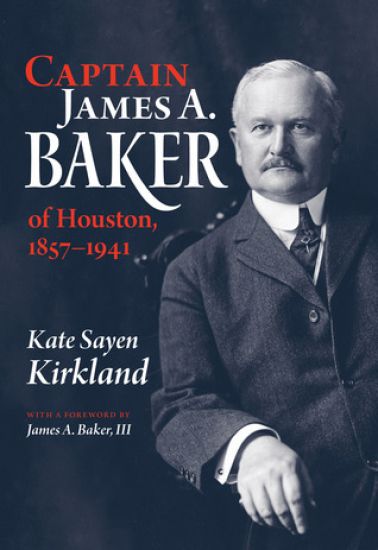
Captain James a. Baker of Houston, 1857-1941

Captain James a. Baker of Houston, 1857-1941

Kate Sayen Kirkland

Texas A M University Press
2012
sidottu
Captain James A. Baker, Houston lawyer, banker, and businessman, received an alarming telegram on September 23, 1900: his elderly millionaire client William Marsh Rice had died unexpectedly in New York City. Baker rushed to New York, where he unraveled a plot to murder Rice and plunder his estate. Working tirelessly with local authorities, Baker saved Rice’s fortune from more than one hundred claimants; he championed the wishes of his deceased client and founded Rice Institute for the Advancement of Literature, Science and Art—today’s internationally acclaimed Rice University.For fifty years Captain Baker nurtured Rice’s dream. He partnered with leading lawyers to create Houston’s first nationally recognized law firm: Baker, Botts, Lovett & Parker, now the worldwide legal practice of Baker Botts L.L.P. He chartered several Houston businesses and utility companies, developed two major regional banks, promoted real estate projects, and led an active civic life. To expand the Institute’s endowment, Baker invested William Marsh Rice’s fortune with local entrepreneurs, who were building homes, office towers, commercial enterprises, and institutions that transformed Houston from a small town in the nineteenth century to an international powerhouse in the twenty-first century.Author Kate Sayen Kirkland explored the archival records of Baker and his family and firm and carefully mined the archives of Baker’s contemporaries. Published as part of Rice University’s centennial celebration, Captain James A. Baker of Houston, 1857–1941 weaves together the history of Houston and the story of an influential man who labored all his life to make Houston a world-class city.
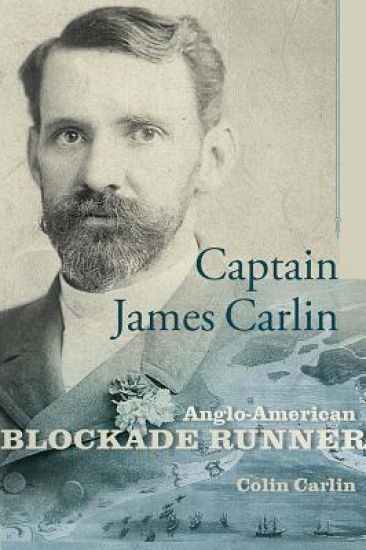
Captain James Carlin

Captain James Carlin

Colin Carlin

University of South Carolina Press
2016
sidottu
Captain James Carlin is a biography of a shadowy nineteenth-century British Confederate, James Carlin (1833–1921), who was among the most successful captains running the U.S. Navy’s blockade of Southern ports during the Civil War. Written by his descendent Colin Carlin, Captain James Carlin ventures behind the scenes of this perilous trade that transported vital supplies to the Confederate forces.An Englishman trained in the British merchant marine, Carlin was recruited into the U.S. Coastal and Geodetic Survey Department in 1856, spending four years charting the U.S. Atlantic seaboard. Married and settled in Charleston, South Carolina, he resigned from the survey in 1860 to resume his maritime career. His blockade-running started with early runs into Charleston under sail. These came to a lively conclusion under gunfire off the Stono River mouth. More blockade-running followed until his capture on the SS Memphis. Documents in London reveal the politics of securing Carlin’s release from Fort Lafayette.On his return to Charleston, General P. G. T. Beauregard gave him command of the spar torpedo launch Torch for an attack on the USS New Ironsides. After more successful trips though the blockade, he was appointed superintending captain of the South Carolina Importing and Exporting Company and moved to Scotland to commission six new steam runners.After the war Carlin returned to the southern states to secure his assets before embarking on a gun-running expedition to the northern coast of Cuba for the Cuban Liberation Junta fighting to free the island from Spanish control and plantation slavery.In researching his forebear, the author gathered a wealth of private and public records from England, Scotland, Ireland, Greenland, the Bahamas, and the United States. The use of fresh sources from British Foreign Office and U.S. Prize Court documents and surviving business papers make this volume distinctive.
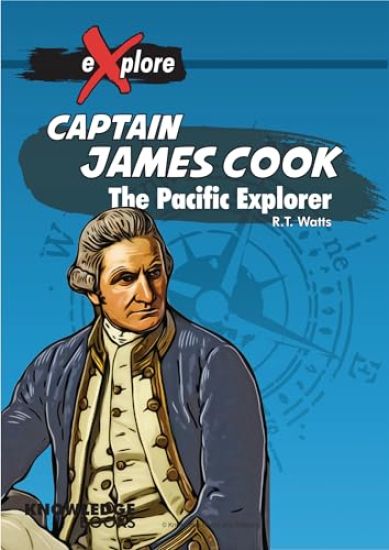
Captain James Cook: The Pacific Explorer

Captain James Cook: The Pacific Explorer

Robert Watts

Knowledge Books
2024
nidottu
James Cook was one of the great explorers of the Pacific. Why was he so successful? And how does this relate to our lives today? Cook remains an inspirational character for students today.James Cook was a sailor and navigator who had one objective: to find the Great South Land. He never achieved this objective though, and the subsequent colonizing of the Pacific countries was done by others. Still, Cook rose from very humble beginnings to eventually have a space shuttle named after his ship. This story is an introduction to a great explorer, who's image, however, is currently under criticism for his association with the colonization of the Pacific nations.
Captain James Cook, R.N.

Captain James Cook, R.N.

Joseph Carruthers

Connor Court Publishing Pty Ltd
2020
sidottu
According to detractors, Captain Cook's centricity to the founding of Australia is a harmful colonialist "myth". The man many of them blame for starting that myth is Sir Joseph Carruthers, one of the Fathers of Federation. Just in time for the 250th anniversary of Cook's landing at Kurnell, the reader can now judge for themselves. Carruthers believed that Cook's life was a meritocratic success story that should be held up as an example for his young nation to emulate. His passion was so infectious that it not only won over the Australian public, but managed to unite the whole of the English-speaking Pacific to come together to celebrate their greatest pioneer.
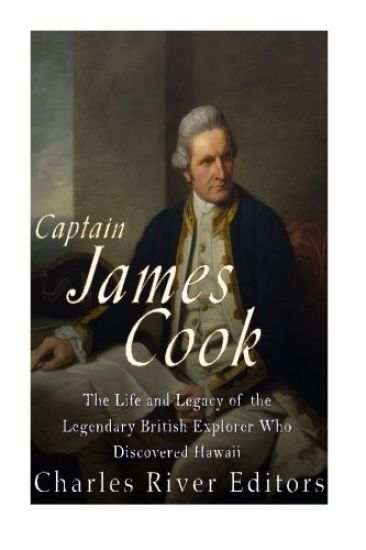
Captain James Cook: The Life and Legacy of the Legendary British Explorer Who Discovered Hawaii
*Includes pictures *Includes Cook's accounts of his historic voyages *Includes online resources and a bibliography for further reading *Includes a table of contents "Do just once what others say you can't do, and you will never pay attention to their limitations again." - James Cook "To boldly go where no man has gone before" was a phrase made popular by Gene Rodenberry in a science fiction setting, but it was certainly the creed of countless explorers during the Age of Discovery and afterwards. In fact, as recently as the mid-18th century, a young sailor named James Cook determined to go "farther than any man has been before me, but as far as I think it is possible for a man to go." And unlike so many others who tried, he did just that. Cook was a war veteran who participated in the French & Indian War, but he remains best known over 250 years later for sailing thousands of miles across much of the Pacific, mapping regions, naming new places, and making scientific discoveries. Indeed, there are plenty of similarities between Cook's three voyages and the famed "five year mission" of the Enterprise. Like Captain Picard, Cook's missions were supposed to be peaceful and focused primarily on scientific research. His first voyage, which took him to New Zealand, was meant to transport astronomers to study Venus, and his second voyage also carried several scientists tasked with "exploring strange new worlds" that Cook and his crew encountered. At the same time, Cook also seemed to run across many of the same problems faced by explorers across all centuries, even the fabled 23rd century. He found himself making first contact with native peoples who had never met Europeans, and though Cook's intentions were supposedly peaceful, the men and women he encountered were justifiably concerned enough that they decided to attack rather than wait to be attacked. Cook himself often made bad decisions, especially when it came to interacting with aboriginal peoples, and these decisions cost a number of his crew their lives, as well as his own eventually. Perhaps fittingly, he was killed along the coast of Hawaii, one of his most important discoveries, and while that may have brought his discoveries to an end, his legacy is a mix of adventure and cautionary tale that can continue to inspire to this day. Captain James Cook: The Life and Legacy of the Legendary British Explorer Who Discovered Hawaii chronicles the historic expeditions that Cook made across the Pacific, and his climactic discoveries and death. Along with pictures of important people, places, and events, you will learn about Captain Cook like never before.
Captain James Cook

Captain James Cook

Evelyn Stone

Scribbles
2017
pokkari
Captain James Cook was a British explorer, navigator, cartographer, and captain in the Royal Navy. Cook made detailed maps of Newfoundland prior to making three voyages to the Pacific Ocean, during which he achieved the first recorded European contact with the eastern coastline of Australia and the Hawaiian Islands, and the first recorded circumnavigation of New Zealand. This book gives a brief account of his Life.
The Three Voyages of Captain James Cook round the World

The Three Voyages of Captain James Cook round the World

Cook James; Joseph Banks

Cambridge University Press
2015
pokkari
During Charles Darwin's 1831–6 voyage on the Beagle, his on-board library included 'Cook's voyages' (the edition is not specified). This illustrated 1821 edition, in seven volumes, is representative of the versions available in the early nineteenth century. Volumes 1 and 2 cover the first Pacific voyage of James Cook (1728–79), the object of which was to observe the 1769 transit of Venus from Tahiti. The text replicates the version published in 1773 by John Hawkesworth (1715–73) as part of a collection of 'Voyages … in the Southern Hemisphere', which interwove Cook's account with botanical and ethnographical notes by the ship's naturalist, Sir Joseph Banks (1743–1820). The journals were only published separately much later: Cook's in 1893 (ed. Wharton) and Banks' in 1896 (ed. Hooker); both are also available. Volume 1 narrates the voyage to Tahiti, the observations there, and the explorers' first impressions of New Zealand.
The Three Voyages of Captain James Cook round the World

The Three Voyages of Captain James Cook round the World

Cook James; Forster George

Cambridge University Press
2015
pokkari
During Charles Darwin's 1831–6 voyage on the Beagle, his on-board library included 'Cook's voyages' (the edition is not specified). This illustrated 1821 edition, in seven volumes, is representative of the versions available in the early nineteenth century. Volumes 3 and 4 cover Cook's second voyage (1772–5), a key objective of which was to look for a continent in the Southern Ocean. The explorers sailed to 71 degrees south, within the Antarctic Circle, encountering stormy weather and icebergs, albatrosses and storm petrels. On this voyage, the ship's naturalists were Johann Reinhold Forster and his son Georg (1754–94), who is credited here as co-author. Volume 3 contains accounts of the Antarctic in December 1772 and December 1773, Tasmania (by Captain Furneaux, whose ship had become separated from the Resolution for several weeks), and the inhabitants of Tahiti, Easter Island with its giant statues, Tonga, and New Zealand.
The Three Voyages of Captain James Cook round the World

The Three Voyages of Captain James Cook round the World

Cook James; Forster George

Cambridge University Press
2015
pokkari
During Charles Darwin's 1831–6 voyage on the Beagle, his on-board library included 'Cook's voyages' (the edition is not specified). This illustrated 1821 edition, in seven volumes, is representative of the versions available in the early nineteenth century. Volumes 3 and 4 cover Cook's second voyage (1772–5), a key objective of which was to look for a continent in the Southern Ocean. The explorers sailed to 71 degrees South, within the Antarctic Circle, encountering stormy weather and icebergs, albatrosses and storm petrels. On this voyage, the ship's naturalists were Johann Reinhold Forster and his son Georg (1754–94), who is credited here as co-author. Volume 4 describes the flora, fauna and people of the New Hebrides and New Caledonia, the uninhabited Norfolk Island, and the voyage home via Cape Horn and Tierra del Fuego. The appendix contains a vocabulary of the Tahitian language as spoken in the Society Islands.
The Three Voyages of Captain James Cook round the World

The Three Voyages of Captain James Cook round the World

Cook James

Cambridge University Press
2015
pokkari
During Charles Darwin's 1831–6 voyage on the Beagle, his on-board library included 'Cook's voyages' (the edition is not specified). This illustrated 1821 edition, in seven volumes, is representative of the versions available in the early nineteenth century. Volumes 5–7 cover the third Pacific voyage of James Cook (1728–79), which began in July 1776 and ended in his death in Hawaii. Its objective was to search for the Pacific end of the North-West Passage. Volume 6 contains Cook's journal of the voyage from July 1777 to January 1779. From Tahiti, he sailed via Hawaii to Nootka Sound, and reached the Bering Strait in June 1778. The expedition then explored the Aleutian Islands and the Alaskan coast, reaching 70 degrees north, but by late August fog and snow meant the mission had to be abandoned for that year. The ships sailed south to Kamchatka and then back to Hawaii.