

Kirjahaku
Etsi kirjoja tekijän nimen, kirjan nimen tai ISBN:n perusteella.
1000 tulosta hakusanalla Carl Beck





Hilary of Poitiers (c300-368), Bishop and Theologian, was instrumental in shaping the development of pro-Nicene theology in the West. Carl Beckwith engages the extensive scholarship on the fourth-century Trinitarian debates and brings new light on the structure and chronology of Hilary's monumental De Trinitate. There is a broad scholarly consensus that Hilary combined two separate theological works, a treatise on faith (De Fide) and a treatise against the 'Arians' (Adversus Arianos), to create De Trinitate. In spite of this the question of when and why Hilary performed this task has largely remained unanswered. Beckwith addresses this puzzle, situating Hilary's De Trinitate in its historical and theological context and offering a close reading of his text. He demonstrates that Hilary made significant revisions to the early books of his treatise; revisions that he attempted to conceal from his readers in order to give the impression of a unified work on the Trinity. Beckwith argues that De Fide was written in 356 following Hilary's condemnation at the synod of Béziers and prior to receiving a decision on his exile from the Emperor. When Hilary arrived in exile, he wrote a second work, Adversus Arianos. Following the synod of Sirmium in 357 and his collaboration with Basil of Ancyra in early 358, Hilary recast his efforts and began to write De Trinitate. He decided to incorporate his two earlier works, De Fide and Adversus Arianos, into this project. Toward that end, he returned to his earlier works and drastically revised their content by adding new prefaces and new theological and exegetical material to reflect his mature pro-Nicene theology. Beckwith provides a compelling case for the nature of these radical revisions, crucial textual alterations that have never before been acknowledged in the scholarship on De Trinitate.

According to Carl Becker "if the framers of the Constitution could come back to earth and see what the federal government is doing to-day, they would all agree that this monstrous thing was no child of theirs; for to-day the federal government exercises as a matter of course powers which they never dreamed of." This prescient statement rings as true today as it did when Becker wrote An Experiment in Democracy nearly eighty years ago. This American classic is an engaging, gracefully rendered piece of historical literature as well as a non-ideological meditation on the "meaning of America."Carl Becker's ruminations are invariably provocative, notably wise, and remarkably enduring. He clearly believed in what has been called a "living Constitution," one that must be adapted to changing circumstances and imperatives in America life, and his faith in democracy seems to have strengthened as the decades progressed.In his new introduction, Michael Kammen places this American classic in historical perspective. Kammen sees Becker as more than an archival historian, but rather as a master of the "creative synthesis" looking at familiar sources in fresh ways and developing new points of view that were frequently revisionist and, on occasion, radically arresting. Much has changed between 1920 and the present; but Carl Becker's sagacity persists, just as his expository prose will continue to please a new generation of historians and students of American social history. Carl Becker was the author of "Kansas"; The Declaration of Independence: A Study in the History of Political Ideas; Modern History: The Rise of a Democratic, Scientific, and Industrial Civilization; "Benjamin Franklin"; "Everyman His Own Historian"; The Heavenly City of the Eighteenth-Century Philosophers; How New Will the Better World Be?; and Freedom and Responsibility in the American Way of Life.

In this much-needed examination of Buddhist views of death and the afterlife, Carl B. Becker bridges the gap between books on death in the West and books on Buddhism in the East. Other Western writers have addressed the mysteries surrounding death and the afterlife, but few have approached the topic from a Buddhist perspective. Here, Becker resolves questions that have troubled scholars since the beginning of Buddhism: How can Buddhism reconcile its belief in karma and rebirth with its denial of a permanent soul? What is reborn? And when, exactly, is the moment of death?By systematically tracing Buddhism's migration from India through China, Japan, and Tibet, Becker demonstrates how culture and environment affect Buddhist religious tradition.In addition to discussing historical Buddhism, Becker shows how Buddhism resolves controversial current issues as well. In the face of modern medicine's trend toward depersonalization, traditional Buddhist practices imbue the dying process with respect and dignity. At the same time, Buddhist tradition offers documented precedents for decision making in cases of suicide and euthanasia.
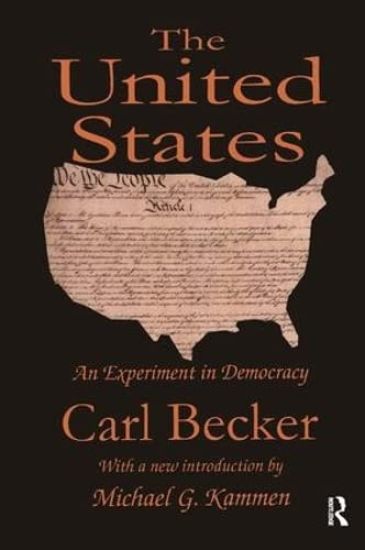
According to Carl Becker "if the framers of the Constitution could come back to earth and see what the federal government is doing to-day, they would all agree that this monstrous thing was no child of theirs; for to-day the federal government exercises as a matter of course powers which they never dreamed of." This prescient statement rings as true today as it did when Becker wrote An Experiment in Democracy nearly eighty years ago. This American classic is an engaging, gracefully rendered piece of historical literature as well as a non-ideological meditation on the "meaning of America."Carl Becker's ruminations are invariably provocative, notably wise, and remarkably enduring. He clearly believed in what has been called a "living Constitution," one that must be adapted to changing circumstances and imperatives in America life, and his faith in democracy seems to have strengthened as the decades progressed.In his new introduction, Michael Kammen places this American classic in historical perspective. Kammen sees Becker as more than an archival historian, but rather as a master of the "creative synthesis" looking at familiar sources in fresh ways and developing new points of view that were frequently revisionist and, on occasion, radically arresting. Much has changed between 1920 and the present; but Carl Becker's sagacity persists, just as his expository prose will continue to please a new generation of historians and students of American social history. Carl Becker was the author of "Kansas"; The Declaration of Independence: A Study in the History of Political Ideas; Modern History: The Rise of a Democratic, Scientific, and Industrial Civilization; "Benjamin Franklin"; "Everyman His Own Historian"; The Heavenly City of the Eighteenth-Century Philosophers; How New Will the Better World Be?; and Freedom and Responsibility in the American Way of Life.

The Eve Of The Revolution - A Chronicle Of The Breach With England
Carl Becker
Read Books
2006
pokkari

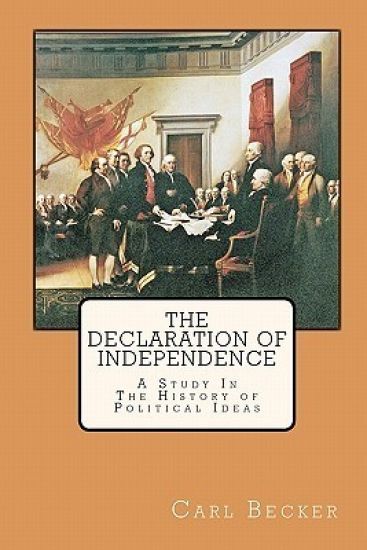
The Declaration of Independence: A Study In The History of Political Ideas
Carl Becker
Createspace Independent Publishing Platform
2010
nidottu

The Eve of the Revolution: A Chronicle of The Breach With England
Carl Becker
Createspace Independent Publishing Platform
2010
nidottu
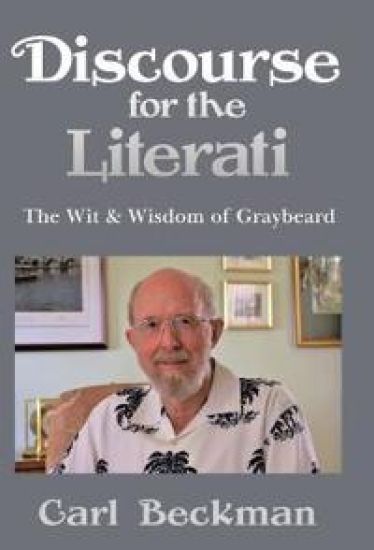
A fit of pique lead to the creation of the Discourse, an electronic publication of articles containing the sometimes satirical, sometimes esoteric, and often humorous writings of the man known as Graybeard after he fell prey to a kangaroo court and was dismissed as editor of his community newsletter.In Discourse for the Literati, Carl Beckman, who uses the pen name Graybeard, shares selections from his reborn publication, which includes commentaries, a bit of humor, satirical missives on travel, the intrusion of technology in our lives, and nostalgia, and other pithy comments, reflections, and bon mots. From a funny history of America and a satire about computers to commentaries on getting old and witticisms about food, travel, and the modern world, there's a little of something for everyone.Now in his seventh decade of life, Graybeard opens the Discourse to anyone interested in the idiosyncratic musings of a man reincarnated to write whatever he wanted to write and to publish--no censorship and no deadlines, just a writer and something to say.
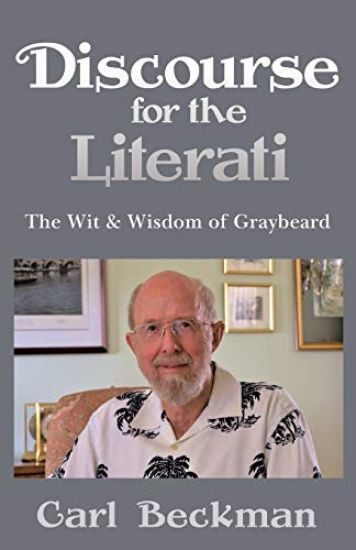
A fit of pique lead to the creation of the Discourse, an electronic publication of articles containing the sometimes satirical, sometimes esoteric, and often humorous writings of the man known as Graybeard after he fell prey to a kangaroo court and was dismissed as editor of his community newsletter.In Discourse for the Literati, Carl Beckman, who uses the pen name Graybeard, shares selections from his reborn publication, which includes commentaries, a bit of humor, satirical missives on travel, the intrusion of technology in our lives, and nostalgia, and other pithy comments, reflections, and bon mots. From a funny history of America and a satire about computers to commentaries on getting old and witticisms about food, travel, and the modern world, there's a little of something for everyone.Now in his seventh decade of life, Graybeard opens the Discourse to anyone interested in the idiosyncratic musings of a man reincarnated to write whatever he wanted to write and to publish--no censorship and no deadlines, just a writer and something to say.

The Eve of the Revolution V11: Chronicles of America
Carl Becker
Literary Licensing, LLC
2014
nidottu