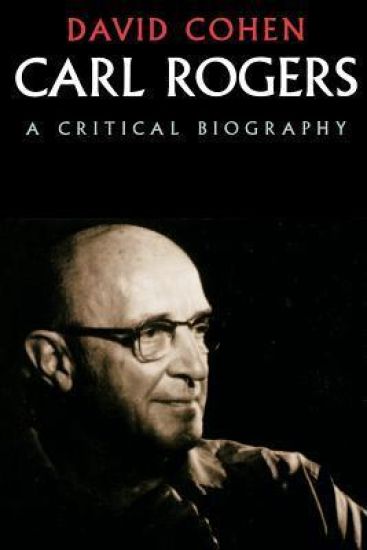
Carl Rogers was the psychiatrist who pioneered the practice of client-centred therapy, revolutionising the practice of psychotherapy, yet his own life was far from ideal. This biography explores his life - including his tortured marriage, his use of confidential information about his children's lives and his drinking - against the background of his work. The author draws heavily on the papers left by Rogers to the Library of Congress.
Carl usually comes second or third in the sprint races on sports day, but this year he wants to win an event...just once! To help himself achieve his goal, he sets up a high jump at home.
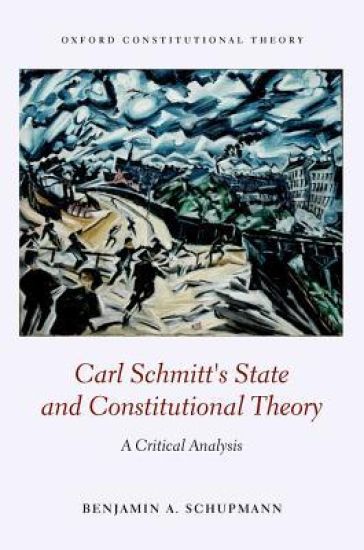
Can a constitutional democracy commit suicide? Can an illiberal antidemocratic party legitimately obtain power through democratic elections and amend liberalism and democracy out of the constitution entirely? In Weimar Germany, these theoretical questions were both practically and existentially relevant. By 1932, the Nazi and Communist parties combined held a majority of seats in parliament. Neither accepted the legitimacy of liberal democracy. Their only reason for participating democratically was to amend the constitution out of existence. This book analyses Carl Schmitt's state and constitutional theory and shows how it was conceived in response to the Weimar crisis. Right-wing and left-wing political extremists recognized that a path to legal revolution lay in the Weimar constitution's combination of democratic procedures, total neutrality toward political goals, and positive law. Schmitt's writings sought to address the unique problems posed by mass democracy. Schmitt's thought anticipated 'constrained' or 'militant' democracy, a type of constitution that guards against subversive expressions of popular sovereignty and whose mechanisms include the entrenchment of basic constitutional commitments and party bans. Schmitt's state and constitutional theory remains important: the problems he identified continue to exist within liberal democratic states. Schmitt offers democrats today a novel way to understand the legitimacy of liberal democracy and the limits of constitutional change.
Carl Peters (1856-1918) ranked among Germany's most prominent imperialists in the Bismarckian and Wilhelmine periods. In the 1880s he emerged as a leader of the colonial movement and became known as the founder of Deutsch-Ostafrika, a region many Germans regarded as the pearl of their overseas possessions. In Nazi Germany he was revered as a precursor of Hitler and ascended retrospectively to new glory as a pioneer in the struggle for Lebensraum. This scholarly biography examines Peters's nationalist agenda and sheds light on his colonial expeditions into East Africa. It seeks to explain how this young academic who had written about Schopenhauer and metaphysics eventually became a skilful agitator for a German world empire.
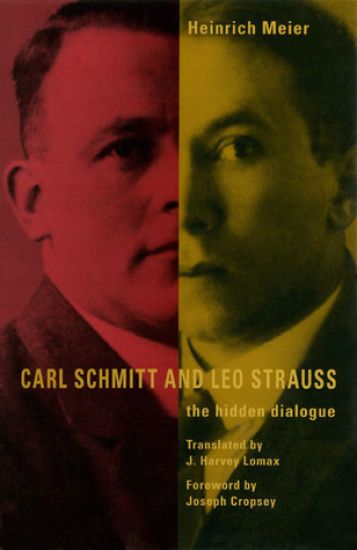
Carl Schmitt was the most famous and controversial defender of political theology in the twentieth century. But in his best-known work, The Concept of the Political, issued in 1927, 1932, and 1933, political considerations led him to conceal the dependence of his political theory on his faith in divine revelation. In 1932 Leo Strauss published a critical review of Concept that initiated an extremely subtle exchange between Schmitt and Strauss regarding Schmitt’s critique of liberalism. Although Schmitt never answered Strauss publicly, in the third edition of his book he changed a number of passages in response to Strauss’s criticisms. Now, in this elegant translation by J. Harvey Lomax, Heinrich Meier shows us what the remarkable dialogue between Schmitt and Strauss reveals about the development of these two seminal thinkers.Meier contends that their exchange only ostensibly revolves around liberalism. At its heart, their “hidden dialogue” explores the fundamental conflict between political theology and political philosophy, between revelation and reasonand ultimately, the vital question of how human beings ought to live their lives. “Heinrich Meier’s treatment of Schmitt’s writings is morally analytical without moralizing, a remarkable feat in view of Schmitt’s past. He wishes to understand what Schmitt was after rather than to dismiss him out of hand or bowdlerize his thoughts for contemporary political purposes.”—Mark Lilla, New York Review of Books
Carl Schmitt's friend/enemy principle is exposed to in-depth philosophical analysis and historical examination with the aim of showing that the political follows hostility, violence and terror as form follows matter. The book argues that the partisan is an umbrella concept that includes the national and global terrorist.
Carl Gustav Jung has always been a popular but never a fashionable thinker. His ground-breaking theories about dream interpretation and psychological types have often been overshadowed by allegations that he was anti-Semitic and a Nazi sympathizer. Most accounts have unfortunately been marred by factual errors and quotes taken out of context; this has been due to the often partisan sympathies of those who have written about him. This book provides a more accurate and comprehensive account of Jung's controversial opinions about art, politics, and race.
As the first elected black mayor of a major U.S. city, Cleveland's Carl B. Stokes embodied the transformation of the civil rights movement from a vehicle of protest to one of black political power. In this wide-ranging political biography, Leonard N. Moore examines the convictions and alliances that brought Stokes to power. Impelled by the problems plaguing Cleveland's ghettos in the decades following World War II, Stokes and other Clevelanders questioned how the sit-ins and marches of the civil rights movement could correct the exclusionary zoning practices, police brutality, substandard housing, and de facto school segregation that African Americans in the country's northern urban centers viewed as evidence of their oppression. As civil unrest in the country's ghettos turned to violence in the 1960s, Cleveland was one of the first cities to heed the call of Malcolm X's infamous "The Ballot or the Bullet" speech. Understanding the importance of controlling the city's political system, Cleveland's blacks utilized their substantial voting base to put Stokes in office in 1967. Stokes was committed to showing the country that an African American could be an effective political leader. He employed an ambitious and radically progressive agenda to clean up Cleveland's ghettos, reform law enforcement, move public housing to middle-class neighborhoods, and jump-start black economic power. Hindered by resistance from the black middle class and the Cleveland City Council, spurned by the media and fellow politicians who deemed him a black nationalist, and unable to prove that black leadership could thwart black unrest, Stokes finished his four years in office with many of his legislative goals unfulfilled. Focusing on Stokes and Cleveland, but attending to themes that affected many urban centers after the second great migration of African Americans to the North, Moore balances Stokes's failures and successes to provide a thorough and engaging portrait of his life and his pioneering contributions to a distinct African American political culture that continues to shape American life.
Stephen C. Meyer details the intricate relationships between the operas Der Freischütz and Euryanthe, and contemporary discourse on both the "Germany of the imagination" and the new nation itself. In so doing, he presents excerpts from a wide range of philosophical, political, and musical writings, many of which are little known and otherwise unavailable in English. Individual chapters trace the multidimensional concept of German and "foreign" opera through the 19th century. Meyer's study of Der Freischütz places the work within the context of emerging German nationalism, and a chapter on Euryanthe addresses the opera's stylistic and topical shifts in light of changing cultural and aesthetic circumstances. As a result, Meyer argues that the search for a new German opera was not merely an aesthetic movement, but a political and social critique as well.
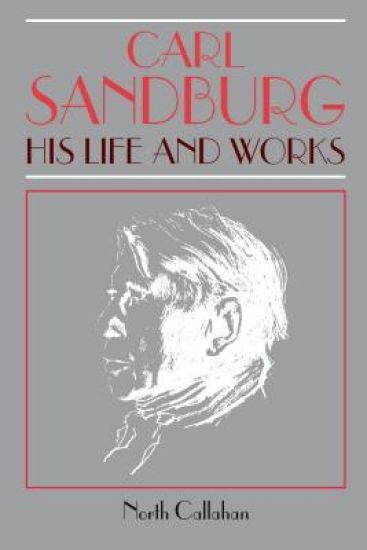
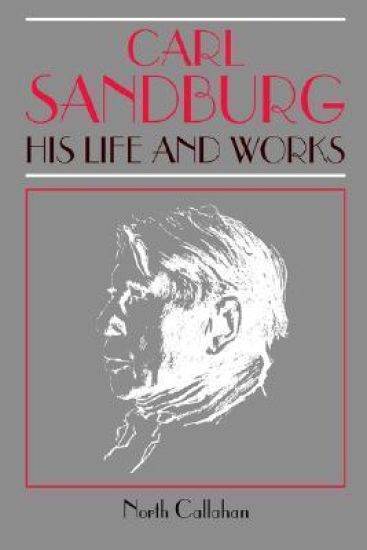
North Callahan has written the complete and definitive biography of a unique writer and rare personality. Carl Sandburg was a many-faceted man: poet, musician, biographer, historian, writer of children's books, and novelist. Callahan knew Sandburg personally and worked with him in various historical enterprises. He has done extensive research on letters, diaries, scholarly papers, and other documents in various libraries and archives around the country, including material in the Sandburg homes and especially in the Carl Sandburg Collection at the University of IIlinois.Callahan has interviewed many friends and former associates of Sandburg including Allen Nevins, Harry Hansen C. D. Batchelor, Douglas Southall Freeman, and Ralph McCall; he had the close cooperation of the Sandburg family, especially that of the poet's widow. Literary scholars will be concerned with Sandburg's poetry, his novel, and children's books; historians, with his great biography of Abraham Lincoln.Because of Callahan's association with Sandburg over many years, a personal sense of Sandburg's presence pervades this book. We see in full the influences that shaped Sandburg: the reading, the poverty, and the social conditions of his early life and his impact on his generation.This book is a vivid description and celebration of Sandburg's life, much more comprehensive and detailed than any previous such account. It is rich and full of striking factual information and revealing and highly entertaining anecdotes.
North Callahan has written the complete and definitive biography of a unique writer and rare personality. Carl Sandburg was a many-faceted man: poet, musician, biographer, historian, writer of children's books, and novelist. Callahan knew Sandburg personally and worked with him in various historical enterprises. He has done extensive research on letters, diaries, scholarly papers, and other documents in various libraries and archives around the country, including material in the Sandburg homes and especially in the Carl Sandburg Collection at the University of IIlinois.Callahan has interviewed many friends and former associates of Sandburg including Allen Nevins, Harry Hansen C. D. Batchelor, Douglas Southall Freeman, and Ralph McCall; he had the close cooperation of the Sandburg family, especially that of the poet's widow. Literary scholars will be concerned with Sandburg's poetry, his novel, and children's books; historians, with his great biography of Abraham Lincoln.Because of Callahan's association with Sandburg over many years, a personal sense of Sandburg's presence pervades this book. We see in full the influences that shaped Sandburg: the reading, the poverty, and the social conditions of his early life and his impact on his generation.This book is a vivid description and celebration of Sandburg's life, much more comprehensive and detailed than any previous such account. It is rich and full of striking factual information and revealing and highly entertaining anecdotes.
Architect Carl F. Gould (1873-1939) was one of the major shapers of modern Seattle. In the early part of the century he was responsible for some of the city's most distinguished homes and public buildings. He and his partner Charles Herbert Bebb developed the University of Washington campus plan and designed and executed many of its finest buildings, including the renowned Suzzallo Library and the Henry Art Gallery. Gould founded the university's Department of Architecture; was active in the Washington State Chapter of the American Institute of Architects and the Seattle Fine Arts Society (and its successor the Seattle Art Institute); and was a member of the city's first planning commission. In this first biography of Gould the architect, teacher, civic leader, and family man, authors T. William Booth and William H. Wilson trace his life and work during almost thirty years of architectural practice in Seattle.Utilizing numerous drawings held in family, university, and Seattle Art Museum collections, the authors explore the full range of Gould's work, from student Beaux-Arts projects to over 150 extant buildings, and other important though unbuilt projects. Gould's homes and commercial buildings are profusely illustrated. Booth and Wilson follow the evolution of Gould's ideas through his publications, lecture notes, correspondence, diaries, speeches, and public activities.Gould moved from New York to Seattle in 1908, when the city was undergoing vigorous expansion in population, industry, and civic awareness. Well traveled and educated, the 34-year-old Gould brought with him a cosmopolitan sensibility, a gregarious nature, a highly developed civic consciousness, and talent. In the first years of his practice, domestic structures in traditional style formed the major portion of his work. His noble interiors, naturally lighted and elegantly proportioned, remain among the most satisfactory of living spaces.Essentially a regionalist and traditionalist in the design of homes, in the last decade of his life Gould embraced modernism for commercial structures. These affirm his skill in utilizing new concepts and materials. His consummate achievement in the modern idiom was the Seattle Art Museum in Volunteer Park.This book explores Gould's intellectual and aesthetic commitment to ideas he considered essential to the life of architecture. He advocated the concept of beauty as fundamental in architecture, comprising elements of balance, site appropriateness, suitability for the client, generosity of spirit, and a human response of ease and delight in the entire architectural ensemble. Gould worked in the great age of the generalist--he concerned himself with site, landscape, and interior design as well as with the architectural envelope. Throughout his career he searched for elements of an American and regional style.This biography reviews Gould's life and career, capturing the setting in which he worked and thrived, and the vision and sense of obligation that supported his private and public actions.
The name of Carl Hagenbeck is as evocative in Europe as that of P. T. Barnum or Walt Disney in North America. Hagenbeck was the nineteenth century's foremost animal trader and ethnographic showman, known for his enormously popular displays of people, animals, and artifacts gathered from all corners of the globe. The culmination of Hagenbeck's commercial ventures was the opening of his Tierpark near Hamburg in 1907, a dazzling assemblage of constructed exotic environments inhabited by humans and animals.Eric Ames shows that Hagenbeck's various enterprises illustrate a significant evolution in popular culture. Earlier display forms that relied on the collection and presentation of "authentic" artifacts and living beings--the panorama, the zoological garden, the ethnographic collection--gave rise to the self-consciously synthetic forms of entertainment that we now associate with theme parks and films. This shift took place in the context of Hagenbeck's exhibitions, which were simultaneously the apotheosis of the collecting impulse and the germinating source for the creation of fictional spaces that rely for their effect on the spectator's imaginative engagement and interaction with the spectacle.Carl Hagenbeck's Empire of Entertainments locates Hagenbeck's myriad enterprises in the context of colonialism and nascent globalization; ethnography and anthropology; zoological gardens and international expositions; museum culture and visual spectacle; and consumerism and immersive entertainments. By tracing out the divergent lineages of themed environments, Ames offers a vivid reconstruction of the impulses and contradictions that lay behind the visual and display culture of the nineteenth and early twentieth centuries--a culture that forms the foundation of contemporary themed environments.Written in an accessible style with many wonderful images, this book draws on meticulous archival research and a wealth of primary sources not available in English. It is an original and entertaining interdisciplinary study that will appeal to readers interested in visual culture, popular culture, nineteenth-century German history, and film studies, as well as anyone intrigued by the history of such popular entertainments as zoos, museums, panoramas, world's fairs, cinema, theme parks, anthropological exhibitions, and Wild West Shows.
If there is one film in the canon of Carl Theodor Dreyer that can be said to be, as Jacques Lacan might put it, his most "painfully enjoyable," it is Gertrud. The film's Paris premier in 1964 was covered by the Danish press as a national scandal; it was lambasted on its release for its lugubrious pace, wooden acting, and old-fashioned, stuffy milieu. Only later, when a younger generation of critics came to its defense, did the method in what appeared to be Dreyer's madness begin to become apparent.To make vivid just what was at stake for Dreyer, and still for us, in his final work, James Schamus focuses on a single moment in the film. He follows a trail of references and allusions back through a number of thinkers and artists (Boccaccio, Lessing, Philostratus, Charcot, and others) to reveal the richness and depth of Dreyer's work--and the excitement that can accompany cinema studies when it opens itself up to other disciplines and media. Throughout, Schamus pays particular attention to Dreyer's lifelong obsession with the "real," developed through his practice of "textual realism," a realism grounded not in standard codes of verisimilitude but on the force of its rhetorical appeal to its written, documentary sources.As do so many of the heroines of Dreyer's other films, such as La Passion de Jeanne d'Arc (1928), Gertrud serves as a locus for Dreyer's twin fixations; written texts, and the heroines who both embody and free themselves from them. Dreyer based Gertrud not only on Hjalmar Soderberg's play of 1906, but also on his own extensive research into the life of the "real" Gertrud, Maria van Platen, whose own words Dreyer interpolated into the film. By using his film as a kind of return to the real woman beneath the text, Dreyer rehearsed another lifelong journey, back to the poor Swedish girl who gave birth to him out of wedlock and who gave him up for adoption to a Danish family, a mother whose existence Dreyer only discovered later in life, long after she had died.
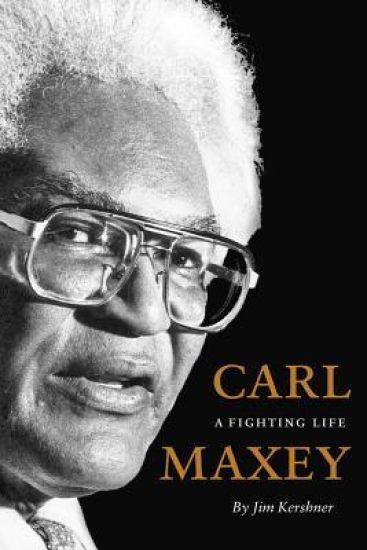
Carl Maxey was, in his own words, "a guy who started from scratch - black scratch." He was sent, at age five, to the scandal-ridden Spokane Children's Home and then kicked out at age eleven with the only other "colored" orphan. Yet Maxey managed to make a national name for himself, first as an NCAA championship boxer at Gonzaga University, and then as eastern Washington's first prominent black lawyer and a renowned civil rights attorney who always fought for the underdog.During the tumultuous civil rights and Vietnam War eras, Carl Maxey fought to break down color barriers in his hometown of Spokane and throughout the nation. As a defense lawyer, he made national headlines working on lurid murder cases and war-protest trials, including the notorious Seattle Seven trial. He even took his commitment to justice and antiwar causes to the political arena, running for the U.S. Senate against powerhouse senator Henry M. Jackson.In Carl Maxey: A Fighting Life, Jim Kershner explores the sources of Maxey's passions as well as the price he ultimately paid for his struggles. The result is a moving portrait of a man called a "Type-A Gandhi" by the New York Times, whose own personal misfortune spurred his lifelong, tireless crusade against injustice.