Kirjojen hintavertailu. Mukana 12 390 323 kirjaa ja 12 kauppaa.

Kirjahaku

Etsi kirjoja tekijän nimen, kirjan nimen tai ISBN:n perusteella.

1000 tulosta hakusanalla Carlo Rastrelli

Carlo Sigonio

Carlo Sigonio

William McCuaig

Princeton University Press
2014
pokkari
William McCuaig explores the intellectual turbulence of the late Italian Renaissance through a full examination of the work of one scholar--the humanist Carlo Sigonio (1523-84), whose insistence on critical methods for reconstructing the past revolutionized the study of ancient Roman history and the Italian Middle Ages. An internationally published scholar caught in the political tension of the Counter-Reformation, Sigonio was harshly censored by ecclesiastical authorities in Rome, who opposed his application of critical methods to the history of the post-classical world. McCuaig traces Sigonio's interactions with his opponents and supporters, both academic and clerical, to provide a fascinating and detailed portrait of a cultural milieu. On a general level, this study of Sigonio's works helps explain how the republican ethos of the Italian Renaissance came to an end and how the modern study of ancient history evolved in Italy and France after 1550. Among many topics, this book emphasizes Sigonio's contributions to social history, and points to parallels between the changing social stratifications of ancient Rome and those of early modern Italy. Interdisciplinary in its approach, the work also touches upon the history of education, political theory, the book trade, and historiography. Originally published in 1989. The Princeton Legacy Library uses the latest print-on-demand technology to again make available previously out-of-print books from the distinguished backlist of Princeton University Press. These editions preserve the original texts of these important books while presenting them in durable paperback and hardcover editions. The goal of the Princeton Legacy Library is to vastly increase access to the rich scholarly heritage found in the thousands of books published by Princeton University Press since its founding in 1905.
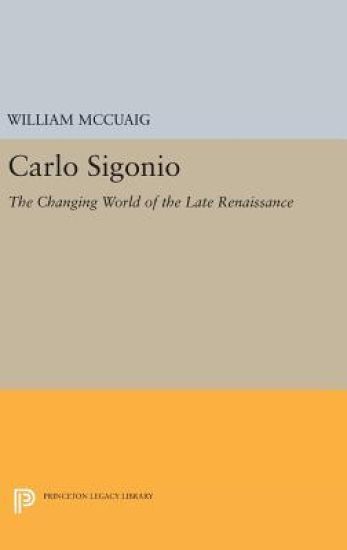
Carlo Sigonio

Carlo Sigonio

William McCuaig

Princeton University Press
2016
sidottu
William McCuaig explores the intellectual turbulence of the late Italian Renaissance through a full examination of the work of one scholar--the humanist Carlo Sigonio (1523-84), whose insistence on critical methods for reconstructing the past revolutionized the study of ancient Roman history and the Italian Middle Ages. An internationally published scholar caught in the political tension of the Counter-Reformation, Sigonio was harshly censored by ecclesiastical authorities in Rome, who opposed his application of critical methods to the history of the post-classical world. McCuaig traces Sigonio's interactions with his opponents and supporters, both academic and clerical, to provide a fascinating and detailed portrait of a cultural milieu. On a general level, this study of Sigonio's works helps explain how the republican ethos of the Italian Renaissance came to an end and how the modern study of ancient history evolved in Italy and France after 1550. Among many topics, this book emphasizes Sigonio's contributions to social history, and points to parallels between the changing social stratifications of ancient Rome and those of early modern Italy. Interdisciplinary in its approach, the work also touches upon the history of education, political theory, the book trade, and historiography. Originally published in 1989. The Princeton Legacy Library uses the latest print-on-demand technology to again make available previously out-of-print books from the distinguished backlist of Princeton University Press. These editions preserve the original texts of these important books while presenting them in durable paperback and hardcover editions. The goal of the Princeton Legacy Library is to vastly increase access to the rich scholarly heritage found in the thousands of books published by Princeton University Press since its founding in 1905.
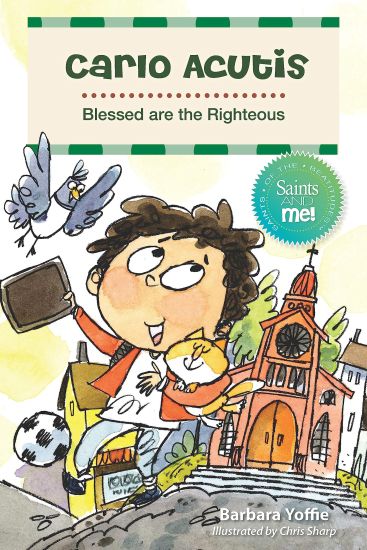
Carlo Acutis: Blessed Are the Righteous

Carlo Acutis: Blessed Are the Righteous

Barbara Yoffie

Liguori Publications
2023
nidottu
Carlo Acutis was an ordinary teenager who enjoyed soccer, computers, and video games, but he was also committed to Mass, confession, and prayer. He used his computer skills to help people understand the teachings of the Church and to teach about the Eucharist. He was beatified by Pope Francis on October 10, 2020.. Saints are real-life heroes of faith who inspire us to become more like Christ. In this series of beautifully illustrated books for early and young readers ages four to nine, these true stories come to life and connect the children of today with the virtues known as the Beatitudes, which Jesus spotlighted in his Sermon on the Mount.
Carlo Gozzi

Carlo Gozzi

John Louis DiGaetani

McFarland Co Inc
2014
pokkari
Italian playwright Carlo Gozzi (1720-1806) is best known for his plays that have famously been adapted into opera librettos. Puccini's final opera, Turandot, was based on a play by Gozzi. Prokofiev's The Love of Three Oranges is also based on a Gozzi play. Richard Wagner's first opera, Die Feen, is based on Gozzi's La Donna Serpente. Mozart's The Magic Flute contains many elements that are similar to Gozzi's plays. Gozzi is well known for reviving commedia dell'arte, an ancient form of Italian improvisational theater that had fallen out of favor before his time. This is the first full biography in English of the most successful playwright in 18th century Venice.
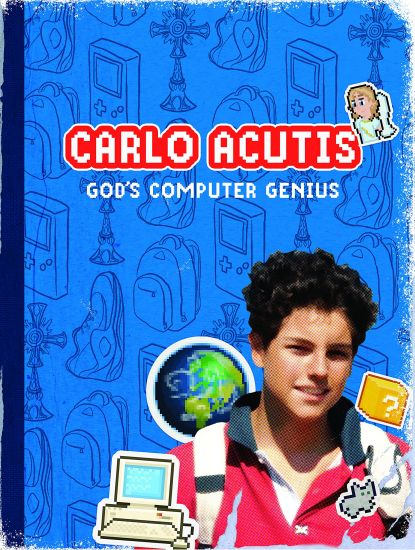
Carlo Acutis God's Computer Genius: God's Computer Genius
Set to become the first millennial saint, Blessed Carlo Acutis was a vibrant, faith-filled Italian teenager who loved technology and the Eucharist. This kid-friendly biography is the perfect introduction to Carlo's fascinating and moving story for children ages 8-11, with an engaging narrative, colorful illustrations and design, and fun and educational sidebars.
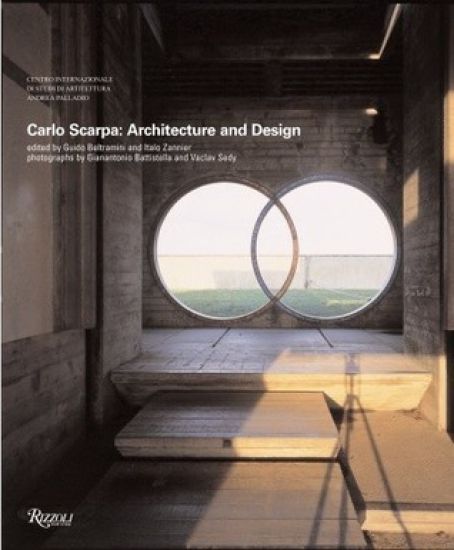
Carlo Scarpa

Carlo Scarpa

Rizzoli International Publications
2007
sidottu
Carlo Scarpa was a virtuoso of light, a master of detail, and a connoisseur of materials. Today he is known as a 20th-century master of architecture. To mark the first centenary of Scarpa's birth, all his works are presented here for the first time. The 250 illustrations cover all 58 of his structures, including the Castelvecchio Museum (Verona), the Olivetti showroom (Venice), and the Brion Tomb in San Vito d'Altivole (Treviso), as well as his important glass designs. The book includes essays by leading architects and architecture critics, offering an extensive overview of Scarpa's life as well as interpretations of his architecture. Known as the "Frank Lloyd Wright of Italy," Scarpa's decorative style has become a model for architects wishing to revive craft and luscious materials in the contemporary manner.
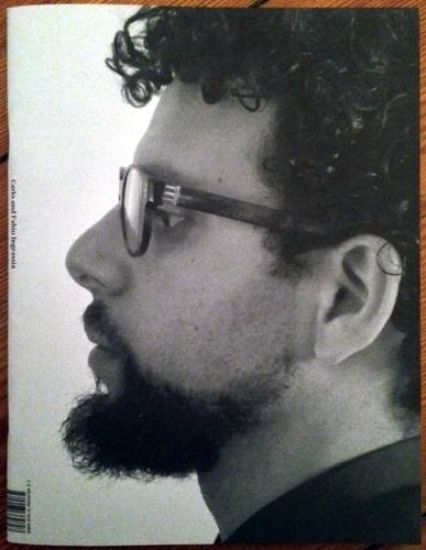
Carlo and Fabio Ingrassia

Carlo and Fabio Ingrassia

Carlo Ingrassia; Fabio Ingrassia

The Everyday Press
2016
nidottu
Carlo and Fabio Ingrassia (b. 1985 in Catania, Sicily) work with matter, time, biology, and philosophy. The peculiarity of the identical twins is to work simultaneously on the same precise and scientific body of work, because one is left-handed and the other, right-handed. This natural disposition illustrated most prominently in pastels created on the same paper support, allows each to contribute his own characteristic structure of sign and form in a jointly authored work. Drawing becomes sculpture and back again, in an art that investigates the nature of authorship, and identity, and the material basis for a conceptual practice. Contributors: Jonathan Monk, Valentina Bruschi, Claudio Crescentini, David Freedberg, Cornelia Lauf
Carlo Borromeo and the Sacred Image in Sixteenth-Century Italy

Carlo Borromeo and the Sacred Image in Sixteenth-Century Italy

Grace M. Harpster

Cambridge University Press
2026
sidottu
Scholars have long acknowledged that reforms after the Catholic Council of Trent (1545–63) represent a watershed in art history, yet they have failed to agree on whether, and how, they had any effect on art. In this study, Grace Harpster offers new insights on the impact of Catholic reform on early modern art. Exploring the social roles of images in late sixteenth-century Italy, she demonstrates that the pressures of Catholic reform increased, rather than limited, the authority of the image. Harpster approaches the topic through a focus on the zealous, peripatetic reformer Carlo Borromeo (1538–84), who implemented new ways to police and pray to sacred images after Trent. His actions demonstrate that Catholic reformers endorsed the image as a powerful object, truthteller, and miracle-worker. The diverse corpus of images on his itinerary, moreover, reveals the critical role of the sacred image in a formative religious and art historical moment.