

Kirjahaku
Etsi kirjoja tekijän nimen, kirjan nimen tai ISBN:n perusteella.
1000 tulosta hakusanalla Carlos Basualdo




The story is about a small concrete truck called Carlos, who is different from the other trucks. Carlos teaches us that our differences can often be our biggest strengths. Despite feeling 'left out' by the larger concrete trucks, Carlos is determined, focussed and ready to take on any challenge. This story teaches our kids the lesson that there will always be 'the bigger concrete trucks' criticising and doubting, but when you believe in yourself, you can achieve anything
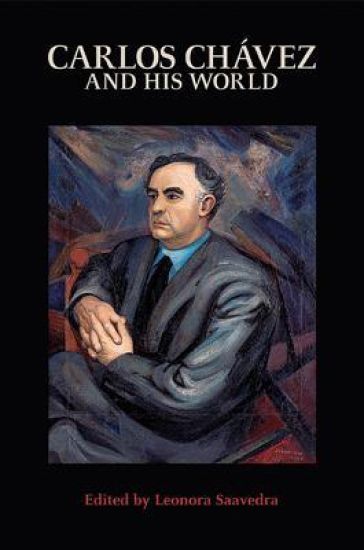
Carlos Chávez and His World
Princeton University Press
2015
sidottu
Carlos Chavez (1899-1978) is the central figure in Mexican music of the twentieth century and among the most eminent of all Latin American modernist composers. An enfant terrible in his own country, Chavez was an integral part of the emerging music scene in the United States in the 1920s. His highly individual style--diatonic, dissonant, contrapuntal--addressed both modernity and Mexico's indigenous past. Chavez was also a governmental arts administrator, founder of major Mexican cultural institutions, and conductor and founder of the Orquesta Sinfonica de Mexico. Carlos Chavez and His World brings together an international roster of leading scholars to delve into not only Chavez's music but also the history, art, and politics surrounding his life and work. Contributors explore Chavez's vast body of compositions, including his piano music, symphonies, violin concerto, late compositions, and Indianist music. They look at his connections with such artistic greats as Aaron Copland, Miguel Covarrubias, Henry Cowell, Silvestre Revueltas, and Paul Strand. The essays examine New York's modernist scene, Mexican symphonic music, portraits of Chavez by major Mexican artists of the period, including Diego Rivera and Rufino Tamayo, and Chavez's impact on El Colegio Nacional. A quantum leap in understanding Carlos Chavez and his milieu, this collection will stimulate further work in Latin American music and culture. The contributors are Ana R. Alonso-Minutti, Amy Bauer, Leon Botstein, David Brodbeck, Helen Delpar, Christina Taylor Gibson, Susana Gonzalez Aktories, Anna Indych-Lopez, Roberto Kolb-Neuhaus, James Krippner, Rebecca Levi, Ricardo Miranda, Julian Orbon, Howard Pollack, Leonora Saavedra, Antonio Saborit, Stephanie Stallings, and Luisa Vilar Paya. Bard Music Festival 2015: Carlos Chavez and His World Bard College August 7-9 and August 14-16, 2015
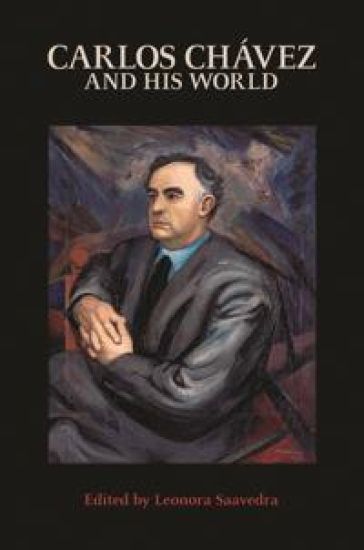
Carlos Chávez and His World
Princeton University Press
2015
pokkari
Carlos Chavez (1899-1978) is the central figure in Mexican music of the twentieth century and among the most eminent of all Latin American modernist composers. An enfant terrible in his own country, Chavez was an integral part of the emerging music scene in the United States in the 1920s. His highly individual style--diatonic, dissonant, contrapuntal--addressed both modernity and Mexico's indigenous past. Chavez was also a governmental arts administrator, founder of major Mexican cultural institutions, and conductor and founder of the Orquesta Sinfonica de Mexico. Carlos Chavez and His World brings together an international roster of leading scholars to delve into not only Chavez's music but also the history, art, and politics surrounding his life and work. Contributors explore Chavez's vast body of compositions, including his piano music, symphonies, violin concerto, late compositions, and Indianist music. They look at his connections with such artistic greats as Aaron Copland, Miguel Covarrubias, Henry Cowell, Silvestre Revueltas, and Paul Strand. The essays examine New York's modernist scene, Mexican symphonic music, portraits of Chavez by major Mexican artists of the period, including Diego Rivera and Rufino Tamayo, and Chavez's impact on El Colegio Nacional. A quantum leap in understanding Carlos Chavez and his milieu, this collection will stimulate further work in Latin American music and culture. The contributors are Ana R. Alonso-Minutti, Amy Bauer, Leon Botstein, David Brodbeck, Helen Delpar, Christina Taylor Gibson, Susana Gonzalez Aktories, Anna Indych-Lopez, Roberto Kolb-Neuhaus, James Krippner, Rebecca Levi, Ricardo Miranda, Julian Orbon, Howard Pollack, Leonora Saavedra, Antonio Saborit, Stephanie Stallings, and Luisa Vilar Paya. Bard Music Festival 2015: Carlos Chavez and His World Bard College August 7-9 and August 14-16, 2015
Carlos V en Francia
University of Pennsylvania Press
1963
sidottu
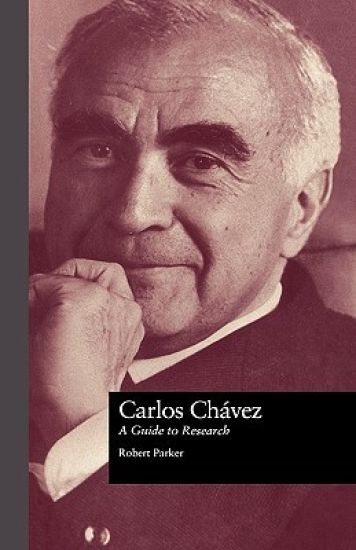
This book is the first extensive guide to the life, music, and writings of Carlos Ch vez (1899-1978), Mexico's most influential musician of the 20th century. The chapter on biography also presents a characterization of his compositional styles. This work provides a comprehensive listing of Ch vez's compositions and arrangements by genre and performance medium, and reviews the composer's own abundant writings on a broad range of musical subjects. Subsequent chapters address other authors' writings about his multi-faceted career as composer, conductor, teacher, and arts administrator that contributed to his international reputation. A chapter on Research Aids includes annotations of pertinent general reference works, catalogs, and collections of letters that will assist both the general reader and the music specialist.Introductory narratives illuminate the bibliographic entries in each section, and cross references facilitate access to literature that extends beyond a single relevant topic. The book includes three indexes, which cover compositions and arrangements, authors and titles, and subjects.

One of Mexico's foremost social and political chroniclers and its most celebrated cultural critic, Carlos Monsivais has read the pulse of his country over the past half century. The author of five collections of literary journalism pieces called cronicas, he is perhaps best known for his analytic and often satirical descriptions of Mexico City's popular culture. This comprehensive study of Monsivais's cronicas is the first book to offer an analysis of these works and to place Monsivais's work within a theoretical framework that recognizes the importance of his vision of Mexican culture. Linda Egan examines his ideology in relation to theoretical postures in Latin America, the United States, and Europe to cast Monsivais as both a heterodox pioneer and a mainstream spokesman. She then explores the poetics of the contemporary chronicle in Mexico, reviewing the genre's history and its relation to other narrative forms. Finally, she focuses on the canonical status of Monsivais's work, devoting a chapter to each of his five principal collections. Egan argues that the five books that are the focus of her study tell a story of ever-renewing suspense: we cannot know ?the end? until Monsivais is through constructing his literary project. Despite this, she observes, his work between 1970 and 1995 documents important discoveries in his search for causes, effects, and deconstructions of historical obstacles to Mexico's passage into modernity. While anthropologists and historians continue to introduce new paradigms for the study of Mexico's cultural space, Egan's book provides a reflexive twist by examining the work of one of the thinkers who first inspired such a critical movement. More than an appraisal of Monsivais, it offers a valuable discussion of theoretical issues surrounding the study of the chronicle as it is currently practiced in Mexico. It balances theory and criticism to lend new insight into the ties between Mexican society, social conscience, and literature.
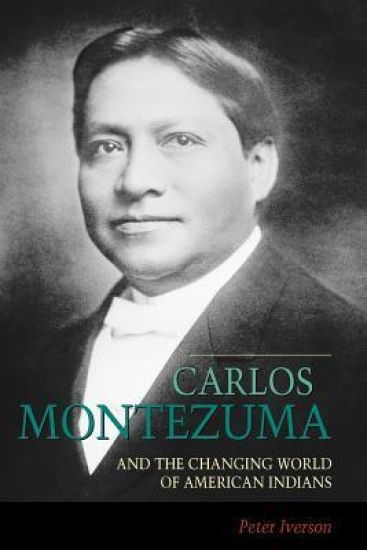
Carlos Montezuma and the Changing World of American Indians
Peter Iverson
University of New Mexico Press
1982
nidottu
Carlos Montezuma (1866-1923) was one of the great Native American crusaders for Indian rights in the early twentieth century. This biography by an authority on Southwest Indian history tells a dramatic story that sheds light both on Montezuma's career and on the movements he influenced.A southern Arizona Yavapai called Wassaja by his parents, Montezuma was captured by rival tribesman as a boy and sold to a white man who gave him the name by which we know him. Trained as a physician, his career as a reformer began when he went to work at the Carlisle Indian School, for here--in addition to serving as physician to the famous Carlisle football team--he was able to meet many of the people centrally involved in the administration of federal Indian policy.Shortly after the turn of the century Montezuma emerged as a national leader of Native American affairs. He helped to found the Society of American Indians and became increasingly involved in the affairs of the Fort McDowell Yavapai reservation, earning fame among pan-Indian activists and among his own people in Arizona and attaining notoriety in the BIA.

In Carlos Fuentes, Mexico, and Modernity, Van Delden argues that there is a fundamental paradox at the heart of Fuentes's vision of Mexico and in his role as novelist and critic in putting forth that vision. This paradox hinges on the tension between national identity and modernity. A significant internal conflict emerges in Fuentes's work from his attempt to stake out two different positions for himself, as experimental novelist and as politically engaged and responsible intellectual. Drawing from his fiction, literary essays, and political journalism, Van Delden places these tensions in Fuentes's work in relation to the larger debates about modernity and postmodernity in Latin America. He concludes that Fuentes is fundamentally a modernist writer, in spite of the fact that he occasionally gravitates toward the postmodernist position in literature and politics.Van Delden's thorough command of the subject matter, his innovative and sometimes iconoclastic conclusions, and his clear and engaging writing style make this study more than just an interpretation of Fuentes's work. Carlos Fuentes, Mexico, and Modernity offers nothing less than a comprehensive analysis of Fuentes's intellectual development in the context of modern Mexican political and cultural life.
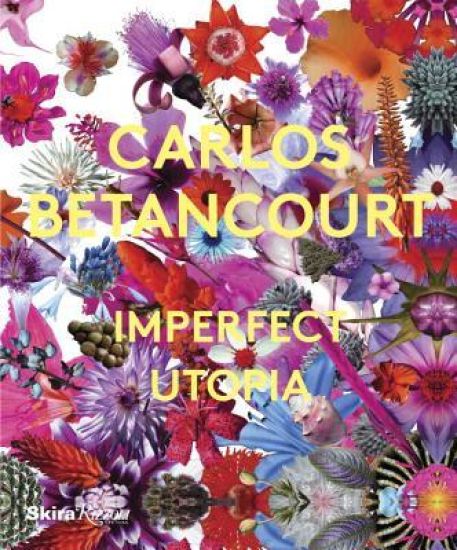
Mixed-media artist Carlos Betancourt and his influential studio, Imperfect Utopia, helped to launch the Miami art scene in the 1980’s. Betancourt’s oeuvre ?is a lush explosion of radiant, eccentric colors in which he explores the kaleidoscope (multi-racial, multi-lingual, trans-cultural) of Caribbean and American culture. His work alludes to issues of memory, beauty, identity, and communication. He bends the lines between art, photography, and nature in his photographs, collages, painting, installations, and conceptual pieces. Carlos Betancourt’s imagery reinterprets the past and present and offers it in a fresh context. He is inspired by Puerto Rico, Miami, and his extensive travels; also artist Ana Mendieta’s interventions in nature, Robert Rauschenberg’s assemblages, Andy Warhol’s perceptions, Neo Rauch compositions, and a Federico Fellini-esque cast of characters for his photo assemblages. This exuberant volume explores Betancourt’s body of work, with more than 250 images and texts by art critic Paul Laster, art history professor Robert Farris Thompson and United States Inaugural Poet, Richard Blanco. His artwork is included in the permanent collections of various museums, including The Metropolitan Museum of Art, The National Portrait Gallery, and The Smithsonian Institute.
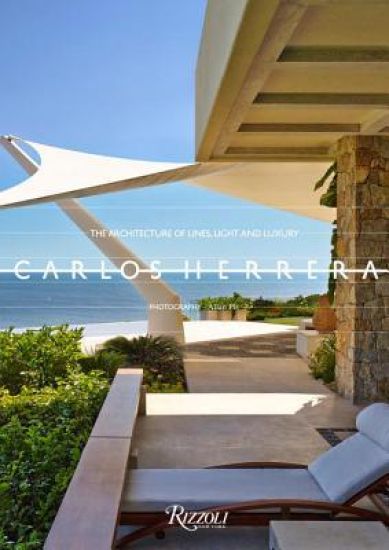
This beautiful monograph is the first book in English on Carlos Herrera, a prolific architect with built work throughout Mexico and Central America. Known for his modernist sensibilities and organic use of nature, Herrera is considered an important member of the Mexican architectural tradition. Here exquisite photographs of Herrera's work, sited in spectacular natural settings, are paired with original writings. Covering the wide range of Herrera's work to date, this volume is sure to appeal to those interested in such greats of Mexican Modernism as Ricardo Legorreta and Luis Barragan.
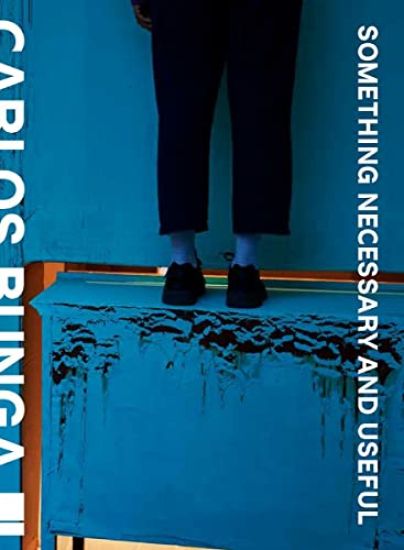
Published on the occasion of the new Whitechapel Gallery commission for 2020 by Portuguese artist Carlos Bunga, who creates dynamic site-specific ephemeral structures.Originally training as a painter, Carlos Bunga (b. 1976 Porto, lives and works in Barcelona) uses mass-produced materials such as cardboard, adhesive tape, and household paint to produce large-scale installations. Created in dialogue with the existing architectural space, these ephemeral structures recall theatre sets, architectural models, or temporary shelters, inviting viewers to rethink their physical and emotional experience of space and architecture. By giving equal importance to creation and destruction, he also evokes the fragile nature of urban structures, with the traces of his works bringing to mind dispossession and the symbolic potential of ruins.For his new commission at Whitechapel Gallery the artist will create two different painted structures that will shift during the course of exhibition, creating a new construction that can be seen from four viewing areas with other objects and works in conversation with the space. This gesture will be complemented by inviting dancers to respond to the space before and after its transfer.The fully illustrated catalogue will include new installation photography documenting the commission.

Celebrate purple in all its manifestations--in nature, art, interiors, and design "Carlos Mota's G: Forever Green is a scrapbook-like compilation dedicated to the universally loved color. . . . No subject too humble or shade too bright is off-limits for this well-traveled style guru. . . . Prepare for a jolt of serotonin with each turn of the page."--Luxe Interiors + Design Purple: the color of royalty, creativity, luxury, magic, and peace. It is seen in nature--lavender, plum, amethyst--and in fashion, jewelry, art, interiors, and architecture. Now, interior designer Carlos Mota follows his acclaimed book G: Forever Green with this new look at purple, a color that inspires creativity and mystery in cultures around the globe. From the sublime, varied hues of orchids, pansies, and hydrangea to Georgia O'Keeffe's Purple Petunia and Monet's paintings of water lilies in his garden at Giverny; from the brilliant feathers of purple hummingbirds and doves to stained-glass windows, royal robes, and velvet upholstery; from the palest lilac to the deepest violet, the variety of purple is astonishing. Illustrated with Mota's own photographs, taken as he has traveled the world, as well as images by renowned photographers, Purple Fever even features purple rooms by notable designers. This stunning volume is a testament to the power of purple to inspire, excite, and fascinate. Sustainability is integral to Vendome's publishing process. All materials used in our books are 100% FSC-certified and we are proud to be a brand partner of Trees for the Future (https: //trees.org), supporting global communities through sustainable land use. By planting trees, we help create thriving regional economies, robust food systems, and a healthier planet.
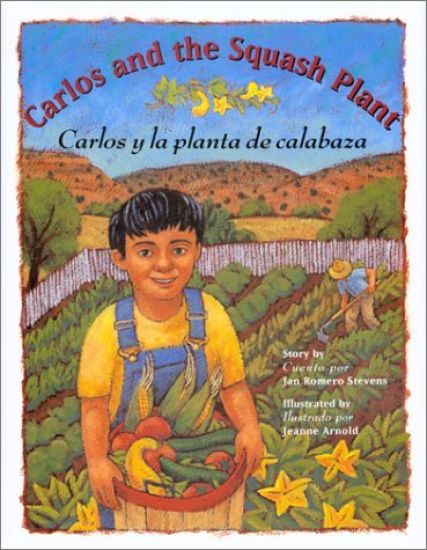
Carlos and the Squash Plant (Bilingual)
Jan Romero Stevens; Mary Fernald
Northland Publishing
2004
sidottu
Set in northern New Mexico, young Carlos refuses to take a bath after his farm work each day, until a plant sprouts in his ear.
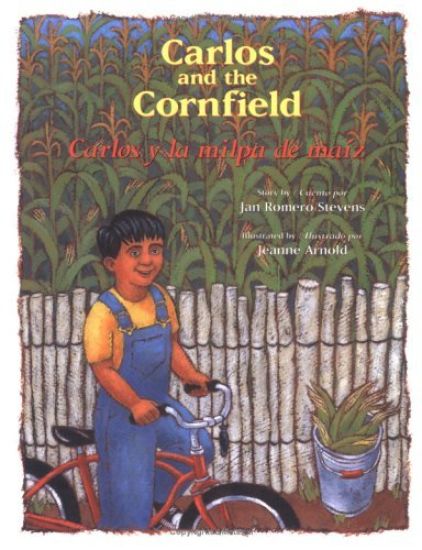
Carlos and the Cornfield / Carlos y La Milpa de Maiz
Jan Romero Stevens
Northland Publishing
2000
sidottu
In this delightful sequel to "Carlos y la Planta de Calabaza", Carlos is told by his father that "you reap what you sow". After some humorous experiences, Carlos comes to understand the rewards of hard work and learns a valuable lesson in listening. Full color.
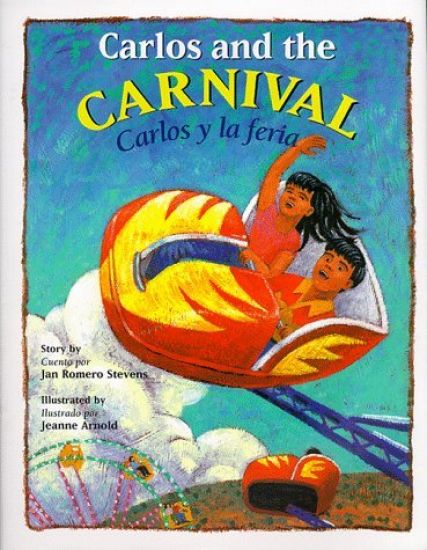
Carlos and the Carnival/Carlos y La Feria (Bilingual)
Jan Romero Stevens
Northland Publishing
2004
sidottu
As usual, Carlos is too proud to believe he can't handle things. The local carnival is colorful and exciting, and before long, his pockets are empty.
Carlos and the Cornfield / Carlos y la Milpa de Maiz
Jan Romero Stevens
Northland Publishing
1999
pokkari
When he sees the results of not following his father's instructions on the proper way to plant corn, a young boy tries to make things right.