Kirjojen hintavertailu. Mukana 11 244 527 kirjaa ja 12 kauppaa.

Kirjahaku

Etsi kirjoja tekijän nimen, kirjan nimen tai ISBN:n perusteella.

1000 tulosta hakusanalla Carlos Ezquerra

Carlos Lacerda, Brazilian Crusader

Carlos Lacerda, Brazilian Crusader

John W. F. Dulles

University of Texas Press
2010
pokkari
Playwright, journalist, and spectacularly successful governor, Carlos Lacerda was Brazil's foremost orator in the 20th century and its most controversial politician. He might have become president in the 1960s had not the military taken over. In the words of eminent historian José Honório Rodrigues, "No one person influenced the Brazilian historical process as much as Carlos Lacerda from 1945 to 1968."In this volume, the first of a two-volume biography, Professor Dulles paints a portrait of a rebellious youth, who had the willfulness of his prominent father and who crusaded for Communism before becoming its most outspoken foe. Recalling Lacerda's rallying cry, "Brazil must be shaken up," Dulles traces the career of the journalist whose unsparing attacks on the men in power led authorities to imprison him and employ thugs who pummeled him physically. The story covers events in which Lacerda helped alter Brazil, such as the redemocratization in 1945 and his revelation of scandals in high places in the early 1950s. An unsuccessful attempt by government men to murder him in 1954 led to the suicide of President Getulio Vargas in 1954.Lacerda's spirited oratory helped him become Brazil's most popular congressman, but it scared the rulers of Brazil and they prohibited the broadcast of his speeches after he returned from exile in 1956. Their effort to deprive him of his mandate stirred the entire nation and culminated in one of the most dramatic sessions ever held in the Chamber of Deputies.Dulles, who knew Lacerda well and had access to his papers, sheds light on Lacerda the man, ardent in courtship and in all his undertakings, intellectually restless, and scornful of routine and mediocrity. Lacerda had a vitriolic pen that made bitter enemies, but, as disclosed in these pages, his courage and incorruptibility attracted an enthusiastic following, evident in the landslide election victories that brought him seats on Rio de Janeiro's city council and in the federal Congress.
Carlos Lacerda, Brazilian Crusader

Carlos Lacerda, Brazilian Crusader

John W. F. Dulles

University of Texas Press
1996
pokkari
From reviews of Volume I:"Brazilian Crusader is no doubt the best biography yet produced on Lacerda and the second volume . . . is certainly worth waiting for."-Luso-Brazilian ReviewJournalist and spectacularly successful governor, Carlos Lacerda was Brazil's foremost orator in the 20th century and its most controversial politician. He might have become president in the 1960s had not the military taken over.In the first volume, John F. W. Dulles paints a portrait of a rebellious youth, who had the willfulness of his prominent father and who crusaded for Communism before becoming its most outspoken foe. Recalling Lacerda's rallying cry, "Brazil must be shaken up," Dulles traces the career of the journalist whose unsparing attacks on the men in power led authorities to imprison him and employ thugs who pummeled him physically. Lacerda's spirited oratory helped him become Brazil's most popular congressman, but it scared the rulers of Brazil, who prohibited the broadcast of his speeches after he returned from exile in 1956. Their effort to deprive him of his mandate stirred the entire nation and culminated in one of the most dramatic sessions ever held in the Chamber of Deputies.In the second and final volume, Dulles explores the political and private life of Lacerda from 1960, when he became governor of Brazil's Guanabara state, until his death in 1977. Dulles focuses particularly on the years 1960 to 1968, in which Lacerda played a central role in some of the most drastic political changes that Brazil has experienced in this century.Lacerda's story ranges from the headlines constantly generated by his political attacks and journalistic sensationalism to private moments of personal tragedy. In telling his story, Dulles draws on hundreds of interviews, as well as extensive research in press archives, Lacerda's public papers, and the private collections of Lacerda's family and associates. This material paints a compelling portrait of an honest administrator who alienated top figures in politics, the press, and the military.
Carlos Fuentes

Carlos Fuentes

University of Texas Press
1982
pokkari
Carlos Fuentes is a master of modern world literature. With the translation of his major works into English and other languages, his reputation has surpassed the boundaries of his native Mexico and of Hispanic literature and has become international. Now each new novel stimulates popular and scholarly reviews in periodicals from Mexico City and Buenos Aires to Paris and New York. Carlos Fuentes: A Critical View is the first full-scale examination in English of this major writer's work. The range and diversity of this critical view are remarkable and reflect similar characteristics in the creative work of Carlos Fuentes, a man of formidable intellectual energy and curiosity. The whole of Fuentes' work is encompassed by Luis Leal as he explores history and myth in the writer's narrative. Insightful new views of single works are provided by other well-known scholars, such as Roberto González Echevarría, writing on Fuentes' extraordinary Terra Nostra, and Margaret Sayers Peden, exploring Distant Relations, for which she served as authorized translator. Here too are fresh approaches to Fuentes' other novels, among them Where the Air Is Clear, Aura, and The Hydra Head, as well as an examination by John Brushwood of the writer's short fiction and a look by Merlin Forster at Fuentes the playwright. Lanin Gyurko reaches outside Fuentes' canon for his fascinating study of the influence of Orson Welles' Citizen Kane on The Death of Artemio Cruz. Manuel Durán and George Wing consider Fuentes in his role as critic of both literature and art. Carlos Fuentes: A Critical View has been prepared with the writer's many English-speaking readers in mind. Quotations are most frequently from standard, readily available English translations of Fuentes' works. A valuable chronology of the writer's life rounds off the volume.
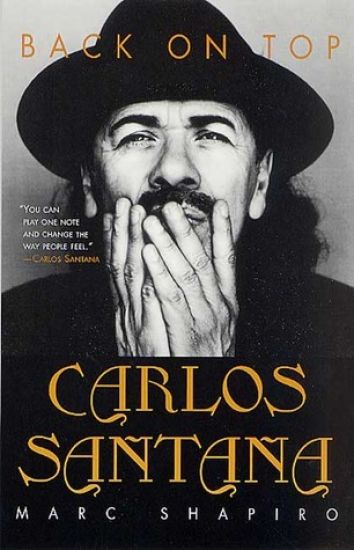
Carlos Santana: Back on Top

Carlos Santana: Back on Top

Marc Shapiro

St. Martin's Griffin
2002
nidottu
Carlos Santana took the music world by storm back in 1969 with his thrilling performance at the Woodstock festival. He was the first guitarist to skillfully blend fiery rock riffs with Latin, blues and sensuous Afro-Cuban rhythms to create a unique and unforgettable sound. His vision to create innovative melodies has earned him a magnitude of critical praise and acclaim over his illustrious career. But, the road to success has been a rocky, uphill climb. The middle child of seven children, Carlos Santana was born on July 20, 1947 in a tiny Mexican village where the homes were comprised of brick and mud, and there was no running water or lights. But, what his parents couldn't give in material wealth, they heaped upon their children in love. It was after the family moved to Tijuana that twelve year old Carlos developed his talent for the guitar and his reputation as a formidable musician spread. In 1968 Columbia Records signed on the Santana Blues Band and they began in earnest to work on an album that would include such popular Latin and soul favorites as "Black Magic Woman," "Evil Ways," and "Oye Como Va". On August 15, 1969, the Santana band was given the opportunity to play Woodstock before the release of their first album and this performance would forever be etched in fans' minds as a key moment in rock history. The Santana Blues Bands went from obscurity to instant recognition. Shortly thereafter, rumblings of discontent were echoed within the group with the volatile mixture of drug abuse, personality clashes, and the frustrations over the musical direction the band, ultimately leading to the demise of the group. Following the breakup, Carlos Santana delved deeper into the meditative arts and spirituality. The succession of albums that followed were greeted with critical acclaim, but moderate success. In the late 90's, Santana begin working on a new album under the creative direction of Clive Davis, head of Arista Records. In a brilliant union of collaborating with younger artists as Lauryn Hill, Wyclef Jean, and Rob Thomas, the album, Supernatural was a commercial smash. It sold over thirteen million copies, and appealed to both the baby boomers and the teenage crowd. Carlos Santana became the star of the 2000 Grammys, and Supernatural won several awards including, Best Rock Album of the Year, Song of the Year for "Smooth", and Album of the Year. With a career that spans three decades, Carlos Santana has proven that talent, determination, and passion are the keys to longevity in a business that is obsessed with youth and beauty. Against the odds, he has defied the rule of convention and made an incredible comeback. His story is timeless, inspirational, and he has undoubtedly proven himself to be the king of the guitar.
Carlos Santana

Carlos Santana

Norman Weinstein

Greenwood Press
2009
sidottu
As eclectic and paradoxical as its subject, this is the first and only book about Carlos Santana that reveals the full sweep of his musical odyssey. Carlos Santana: A Biography explores the life and music of this extraordinary guitarist, ranging from his professional beginnings—his first regular gig was at a Tijuana strip club—and early success in San Francisco to the definitive songs and albums of the 1970s, the commercial resurgence with 1999's Supernatural, his induction into the Rock and Roll Hall of Fame, and his current work with producer Bill Laswell. Unlike other biographies, this book offers a comprehensive look at Santana's transitions through a variety of musical styles beyond rock, including blues, salsa, jazz, and world music. It also portrays Santana as very much a child of the eclectic musical culture of the 1960s, as well as showing the profound influence of the New Age movement on Santana's life and music.
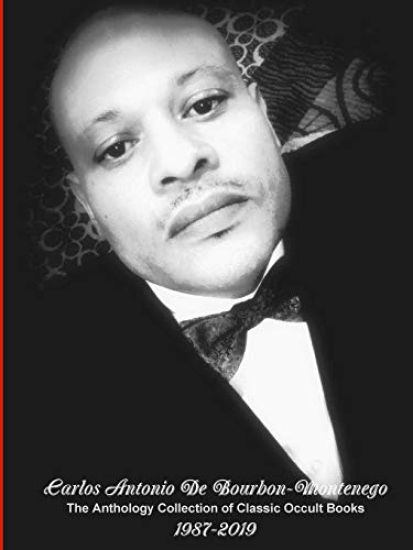
2019 Winter/Spring Book Catalog of Carlos de Bourbon-Montenegro

2019 Winter/Spring Book Catalog of Carlos de Bourbon-Montenegro

Carlos Antonio De Bourbon-Montenegro

Lulu.com
2019
pokkari
SANCTUS ILLUMINATUS PUBLICATIONS - 2019 WINTER/SPRING CATALOG OF BOOKS WRITTEN BY CARLOS ANTONIO DE BOURBON-MONTENEGRO. All of the following Occult books, Grimoires and Magick Instruction Books were written from 1987-2019 by the author, Carlos Antonio De Bourbon-Montenegro, a Ceremonial Magick Sorcerer. The author's books represent the findings of a 30 year sacred journey and his spiritual observations of a colored world of darkness that is a surreal dimension which holds the secrets of the Universe.
Carlos Villa

Carlos Villa

University of California Press
2022
sidottu
This expansive catalogue illuminates the social and cultural roots—and global importance—of iconic Filipino American artist and educator Carlos Villa’s artwork and career. Carlos Villa has been described as the preeminent Filipino American artist—a legend in artistic circles for his groundbreaking approaches and his influence on countless artists—but he remains little known to many fans and scholars of modern and contemporary art. Carlos Villa: Worlds in Collision is the first museum retrospective of his work, presented at the San Francisco Art Institute and the Asian Art Museum of San Francisco. Villa was trained at the San Francisco Art Institute in the 1950s as an abstract expressionist, and over time he transformed his practice to address issues of ethnic and cultural diversity. He concurrently assumed a leadership role in “Third World” and “multicultural” international art movements, and his large-scale works reference non-Western traditions, including tattoo, scarification, ritual, and ceremony. He was also an important theorist, curator, and organizer of public forums that he called “actions.” This book traces the arc of his career from 1969 until his death in 2013, with emphasis on his feathered works from the 1970s, as well as later works that address aspects of the history of Filipinos in the United States. It illuminates the social and cultural roots—and global importance—of Villa’s art and teaching career as he sought to forge a new kind of art-world inclusion that reflected his own experience, commitment to diversity, and boundary-bending imagination. Published in association with the San Francisco Art Institute. Exhibition dates: Newark Museum of Art: February 8, 2022–May 8, 2022 San Francisco Art Institute & Asian Art Museum: June 17, 2022–Fall 2022
Carlos the Ant

Carlos the Ant

John Ellsworth

John Ellsworth Author LLC
2019
pokkari
Start With a Bank Robber and a Legal Thriller Carlos has a sick daughter and needs money. He's also an upstanding citizen who pays his taxes, puts in his forty hours, doesn't drink and carouse, and loves his wife. Still...he has nowhere else to turn. So Carlos gets money the old-fashioned way--he robs banks. The money comes pouring in but then a new man joins the crew and everything tumbles downhill. Criminal charges for armed robbery are brought against Carlos in several states and he needs a heavy hitter to defend him. Carlos calls Michael Gresham for help and the lawyer comes to his aid. But it is going to be the meanest case of Michael's career, as the prosecutor is a woman who means to jab the death needle in Carlos' arm and watch him die. And she has the legal chops to do just that. But she has problems of her own--legal problems, big ones. Add Just the Right Amount of Courtroom Thrills and Financial Intrigue Full of bank robberies and courtroom drama, this legal financial thriller is sure to satisfy even the most ardent Michael Gresham fan as the trial lawyer walks into a courtroom where the toughest district attorney and the guiltiest client on the West Coast await him.
Carlos The Cold Cactus

Carlos The Cold Cactus

Sarah Hauer

Grace and Garden
2020
sidottu
In in the Sonoran Desert of Arizona, lives Carlos and Bella. Neighbors on the same saguaro cactus. Bella is a happy saguaro flower and Carlos is grumpy and always cold Bella with the help of her desert friends, takes Carlos on a wild adventure to Alaska, where he really does learn what it is to be cold. He ends up learning even more about friendships and neighbors.
Carlos the Concrete Truck

Carlos the Concrete Truck

Anton J Bialylew

Concrete by Bayleaf
2022
sidottu
The story is about a small concrete truck called Carlos, who is different from the other trucks. Carlos teaches us that our differences can often be our biggest strengths. Despite feeling 'left out' by the larger concrete trucks, Carlos is determined, focussed and ready to take on any challenge. This story teaches our kids the lesson that there will always be 'the bigger concrete trucks' criticising and doubting, but when you believe in yourself, you can achieve anything
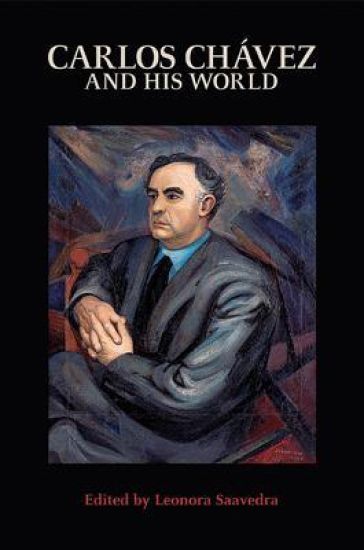
Carlos Chávez and His World

Carlos Chávez and His World

Princeton University Press
2015
sidottu
Carlos Chavez (1899-1978) is the central figure in Mexican music of the twentieth century and among the most eminent of all Latin American modernist composers. An enfant terrible in his own country, Chavez was an integral part of the emerging music scene in the United States in the 1920s. His highly individual style--diatonic, dissonant, contrapuntal--addressed both modernity and Mexico's indigenous past. Chavez was also a governmental arts administrator, founder of major Mexican cultural institutions, and conductor and founder of the Orquesta Sinfonica de Mexico. Carlos Chavez and His World brings together an international roster of leading scholars to delve into not only Chavez's music but also the history, art, and politics surrounding his life and work. Contributors explore Chavez's vast body of compositions, including his piano music, symphonies, violin concerto, late compositions, and Indianist music. They look at his connections with such artistic greats as Aaron Copland, Miguel Covarrubias, Henry Cowell, Silvestre Revueltas, and Paul Strand. The essays examine New York's modernist scene, Mexican symphonic music, portraits of Chavez by major Mexican artists of the period, including Diego Rivera and Rufino Tamayo, and Chavez's impact on El Colegio Nacional. A quantum leap in understanding Carlos Chavez and his milieu, this collection will stimulate further work in Latin American music and culture. The contributors are Ana R. Alonso-Minutti, Amy Bauer, Leon Botstein, David Brodbeck, Helen Delpar, Christina Taylor Gibson, Susana Gonzalez Aktories, Anna Indych-Lopez, Roberto Kolb-Neuhaus, James Krippner, Rebecca Levi, Ricardo Miranda, Julian Orbon, Howard Pollack, Leonora Saavedra, Antonio Saborit, Stephanie Stallings, and Luisa Vilar Paya. Bard Music Festival 2015: Carlos Chavez and His World Bard College August 7-9 and August 14-16, 2015
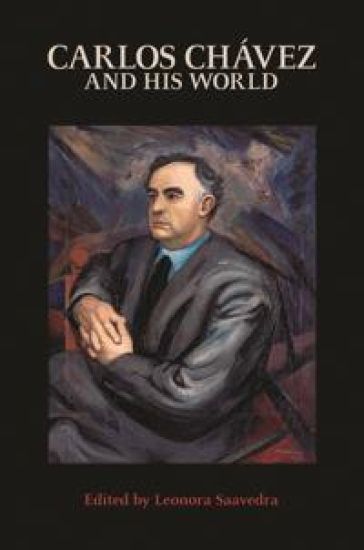
Carlos Chávez and His World

Carlos Chávez and His World

Princeton University Press
2015
pokkari
Carlos Chavez (1899-1978) is the central figure in Mexican music of the twentieth century and among the most eminent of all Latin American modernist composers. An enfant terrible in his own country, Chavez was an integral part of the emerging music scene in the United States in the 1920s. His highly individual style--diatonic, dissonant, contrapuntal--addressed both modernity and Mexico's indigenous past. Chavez was also a governmental arts administrator, founder of major Mexican cultural institutions, and conductor and founder of the Orquesta Sinfonica de Mexico. Carlos Chavez and His World brings together an international roster of leading scholars to delve into not only Chavez's music but also the history, art, and politics surrounding his life and work. Contributors explore Chavez's vast body of compositions, including his piano music, symphonies, violin concerto, late compositions, and Indianist music. They look at his connections with such artistic greats as Aaron Copland, Miguel Covarrubias, Henry Cowell, Silvestre Revueltas, and Paul Strand. The essays examine New York's modernist scene, Mexican symphonic music, portraits of Chavez by major Mexican artists of the period, including Diego Rivera and Rufino Tamayo, and Chavez's impact on El Colegio Nacional. A quantum leap in understanding Carlos Chavez and his milieu, this collection will stimulate further work in Latin American music and culture. The contributors are Ana R. Alonso-Minutti, Amy Bauer, Leon Botstein, David Brodbeck, Helen Delpar, Christina Taylor Gibson, Susana Gonzalez Aktories, Anna Indych-Lopez, Roberto Kolb-Neuhaus, James Krippner, Rebecca Levi, Ricardo Miranda, Julian Orbon, Howard Pollack, Leonora Saavedra, Antonio Saborit, Stephanie Stallings, and Luisa Vilar Paya. Bard Music Festival 2015: Carlos Chavez and His World Bard College August 7-9 and August 14-16, 2015
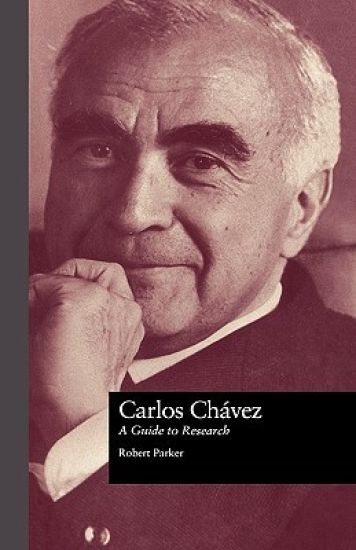
Carlos Chavez

Carlos Chavez

Robert L. Parker

CRC Press Inc
1998
sidottu
This book is the first extensive guide to the life, music, and writings of Carlos Ch vez (1899-1978), Mexico's most influential musician of the 20th century. The chapter on biography also presents a characterization of his compositional styles. This work provides a comprehensive listing of Ch vez's compositions and arrangements by genre and performance medium, and reviews the composer's own abundant writings on a broad range of musical subjects. Subsequent chapters address other authors' writings about his multi-faceted career as composer, conductor, teacher, and arts administrator that contributed to his international reputation. A chapter on Research Aids includes annotations of pertinent general reference works, catalogs, and collections of letters that will assist both the general reader and the music specialist.Introductory narratives illuminate the bibliographic entries in each section, and cross references facilitate access to literature that extends beyond a single relevant topic. The book includes three indexes, which cover compositions and arrangements, authors and titles, and subjects.
CARLOS MONSIVÁIS

CARLOS MONSIVÁIS

The University of Arizona Press

University of Arizona Press
2001
sidottu
One of Mexico's foremost social and political chroniclers and its most celebrated cultural critic, Carlos Monsivais has read the pulse of his country over the past half century. The author of five collections of literary journalism pieces called cronicas, he is perhaps best known for his analytic and often satirical descriptions of Mexico City's popular culture. This comprehensive study of Monsivais's cronicas is the first book to offer an analysis of these works and to place Monsivais's work within a theoretical framework that recognizes the importance of his vision of Mexican culture. Linda Egan examines his ideology in relation to theoretical postures in Latin America, the United States, and Europe to cast Monsivais as both a heterodox pioneer and a mainstream spokesman. She then explores the poetics of the contemporary chronicle in Mexico, reviewing the genre's history and its relation to other narrative forms. Finally, she focuses on the canonical status of Monsivais's work, devoting a chapter to each of his five principal collections. Egan argues that the five books that are the focus of her study tell a story of ever-renewing suspense: we cannot know ?the end? until Monsivais is through constructing his literary project. Despite this, she observes, his work between 1970 and 1995 documents important discoveries in his search for causes, effects, and deconstructions of historical obstacles to Mexico's passage into modernity. While anthropologists and historians continue to introduce new paradigms for the study of Mexico's cultural space, Egan's book provides a reflexive twist by examining the work of one of the thinkers who first inspired such a critical movement. More than an appraisal of Monsivais, it offers a valuable discussion of theoretical issues surrounding the study of the chronicle as it is currently practiced in Mexico. It balances theory and criticism to lend new insight into the ties between Mexican society, social conscience, and literature.
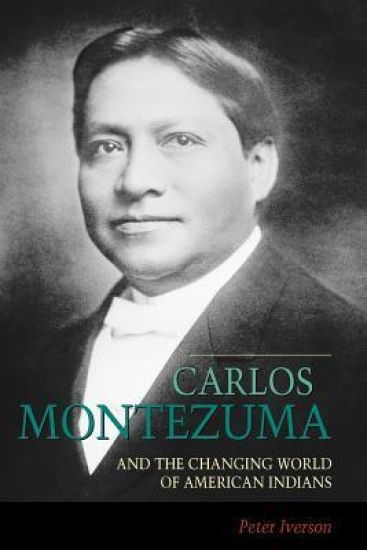
Carlos Montezuma and the Changing World of American Indians

Carlos Montezuma and the Changing World of American Indians

Peter Iverson

University of New Mexico Press
1982
nidottu
Carlos Montezuma (1866-1923) was one of the great Native American crusaders for Indian rights in the early twentieth century. This biography by an authority on Southwest Indian history tells a dramatic story that sheds light both on Montezuma's career and on the movements he influenced.A southern Arizona Yavapai called Wassaja by his parents, Montezuma was captured by rival tribesman as a boy and sold to a white man who gave him the name by which we know him. Trained as a physician, his career as a reformer began when he went to work at the Carlisle Indian School, for here--in addition to serving as physician to the famous Carlisle football team--he was able to meet many of the people centrally involved in the administration of federal Indian policy.Shortly after the turn of the century Montezuma emerged as a national leader of Native American affairs. He helped to found the Society of American Indians and became increasingly involved in the affairs of the Fort McDowell Yavapai reservation, earning fame among pan-Indian activists and among his own people in Arizona and attaining notoriety in the BIA.