

Kirjahaku
Etsi kirjoja tekijän nimen, kirjan nimen tai ISBN:n perusteella.
1000 tulosta hakusanalla Carol J. Adams

Carol J. Lewis Shimmering Poet: Volume1: Published Poems
Billy Brown Ph. D.
Createspace Independent Publishing Platform
2018
nidottu
Carol J. Lewis (1928-2017) was born and raised in Chicago, moved to California and then to New Mexico. Her poetry covers over 64 years of her writing, which was published in over 70 issues of poetry journals, anthologies, and a chap book. This book, published posthumously, celebrates her 90th birthday and contains all of her published poetry. The editor, a personal acquaintance of the poet, feels that Carol Lewis was one of the finest poets in Albuquerque. "... this book of poems ... has all the right ingredients: honesty, truth, emotion ... " (Tim Anderson, poet and publisher).
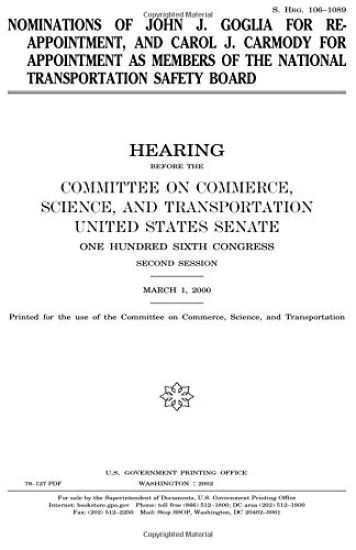
Nominations of John J. Goglia for reappointment, and Carol J. Carmody for appointment as members of the National Transportation Safety Board
United States Senate; Committee On Commerce; United States Congress
Createspace Independent Publishing Platform
2018
nidottu
Nominations of John J. Goglia for reappointment, and Carol J. Carmody for appointment as members of the National Transportation Safety Board: hearing before the Committee on Commerce, Science, and Transportation, United States Senate, One Hundred Sixth Congress, second session, March 1, 2000.

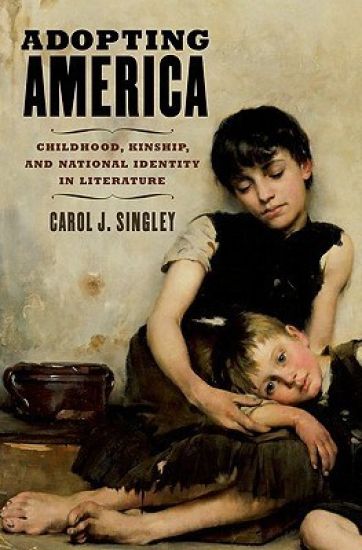
American literature abounds with orphans who experience adoption or placements that resemble adoption. These stories do more than recount adventures of children living away from home. They tell an American story of family and national identity. In narratives from the seventeenth to the early twentieth century, adoption functions as narrative event and trope that describes the American migratory experience, the impact of Calvinist faith, and the growth of democratic individualism. The roots of literary adoption appear in the discourse of Puritan settlers, who ambivalently took leave of their birth parent country and portrayed themselves as abandoned children. Believing they were chosen children of God, they also prayed for spiritual adoption and emulated God's grace by extending adoption to others. Nineteenth-century adoption literature develops from this notion of adoption as salvation and from simultaneous attachments to the Old World and the New. In domestic fiction of the mid-nineteenth century, adoption also reflects a focus on nurture in childrearing, increased mobility in the nation, and middle-class concerns over immigration and urbanization, assuaged when the orphan finds a proper, loving home. Adoption signals fresh starts and the opportunity for success without genealogical constraints, especially for white males, but inflected by gender and racial biases, it often entails dependency for girls and children of color. A complex signifier of difference, adoption gives voice to sometimes contradictory calls to origins and fresh beginning; to feelings of worthiness and unworthiness. In writings from Cotton Mather to Edith Wharton, it both replicates and offers an alternative to the genealogical norm, evoking ambivalence as it shapes national mythologies.
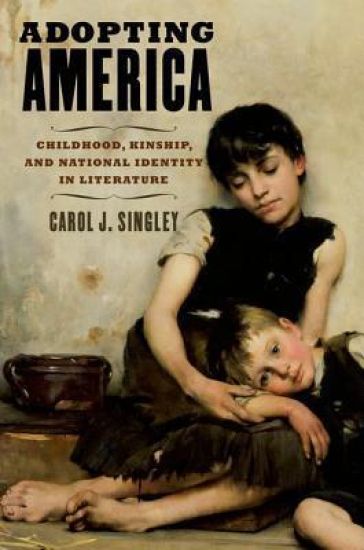
American literature abounds with orphans who experience adoption or placements that resemble adoption. These stories do more than recount adventures of children living away from home. They tell an American story of family and national identity. In narratives from the seventeenth to the early twentieth century, adoption functions as narrative event and trope that describes the American migratory experience, the impact of Calvinist faith, and the growth of democratic individualism. The roots of literary adoption appear in the discourse of Puritan settlers, who ambivalently took leave of their birth parent country and portrayed themselves as abandoned children. Believing they were chosen children of God, they also prayed for spiritual adoption and emulated God's grace by extending adoption to others. Nineteenth-century adoption literature develops from this notion of adoption as salvation and from simultaneous attachments to the Old World and the New. In domestic fiction of the mid-nineteenth century, adoption also reflects a focus on nurture in childrearing, increased mobility in the nation, and middle-class concerns over immigration and urbanization, assuaged when the orphan finds a proper, loving home. Adoption signals fresh starts and the opportunity for success without genealogical constraints, especially for white males, but inflected by gender and racial biases, it often entails dependency for girls and children of color. A complex signifier of difference, adoption gives voice to sometimes contradictory calls to origins and fresh beginning; to feelings of worthiness and unworthiness. In writings from Cotton Mather to Edith Wharton, it both replicates and offers an alternative to the genealogical norm, evoking ambivalence as it shapes national mythologies.

Colin McPhee was a performer, writer, and pioneer among Western composers in turning to Asia for inspiration. A close friend of Aaron Copland, Carlos Chavez, Henry Cowell, and Virgil Thomson, he played a vital role in new music activities in New York in the 1920s. But his most important accomplishments emerged from his devotion to the music of Bali. After hearing rare recordings of the Balinese gamelan--a percussion orchestra with delicately layered textures and clangorous sounds--McPhee traveled to Bali to learn more. There, he worked closely with Western anthropologists like Margaret Mead and Gregory Bateson. McPhee became a devoted and meticulous chronicler of Balinese musical culture in classic texts like Music of Bali while integrating Balinese and Western music into an imaginative hybrid that anticipated work by John Cage, Lou Harrison, and Steve Reich.A fascinating portrait of an unconventional artist-scholar, Colin McPhee evocatively looks at key issues in composition and ethnomusicology while describing the profound experience of a composer striving to comprehend a new musical language.
This book offers fresh insight into women’s mastery of technologies commonly associated with men, with important implications for institutional efforts to identify and support technical proficiency among girls and women. The work is structured across five original case studies featuring: breast cancer survivors in Newfoundland who constructed a wooden dragon boat using hand and power tools; Egyptian women who used information and communication technologies for political action during the Revolution of 2011; pioneer female audio engineers in the United States working in live concert and studio venues; U.S. female commercial airline pilots who mastered the complexity of flying large aircraft; and a university-educated woman working in sewer maintenance and repair for the City of Detroit in the 1970s. The case studies capture women’s own voices and present a range of historical and geographic locations. A major contribution of this volume is the multidisciplinary analytical framework used to explain women’s motivation to engage with non-traditional technologies, the role of peer and political support in encouraging persistence, and informal as well as formal knowledge and skill acquisition. Above all, it is a story of women's empowerment - individually and collectively. This is a unique book suitable for undergraduates and graduates in the fields of Women's and Gender Studies; Science, Technology and Society (STS) Studies; Engineering Education; and Adult Education.
Masculinities in Forests: Representations of Diversity demonstrates the wide variability in ideas about, and practice of, masculinity in different forests, and how these relate to forest management. While forestry is widely considered a masculine domain, a significant portion of the literature on gender and development focuses on the role of women, not men. This book addresses this gap and also highlights how there are significant, demonstrable differences in masculinities from forest to forest. The book develops a simple conceptual framework for considering masculinities, one which both acknowledges the stability or enduring quality of masculinities, but also the significant masculinity-related options available to individual men within any given culture. The author draws on her own experiences, building on her long-term experience working globally in the conservation and development worlds, also observing masculinities among such professionals. The core of the book examines masculinities, based on long-term ethnographic research in the rural Pacific Northwest of the US; Long Segar, East Kalimantan; and Sitiung, West Sumatra, both in Indonesia. The author concludes by pulling together the various strands of masculine identities and discussing the implications of these various versions of masculinity for forest management. This book will be essential reading for students and scholars of forestry, gender studies and conservation and development, as well as practitioners and NGOs working in these fields.The Open Access version of this book, available at https://www.taylorfrancis.com/books/e/9780367815776, has been made available under a Creative Commons Attribution-Non Commercial-No Derivatives 4.0 license.
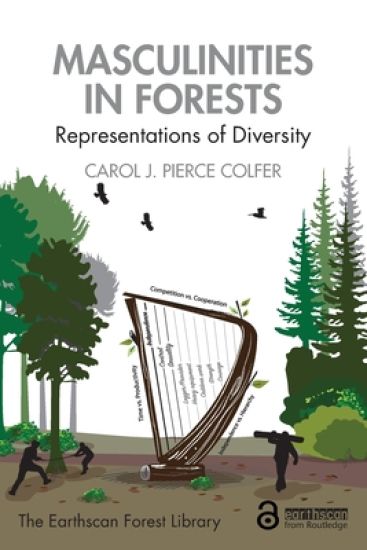
Masculinities in Forests: Representations of Diversity demonstrates the wide variability in ideas about, and practice of, masculinity in different forests, and how these relate to forest management. While forestry is widely considered a masculine domain, a significant portion of the literature on gender and development focuses on the role of women, not men. This book addresses this gap and also highlights how there are significant, demonstrable differences in masculinities from forest to forest. The book develops a simple conceptual framework for considering masculinities, one which both acknowledges the stability or enduring quality of masculinities, but also the significant masculinity-related options available to individual men within any given culture. The author draws on her own experiences, building on her long-term experience working globally in the conservation and development worlds, also observing masculinities among such professionals. The core of the book examines masculinities, based on long-term ethnographic research in the rural Pacific Northwest of the US; Long Segar, East Kalimantan; and Sitiung, West Sumatra, both in Indonesia. The author concludes by pulling together the various strands of masculine identities and discussing the implications of these various versions of masculinity for forest management. This book will be essential reading for students and scholars of forestry, gender studies and conservation and development, as well as practitioners and NGOs working in these fields.The Open Access version of this book, available at https://www.taylorfrancis.com/books/e/9780367815776, has been made available under a Creative Commons Attribution-Non Commercial-No Derivatives 4.0 license.
This book offers fresh insight into women’s mastery of technologies commonly associated with men, with important implications for institutional efforts to identify and support technical proficiency among girls and women. The work is structured across five original case studies featuring: breast cancer survivors in Newfoundland who constructed a wooden dragon boat using hand and power tools; Egyptian women who used information and communication technologies for political action during the Revolution of 2011; pioneer female audio engineers in the United States working in live concert and studio venues; U.S. female commercial airline pilots who mastered the complexity of flying large aircraft; and a university-educated woman working in sewer maintenance and repair for the City of Detroit in the 1970s. The case studies capture women’s own voices and present a range of historical and geographic locations. A major contribution of this volume is the multidisciplinary analytical framework used to explain women’s motivation to engage with non-traditional technologies, the role of peer and political support in encouraging persistence, and informal as well as formal knowledge and skill acquisition. Above all, it is a story of women's empowerment - individually and collectively. This is a unique book suitable for undergraduates and graduates in the fields of Women's and Gender Studies; Science, Technology and Society (STS) Studies; Engineering Education; and Adult Education.

The first English-language monograph on ancient Macedonia in almost thirty years, Carol J. King's book provides a detailed narrative account of the rise and fall of Macedonian power in the Balkan Peninsula and the Aegean region during the five-hundred-year period of the Macedonian monarchy from the seventh to the second century BCE. King draws largely on ancient literary sources for her account, citing both contemporary and later classical authors. Material evidence from the fields of archaeology, epigraphy, and numismatics is also explored.Ancient Macedonia balances historical evidence with interpretations—those of the author as well as other historians—and encourages the reader to engage closely with the source material and the historical questions that material often raises. This volume will be of great interest to both under- and post-graduate students, and those looking to understand the fundamentals of the period.
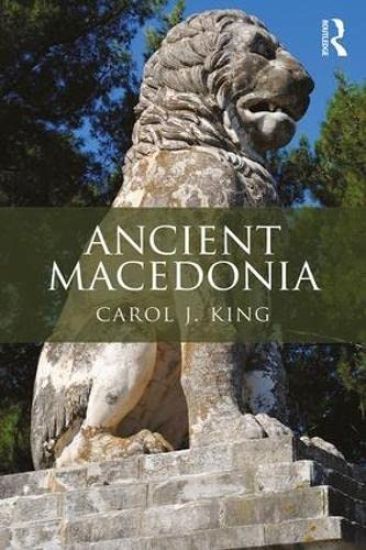
The first English-language monograph on ancient Macedonia in almost thirty years, Carol J. King's book provides a detailed narrative account of the rise and fall of Macedonian power in the Balkan Peninsula and the Aegean region during the five-hundred-year period of the Macedonian monarchy from the seventh to the second century BCE. King draws largely on ancient literary sources for her account, citing both contemporary and later classical authors. Material evidence from the fields of archaeology, epigraphy, and numismatics is also explored.Ancient Macedonia balances historical evidence with interpretations—those of the author as well as other historians—and encourages the reader to engage closely with the source material and the historical questions that material often raises. This volume will be of great interest to both under- and post-graduate students, and those looking to understand the fundamentals of the period.

The Practical Guide to Environmental Community Relations
Carol J. Forrest; Renee Hix Mays
John Wiley Sons Inc
1997
sidottu
A complete, forward-thinking guide to environmental community relations procedures and program development The Practical Guide to Environmental Community Relations offers a comprehensive hands-on framework for working successfully with community residents and other stakeholders to prevent, resolve, or minimize conflicts on environmental issues. Featuring detailed checklists, forms, and worksheets, the book equips you with ready-to-use knowledge and skills in key areas of environmental community relations development: *Community assessmenthow to identify stakeholders and concerns, determine assessment parameters, conduct interviews, analyze data, and report findings *Communicationshow to develop a powerful communications program through written materials, personal communications, and focused media strategy, and how the essential principles of technical, crisis, and risk communication fit within the context of community relations *Community relations techniqueshow to manage public meetings, tours, availability sessions, and other events, plus advice on how to create and run Community Advisory Panels (CAPs) *Community relations programshow to plan and implement programs effectively, including establishing common goals and working with stakeholders constructively to achieve positive results *Environmental regulationsincluding RCRA, CERCLA/SARA, NCP, NPDES, EPCRA, and Clean Air Act Accidental Release Prevention and Risk Management Programs *Cutting-edge issuesinvestigation and cleanup of contaminated sites, permitting of facilities, federal facilities programs, environmental justice, and more Complete with mini-case studies revealing important do's and don'ts of community outreach in action, this accessible guide is a vital resource for private and public sector professionals working in environmental and facilities management, community relations, public affairs, and law.


Postcranial Descriptions of Ilaria and Ngapakaldia (Vombatiformes, Marsupialia) and the Phylogeny of the Vombatiforms Based on Postcranial Morphology
Carol J. Munson
University of California Press
1992
pokkari
The author describes the postcrania of the Miocene marsupials Ilaria illumidens and Ngapakaldia tedfordi and compares them with those of other vombatiforms and out-group marsupials. A cladistic analysis of postcranial characters shows Ilaria to be most closely related to the wombats, primarily on the basis of the highly derived manus. Ngapakaldia's postcranium is more plesiomorphic and most similar to the phalangeriform possums.
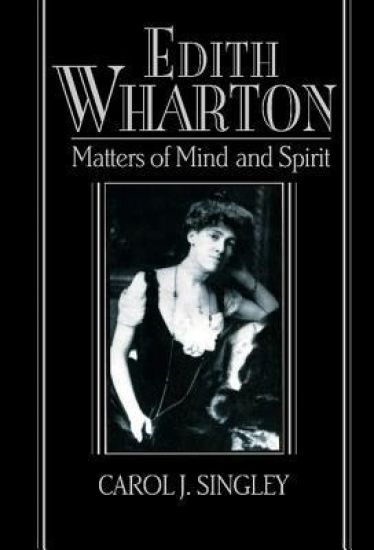
Edith Wharton: Matters of Mind and Spirit, first published in 1995, makes the case for Wharton as a novelist of morals rather than of manners; a novelist who sought answers to profound spiritual and metaphysical questions. Focusing on Wharton's treatment of Anglicanism, Calvinism, Transcendentalism, and Catholicism, Carol Singley analyzes the short stories and seven novels in the light of religious and philosophical developments in Wharton's life and fiction. Singley situates Wharton in the context of turn-of-the-century science, historicism, and aestheticism, reading her religious and philosophical outlook as an evolving response to the cultural crisis of belief. She invokes the dynamics of class and gender as central to Wharton's quest, describing how the author accepted and yet transformed both the classical and Christian traditions that she inherited. By locating Wharton in the library rather than the drawing room, Matters of Mind and Spirit gives this writer her literary and intellectual due, and offers fresh ways of interpreting her life and fiction.

Edith Wharton: Matters of Mind and Spirit makes the case for Wharton as a novelist of morals rather than of manners; a novelist who sought answers to profound spiritual and metaphysical questions. Focusing on Wharton’s treatment of Anglicanism, Calvinism, Transcendentalism, and Catholicism, Carol Singley analyzes the short stories and seven novels in the light of religious and philosophical developments in Wharton’s life and fiction. Singley situates Wharton in the context of turn-of-the-century science, historicism, and aestheticism, reading her religious and philosophical outlook as an evolving response to the cultural crisis of belief. She invokes the dynamics of class and gender as central to Wharton’s quest, describing how the author accepted and yet transformed both the classical and Christian traditions that she inherited. By locating Wharton in the library rather than the drawing room, Matters of Mind and Spirit gives this writer her literary and intellectual due, and offers fresh ways of interpreting her life and fiction.

Maxwell offers an oral history of pro-life direct activism in America from the late 1970s to the early 1990s. Through the stories of leaders and followers, men and women, Catholics and evangelicals, Carol Maxwell explores the complex beliefs and desires that gave rise to this activism, sustained, and eventually undid it. Maxwell's interdisciplinary approach weaves theory from sociology, political science, anthropology, and moral philosophy. She pays special attention to several key issues: the role of the participants' diverse concepts of salvation; concerns about social change; their unresolved grief; their personal experiences of abortion; and differences in men's and women's commitment to protest. The book offers a unique window into the minds of individual protestors as they shifted from conventional activism to direct action and gives an important account of the direct action movement as its initial commitment to Ghandian non-violence was broken by the lethal acts that accompanied its end.