Kirjojen hintavertailu. Mukana 11 244 527 kirjaa ja 12 kauppaa.

Kirjahaku

Etsi kirjoja tekijän nimen, kirjan nimen tai ISBN:n perusteella.

1000 tulosta hakusanalla Caroline Jones

Orkney

Orkney

Caroline Wickham-Jones

Birlinn Ltd
2015
nidottu
Orkney lies only 20 miles north of mainland Scotland, yet for many centuries its culture was more Scandanavian than Scottish. Strong westerly winds account for the scarcity of trees on Orkney and also for the tradition of well-constructed stone structures. As a result, the islands boast a large number of exceptionally well-preserved remains, which help us to form a detailed picture of Orcadian life through the ages. Sites and remains to be explored include settlements from the Stone Age, stone circles and burials from the Bronze Age, Iron Age brochs, Viking castles, the magnificent cathedral of St Magnus in Kirkwall, Renaissance palaces, a Martello tower from the Napoleonic Wars and numerous remains from the Second World War. In this updated edition of her best-selling book, Caroline Wickham-Jones, who has worked extensively on Orcadian sites for many years, introduces the history of the islands and provides a detailed survey of the principal places and sites of historic interest.
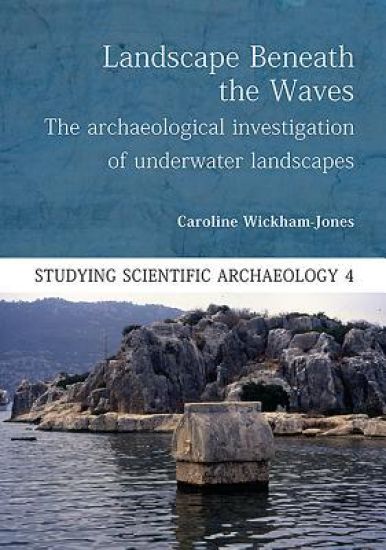
Landscape Beneath the Waves

Landscape Beneath the Waves

Caroline Wickham-Jones

Oxbow Books
2018
nidottu
At the end of the last Ice Age, sea level around the world was lower, coastal lands stretched further and the continents were bigger, in some cases landmasses were joined by dry land that has now disappeared beneath the waves. The study of the now submerged landscapes that our ancestors knew represents one of the last barriers for archaeology. Only recently have advances in underwater technology reached the stage where a wealth of procedures is available to explore this lost undersea world. This volume considers the processes behind the rising (and falling) of relative sea-levels and then presents the main techniques available for the study and interpretation of the archaeological remains that have survived inundation.Case studies are used to illustrate particular applications. Finally, a review of projects around the world highlights the varying scale and period of sites concerned. Submerged archaeological sites often include the preservation of fragile materials such as decorated timbers, that shed rare detail on the communities of prehistory; in other cases the features of the landscape context into which they are set can be extraordinarily well-preserved. This is not a book about shipwrecks but about landscapes now lost beneath the waves. It is written for all archaeologists, whether they work on land or at sea, and for all who are interested in the past; it illustrates the shape of the world as it once was and explains why we need to understand it. It offers an easily accessible introduction to the exciting realm of underwater archaeology.
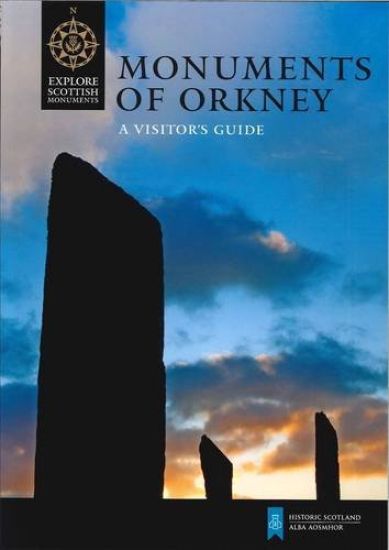
Monuments of Orkney

Monuments of Orkney

Caroline Wickham-Jones

Historic Environment Scotland
2014
pokkari
Orkney-based archaeologist Caroline Wickham-Jones explores more than 60 of Orkney's monuments in concise and accessible terms, set in context by a brief history of the islands.
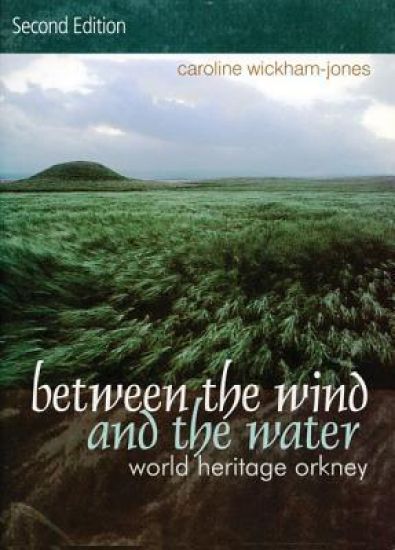
Between the Wind and the Water

Between the Wind and the Water

Caroline Wickham-Jones

Windgather Press
2015
nidottu
The Archaeological sites of Orkney give us an unparalleled glimpse into prehistory. Inscribed as the 'Heart of Neolithic Orkney' World Heritage Site in 1999, four great monuments - the village of Skara Brae, the Ring of Brodgar, the Stones of Stenness and the burial mound of Maeshowe - are also at the centre of the archipelago's story. This book looks at what makes these monuments so special. Caroline Wickham-Jones explores the Neolithic world in which they were built, how they caome to be a focus through the ages, and what they mean today. Picts, saints, Vikings, antiquarians and tourists populate Orkney's past: a history which is channelled through these 'dances of stones'.
Gourmet's Guide to New Orleans

Gourmet's Guide to New Orleans

Natalie Scott; Caroline Merrick Jones

Wildside Press
2024
pokkari
This facsimile reprint of a 1933 New Orleans cookbook features recipes by many notable chefs of the era, from drinks and appetizers to seafood, sauces, meats, eggs, and (of course) desserts. It was compiled from the recipes of famous chefs of the region and time.
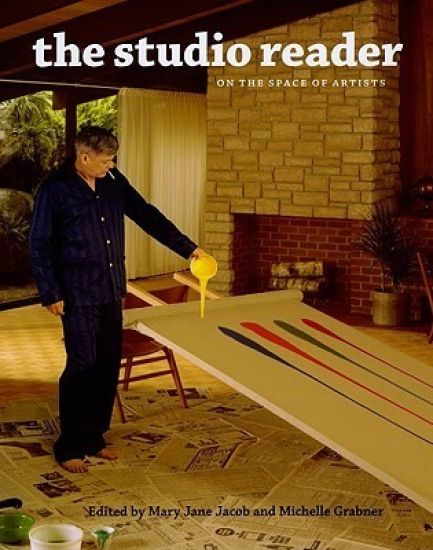
The Studio Reader – On the Space of Artists

The Studio Reader – On the Space of Artists

Mary Jane Jacob; Glenn Adamson; Svetlana Alpers; John Badlessari; Alice Bellony–rewold; Mary Bergstein; Walead Beshty; Andrea Bowers; Daniel Buren; Rochelle Feinstein; David J Getsy; Michelle Grabner; Rodney Graham; Amy Granat; Karl Haendel; Rachel Harrison; Caroline A Jones; Suzanne Lacy; Thomas Lawson; Lynn Lester Hershman; Shana Lutker; Annika Marie; Courtney Martin; Carrie Moyer; Bruce Nauman; Michael Peppiatt; David Reed; Lane Relyea; David Robbins; Judith Rodenbeck; Joe Scanlan; Brenda Schmahmann; Carolee Schneemann

University of Chicago Press
2010
nidottu
The image of a tortured genius working in near isolation has long dominated our conceptions of the artist's studio. Examples are abound: think Jackson Pollock dripping resin on a cicada carcass in his shed in the Hamptons. But times have changed; ever since Andy Warhol declared his art space a 'factory', artists have begun to envision themselves as the leaders of production teams, and their sense of what it means to be in the studio has altered just as dramatically as their practices. "The Studio Reader" pulls back the curtain from the art world to reveal the real activities behind artistic production. What does it mean to be in the studio? What is the space of the studio in the artist's practice? How do studios help artists envision their agency and, beyond that, their own lives? This forward-thinking anthology features an all-star array of contributors, ranging from Svetlana Alpers, Bruce Nauman, and Robert Storr to Daniel Buren, Carolee Schneemann, and Buzz Spector, each of whom locates the studio both spatially and conceptually - at the center of an art world that careens across institutions, markets, and disciplines. A companion for anyone engaged with the spectacular sites of art at its making, "The Studio Reader" reconsiders this crucial space as an actual way of being that illuminates our understanding of both artists and the world they inhabit.
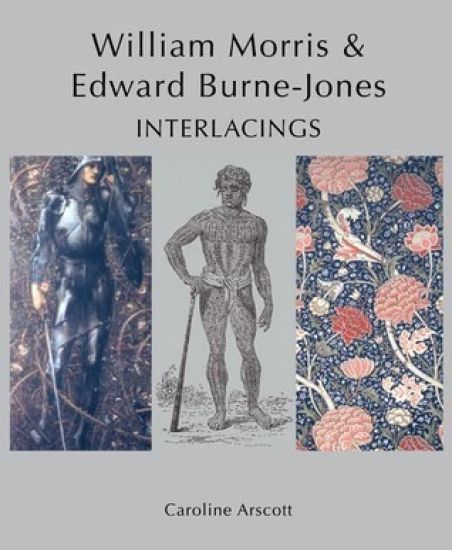
William Morris and Edward Burne-Jones

William Morris and Edward Burne-Jones

Caroline Arscott

Yale University Press
2008
sidottu
The friendship between William Morris and Edward Burne-Jones began when they met as undergraduates in 1853 and—despite their differences in temperament and in attitudes to political engagement—lasted until Morris’s death in 1896. This friendship was one of the defining features of both their lives, and yet the overlap in their artistic projects has not previously been considered in detail. In this deeply thoughtful book, Caroline Arscott explores particular aspects of the paintings of Burne-Jones and the designs of Morris and concludes that there are close interconnections in theme, allusion, and formal strategy between the works of the two men. She suggests that themes of bodily pain, desire and appetite are central to their vision. Through careful readings of Burne-Jones’s painting and Morris’s designs for printed wallpapers and textiles, she shows that it is possible to bring together fine art and design in a linked discussion that illuminates the projects of both artists. Published for the Paul Mellon Centre for Studies in British Art
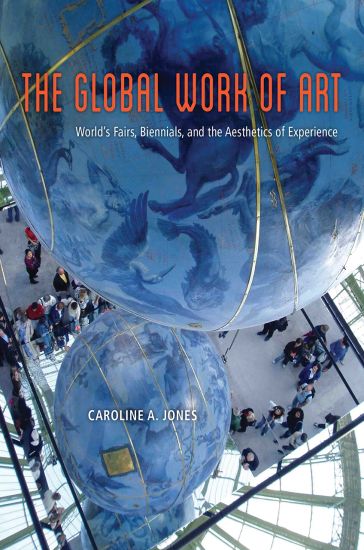
The Global Work of Art

The Global Work of Art

Caroline A. Jones

University of Chicago Press
2017
sidottu
Global biennials have proliferated in the contemporary art world, but artists' engagement with large-scale international exhibitions has a much longer history that has influenced the present in important ways. Going back to the earliest world's fairs in the nineteenth century, this book argues that "globalism" was incubated in a century of international art contests, and today constitutes an important tactic for practicing artists. As world's fairs brought millions of attendees into contact with foreign cultures, products, and processes, artworks became juxtaposed in a "theater of nations," which challenged artists and critics to think outside their local academies for the first time. From Gustave Courbet's rebel pavilion near the official art exhibit at the 1855 French World's Fair to curator Beryl Madra's choice of London-based Cypriot Hussein Chalayan for the off-site Turkish pavilion at the 2006 Venice Biennale, artists have used these exhibitions to reflect on contemporary art, speak to their own governments back home, and challenge the wider geopolitical realm changing art and art history along the way. Ultimately, Caroline A. Jones argues, the modern appetite for experience and event structures, which were cultivated around the art at these earlier expositions, have now come to constitute contemporary art itself, producing encounters that transform the public and force us to reflect critically on the global condition.
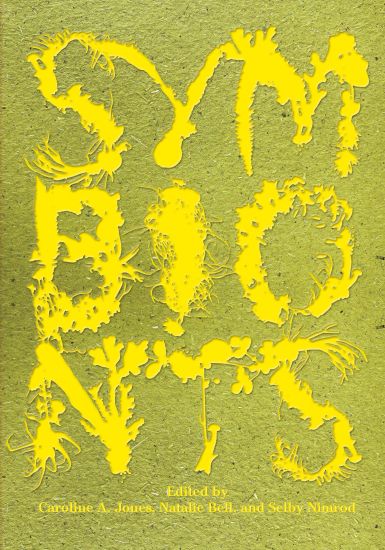
Symbionts

Symbionts

Caroline A. Jones; Natalie Bell

MIT PRESS LTD
2022
nidottu
Essays, conversations, selected texts, and a rich collection of thought-provoking artworks celebrate a revolution in bio art. Expertly designed by Omnivore and printed on special papers, including chlorophyll cover and crush citrus and crush cocoa pages.The texts and artworks in Symbionts provoke a necessary conversation about our species and its relation to the planet. Are we merely “mammalian weeds,” as evolutionary biologist Lynn Margulis put it? Or are we partners in producing and maintaining the biosphere, as she also suggested? Symbionts reflects on a recent revolution in bio art that departs from the late-1990s code-oriented experiments to embrace entanglement and symbiosis (“with-living”). Combining documentation of contemporary artworks with texts by leading thinkers, Symbionts, which accompanies an exhibition at MIT List Visual Arts Center, offers an expansive view of humanity’s place on the planet.Color reproductions document works by international artists that respond to the revelation that planetary microbes construct and maintain our biosphere. A central essay by coeditor Caroline Jones sets their work in the context of larger discussions around symbiosis; additional essays, an edited roundtable discussion, and selected excerpts follow. Contributors explore, among other things, the resilient ecological knowledge of indigenous scholars and artists, and “biofiction,” a term coined by Jones to describe the work of such theoretical biologists as Jacob von Uexku¨ll as well as the witty parafictions of artist Anicka Yi. A playful glossary puts scientific terms in conversation with cultural ones.
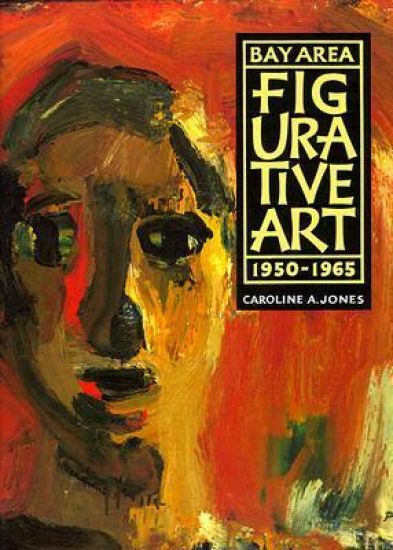
Bay Area Figurative Art

Bay Area Figurative Art

Caroline A. Jones

University of California Press
1989
pokkari
During the 1950s a few painters in the San Francisco Bay Area began to stage personal, dramatic defections from the prevailing style of Abstract Expressionism, creating what would come to be known as Bay Area Figurative Art. In 1949 David Park destroyed many of his nonobjective canvases and began a new style of consciously naive figuration. Soon Elmer Bischoff and Richard Diebenkorn joined Park and other painters such as Nathan Oliveira, Theophilus Brown, James Weeks, and Paul Wonner in the move away from abstraction and toward figurative subject matter. When artists such as Bruce McGaw, Manuel Neri, and Joan Brown emerged as a second generation of figurative artists, the momentum grew for a powerful new development in American painting. The achievement of Bay Area Figurative painters and sculptors has become directly relevant to current debates regarding abstraction and representation, as well as to discourses on modernism and postmodernism. Indeed, the historical phenomenon of the movement is an important case study in the evolution of modernism in America, serving as an early example of rupture in the formalist 'mainstream.' "Bay Area Figurative Art 1950-1965" was written to accompany an exhibition of the same name at the San Francisco Museum of Modern Art. Based on extensive archival research and interviews, it is the first study of the movement as a whole and is the broadest and most accurate account of the careers and interactions of ten Bay Area artists who worked in this new style.
Future of Patient Data: Insights From Multiple Expert Discussions Around The World

Future of Patient Data: Insights From Multiple Expert Discussions Around The World

Caroline Dewing; Tim Jones

Createspace Independent Publishing Platform
2018
nidottu
We are witnessing a growing revolution around the provision of healthcare. Much is being driven by the proliferation of medical data and the technology that supports this. As the pressures on healthcare providers continue to escalate, the better collection, management and use of more patient-specific information provides a significant opportunity for innovation and change. The Future Agenda team made this, the Future of Patient Data, the focus of our major Open Foresight project for 2017/18 - 12 discussions across 11 countries, gathering views from over 300 experts. This report shares the findings from the Future of Patient Data research project. It highlights several important emerging issues that are the source of major differences of opinion around the world. These include how to best accommodate rising data sovereignty concerns, the privatisation of health information and the growing value of health data. Some of the challenges and opportunities are technical in nature, but many are concerned with different ethical, philosophical and cultural approaches to health and how we treat the sick in society.
Future of Philanthropy: Insights from Multiple Expert Discussions Around the World

Future of Philanthropy: Insights from Multiple Expert Discussions Around the World

Caroline Dewing; Tim Jones; James Alexander

Createspace Independent Publishing Platform
2018
nidottu
This report is written for anyone with an interest in philanthropy and how to make it more effective with higher impact in the future. We hope it will be useful to individuals, charities and other NGO's, businesses and governments as well as advisors to each of these audiences. Taking the long view has never been easy. However, as change accelerates in an increasingly connected world, more organisations are looking further ahead to better understand emerging opportunities and threats. We believe that sharing knowledge across disciplines and across continents can add real value to the process, particularly as often innovation occurs at the intersection of different industries disciplines and challenges. There are a host of changes that we need to think about when considering the next ten years. Some are incremental evolutions, and some are radical revolutions. The big challenge in any foresight programme is in differentiating these and gaining a clear understanding of which changes are most likely. The intention of this report is to consolidate expert views from nine workshops in seven countries around the future of philanthropy and how it will develop. This understanding will make it easier to shape a strategy that will address upcoming challenges and opportunities. We offer a summary of the key trends and drivers that will be influential and identify areas of potential change. As such the report provides insight about the leading edge of philanthropy today as well as where it might go in the future. Our hope is that this will enable you to make a bigger difference for society in the years to come. This decade sees philanthropy at a pivotal point. The evolving geopolitical landscape, the rapid creation of new wealth and a greater awareness of how philanthropy can create social change have already led to exciting innovation and new thinking. This is influencing approaches to giving and social responsibility across the world. During our conversations three interconnected drivers of change were identified. They are Power, Knowledge and, inherent to both of these, Trust. They will shape the evolution of philanthropy over the next decade.
Cambridge Balls

Cambridge Balls

Dafydd Jones; Caroline Calloway

ACC Art Books
2026
sidottu
Cambridge Balls is the sensational new book by bestselling society photographer Dafydd Jones. The Cambridge University colleges are renowned for many great alumni and important achievements… and also a series of marathon all-night parties, known as the May Balls, held annually to celebrate the end of the academic year. Dafydd Jones, who according to The New York Times, ‘goes about his business with cheery zest and a wicked eye’, has been granted unique access to this hidden world of revelry since 1981, during which the author of England: The Last Hurrah and Hollywood Confidential has captured an extraordinary tableau of antics and shenanigans now beautifully reproduced on these pages. From former British Prime Minister David Cameron in his Bullingdon coat to victorious rowing teams celebrating into the night, from gate crashers punting across the river to the more international student groups of modern times toasting their successes, this is a fascinating portrait of jubilation among the young, the wealthy and the academic elites of one of the world’s most famous universities. Praise for England: The Last Hurrah… “Wonderfully ironic, every point in the picture ignites and knows how to entertain very well.” — Lovely Books “Dafydd catches those moments of genuine exhilaration, wealth and youth.” — The Hollywood Reporter Praise for Hollywood Confidential… “With his new collection of photographs, Dafydd Jones offers a sensational dive into the excitement of the awards season in the 1990s.” — Vanity Fair France Praise for New York: High Life / Low Life… “The New York book is an evocative historical document, brimming with nostalgia and menace.” –– Hannah Marriott, The Guardian Praise for Dafydd Jones… “Modest though he is, Dafydd’s photographs will endure for having perfectly captured a society on the brink of decline.” –– Country & Townhouse podcast “Sublime vintage photographs…” –– Hermione Eyre, The Telegraph “Some carefully tended public images are punctured with such rapier precision that one can hear the hiss as they deflate.” –– Mitchell Owens, The World of Interiors
Teacher’s Guide 3B

Teacher’s Guide 3B

Caroline Clissold; Jane Jones; Steph King; Brian Macdonald; Richard Perring; Paul Wrangles

Collins
2017
nidottu
The Shanghai Maths Project Teacher's Guide part B, along with part A, provides teachers with all the support they need to deliver the programme of study as part of a mastery approach. It takes teachers through each topic, explains mathematical contexts and provides teaching ideas and activities for whole-class, intervention and enrichment. The Shanghai Maths Project Teacher's Guide 3B, together with The Shanghai Maths Project Teacher's Guide 3A, provides teachers with all the support they need to deliver the Year 3 maths programme of study as part of a mastery approach to teaching. Contents include: • Comprehensive introduction, including guidance on mastery, variation theory, the concrete pictorial abstract (CPA) approach • Recommended teaching sequence and planning support • Units of teaching, with suggested activities for whole-class instruction, methods and suggested activities to provide same-day intervention and same-day enrichment (mastery with greater depth).
Teacher’s Guide 4A

Teacher’s Guide 4A

Caroline Clissold; Sarah Eaton; Linda Glithro; Paul Hodge; Jane Jones; Steph King; Richard Perring

Collins
2018
nidottu
The Shanghai Maths Project Teacher's Guide part A, along with part B, provides teachers with all the support they need to deliver the programme of study as part of a mastery approach. It takes teachers through each topic, explains mathematical contexts and provides teaching ideas and activities for whole-class, intervention and enrichment. The Shanghai Maths Project Teacher's Guide 4A, together with The Shanghai Maths Project Teacher's Guide 4B, provides teachers with all the support they need to deliver the Year 4 maths programme of study as part of a mastery approach to teaching. Contents include:Comprehensive introduction, including guidance on mastery, variation theory, the concrete pictorial abstract (CPA) approachRecommended teaching sequence and planning supportUnits of teaching, with suggested activities for whole-class instruction, methods and suggested activities to provide same-day intervention and same-day enrichment (mastery with greater depth)
Year 2 Learning

Year 2 Learning

Caroline Clissold; Sarah Eaton; Linda Glithro; Jane Jones; Steph King; Brian Macdonald; Cherri Moseley; Paul Wrangles; Laura Clarke

Collins
2017
nidottu
The Shanghai Maths Project Year 2 Learning is a pupil textbook containing the Year 2 maths facts and full pictorial glossary to enable children to master the Year 2 maths programme of study for England. It sits alongside the Practice Books and the Teacher’s Guide to complete the Shanghai Maths programme for Year 2. The Shanghai Maths Project Year 2 Learning is a pupil textbook containing:• Maths facts for each topic with colourful models and images• Full Year 2 pictorial glossary of mathematical termsIt sits alongside the Practice Books and the Teacher’s Guide to complete the Shanghai Maths programme for Year 2.
Antonyms in English

Antonyms in English

Steven Jones; M. Lynne Murphy; Carita Paradis; Caroline Willners

Cambridge University Press
2012
sidottu
The study of antonyms (or 'opposites') in a language can provide important insight into word meaning and discourse structures. This book provides an extensive investigation of antonyms in English and offers an innovative model of how we mentally organize concepts and how we perceive contrasts between them. The authors use corpus and experimental methods to build a theoretical picture of the antonym relation, its status in the mind and its construal in context. Evidence is drawn from natural antonym use in speech and writing, first-language antonym acquisition, and controlled elicitation and judgements of antonym pairs by native speakers. The book also proposes ways in which a greater knowledge of how antonyms work can be applied to the fields of language technology and lexicography.
Antonyms in English

Antonyms in English

Steven Jones; Murphy M. Lynne; Paradis Carita; Willners Caroline

Cambridge University Press
2015
pokkari
The study of antonyms (or 'opposites') in a language can provide important insight into word meaning and discourse structures. This book provides an extensive investigation of antonyms in English and offers an innovative model of how we mentally organize concepts and how we perceive contrasts between them. The authors use corpus and experimental methods to build a theoretical picture of the antonym relation, its status in the mind and its construal in context. Evidence is drawn from natural antonym use in speech and writing, first-language antonym acquisition, and controlled elicitation and judgements of antonym pairs by native speakers. The book also proposes ways in which a greater knowledge of how antonyms work can be applied to the fields of language technology and lexicography.
Teacher’s Guide 2B

Teacher’s Guide 2B

Caroline Clissold; Sarah Eaton; Linda Glithro; Jane Jones; Steph King; Brian Macdonald; Paul Wrangles

Collins
2017
nidottu
The Shanghai Maths Project Teacher's Guide part B, along with part A, provides teachers with all the support they need to deliver the programme of study as part of a mastery approach. It takes teachers through each topic, explains mathematical contexts and provides teaching ideas and activities for whole-class, intervention and enrichment. The Shanghai Maths Project Teacher's Guide 2B, together with The Shanghai Maths Project Teacher's Guide 2A, provides teachers with all the support they need to deliver the Year 2 maths programme of study as part of a mastery approach to teaching. Contents include: • Comprehensive introduction, including guidance on mastery, variation theory, the concrete pictorial abstract (CPA) approach • Recommended teaching sequence and planning support • Units of teaching, with suggested activities for whole-class instruction, methods and suggested activities to provide same-day intervention and same-day enrichment (mastery with greater depth).
Feeding and Nutrition in the Preterm Infant

Feeding and Nutrition in the Preterm Infant

Elizabeth A. Jones; Caroline King

Churchill Livingstone
2005
nidottu
A practical handbook for healthcare professionals that covers all aspects of pre-term nutrition, using evidence-based information to promote safe and effective practice. Readers will discover problem-solving strategies, interventions, and information on meeting the nutritional requirements of pre-term infants. Easily accessible information on all aspects of pre-term and neonatal nutrition Includes the latest research-based information on mammary physiology and the dynamics of milk expression Discusses the nutritional requirements of the pre-term breastfed infant - and how to succeed in meeting these needs Provides effective interventions to prevent pre-term breastfeeding failures Problem-solving strategies ensure a smooth transition from nasogastric to breastfeeding