

Kirjahaku
Etsi kirjoja tekijän nimen, kirjan nimen tai ISBN:n perusteella.
326 tulosta hakusanalla Cathie Gauthier


Movie Guide to Romantic Comedies: 100 Chick Flicks That Make You Laugh and Feel Happy Ever After
Cathie Glenn Jennings
Flikpix LLC
2013
nidottu
Have you ever wondered about why we love, whom we love, and when we love? The "Movie Guide to Romantic Comedies: 100 Chick Flicks That Make You Laugh and Feel Happy Ever After" helps you find answers to this these timeless questions, in the best possible way - with laughter Whether you need to laugh when you're sad, cry when you need to, or inspire yourself to keep singing in the rain even when you're down, this definitive guide to romantic comedies will help you select the perfect movie to match your mood, answer relationship questions and help you through it. From box office hits such as "My Big Fat Greek Wedding," to great independent films like "Mystic Pizza" and everlasting classics such as "When Harry Met Sally," the "Movie Guide to Romantic Comedies" covers the finest, funniest romantic comedy films ever made. This 2013 edition lists 100 of the world's most famous chick flicks for you to choose from, complete with all of the essential information that you could ask for on each movie. The guide explores: -How to find movies that perfectly fit your mood -How to use the power of romantic comedy to feel better -How to employ movies as "emotional yardsticks" of your own romantic evolution -How to identify your own story among the seven stories of love -What makes a movie timeless and the amazing benefits of watching a movie over and over again -Why the music score can shift the way you feel as much as the story You'll also find recommendations for movies that are perfect for date night - films that both men and women like--with plenty of action for the guys and lots of romance for the girls No more fighting about which movie to watch Think of this a self -help book for women, men and dating This impactful guidebook also explains how to use movies as emotional yardsticks for your relationship and how today's changing gender roles affect romantic relationships. If you are ready for laughs and perhaps some tears, as well as a little insight into your own relationships, you'll love "The Movie Guide to Romantic Comedies." And who knows, you might just feel happy ever after "An extremely useful guide that every movie fan will love." Jeffrey Lyons, Film Critic, WNBC-TV Table of Contents Introduction 1: New Rules for 21st Century Romance 2: What Makes a Movie Timeless? 3: Using Movies as Emotional Yardsticks 4: Love Romantic Comedy - No Apologies 5: The Seven Stories of Love 6: The Difference Between a Movie Lover and a Movie Critic 7: Rating Movies by How You Feel After Viewing 8: Why Men Like Action and Women Like Romance 9: Why Feel Guilty about Feeling Good? 10: How to Graze for Movie Comfort Food 11: Don't Forget the Music 12: 100 Romantic Comedies Summary 13: 100 Movie Descriptions Appendix A: Movie Club Tips and Tricks Appendix B: Why Laughter Is the Best Medicine Bio: Cathie Glenn Jennings





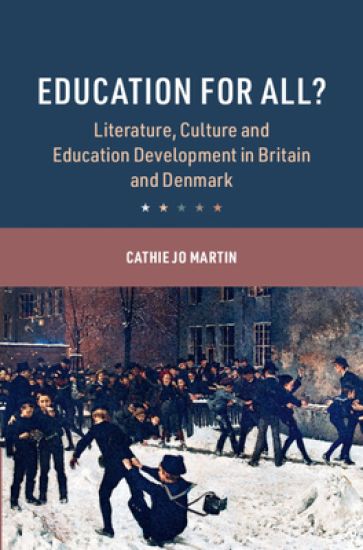
Why did Denmark develop mass education for all in 1814, while Britain created a public-school system only in 1870 that primarily educated academic achievers? Cathie Jo Martin argues that fiction writers and their literary narratives inspired education campaigns throughout the nineteenth-century. Danish writers imagined mass schools as the foundation for a great society and economic growth. Their depictions fortified the mandate to educate all people and showed neglecting low-skill youth would waste societal resources and threaten the social fabric. Conversely, British authors pictured mass education as harming social stability, lower-class work, and national culture. Their stories of youths who overcame structural injustices with individual determination made it easier to blame students who failed to seize educational opportunities. Novel and compelling, Education for All? uses a multidisciplinary perspective to offer a unique gaze into historical policymaking. This title is part of the Flip it Open Programme and may also be available Open Access. Check our website Cambridge Core for details.

Why did Denmark develop mass education for all in 1814, while Britain created a public-school system only in 1870 that primarily educated academic achievers? Cathie Jo Martin argues that fiction writers and their literary narratives inspired education campaigns throughout the nineteenth-century. Danish writers imagined mass schools as the foundation for a great society and economic growth. Their depictions fortified the mandate to educate all people and showed neglecting low-skill youth would waste societal resources and threaten the social fabric. Conversely, British authors pictured mass education as harming social stability, lower-class work, and national culture. Their stories of youths who overcame structural injustices with individual determination made it easier to blame students who failed to seize educational opportunities. Novel and compelling, Education for All? uses a multidisciplinary perspective to offer a unique gaze into historical policymaking. This title is part of the Flip it Open Programme and may also be available Open Access. Check our website Cambridge Core for details.

After leaving MIRC to work abroad using her newly honed psychic skills, Margie moved back to her small home in coastal Georgia to do what she can to help her family's declining business. Working as a bank teller, she views the town's people through Plexiglass barriors, unaware that the glass distorts and people are not always what they seem after they walk out the door. She begins a relationship with a charming and handsome customer, only to find that she will need more than the bandit barriers to protect her. "Hands are an instrument of the mind. Often the hands will solve a mystery that the intellect has struggled with in vain." - CARL JUNG Margie's story explores the possibility of the psychic powers of PSYCHOMETRY.
A Concise History of Bosnia integrates the political, economic and cultural history of this fascinating, beautiful, but much misunderstood country. Drawing on a wide range of primary and secondary literature, this objective and engaging history covers developments in the region up to the present day and offers an accessible interpretation of an often contested and controversial history. Importantly, Cathie Carmichael looks at Bosnia over the long term, moving away from a narrow focus on the 1990s to offer a historical rather than a nationalist perspective on events. Integrated within the narrative account, there is a particular focus on the themes of culture and religion, and the effect of geography and regional changes in the landscape on Bosnian history. Engaging and authoritative, the book succinctly explores how Bosnia has changed over many centuries, and focuses on the dynamic and creative aspects of Bosnia's past as well as the darker elements.
The Political Construction of Business Interests
Cathie Jo Martin; Duane Swank
Cambridge University Press
2012
sidottu
Many societies use labor market coordination to maximize economic growth and equality, yet employers' willing cooperation with government and labor is something of a mystery. The Political Construction of Business Interests recounts employers' struggles to define their collective social identities at turning points in capitalist development. Employers are most likely to support social investments in countries with strong peak business associations, that help members form collective preferences and realize policy goals in labor market negotiations. Politicians, with incentives shaped by governmental structures, took the initiative in association-building and those that created the strongest associations were motivated to evade labor radicalism and to preempt parliamentary democratization. Sweeping in its historical and cross-national reach, the book builds on original archival data, interviews and cross-national quantitative analyses. The research has important implications for the construction of business as a social class and powerful ramifications for equality, welfare state restructuring and social solidarity.
A Concise History of Bosnia integrates the political, economic and cultural history of this fascinating, beautiful, but much misunderstood country. Drawing on a wide range of primary and secondary literature, this objective and engaging history covers developments in the region up to the present day and offers an accessible interpretation of an often contested and controversial history. Importantly, Cathie Carmichael looks at Bosnia over the long term, moving away from a narrow focus on the 1990s to offer a historical rather than a nationalist perspective on events. Integrated within the narrative account, there is a particular focus on the themes of culture and religion, and the effect of geography and regional changes in the landscape on Bosnian history. Engaging and authoritative, the book succinctly explores how Bosnia has changed over many centuries, and focuses on the dynamic and creative aspects of Bosnia's past as well as the darker elements.
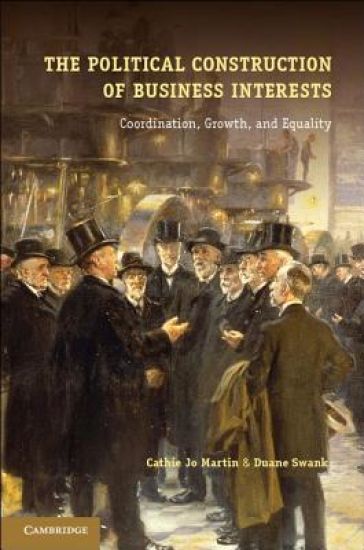
The Political Construction of Business Interests
Cathie Jo Martin; Duane Swank
Cambridge University Press
2012
pokkari
Many societies use labor market coordination to maximize economic growth and equality, yet employers' willing cooperation with government and labor is something of a mystery. The Political Construction of Business Interests recounts employers' struggles to define their collective social identities at turning points in capitalist development. Employers are most likely to support social investments in countries with strong peak business associations, that help members form collective preferences and realize policy goals in labor market negotiations. Politicians, with incentives shaped by governmental structures, took the initiative in association-building and those that created the strongest associations were motivated to evade labor radicalism and to preempt parliamentary democratization. Sweeping in its historical and cross-national reach, the book builds on original archival data, interviews and cross-national quantitative analyses. The research has important implications for the construction of business as a social class and powerful ramifications for equality, welfare state restructuring and social solidarity.

Principles of Astrophysical Fluid Dynamics
Cathie Clarke; Bob Carswell
Cambridge University Press
2014
pokkari
Fluid dynamical forces drive most of the fundamental processes in the Universe and so play a crucial role in our understanding of astrophysics. This comprehensive textbook, first published in 2007, introduces the necessary fluid dynamics to understand a wide range of astronomical phenomena, from stellar structures to supernovae blast waves, to accretion discs. The authors' approach is to introduce and derive the fundamental equations, supplemented by text that conveys a more intuitive understanding of the subject, and to emphasise the observable phenomena that rely on fluid dynamical processes. The textbook has been developed for use by final-year undergraduate and starting graduate students of astrophysics, and contains over fifty exercises. It is based on the authors' many years of teaching their astrophysical fluid dynamics course at the University of Cambridge.
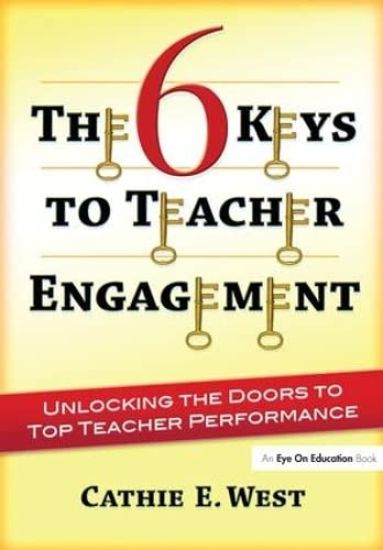
In her new book, award-winning principal and leadership expert Cathie West provides education leaders at all levels with the tools and guidance they need to engage teachers in the process of increasing student achievement. With authentic examples and research highlights, readers learn how to develop a motivated faculty that is truly dedicated to school improvement and student success. The "Six Keys" covered in the book are both substantive and comprehensive and offer a clear path to success: Key 1: Create a Culture of Engagement Teacher engagement definition, attributes, and steps towards attainment Key 2: Get Organizationally Engaged Exemplary organization qualities, leadership styles, and effectiveness strategies Key 3: Engineer Engagement Quality meeting characteristics, engagement activities, and leadership techniques Key 4: Zero in on Best Practice Effective teaching attributes, instructional practices, and success tips Key 5: Tap into Teacher Leaders Teacher leader selection, training, and strategic deployment Key 6: Confront Change Challengers Challenger profiles, interventions, and support suggestions BONUS! Every chapter includes a wrap-up to help readers review, apply, and retain new learning for each of the six keys to teacher engagement: Key Concepts provides a bulleted summary of each theme’s major concepts to help readers review key ideas. Best Strategies summarizes each chapter’s high impact teacher engagement strategies. Steps to Success suggests activities that will move new concepts and skills into practice. NOTEWORTHY: This book is also an excellent resource for university and college instructors who are responsible for teacher and principal preparation. The 6 Keys to Teacher Engagement substantially supports graduate level courses pertaining to educational leadership, school improvement, curriculum and assessment, and professional development.
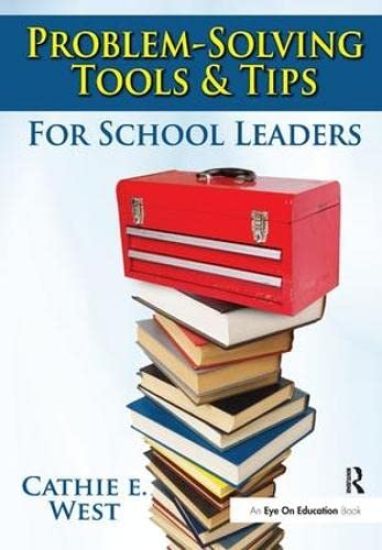
In this book, award-winning educator Cathie West teaches readers how to confidently prepare for and respond to the challenges that come with being a school leader. Derived from professional experience and extensive research, the strategies can be put to work exactly as described or adapted to fit the unique situations that educators face in their schools. With more than thirty years of experience as a school principal, West provides tips for teacher leaders striving to expand their skills, brand new administrators looking for guidance, and experienced principals confronting the unfamiliar or looking for fresh problem-solving ideas.
The Educator’s Guide to Writing a Book is for educators who dream of sharing their knowledge and skills with a broader audience. This exciting resource provides step-by-step guidance on how to set publishing goals, create well-written content and resource material, develop an informative yet accessible writing style, prepare professional level manuscripts, and anticipate each stage in the publishing process. Chapters include authentic writing examples, tips from veteran authors and publishing professionals, and supportive resources. The Educator’s Guide to Writing a Book is an invaluable guide that helps aspiring and novice authors move publishing goals from dreams to reality..
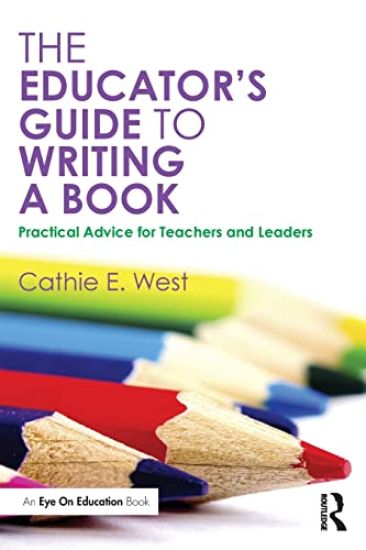
The Educator’s Guide to Writing a Book is for educators who dream of sharing their knowledge and skills with a broader audience. This exciting resource provides step-by-step guidance on how to set publishing goals, create well-written content and resource material, develop an informative yet accessible writing style, prepare professional level manuscripts, and anticipate each stage in the publishing process. Chapters include authentic writing examples, tips from veteran authors and publishing professionals, and supportive resources. The Educator’s Guide to Writing a Book is an invaluable guide that helps aspiring and novice authors move publishing goals from dreams to reality..