Kirjojen hintavertailu. Mukana 11 627 461 kirjaa ja 12 kauppaa.

Kirjahaku

Etsi kirjoja tekijän nimen, kirjan nimen tai ISBN:n perusteella.

87 tulosta hakusanalla Chandramohan Puppala

Effet des composés phénoliques de l'huile d'olive sur le diabète sucré expérimental

Effet des composés phénoliques de l'huile d'olive sur le diabète sucré expérimental

Ramasamy Chandramohan; Leelavinothan Pari

Editions Notre Savoir
2024
pokkari
Le diab te sucr (DM) est un probl me de sant publique majeur et croissant dans le monde entier, avec une pr valence mondiale estim e 415 millions de personnes en 2015, qui devrait passer 642 millions de personnes d'ici 2040. Il existe principalement deux types de diab te, le type 1 et le type 2, dont plus de 90 95 % des patients souffrent de diab te de type 2 (DT2). Le stress oxydatif et l'inflammation sont les principaux facteurs impliqu s dans les complications cardiovasculaires des patients atteints de DT2. Des preuves de plus en plus nombreuses ont soulign que les composants biologiquement actifs des aliments fonctionnels peuvent tre utilis s comme traitement compl mentaire du DT2. Les ph nols contenus dans de nombreux aliments et boissons ont t activement tudi s en tant que traitement potentiel de diverses maladies m taboliques et cardiovasculaires. Le potentiel antioxydant des ph nols est principalement li la capacit de ces compos s pi ger les radicaux libres produits par le stress oxydatif.
Effetto dell'olio di oliva fenolico nel diabete mellito sperimentale

Effetto dell'olio di oliva fenolico nel diabete mellito sperimentale

Ramasamy Chandramohan; Leelavinothan Pari

Edizioni Sapienza
2024
pokkari
Il diabete mellito (DM) un problema di salute pubblica importante e in crescita in tutto il mondo, con una prevalenza mondiale stimata di 415 milioni di persone nel 2015, che si prevede aumenter a 642 milioni di persone entro il 2040. Esistono principalmente due tipi di DM, il tipo 1 e il tipo 2, in cui oltre il 90-95% dei pazienti soffre di DM di tipo 2 (T2DM). Lo stress ossidativo e l'infiammazione sono i principali fattori coinvolti nelle complicanze cardiovascolari dei pazienti con T2DM. L'accumulo di prove ha sottolineato che i componenti biologicamente attivi degli alimenti funzionali possono essere utilizzati come trattamento complementare per il T2DM. I fenoli provenienti da numerosi alimenti e bevande sono stati studiati attivamente come potenziale trattamento per diverse malattie metaboliche e cardiovascolari. Il potenziale antiossidante dei fenoli legato principalmente alla capacit di questi composti di eliminare i radicali liberi prodotti dallo stress ossidativo.
Efeito dos fenólicos do azeite na diabetes mellitus experimental

Efeito dos fenólicos do azeite na diabetes mellitus experimental

Ramasamy Chandramohan; Leelavinothan Pari

Edicoes Nosso Conhecimento
2024
pokkari
A diabetes mellitus (DM) um problema de sa de p blica importante e crescente em todo o mundo, com uma preval ncia mundial estimada em 415 milh es de pessoas em 2015, prevendo-se que aumente para 642 milh es de pessoas em 2040. Existem principalmente dois tipos de DM, o tipo 1 e o tipo 2, em que mais de 90-95% dos doentes sofrem de DM tipo 2 (T2DM). O stress oxidativo e a inflama o s o os principais factores envolvidos nas complica es cardiovasculares dos doentes com DMT2. A acumula o de evid ncias tem enfatizado que os componentes biologicamente activos dos alimentos funcionais podem ser utilizados como tratamento complementar para a DM2. Os fen is de in meros alimentos e bebidas t m sido ativamente estudados como potenciais tratamentos para v rias doen as metab licas e cardiovasculares. O potencial antioxidante dos fen is est principalmente relacionado com a capacidade destes compostos para eliminar os radicais livres produzidos pelo stress oxidativo.
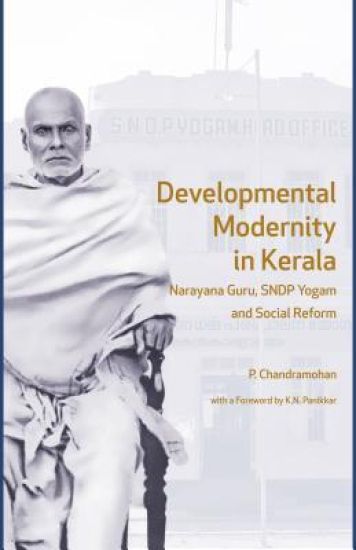
Developmental Modernity in Kerala – Narayana Guru, S.N.D.P Yogam and Social Reform
This study of the Sree Narayana Dharma Paripalana Yogam (SNDP Yogam), one of the earliest social reform movements in Kerala, investigates the relationship of social reform, religion, and caste. The Yogam drew inspiration from the ideas of Narayana Guru, which suited the aspirations of the upwardly mobile Ezhava middle class, who were the main benefactors of the movement. In both religious and social matters, the Guru was a traditionalist who strove to create a modern outlook among the masses. He conceived of the temple as a social space where everybody could meet and exchange ideas. While pursuing his spiritual mission, he advocated education, industrialization, and abolition of caste as necessary prerequisites for social regeneration. This work demonstrates that the SNDP was an organization of an emerging Ezhava middle class, which worked as both its strength and weakness. It focused on such issues as education, employment in government service, industrialization, abolition of cyclical rituals and caste, anti-alcoholism and the demand for a new law of inheritance. However, some disjunction between principles and practice led to the decline of the SNDP movement. Ironically, since the movement was largely focused on the interests of the privileged section of the Ezhava community, it achieved Ezhava solidarity only around caste. This study is a significant example of how a social reform movement turned into a caste solidarity movement.
Physical Properties of Nanorods

Physical Properties of Nanorods

Roman Krahne; Liberato Manna; Giovanni Morello; Albert Figuerola; Chandramohan George; Sasanka Deka

Springer-Verlag Berlin and Heidelberg GmbH Co. K
2013
sidottu
Inorganic nanoparticles are among the most investigated objects nowadays, both in fundamental science and in various technical applications. In this book the physical properties of nanowires formed by nanoparticles with elongated shape, i.e. rod-like or wire-like, are described. The transition in the physical properties is analyzed for nanorods and nanowires consisting of spherical and rod-like nanoparticles. The physical properties of nanowires and elongated inorganic nanoparticles are reviewed too. The optical, electrical, magnetic, mechanical and catalytic properties of nanowires consisting of semiconductors, noble and various other metals, metal oxides properties and metal alloys are presented. The applications of nanorods and nanowires are discussed in the book.
Physical Properties of Nanorods

Physical Properties of Nanorods

Roman Krahne; Liberato Manna; Giovanni Morello; Albert Figuerola; Chandramohan George; Sasanka Deka

Springer-Verlag Berlin and Heidelberg GmbH Co. K
2015
nidottu
Inorganic nanoparticles are among the most investigated objects nowadays, both in fundamental science and in various technical applications. In this book the physical properties of nanowires formed by nanoparticles with elongated shape, i.e. rod-like or wire-like, are described. The transition in the physical properties is analyzed for nanorods and nanowires consisting of spherical and rod-like nanoparticles. The physical properties of nanowires and elongated inorganic nanoparticles are reviewed too. The optical, electrical, magnetic, mechanical and catalytic properties of nanowires consisting of semiconductors, noble and various other metals, metal oxides properties and metal alloys are presented. The applications of nanorods and nanowires are discussed in the book.
Distance Learning

Distance Learning

Chandra Mohan Mehrotra; C . David Hollister; Lawrence McGahey

SAGE Publications Inc
2001
sidottu
"This book is a fine example of what is needed for distance learning teachers,administrators, and evaluators throughout the world. It provides good coverage of the timely topics that face distance educators daily. For those considering starting a distance learning course or program, this book would provide a solid footing upon which to make important decisions."--REVIEW OF HIGHER EDUCATION"The overall strength of this volume is its emphasis on practical considerations that an instructor is likely to encounter in creating a distance course. . . . particularly strong in presenting easily understood principles of good practice for those who must plan and implement distance learning."--EVALUATION & PROGRAM PLANNING What delivery methods are available to make education accessible to a wide variety of potential learners? What are their strengths and weaknesses? How can instructors create effective learning environments in distance courses? What support from administrators and staff is essential? What guidelines are used by accrediting agencies to assure program quality? This highly readable book by three experienced faculty members answers these questions and more. Both theoretical and practical, the book presents proven principles and research-based advice. Drawing upon their experience with a variety of delivery modes, the authors provide readers with tips they can use in designing, implementing, and evaluating distance courses and programs. Instructors and administrators alike will find much valuable assistance, including: A wealth of examples and strategies based on field-tested models, student preferences, and the authors' own extensive experiences Comprehensive coverage that addresses available delivery options, factors to consider when selecting a delivery mode, designing a syllabus for a distance course, fostering student learning and development, and providing student support services Concrete and practical approaches for assessing student learning, conducting course and program evaluation, and addressing accreditation guidelines Summary tips and references to web sites that conclude each chapter provide convenient summaries for readers and guide them to additional resources A companion web site that illustrates the text's coverage with concrete examples Drawing upon the rich details provided by the authors, faculty and administrators will be able to meet the challenge of developing and evaluating successful distance learning courses and programs.
Distance Learning

Distance Learning

Chandra Mohan Mehrotra; C . David Hollister; Lawrence McGahey

SAGE Publications Inc
2001
nidottu
"This book is a fine example of what is needed for distance learning teachers,administrators, and evaluators throughout the world. It provides good coverage of the timely topics that face distance educators daily. For those considering starting a distance learning course or program, this book would provide a solid footing upon which to make important decisions."--REVIEW OF HIGHER EDUCATION"The overall strength of this volume is its emphasis on practical considerations that an instructor is likely to encounter in creating a distance course. . . . particularly strong in presenting easily understood principles of good practice for those who must plan and implement distance learning."--EVALUATION & PROGRAM PLANNING What delivery methods are available to make education accessible to a wide variety of potential learners? What are their strengths and weaknesses? How can instructors create effective learning environments in distance courses? What support from administrators and staff is essential? What guidelines are used by accrediting agencies to assure program quality? This highly readable book by three experienced faculty members answers these questions and more. Both theoretical and practical, the book presents proven principles and research-based advice. Drawing upon their experience with a variety of delivery modes, the authors provide readers with tips they can use in designing, implementing, and evaluating distance courses and programs. Instructors and administrators alike will find much valuable assistance, including: A wealth of examples and strategies based on field-tested models, student preferences, and the authors' own extensive experiences Comprehensive coverage that addresses available delivery options, factors to consider when selecting a delivery mode, designing a syllabus for a distance course, fostering student learning and development, and providing student support services Concrete and practical approaches for assessing student learning, conducting course and program evaluation, and addressing accreditation guidelines Summary tips and references to web sites that conclude each chapter provide convenient summaries for readers and guide them to additional resources A companion web site that illustrates the text's coverage with concrete examples Drawing upon the rich details provided by the authors, faculty and administrators will be able to meet the challenge of developing and evaluating successful distance learning courses and programs.
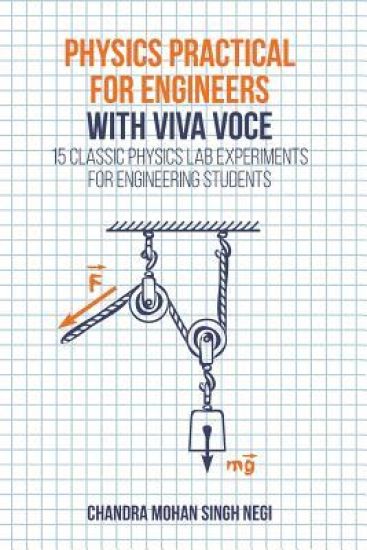
Physics Practical for Engineers with Viva-Voce

Physics Practical for Engineers with Viva-Voce

Chandra Mohan Singh Negi

Universal Publishers
2018
pokkari
This is one of enumerable self-help or how to books with an emphasis on Engineering Physics Practical. The basic premise of the book is that there are certain simple experiments, involving no more than rudimentary Physics laws and the very basic laws of Engineering Physics for undergraduate college engineering students. But these practical are often not done or taken lightly, for several reasons. First, people don't realize how easy they are to do. Second, and more fundamental, they are not done because it does not occur to people to do them. Finally, and tragically, no one in their elementary, middle, or high school educational experience has stressed the importance of doing them, and of course neither did they teach to do them. This book is to reveal to you what the experiments are, make them readily understandable, and by means of a very easy-to-use illustrations. The main thing you should expect from this book is the theories and practical related small information more precisely about experiments. You will get a rudimentary understanding of the basic concepts behind the Engineering Physics experiment that governs the fundamental daily life questions that challenge us in life. The book is divided into seven major categories and Fifteen chapters. In this book the students will find solutions to experimental obstacles normally faced by undergraduate college engineering students. students. In summary, you don't need any special background or ability to profit from this book.