

Kirjahaku
Etsi kirjoja tekijän nimen, kirjan nimen tai ISBN:n perusteella.
1000 tulosta hakusanalla Charles B. Roth


Monopoly Mastermind: Charles B. Darrow: Charles B. Darrow
Paige V. Polinsky
Checkerboard Library
2017
sidottu
In this engaging biography, readers will learn about the developer of the Monopoly board game, Charles B. Darrow. Follow the story of Darrow as he develops Monopoly from its roots as a tool to demonstrate the benefits of single tax through its evolution to the game we know today. Along the way readers will learn how Monopoly helped prisoners of war escape during World War II Sidebars, historic photos, and a glossary enhance readers' understanding of this topic. Additional features include a table of contents, an index, a timeline and fun facts. Aligned to Common Core Standards and correlated to state standards. Checkerboard Library is an imprint of Abdo Publishing, a division of ABDO.

A Medico-Legal Examination Of The Case Of Charles B. Huntington
Chandler Robbins Gilman
KESSINGER PUBLISHING, LLC
2010
sidottu

A Medico-legal Examination of the Case of Charles B. Huntington
Chandler Robbins Gilman
Kessinger Pub
2009
pokkari


Lt. Charles B. Gatewood (1853–1896), an educated Virginian, served in the Sixth U.S. Cavalry as the commander of Indian scouts. Gatewood was largely accepted by the Native peoples with whom he worked because of his efforts to understand their cultures. It was this connection that Gatewood formed with the Indians, and with Geronimo and Naiche in particular, that led to his involvement in the last Apache war and his work for Indian rights. Realizing that he had more experience dealing with Native peoples than other lieutenants serving on the frontier, Gatewood decided to record his experiences. Although he died before he completed his project, the work he left behind remains an important firsthand account of his life as a commander of Apache scouts and as a military commandant of the White Mountain Indian Reservation. Louis Kraft presents Gatewood's previously unpublished account, punctuating it with an introduction, additional text that fills in the gaps in Gatewood's narrative, detailed notes, and an epilogue. Kraft's work offers new background information on Gatewood and discusses the manuscript as a fresh account of how Gatewood viewed the events in which he took part.

Lt. Charles B. Gatewood (1853–1896), an educated Virginian, served in the Sixth U.S. Cavalry as the commander of Indian scouts. Gatewood was largely accepted by the Native peoples with whom he worked because of his efforts to understand their cultures. It was this connection that Gatewood formed with the Indians, and with Geronimo and Naiche in particular, that led to his involvement in the last Apache war and his work for Indian rights. Realizing that he had more experience dealing with Native peoples than other lieutenants serving on the frontier, Gatewood decided to record his experiences. Although he died before he completed his project, the work he left behind remains an important firsthand account of his life as a commander of Apache scouts and as a military commandant of the White Mountain Indian Reservation. Louis Kraft presents Gatewood's previously unpublished account, punctuating it with an introduction, additional text that fills in the gaps in Gatewood's narrative, detailed notes, and an epilogue. Kraft's work offers new background information on Gatewood and discusses the manuscript as a fresh account of how Gatewood viewed the events in which he took part.

A Review of the Unconstitutional Laws, of the Twelfth Legislature of Texas, and the Oppressions of the Present Administrations Exposed, by Chas. B. Pearre ...
Charles B Pearre
University of Michigan Library
2006
pokkari
Appel d'Un Prêtre Innocent Dans l'Affaire d'Arudy, Diocèse de Bayonne
Charles B
Hachette Livre - BNF
2013
pokkari
Appel d'un pretre innocent dans l'affaire d'Arudy, diocese de Bayonne . (Signe: Charles B...)Date de l'edition originale: 1871Sujet de l'ouvrage: BergeCe livre est la reproduction fidele d'une oeuvre publiee avant 1920 et fait partie d'une collection de livres reimprimes a la demande editee par Hachette Livre, dans le cadre d'un partenariat avec la Bibliotheque nationale de France, offrant l'opportunite d'acceder a des ouvrages anciens et souvent rares issus des fonds patrimoniaux de la BnF.Les oeuvres faisant partie de cette collection ont ete numerisees par la BnF et sont presentes sur Gallica, sa bibliotheque numerique.En entreprenant de redonner vie a ces ouvrages au travers d'une collection de livres reimprimes a la demande, nous leur donnons la possibilite de rencontrer un public elargi et participons a la transmission de connaissances et de savoirs parfois difficilement accessibles.Nous avons cherche a concilier la reproduction fidele d'un livre ancien a partir de sa version numerisee avec le souci d'un confort de lecture optimal. Nous esperons que les ouvrages de cette nouvelle collection vous apporteront entiere satisfaction.Pour plus d'informations, rendez-vous sur www.hachettebnf.fr

A market strategist shares the secrets of selecting winning stocks in both up and down markets, explaining why a stock in the Dow Jones Industrial index that has performed poorly during the previous year is ripe for a turnaround that will provide a return to or sale above its usual price. Reprint. 10,000 first printing.

Engineering Ethics is ideal for use in undergraduate engineering programs incorporating ethics topics. Engineering Ethics serves as both a textbook and a resource for the study of engineering ethics. It is written to help future engineers be prepared for confronting and resolving ethical dilemmas that they might encounter during their professional careers.

The legal foundations of global governance are shifting. In addition to traditional instruments for resolving cross-border problems, such as treaties and formal international organizations, policy-makers are turning increasingly to informal agreements and organizations like the Group of Twenty, the Financial Stability Board, and the Asia Pacific Economic Cooperation. A growing number of policy-makers view such weakly-legalized organizations as promising new tools of governance, arguing that informal bodies are faster and more flexible than their formal counterparts, and better-suited to the complex problems raised by deepening interdependence. Yet, equally, political scientists have puzzled over these international organizations. At present, we still know relatively little about these bodies, why they have become so important, and whether they are indeed capable of addressing the immense challenges faced by the global community. In The Origins of Informality, Charles Roger offers a new way of thinking about informal organizations, presents new data revealing their extraordinary growth over time and across regions, and advances a novel theory to explain these patterns. In contrast with existing approaches, he locates the drivers of informality within the internal politics of states, explaining how major shifts within the domestic political arenas of the great powers have projected outwards and reshaped the legal structure of the global system. Informal organizations have been embraced because they allow bureaucrats in powerful states to maintain autonomy over their activities, and can help politicians to circumvent domestic opponents of their foreign policies. Drawing on original quantitative data, interviews, and archival research, the book analyzes some of the most important institutions governing the global economy, showing how informality has helped domestic actors to achieve their narrow political goals-even when this comes at the expense of the institutions they eventually create. Ultimately, Roger claims, the shift towards informality has allowed the number of multilateral institutions to rapidly increase in response to global problems. But, at the same time, it has coincided with a decline in their quality, leaving us less prepared for the next global crisis.

The Fundamentalist Mindset
Charles B. Strozier; David M. Terman; James W. Jones; Katherine A. Boyd
Oxford University Press Inc
2010
sidottu
This penetrating book sheds light on the psychology of fundamentalism, with a particular focus on those who become extremists and fanatics. What accounts for the violence that emerges among some fundamentalist groups? The contributors to this book identify several factors: a radical dualism, in which all aspects of life are bluntly categorized as either good or evil; a destructive inclination to interpret authoritative texts, laws, and teachings in the most literal of terms; an extreme and totalized conversion experience; paranoid thinking; and an apocalyptic world view. After examining each of these concepts in detail, and showing the ways in which they lead to violence among widely disparate groups, these engrossing essays explore such areas as fundamentalism in the American experience and among jihadists, and they illuminate aspects of the same psychology that contributed to such historical crises as the French Revolution, the Nazi movement, and post-Partition Hindu religious practice.

The Fundamentalist Mindset
Charles B. Strozier; David M. Terman; James W. Jones; Katherine A. Boyd
Oxford University Press Inc
2010
nidottu
This penetrating book sheds light on the psychology of fundamentalism, with a particular focus on those who become extremists and fanatics. What accounts for the violence that emerges among some fundamentalist groups? The contributors to this book identify several factors: a radical dualism, in which all aspects of life are bluntly categorized as either good or evil; a destructive inclination to interpret authoritative texts, laws, and teachings in the most literal of terms; an extreme and totalized conversion experience; paranoid thinking; and an apocalyptic world view. After examining each of these concepts in detail, and showing the ways in which they lead to violence among widely disparate groups, these engrossing essays explore such areas as fundamentalism in the American experience and among jihadists, and they illuminate aspects of the same psychology that contributed to such historical crises as the French Revolution, the Nazi movement, and post-Partition Hindu religious practice.
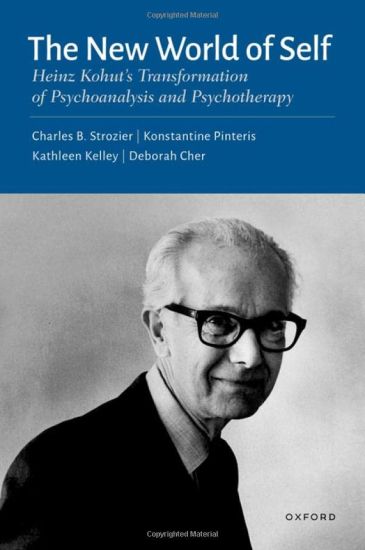
The New World of Self
Charles B. Strozier; Konstantine Pinteris; Kathleen Kelley; Deborah Cher
OXFORD UNIVERSITY PRESS INC
2022
sidottu
There are two foundational thinkers in the history of psychoanalysis: Sigmund Freud and Heinz Kohut. Though Kohut is much less well known, he revolutionized psychoanalytic theory and the practice of psychotherapy. In a burst of creativity from the mid-1960s until his death in 1981, he reimagined the field in a way that made it open, mutual, relational, and inclusive. His conceptualization of a holistic self that is in an ongoing relationship with others represented a paradigm shift from the purely intrapsychic Freudian model of id/ego/superego. In The New World of Self, Charles B. Strozier, Konstantine Pinteris, Kathleen Kelley, and Deborah Cher draw upon their deep knowledge of Kohut's extensive and diverse writing to understand the full significance of his thinking. His self psychology released psychoanalysis from the inherent limits created by its theoretical dependence on drive theory. Kohut instead focused on immediate experience. He also embraced historical themes, leadership and culture, literature from Kafka to O'Neill, the psychology of music, much about art, and a theory of religion and spirituality for modern sensibilities. Acquainting the work of this eminent psychoanalytic theorist to a new generation of clinicians and scholars, The New World of Self unpacks the transformative research of Heinz Kohut and highlights his significance in the history of psychoanalysis.

Oar Feet and Opal Teeth is about free-living copepods and the copepodologists who study them. Copepods are a subclass of the arthropod class Crustacea. They act as dominant herbivores and small predators in the planktonic ecosystems of oceans, estuaries, and lakes. Copepods are likely the largest assemblage of complex animals on earth. These strikingly beautiful small crustaceans are of wide ecological significance and as complex and precisely adapted as insects. Yet few biologists and others interested in animals are familiar with them. In Oar Feet and Opal Teeth, Charles B. Miller introduces these small crustaceans and the scientists devoting their careers to revealing their biology. In twenty-one chapters, Miller details the defining features and general biology of copepods. They typically have four or five pairs of oar-like feet to drive escape jumps. Teeth on mandible extensions are formed with siliceous minerals akin to opal. The first two chapters of the book closely examine the oar feet and mouth parts. Subsequent chapters describe internal anatomy, taxonomy, and many aspects of copepod natural history. Recent evolutionary insights about them are reviewed; those are based on molecular genetics and reach back to the Cambrian explosion. Oar Feet and Opal Teeth includes over twenty biographical sketches of copepodologists from the mid-twentieth century to the present. Among them, Russell Hopcroft, a premier photographer of plankton, has full-color copepod images featured throughout the book. Jeannette Yen learned how Euchaeta marina detects prey and studies how ready-for-mating copepods find each other. Shinichi Uye of Hiroshima University studied the production by copepods of resting eggs and their delayed development. Grace Wyngaard is studying the special embryonic cell-divisions of some lake copepods for eliminating "junk DNA." Miller based most of the profiles featured in the book on personal interviews he conducted.

"Subversive Sounds" probes New Orleans' history, uncovering a web of racial interconnections and animosities that was instrumental to the creation of a vital American art form - jazz. Drawing on oral histories, police reports, newspaper accounts, and vintage recordings, Charles Hersch brings to vivid life the neighborhoods and nightspots where jazz was born. This volume shows how musicians such as Jelly Roll Morton, Nick La Rocca, and Louis Armstrong negotiated New Orleans' complex racial rules to pursue their craft and how, in order to widen their audiences, they became fluent in a variety of musical traditions from diverse ethnic sources. These encounters with other music and races subverted their own racial identities and changed the way they played - a musical miscegenation that, in the shadow of Jim Crow, undermined the pursuit of racial purity and indelibly transformed American culture.
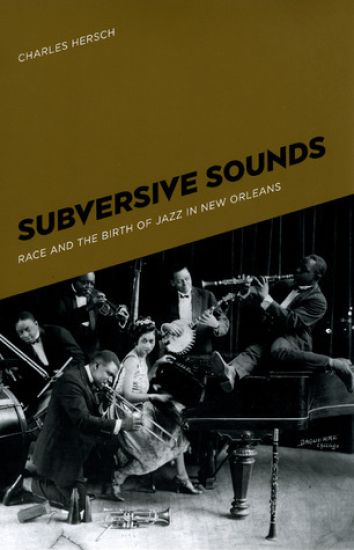
"Subversive Sounds" probes New Orleans' history, uncovering a web of racial interconnections and animosities that was instrumental to the creation of a vital American art form - jazz. Drawing on oral histories, police reports, newspaper accounts, and vintage recordings, Charles Hersch brings to vivid life the neighborhoods and nightspots where jazz was born. This volume shows how musicians such as Jelly Roll Morton, Nick La Rocca, and Louis Armstrong negotiated New Orleans' complex racial rules to pursue their craft and how, in order to widen their audiences, they became fluent in a variety of musical traditions from diverse ethnic sources. These encounters with other music and races subverted their own racial identities and changed the way they played - a musical miscegenation that, in the shadow of Jim Crow, undermined the pursuit of racial purity and indelibly transformed American culture.

On April 15, 1837, a "long, gawky" Abraham Lincoln walked into Joshua Speed's dry-goods store in Springfield, Illinois, and asked what it would cost to buy the materials for a bed. Speed said seventeen dollars, which Lincoln didn't have. He asked for a loan to cover that amount until Christmas. Speed was taken with his visitor, but, as he said later, "I never saw so gloomy and melancholy a face." Speed suggested Lincoln stay with him in a room over his store for free and share his large double bed. What began would become one of the most important friendships in American history. Speed was Lincoln's closest confidant, offering him invaluable support after the death of his first love, Ann Rutledge, and during his rocky courtship of Mary Todd. Lincoln needed Speed for guidance, support, and empathy. Your Friend Forever, A. Lincoln is a rich analysis of a relationship that was both a model of male friendship and a specific dynamic between two brilliant but fascinatingly flawed men who played off each other's strengths and weaknesses to launch themselves in love and life. Their friendship resolves important questions about Lincoln's early years and adds significant psychological depth to our understanding of our sixteenth president.