

Kirjahaku
Etsi kirjoja tekijän nimen, kirjan nimen tai ISBN:n perusteella.
1000 tulosta hakusanalla Charles Devert

![The Deserter; a new musical drama, etc. [Based on Le Déserteur of Michel Jean Sedaine.]](/covers/9781241732820.jpg)
The Deserter; a new musical drama, etc. [Based on Le Déserteur of Michel Jean Sedaine.]
Charles Dibdin
British Library, Historical Print Editions
2011
pokkari
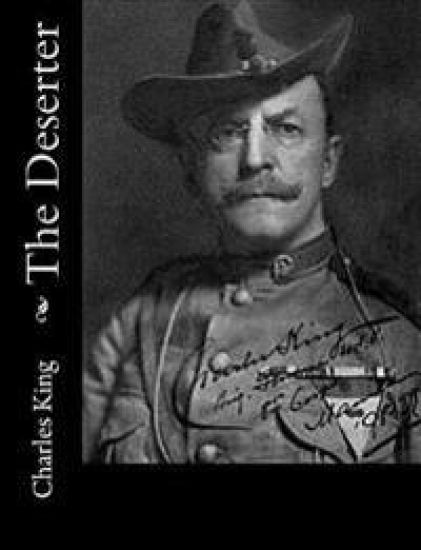

A popular army novel...We are happy to announce this classic book. Many of the books in our collection have not been published for decades and are therefore not broadly available to the readers. Our goal is to access the very large literary repository of general public books. The main contents of our entire classical books are the original works. To ensure high quality products, all the titles are chosen carefully by our staff. We hope you enjoy this classic.

The Desert Rats: The History and Legacy of the British Army's 7th Armoured Division during World War II
Charles River
Createspace Independent Publishing Platform
2018
nidottu
*Includes pictures *Includes online resources and a bibliography for further reading The fighting in North Africa during World War II is commonly overlooked, aside from the famous battle at El Alamein that pitted the British under General Bernard Montgomery against the legendary "Desert Fox," Erwin Rommel. But while the Second Battle of El Alamein would be the pivotal action in North Africa, the conflict in North Africa began all the way back in the summer of 1940 when Italian dictator Benito Mussolini declared Italy's entrance into the war. From his perspective, the fact that the British and French had their hands full with the Germans created an opportunity for Italy to enlarge its colonial holdings in Africa by seizing portions of the British Empire. However, British troops in the colony of Egypt responded to Italy's declaration of war by driving through the Egyptian-Ethiopian border and attacking Italian troops stationed in the Italian colony of Ethiopia. By September 13, 1940, Italian commanders in Ethiopia were finally ready to put Mussolini's plan into action and attack British colonial holdings, but British troops had already attacked a series of Italian frontier posts and had inflicted 3,500 casualties among Italy's North African troops. Despite Italy's advantages, in December 1940, Operation Compass was launched under the overall command of British General Archibald Percival Wavell. In a mobile campaign, the Italian 10th Army was swiftly routed and pitched into retreat. A headlong pursuit followed, spearheaded by the 7th Armoured Division, who would become known as the legendary Desert Rats, and supported by a variety of British and Commonwealth troops. It was during this advance that the important port of Tobruk was taken, mainly by Australians troops, and held for 241 days, despite the ebb and flow of Allied military fortunes. Dealing with the Italians was one thing, but the British faced an entirely different monster in North Africa when Erwin Rommel, a German general who had gained much fame for his role in the invasions of Poland and France, was sent to North Africa in February 1941 along with the Afrika Korps. Rommel's directives from the German headquarters were to maneuver in a way that would allow him to hide the fact that his ultimate goal was the capture of Cairo and the Suez Canal. The ultimate plan was that Rommel would not reveal the Germans' true intentions in North Africa until after the Germans had made headway in their invasion of the Soviet Union. With the Axis forces trying to push through Egypt towards the Suez Canal and the British Mandate of Palestine, American forces landed to their west in North Africa, which ultimately compelled Rommel to try to break through before the Allies could build up and overwhelm them with superior numbers. Given that the combined Allied forces under Montgomery already had an advantage in manpower, Montgomery also wanted to be aggressive, and the fighting would start in late October 1942 with an Allied attack. The Second Battle of El Alamein was a turning point in the campaign. While the scale of the battle paled in comparison to the battles of the Eastern Front, where the majority of German troops were concentrated, it still marked an important victory in World War II, especially from the British perspective. The fighting at the end of 1942 inevitably compelled all Axis forces to quit the theater, the first time since the beginning of the war that Africa was safe for the Allies. The Desert Rats: The History and Legacy of the British Army's 7th Armoured Division during World War II chronicles the legendary unit's war record, and how the Desert Rats earned their name in North Africa. Along with pictures of important people, places, and events, you will learn about the Desert Rats like never before.

The Desert Rats: The History and Legacy of the British Army's 7th Armoured Division during World War II
Charles River
Createspace Independent Publishing Platform
2018
nidottu
*Includes pictures *Includes online resources and a bibliography for further reading The fighting in North Africa during World War II is commonly overlooked, aside from the famous battle at El Alamein that pitted the British under General Bernard Montgomery against the legendary "Desert Fox," Erwin Rommel. But while the Second Battle of El Alamein would be the pivotal action in North Africa, the conflict in North Africa began all the way back in the summer of 1940 when Italian dictator Benito Mussolini declared Italy's entrance into the war. From his perspective, the fact that the British and French had their hands full with the Germans created an opportunity for Italy to enlarge its colonial holdings in Africa by seizing portions of the British Empire. However, British troops in the colony of Egypt responded to Italy's declaration of war by driving through the Egyptian-Ethiopian border and attacking Italian troops stationed in the Italian colony of Ethiopia. By September 13, 1940, Italian commanders in Ethiopia were finally ready to put Mussolini's plan into action and attack British colonial holdings, but British troops had already attacked a series of Italian frontier posts and had inflicted 3,500 casualties among Italy's North African troops. Despite Italy's advantages, in December 1940, Operation Compass was launched under the overall command of British General Archibald Percival Wavell. In a mobile campaign, the Italian 10th Army was swiftly routed and pitched into retreat. A headlong pursuit followed, spearheaded by the 7th Armoured Division, who would become known as the legendary Desert Rats, and supported by a variety of British and Commonwealth troops. It was during this advance that the important port of Tobruk was taken, mainly by Australians troops, and held for 241 days, despite the ebb and flow of Allied military fortunes. Dealing with the Italians was one thing, but the British faced an entirely different monster in North Africa when Erwin Rommel, a German general who had gained much fame for his role in the invasions of Poland and France, was sent to North Africa in February 1941 along with the Afrika Korps. Rommel's directives from the German headquarters were to maneuver in a way that would allow him to hide the fact that his ultimate goal was the capture of Cairo and the Suez Canal. The ultimate plan was that Rommel would not reveal the Germans' true intentions in North Africa until after the Germans had made headway in their invasion of the Soviet Union. With the Axis forces trying to push through Egypt towards the Suez Canal and the British Mandate of Palestine, American forces landed to their west in North Africa, which ultimately compelled Rommel to try to break through before the Allies could build up and overwhelm them with superior numbers. Given that the combined Allied forces under Montgomery already had an advantage in manpower, Montgomery also wanted to be aggressive, and the fighting would start in late October 1942 with an Allied attack. The Second Battle of El Alamein was a turning point in the campaign. While the scale of the battle paled in comparison to the battles of the Eastern Front, where the majority of German troops were concentrated, it still marked an important victory in World War II, especially from the British perspective. The fighting at the end of 1942 inevitably compelled all Axis forces to quit the theater, the first time since the beginning of the war that Africa was safe for the Allies. The Desert Rats: The History and Legacy of the British Army's 7th Armoured Division during World War II chronicles the legendary unit's war record, and how the Desert Rats earned their name in North Africa. Along with pictures of important people, places, and events, you will learn about the Desert Rats like never before.

Reproduction of the original: The Deserter by Charles King



A poet, a gangster and an agent of the Resistance; 'Deserter' details three astonishing lives shaped by the decision to flee during WWII.

Survival situations can and do happen to average people, as well as adventurous explorers. You have the capacity to handle these situations if you know and follow the fundamental principles of survival. Desert Survival Handbook contains the basics to get you started: Prepare yourself for actual emergencies by solving real-life scenarios; Increase your survival odds by knowing how to protect your body; Improve your chances of rescue; Make survival situations easier with a survival kit.


The Mojave Desert: The History and Legacy of North America's Most Famous Desert
Charles River
Createspace Independent Publishing Platform
2018
nidottu
*Includes pictures *Includes online resources and a bibliography for further reading "The Mojave is a big desert and a frightening one. It's as though nature tested a man for endurance and constancy to prove whether he was good enough to get to California." - John Steinbeck The Mojave Desert, otherwise known as the "High Desert," is the smallest of the deserts in the North American continent, nestled between Los Angeles and Las Vegas, two of the most frequented tourist capitals in the country. That being said, this unassuming, yet mesmerizing desert is visited by millions each year, with over 2 million people flocking to Joshua Tree Park alone, for this diverse terrain is built on the back of a rich and unique history, be they real or fictitious. The Mojave Desert: The History and Legacy of North America's Most Famous Desert explores the development of the Mojave, from its formative years to the heterogeneous tract of land it is today. It also examines the native tribes who inhabited it, and their complex relationships with the foreign explorers who traversed their territories. The book also dives into the desert's literal golden era and takes a tour through the desert's fabled Death Valley. Along with pictures of important people, places, and events, you will learn about the Mojave Desert like never before.

The Mojave Desert: The History and Legacy of North America's Most Famous Desert
Charles River
Createspace Independent Publishing Platform
2018
nidottu
*Includes pictures *Includes online resources and a bibliography for further reading "The Mojave is a big desert and a frightening one. It's as though nature tested a man for endurance and constancy to prove whether he was good enough to get to California." - John Steinbeck The Mojave Desert, otherwise known as the "High Desert," is the smallest of the deserts in the North American continent, nestled between Los Angeles and Las Vegas, two of the most frequented tourist capitals in the country. That being said, this unassuming, yet mesmerizing desert is visited by millions each year, with over 2 million people flocking to Joshua Tree Park alone, for this diverse terrain is built on the back of a rich and unique history, be they real or fictitious. The Mojave Desert: The History and Legacy of North America's Most Famous Desert explores the development of the Mojave, from its formative years to the heterogeneous tract of land it is today. It also examines the native tribes who inhabited it, and their complex relationships with the foreign explorers who traversed their territories. The book also dives into the desert's literal golden era and takes a tour through the desert's fabled Death Valley. Along with pictures of important people, places, and events, you will learn about the Mojave Desert like never before.

The Gobi Desert: The History and Legacy of the Asia's Largest Desert
Charles River
Createspace Independent Publishing Platform
2018
nidottu
*Includes pictures *Includes online resources and a bibliography for further reading "The Gobi Desert seems like earth reduced to its most basic elements: rock, sky, glaring sunlight, and little else. The apparent emptiness is both compelling and intimidating. But the Gobi is not empty, it is filled with space, sky, history, and landscapes..." - Conservation Ink In August of 2008, London-based Jane Macartney published this striking description of the Gobi Desert in The Times: "On the Mongolian steppes, the emptiness and the silence inspire awe. From time to time, a huge, tawny eagle drifts on the breeze, watching for small animals to snatch amid the grasses. The only movement on the ground comes from the flocks of sheep and goats, yaks and cattle that roam, heads down, as they much their way across the grasslands..." Alongside this stunning and therapeutic view of the grassland critters are a smattering of white yurts which belonged to the Mongolian nomads who now inhabit the land. Gazing upon the rest of the Gobi, furnished with rolling plains, sweeping steppes, cragged mountains, and singing sand dunes, the desert instills in one a similar sense of inner peace. In fact, these Kodak scenes are so picture-perfect that it is almost impossible to imagine the adventurous discoveries, devastating wars, colorful commerce, and dramatically different landscape that once appeared in its place. The Gobi Desert: The History and Legacy of the Asia's Largest Desert examines the history of Asia's greatest desert. Along with pictures of important people, places, and events, you will learn about the Gobi Desert like never before.

The Gobi Desert: The History and Legacy of the Asia's Largest Desert
Charles River
Createspace Independent Publishing Platform
2018
nidottu
*Includes pictures *Includes online resources and a bibliography for further reading "The Gobi Desert seems like earth reduced to its most basic elements: rock, sky, glaring sunlight, and little else. The apparent emptiness is both compelling and intimidating. But the Gobi is not empty, it is filled with space, sky, history, and landscapes..." - Conservation Ink In August of 2008, London-based Jane Macartney published this striking description of the Gobi Desert in The Times: "On the Mongolian steppes, the emptiness and the silence inspire awe. From time to time, a huge, tawny eagle drifts on the breeze, watching for small animals to snatch amid the grasses. The only movement on the ground comes from the flocks of sheep and goats, yaks and cattle that roam, heads down, as they much their way across the grasslands..." Alongside this stunning and therapeutic view of the grassland critters are a smattering of white yurts which belonged to the Mongolian nomads who now inhabit the land. Gazing upon the rest of the Gobi, furnished with rolling plains, sweeping steppes, cragged mountains, and singing sand dunes, the desert instills in one a similar sense of inner peace. In fact, these Kodak scenes are so picture-perfect that it is almost impossible to imagine the adventurous discoveries, devastating wars, colorful commerce, and dramatically different landscape that once appeared in its place. The Gobi Desert: The History and Legacy of the Asia's Largest Desert examines the history of Asia's greatest desert. Along with pictures of important people, places, and events, you will learn about the Gobi Desert like never before.

The U.S.-led conquest and occupation of Iraq have kept that troubled country in international headlines since 2003. For America's major Coalition ally, Great Britain, however, this latest incursion into the region played out against the dramatic backdrop of imperial history: Britain's fateful invasion of Mesopotamia in 1914 and the creation of a new nation from the shards of war. The objectives of the expedition sent by the British Government of India were primarily strategic: to protect the Raj, impress Britain's military power upon Arabs chafing under Ottoman rule, and secure the Persian oil supply. But over the course of the Mesopotamian campaign, these goals expanded, and by the end of World War I Britain was committed to controlling the entire region from Suez to India. The conquest of Mesopotamia and the creation of Iraq were the central acts in this boldly opportunistic bid for supremacy. Charles Townshend provides a compelling account of the atrocious, unnecessary suffering inflicted on the expedition's mostly Indian troops, which set the pattern for Britain's follow-up campaigns in Iraq and Afghanistan over the next seven years. He chronicles the overconfidence, incompetence, and dangerously vague policy that distorted the mission, and examines the steps by which an initially cautious strategic operation led to imperial expansion on a vast scale. Desert Hell is a cautionary tale for makers of national policy. And for those with an interest in imperial history, it raises searching questions about Britain's quest for global power and the indelible consequences of those actions for the Middle East and the world.
