Kirjojen hintavertailu. Mukana 11 244 527 kirjaa ja 12 kauppaa.

Kirjahaku

Etsi kirjoja tekijän nimen, kirjan nimen tai ISBN:n perusteella.

1000 tulosta hakusanalla Charles Hibbert Tupper

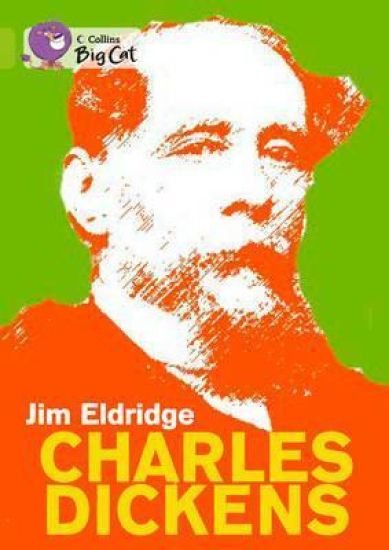
Charles Darwin and Alfred Russel Wallace
Build your child’s reading confidence at home with books at the right level Collins Big Cat is a guided reading series for ages 4–11 edited by Cliff Moon. Top children's authors and illustrators have created fiction and non-fiction books that your children will love to read, banded to help you choose the right book for every child. Practical ideas for guided reading are included at the back of each book. Pearl/Band 18 books offer fluent readers a complex, substantial text with challenging themes to facilitate sustained comprehension, bridging the gap between a reading programme and longer chapter books.Text type:Curriculum links:
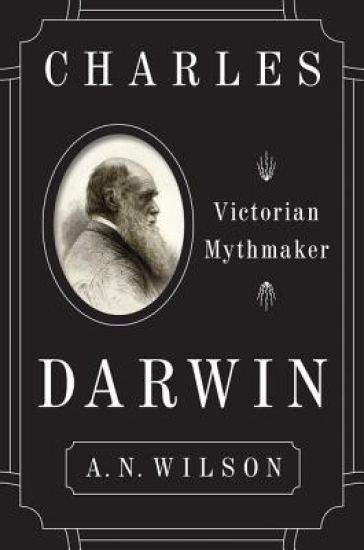
Charles Darwin: Victorian Mythmaker

Charles Darwin: Victorian Mythmaker

A. N. Wilson

HARPER PERENNIAL
2018
nidottu
A radical reappraisal of Charles Darwin from the bestselling author of Victoria: A Life.With the publication of On the Origin of Species, Charles Darwin--hailed as the man who "discovered evolution"--was propelled into the pantheon of great scientific thinkers, alongside Galileo, Copernicus, and Newton. Eminent writer A. N. Wilson challenges this long-held assumption. Contextualizing Darwin and his ideas, he offers a groundbreaking critical look at this revered figure in modern science.In this beautifully written, deeply erudite portrait, Wilson argues that Darwin was not an original scientific thinker, but a ruthless and determined self-promoter who did not credit the many great sages whose ideas he advanced in his book. Furthermore, Wilson contends that religion and Darwinism have much more in common than it would seem, for the acceptance of Darwin's theory involves a pretty significant leap of faith.Armed with an extraordinary breadth of knowledge, Wilson explores how Darwin and his theory were very much a product of their place and time. The "Survival of the Fittest" was really the Survival of Middle Class families like the Darwins--members of a relatively new economic strata who benefited from the rising Industrial Revolution at the expense of the working classes. Following Darwin's theory, the wretched state of the poor was an outcome of nature, not the greed and neglect of the moneyed classes. In a paradigm-shifting conclusion, Wilson suggests that it remains to be seen, as this class dies out, whether the Darwinian idea will survive, or whether it, like other Victorian fads, will become a footnote in our intellectual history.Brilliant, daring, and ambitious, Charles Darwin explores this legendary man as never before, and challenges us to reconsider our understanding of both Darwin and modern science itself.
The Collected Novels of Charles Wright: The Messenger, the Wig, and Absolutely Nothing to Get Alarmed about
"Reading Wright is a steep, stinging pleasure."--Dwight Garner, New York TimesIn this incisive, satirical collection of three classic American novels by Charles Wright--hailed by the New York Times as "malevolent, bitter, glittering"--a young, black intellectual from the South struggles to make it in New York City. This special compilation includes a foreword by acclaimed poet and novelist Ishmael Reed, who calls Wright, "Richard Pryor on paper."As fresh and poignant as when originally published in the sixties and seventies, The Messenger, The Wig, and Absolutely Nothing to get Alarmed About form Charles Wright's remarkable New York City trilogy. By turns brutally funny and starkly real, these three autobiographical novels create a memorable portrait of a young, working-class, black intellectual--a man caught between the bohemian elite of Greenwich Village and the dregs of male prostitution and drug abuse. Wright's fiction is searingly original in bringing to life a special time, a special place, and the remarkable story of a man living in two worlds. This updated edition shines a spotlight once again on this important writer--a writer whose work is so crucial to our times.
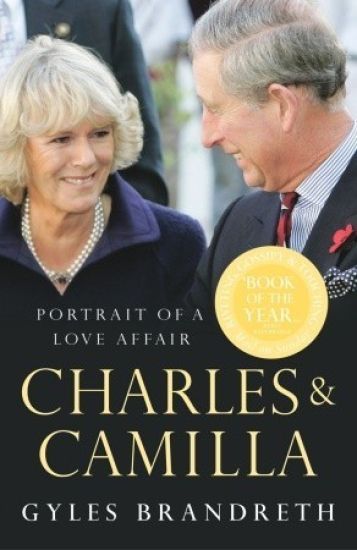
Charles & Camilla

Charles & Camilla

Arrow Books Ltd
2006
pokkari
This is the definitive account of one of the most extraordinary stories of our time. Gyles Brandreth, acclaimed biographer of the Queen and Prince Philip, presents a unique portrait of their son, Charles, Prince of Wales, and of the one 'non-negotiable' love of his life, Camilla Shand, now Duchess of Cornwall.What are Charles and Camilla really like? What is their heritage? What has made them the way they are? This is both a revealing portrait of two unusual individuals and a family saga like no other, told with unrivalled authority and insight - and humour - by a best-selling writer who has met all the key characters in the drama: Charles, Camilla, Diana, their children, their families and their friends.
Charles Jessold, Considered as a Murderer
The night before brilliant but erratic composer Charles Jessold's opera - about a betrayed husband who murders his wife and her lover - is due to open, Jessold is found dead, having apparently murdered his wife and her lover. Leslie Shepherd, music critic and Jessold's collaborator on the opera, reflects on the scandalous affair in a dazzling, passionate and witty novel about the dangerous relationship between artist and critic.
Charles Laughton

Charles Laughton

Simon Callow

Vintage
2012
pokkari
The creator of the Hunchback of Notre Dame, Henry VIII and Captain Bligh, Charles Laughton's career spans 50 films and 40 stage roles. Along the way we meet a galaxy of Hollywood greats - from Korda, Hitchcock and Billy WIlder to Gregory Peck, Robert Mitchum and Marilyn Monroe.
Charles Waterton 1782-1865

Charles Waterton 1782-1865

Julia Blackburn

Vintage
1997
pokkari
Charles Waterton was the first conservationist who fought to protect wild nature against the destruction and pollution of Victorian industrialisation. Using his surviving papers, Julia Blackburn has redressed the balance in a biogr aphy that restores Waterton to his place as the first conservationist of the modern age.
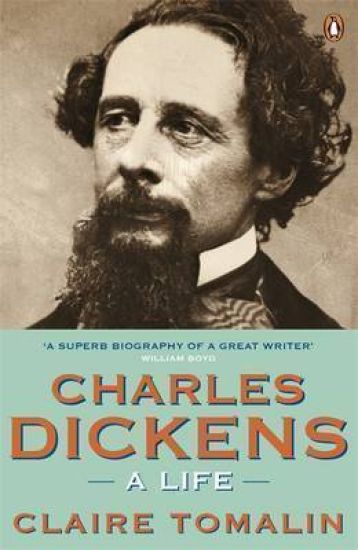
Charles Dickens

Charles Dickens

Claire Tomalin

Penguin Books Ltd
2012
pokkari
Charles Dickens is the acclaimed definitive biography by bestselling author Claire Tomalin Charles Dickens was a phenomenon: a demonicly hardworking journalist, the father of ten children, a tireless walker and traveller, a supporter of liberal social causes, but most of all a great novelist - the creator of characters who live immortally in the English imagination: the Artful Dodger, Mr Pickwick, Pip, David Copperfield, Little Nell, Lady Dedlock, and many more.At the age of twelve he was sent to work in a blacking factory by his affectionate but feckless parents. From these unpromising beginnings, he rose to scale all the social and literary heights, entirely through his own efforts. When he died, the world mourned, and he was buried - against his wishes - in Westminster Abbey.Yet the brilliance concealed a divided character: a republican, he disliked America; sentimental about the family in his writings, he took up passionately with a young actress; usually generous, he cut off his impecunious children. From the award-winning author of Samuel Pepys, Charles Dickens: A Life paints an unforgettable portrait of Dickens, capturing brilliantly the complex character of this great genius. If you loved Great Expectations, Oliver Twist and A Christmas Carol, this book is invaluable reading.'By far the most humane and imaginatively sympathetic account yet for the general reader' Amanda Craig, New Statesman
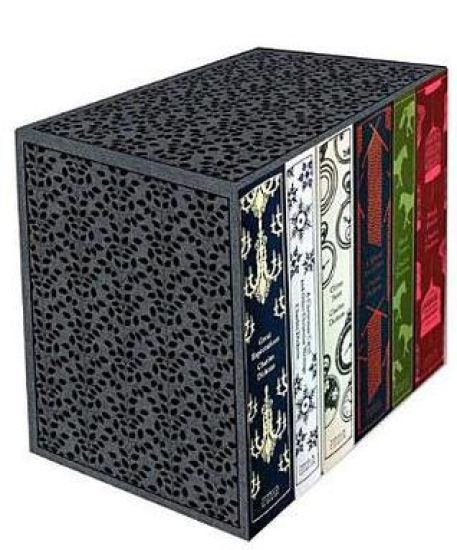
Major Works of Charles Dickens (Boxed Set)

Major Works of Charles Dickens (Boxed Set)

Charles Dickens

Penguin Classics
2011
tuotepaketti
2012 is the two-hundredth anniversary of the birth of one of our greatest and most important novelists, Charles Dickens. To celebrate we're publishing six of his works in this exclusive and sumptuous boxed set of lavish, clothbound editions, designed by Penguin's own award-winning Coralie Bickford-Smith.Part of Penguin's beautiful hardback Clothbound Classics series, designed by the award-winning Coralie Bickford-Smith, these delectable and collectible editions are bound in high-quality colourful, tactile cloth with foil stamped into the design.
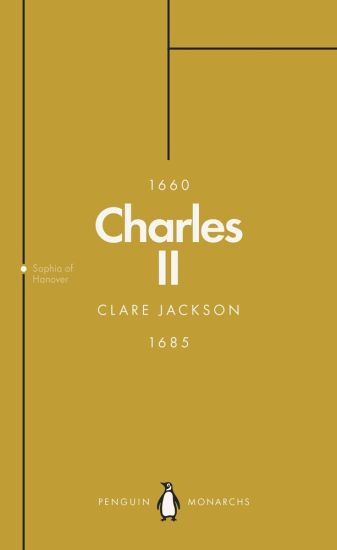
Charles II (Penguin Monarchs)

Charles II (Penguin Monarchs)

Clare Jackson

Penguin Books Ltd
2018
nidottu
The acclaimed Penguin Monarchs series: short, fresh, expert accounts of England's rulers - now in paperbackCharles II has always been one of the most instantly recognisable British kings - both in his physical appearance, disseminated through endless portraits, prints and pub signs, and in his complicated mix of lasciviousness, cynicism and luxury. His father's execution and his own many years of exile made him a guarded, curious, unusually self-conscious ruler. He lived through some of the most striking events in the national history - from the Civil Wars to the Great Plague, from the Fire of London to the wars with the Dutch.Clare Jackson's marvellous book takes full advantage of its irrepressible subject.
The Portable Charles W. Chesnutt

The Portable Charles W. Chesnutt

Charles W. Chesnutt

Penguin Classics
2008
pokkari
A collection from one of our most influential African American writers An icon of nineteenth-century American fiction, Charles W. Chesnutt, an incisive storyteller of the aftermath of slavery in the South, is widely credited with almost single-handedly inaugurating the African American short story tradition and was the first African American novelist to achieve national critical acclaim. This major addition to Penguin Classics features an ideal sampling of his work: twelve short stories (including conjure tales and protest fiction), three essays, and the novel The Marrow of Tradition. Published here for the 150th anniversary of Chesnutt's birth, The Portable Charles W. Chesnutt will bring to a new audience the genius of a man whose legacy underlies key trends in modern black fiction. For more than seventy years, Penguin has been the leading publisher of classic literature in the English-speaking world. With more than 1,700 titles, Penguin Classics represents a global bookshelf of the best works throughout history and across genres and disciplines. Readers trust the series to provide authoritative texts enhanced by introductions and notes by distinguished scholars and contemporary authors, as well as up-to-date translations by award-winning translators.
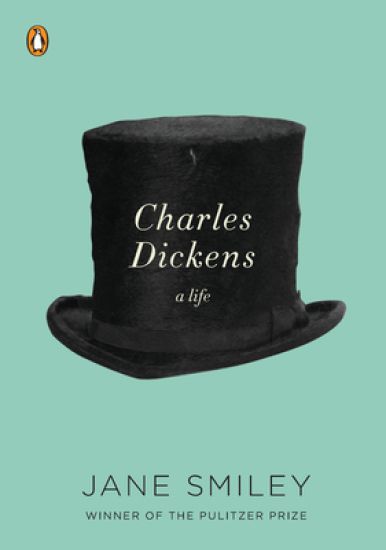
Charles Dickens: A Life

Charles Dickens: A Life

Jane Smiley

PENGUIN BOOKS
2011
nidottu
With the delectable wit, unforgettable characters, and challenging themes that won her a Pulitzer Prize and national bestseller status, Jane Smiley naturally finds a kindred spirit in the author of classics such as Great Expectations and A Christmas Carol. As "his novels shaped his life as much as his life shaped his novels," Smiley's Charles Dickens is at once a sensitive profile of the great master and a fascinating meditation on the writing life. This biographical deep dive offers brilliant interpretations of almost all the major works, an exploration of Dickens's narrative techniques and his innovative voice and themes, and a reflection on how his richly varied lower-class cameos sprang from an experience and passion more personal than his public knew. Smiley's own "demon narrative intelligence" (The Boston Globe) touches, too, on controversial details that include Dickens's obsession with money and squabbles with publishers, his unhappy marriage, and the rumors of an affair. Charles Dickens is a fresh look at the dazzling personality of a verbal magician and the fascinating times behind the classics we read in school and continue to enjoy today.
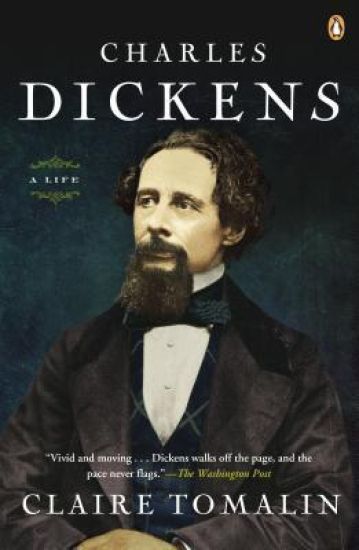
Charles Dickens: A Life

Charles Dickens: A Life

Claire Tomalin

Penguin Publishing Group
2012
nidottu
Award-winning Claire Tomalin, author of A Life of My Own, sets the standard for sophisticated and popular biography, having written lives of Jane Austen, Samuel Pepys, and Thomas Hardy, among others. Here she tackles the best recognized and loved man of nineteenth-century England, Charles Dickens; a literary leviathan whose own difficult path to greatness inspired the creation of classic novels such as Great Expectations, David Copperfield, Oliver Twist, and Hard Times. From his sensational public appearances to the obsessive love affair that led him to betray, deceive, and break with those closest to him, Charles Dickens: A Life is a triumph of the biographer's craft, a comedy that turns to tragedy in a story worthy of Dickens' own pen.
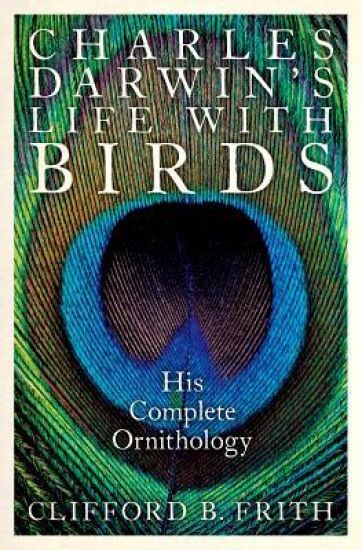
Charles Darwin's Life With Birds

Charles Darwin's Life With Birds

Clifford B. Frith

Oxford University Press Inc
2016
sidottu
Much of Charles Darwin's groundbreaking work as an evolutionary biologist stemmed from his study of birds. It is universally acknowledged that Darwin's observation of bird groups and species like the Galapagos finches, mockingbirds, and rock doves was critical to the development of his theories on natural selection, evolution, and sexual selection. The significant number of diverse birds that Darwin covered in his published works represents a most substantial ornithological contribution. His major books alone contain reference to and consideration of almost 500 bird species, as well as interesting and pertinent discussion of over 100 ornithological topics. "Charles Darwin's Birds" is a comprehensive treatment of Darwin's work as an ornithologist. Clifford Frith discusses every ornithological topic and bird species that Darwin researched, providing a complete historical survey of his published writing on birds. Through this, we learn how Darwin became an increasingly skilled and eventually exceptional ornithologist, and how his relationships grew with contemporary scientists like John Gould. It examines how Darwin was influenced by birds, and how the major themes of his research developed through his study of them. The book also features 4 appendices, which contain brief accounts of every bird species Darwin wrote about, basic ornithological information about each of the species, and a listing of where the species appears in Darwin's work.
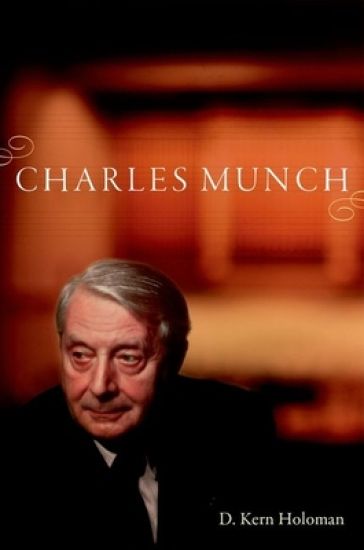
Charles Munch

Charles Munch

Holoman D. Kern

Oxford University Press Inc
2015
nidottu
A mesmerizing figure in concert, Charles Munch was celebrated for his electrifying public performances. He was a pioneer in many arenas of classical music—establishing Berlioz in the canon, perfecting the orchestral work of Debussy and Ravel, and leading the world to Roussel, Honegger, and Dutilleux. A pivotal figure, his accomplishments put him on a par with Arturo Toscanini and Leonard Bernstein. In Charles Munch, D. Kern Holoman provides the first full biography of this giant of twentieth-century music, tracing his dramatic survival in occupied Paris, his triumphant arrival at the Boston Symphony Orchestra, and his later years, when he was a leading cultural figure in the United States, a man known and admired by Presidents Truman, Eisenhower, and Kennedy. He turned to conducting only in middle age, after two decades as a violinist and concertmaster, a background which gave him special insight into the relationship between conductor and orchestra. At the podium, his bond with his musicians unleashed something in them and in himself. "A certain magic took wing that amounts to the very essence of music in concert," the author writes, as if "public performance loosed the facets of character and artistry and poetry otherwise muffled by his timidity and simple disinclination to say much." In concert, Munch was arresting, even seductive, sweeping his baton in an enormous arch from above his head down to his knee. Yet as Holoman shows, he remained a lonely, even sad figure, a widower with no children, a man who fled admirers and avoided reporters. With groundbreaking research and sensitive, lyrical writing, Charles Munch penetrates the enigma to capture this elusive musical titan.
Charles S. Peirce's Phenomenology

Charles S. Peirce's Phenomenology

Richard Kenneth Atkins

Oxford University Press Inc
2019
sidottu
No reasonable person would deny that the sound of a falling pin is less intense than the feeling of a hot poker pressed against the skin, or that the recollection of something seen decades earlier is less vivid than beholding it in the present. Yet John Locke is quick to dismiss a blind man's report that the color scarlet is like the sound of a trumpet, and Thomas Nagel similarly avers that such loose intermodal analogies are of little use in developing an objective phenomenology. Charles Sanders Peirce (1839-1914), by striking contrast, maintains rather that the blind man is correct. Peirce's reasoning stems from his phenomenology, which has received little attention as compared with his logic, pragmatism, or semiotics. Peirce argues that one can describe the similarities and differences between such experiences as seeing a scarlet red and hearing a trumpet's blare or hearing a falling pin and feeling a hot poker. Drawing on the Kantian idea that the analysis of consciousness should take as its guide formal logic, Peirce contends that we can construct a table of the elements of consciousness, just as Dmitri Mendeleev constructed a table of the chemical elements. By showing that the elements of consciousness fall into distinct classes, Peirce makes significant headway in developing the very sort of objective phenomenology which vindicates the studious blind man Locke so derides. Charles S. Peirce's Phenomenology shows how his phenomenology rests on his logic, gives an account of Peirce's phenomenology as science, and then shows how his work can be used to develop an objective phenomenological vocabulary. Ultimately, Richard Kenneth Atkins shows how Peirce's pioneering and distinctive formal logic led him to a phenomenology that addresses many of the questions philosophers of mind continue to raise today.
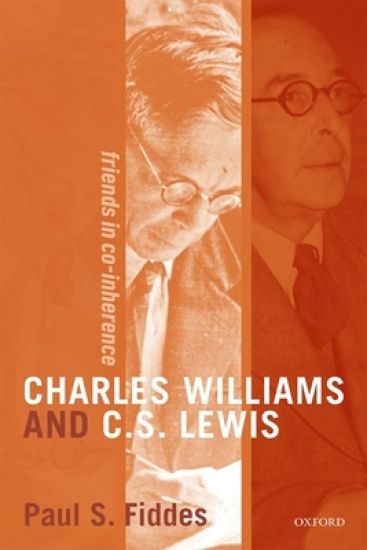
Charles Williams and C. S. Lewis

Charles Williams and C. S. Lewis

Paul S. Fiddes

Oxford University Press
2021
sidottu
This study of the literary relationship between Charles Williams and C. S. Lewis during the years 1936-1945 focuses on the theme of 'co-inherence' at the centre of their friendship. The idea of 'co-inherence' has long been recognized as an important contribution of Williams to theology, and had significant influence on the thought of Lewis. This account of the two writers' conviction that human persons 'inhere' or 'dwell' both in each other and in the triune God reveals many inter-relationships between their writings that would otherwise be missed. It also shows up profound differences between their world-views, and a gradual, though incomplete, convergence onto common ground. Exploring the idea of co-inherence throws light on the fictional worlds they created, as well as on their treatment (whether together or separately) of a wide range of theological and literary subjects: the Arthurian tradition, the poetry of William Blake and Thomas Traherne, the theology of Karl Barth, the nature of human and divine love, and the doctrine of the Trinity. This study draws for the first time on transcriptions of Williams' lectures from 1932 to 1939, tracing more clearly the development and use of the idea of co-inherence in his thought than has been possible before. Finally, an account of the use of the word 'co-inherence' in English-speaking theology suggests that the differences that existed between Lewis and Williams, especially on the place of analogy and participation in human experience of God, might be resolved by a theology of co-inherence in the Trinity.
Charles Bonnet, Analytical Essay on the Faculties of the Soul
In the course of the eighteenth century, understanding human cognitive life came to be construed as something to be explored in terms of the physiology of the sensory organs, the nerves, and the brain: a form of naturalization that effectively moved cognition out of the realm of philosophy as it had traditionally been understood. Bonnet's Analytical Essay on the Faculties of the Soul was at the forefront of these developments, and this is its first English translation. Drawing on his earlier work in natural history--he was the leading entomologist of his era--he approaches problems of the nature of the mind via the physiology and anatomy of the brain and sensory systems. His approach is one of 'reverse engineering', starting from an organic statue without faculties, and investigating how it would need to be modified to produce a human being. Bonnet takes up a position that cuts across the standard understanding of the period as a clash between materialism and dualism. While his approach was rigorously naturalistic and physiological, this did not lead him to reject the notion of a soul. Instead, he argues that, in order to make sense of their sensory abilities, we need to attribute a soul to animals as well as human beings. At the same time, he argues that if personal immortality is to be possible, it can be conceived along the lines of insect metamorphosis, which shows how different biological forms can harbour a single identity.
Charles Dickens

Charles Dickens

Annette Federico

Oxford University Press
2022
sidottu
A personal approach to Dickens's art that pays attention to what magnetizes Federico or strikes her as newly relevant to our own world, and to her life, as she explores what Dickens' works are emotionally about. Dickens's first concern in all his fiction is with people's feelings and their imaginations. Everything else--the social criticism, the satire, the comedy--flows from that spring. How does a person begin to imagine, to enter vividly into the life he or she has been given, and into the lives of others? How does someone change, how do they love, give their trust, look forward to the future? These questions make their way into all of Dickens's novels, including the four discussed in this contribution to the My Reading series: Oliver Twist (1837-39), David Copperfield (1849-50), Little Dorrit (1855-57), and A Tale of Two Cities (1859). Consistent with the aims of the series, this book takes a personal approach to Dickens's art. Federico follows her own responses, paying attention to what magnetizes her or strikes her as newly relevant to our own world, and to her life. What is the story emotionally about? This becomes the important question as she reads through Dickens's works. It is the question that opens the door to her own memories, her own stories, as she grows from being an innocent reader of Dickens to a more critical, professionalized one--while still listening confidentially to what Dickens has to teach her about hope, love, and the limits of knowledge.