Kirjojen hintavertailu. Mukana 11 244 527 kirjaa ja 12 kauppaa.

Kirjahaku

Etsi kirjoja tekijän nimen, kirjan nimen tai ISBN:n perusteella.

747 tulosta hakusanalla Cherokee Hatcher

Cherokee Mist

Cherokee Mist

Jimi Hendrix

Bloomsbury Publishing PLC
1995
pokkari
This is a collection of the previously unpublished work of Jimi Hendrix including letters to family, friends and girlfriends; a movie outline; poems; notes; and, many unrecorded songs including "Black Gold". This book includes 75 handwriting facsimilies.
Cherokee Myths and Legends

Cherokee Myths and Legends

Terry L. Norton

McFarland Co Inc
2014
pokkari
Retelling 30 myths and legends of the Eastern Cherokee, this book presents the stories with important details providing a culturally authentic and historically accurate context. Background information is given within each story so the reader may avoid reliance on glossaries, endnotes, or other explanatory aids. The reader may thus experience the stories more as their original audiences would have. This approach to adapting traditional literature derives from ideas found in reader-response and translation theory and from research in cognitive psychology and sociolinguistics.
Cherokee Sister

Cherokee Sister

Catharine Brown

University of Nebraska Press
2014
pokkari
Catharine Brown (1800?–1823) became Brainerd Mission School’s first Cherokee convert to Christianity, a missionary teacher, and the first Native American woman whose own writings saw extensive publication in her lifetime. After her death from tuberculosis at age twenty-three, the missionary organization that had educated and later employed Brown commissioned a posthumous biography, Memoir of Catharine Brown, which enjoyed widespread contemporary popularity and praise. In the following decade, her writings, along with those of other educated Cherokees, became highly politicized and were used in debates about the removal of the Cherokees and other tribes to Indian Territory. Although she was once viewed by literary critics as a docile and dominated victim of missionaries who represented the tragic fate of Indians who abandoned their identities, Brown is now being reconsidered as a figure of enduring Cherokee revitalization, survival, adaptability, and leadership. In Cherokee Sister Theresa Strouth Gaul collects all of Brown’s writings, consisting of letters and a diary, some appearing in print for the first time, as well as Brown’s biography and a drama and poems about her. This edition of Brown’s collected works and related materials firmly establishes her place in early nineteenth-century culture and her influence on American perceptions of Native Americans.
Cherokee Americans

Cherokee Americans

John R. Finger

Bison Books
1993
pokkari
Cherokee Americans combines . . . high-quality scholarship and eminent readability.-ChoiceMuch has been written about the forced removal of thousands of Cherokee Indians to present-day Oklahoma in the 1830s. Many of them died on the Trail of Tears. But until recently historians have largely ignored the tribal remnant that avoided removal and remained in North Carolina. John R. Finger shifts attention to the Eastern Band of Cherokees, descended from that remnant and now numbering almost ten thousand, most of whom live on a reservation adjacent to Great Smoky Mountains National Park. Cherokee Americans is, ironically, the first comprehensive account of the twentieth-century experience of a band that is known to and photographed by millions of tourists.This book is a sequel to The Eastern Band of Cherokees, 1819–1900 (1984) by John R. Finger, who is a professor of history at the University of Tennessee.
Cherokee Women

Cherokee Women

Theda Perdue

University of Nebraska Press
1999
pokkari
“An interesting and effective overview. . . . It is to the author’s considerable credit that she is able to re-create the values and behavior of Cherokee women through court records, myths, and observers’ accounts. By examining women’s roles in farming and community life, Perdue argues that women were coequal contributors to Cherokee culture.”-ChoiceTheda Perdue examines the roles and responsibilities of Cherokee women during the eighteenth and nineteenth centuries, a time of intense cultural change. While building on the research of earlier historians, she develops a uniquely complex view of the effects of contact on Native gender relations, arguing that Cherokee conceptions of gender persisted long after contact. Maintaining traditional gender roles actually allowed Cherokee women and men to adapt to new circumstances and adopt new industries and practices.
Cherokee Tragedy

Cherokee Tragedy

Thurman Wilkins

University of Oklahoma Press
1989
nidottu
Beginning with the birth of the Cherokee patriarch Major Ridge in the 1770's, Thurman Wilkins tells the events that led to the Trail of Tears, through the eyes of the illustrious Ridge family. Major Ridge and his Connecticut-educated son John were willing to abandon the rich tribal homelands in North Carolina, Tennessee, Alabama, and Georgia and emigrate west to the Indian Territory to escape the white invaders.During the decades of fruitless negotiations that culminated in the infamous Treaty of New Echota, Georgia, in 1835, the Ridges and their relatives Elias Boudinot and Stand Watie became persuaded that further protests by the Cherokees would lead only to their annihilation at the hands of the whites. The pro-treaty Ridge faction was opposed by fiery John Ross, the leader of the majority National Party, who wanted to stay and fight in the Southeast against all odds.In this revised edition of his great work, Thurman Wilkins addresses the new scholarship of the past fifteen years and reconsiders the important questions raised by Cherokee history aficionados: Were Major Ridge and John Ridge paid off by the United States for their support of removal? If not, how did these Cherokee patriots come to change their minds about emigrating west? Was Chief John Ross a hero or a villain?Since Cherokee Tragedy was first published in 1970, it has been valued as a penetrating social and political history of neither the whole Cherokee Nation-nor just the Ridge family- from the last quarter of the eighteenth century to the 1838 Trail of Tears and the subsequent ""execution"" of the Ridges in Indian Territory.
Cherokee Dance and Drama

Cherokee Dance and Drama

Frank G. Speck; Leonard Broom

University of Oklahoma Press
1993
nidottu
Traditionally, the Cherokees dance to ensure individual health and social welfare. According to legend, the dance songs bequeathed to them by the Stone Coat monster will assuage all the ills of life that the monster brought. Winter dance (including the Booger Dance, which expresses the Cherokees' anxiety at the white invasion) are to be given only during times of frost, lest they affect the growth of vegetation by attracting cold and death. The summer dance (the Green Corn Ceremony and the Ballplayer's Dance) are associated with crops and vegetation. Other dances are purely for social intercourse and entertainment or are prompted by specific events in the community.When it was first published in 1951, this description of the dances of a conservative Eastern Cherokee band was hailed as a scholarly contribution that could not be duplicated, Frank G. Speak and Leonard Broom had achieved the close and sustained interaction that very best ethnological fieldwork requires. Their principal informant, will West Long, upheld the unbroken ceremonial tradition of the Big Cove band, near Cherokee, North Carolina.
Cherokee Cavaliers

Cherokee Cavaliers

Edward Everett Dale; Gaston Litton; James W. Parins

University of Oklahoma Press
1995
nidottu
The two hundred letters which from the colorful mosaic of this story of the Cherokee tell for the first time, in the Indian's own words, of more than forty years in the history of the old Cherokee Nation. These letters, found in three great trunks in Oklahoma by Edward Everett Dale, and here brought together, in collaboration with Gaston Litton, in sequence and with the necessary annotation to make a connected story, are the correspondence of the Ridge-Watie-Boudinot family, the minority leaders in the Nation.The Cherokees, by the first decade of the nineteenth century, had made great progress in civilization. They had a constitutional form of government under which they were to live for three-quarters of a century in a tiny independent republic within the confines of the United States. Not a few were well educated. They had their own written language as evolved by Sequoyah and many had large plantations, cultivated by numerous slaves, and lived in beautiful homes as Southern planters, in the full tradition of the Southern cavalier.From the time of President Jefferson, however, they had been under urgent pressure to leave their traditional homes in the deep south and seek new ones in the great unoccupied lands of the Louisiana Purchase. In 1835 the minority group, headed by the Ridge-Watie-Boudinot family, signed at New Echota, Georgia, a treaty which provided that the entire tribe should remove to lands in Indian Territory already occupied by the Cherokees West. This group was henceforth known as the ""Treaty Party.""The treaty and the enforced removal three years later divided the Cherokee into two hostile factions and paved the way for thirty years of political turmoil and bloody strife within the Nation. In these letters, which center around the figure of the last Confederate General to surrender his sword - brigadier General Stand Watie - is told the story of the removal, the establishment of a new nation in the West, the divided loyalties of the tribe during the Civil War, and the tragic difficulties of the reconstruction. The picture is not alone that of life within the Nation. E. C. Boudinot, the Cherokee delegate to the Confederate congress, writes of war-torn Richmond during the Civil War. John Rollin Ridge, the poet and journalist, and several others who followed the Gold Rush to California tell of the mining camps during the days of forty-nine. General Albert Pike's official correspondence with General Watie is revealed.As only personal letters can reveal, here in intimacy are the lives and thoughts, the loves and hates, the philosophies and ambitions of these proud cavaliers of Cherokee blood. This book will be a revelation to those who have thought of this branch of Indian race as barbarous or semi-civilized.
Cherokee Outlet Cowboy

Cherokee Outlet Cowboy

Laban Samuel Records

University of Oklahoma Press
1997
nidottu
At age fifteen, Laban Samuel Records (1856-1940), the youngest of twelve children, moved west with his family from Indiana to Kansas. About sixty-six years later, writing in pencil on Big Chief tablets, he remembered this move and his other western experiences through the year 1892, when he settled with his wife and children on the claim he had staked in the Cheyenne-Arapaho Run.In the intervening years, Laban was a freighter with his brother on the Santa Fe Trail and a cowpuncher in the Dodge City stockyards. He first encountered Indians on the banks of the Verdigris River in southern Kansas, learned the Osage language, and become an agency cook at Pawhuska. Later he worked in the Cherokee Outlet as a line rider for the T-5 and Spade ranches, eventually becoming a foreman.Because of Laban's firsthand knowledge of people and events, his account adds a new perspective to several infamous episodes. For example, he barely escaped the raid Dull Knife and other Cheyenne warriors in 1878, and he knew the participants in the Medicine Lodge bank robbery, the Talbot raid at Caldwell, and the Potts-Franklin shootout on the T-5 Ranch.In addition, Laban recounted many affectionate and often humorous stories about Outlet ranchers such as Maj. Andrew Drumm, Outlet cowpunchers such as Charlie Siringo, Texas trail drivers such as ""Shanghai"" Pierce, and western writers such as Thomas McNeal of the Medicine Lodge Cresset, Scott Cummings (the ""Pilgrim Bard""), and Pawnee Bill. But perhaps most memorable are Laban's stories of every day cowboy life: herding cattle with his dog Shep, riding his favorite horses, and surviving the rigors encountered by everyone on the western range-tornadoes, rattlesnakes, cold and snow, outlaws, and hard work.Laban concludes, ""The great open range that I know so well, worked on so hard, and loved so much ... [has] vanished, as have the signs of the old cow trail."" Perhaps so, but thanks to Ellen Jayne Maris Wheeler's organization of these stories, and to Laban's colorful and entertaining writing, the readers of Cherokee Outlet Cowboy can still ride that range and see that old cow trail for themselves.
Cherokee Messenger

Cherokee Messenger

Althea Bass

University of Oklahoma Press
1996
nidottu
He is wise; he has something to say. Let us call him ‘A-tse-nu-sti,' the messenger."" This is the story of Reverend Samuel Austin Worcester (1798-1859), ""messenger"" and missionary to the Cherokees from 1825 to 1859 under the auspices of the American Board of Foreign Missions (Congregational). One of Worcester's earliest accomplishments was to set Sequoyah's alphabet in type so that he and Elias Boudinot could print the bilingual Cherokee Phoenix. After removal to Indian Territory, he helped establish the Cherokee Advocate, edited by William Ross, and issued almanacs, gospels, hymnals, bibles, and other books in the Cherokee, Creek, and Choctaw languages. He served the Cherokee in numerous roles, including those of preacher, teacher, postmaster, legal advisor, doctor, and organizer of temperance societies. His story is the Cherokee story, and in the foreword to this new edition, William L. Anderson discusses Worcester's life among the Cherokee.
Cherokee Dragon

Cherokee Dragon

Robert J. Conley

University of Oklahoma Press
2001
nidottu
Few writers portray Native American life and history as richly, authentically, and insightfully as Robert J. Conley. Conley represents an important voice of the Cherokee past. The novels in his Real People series combine powerful characters, gripping plots, and vivid descriptions of tradition and mythology to preserve Cherokee culture and history.In Cherokee Dragon, the tenth novel in the series, Robert Conley explores the life if Dragging Canoe, the last great war chief of the united Cherokee tribe. In the late eighteenth century, as the English settlers begin steadily encroaching upon the Cherokee lands, the Nation divided among several towns and many chiefs?unites in a series of battles. But the united front is not one that lasts: Dragging Canoe's belief that they must fight the settlers to preserve their lands and their culture is far from universal.
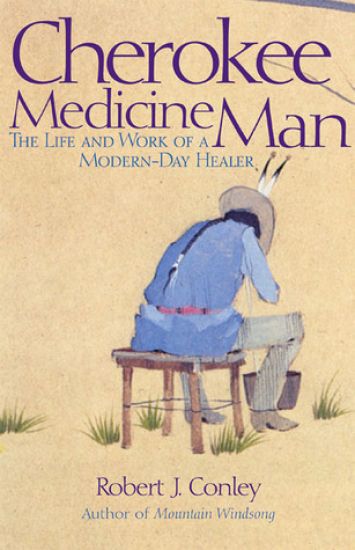
Cherokee Medicine Man

Cherokee Medicine Man

Robert J. Conley

University of Oklahoma Press
2007
nidottu
A modern medicine man portrayed through the words of the people he has helpedRobert J. Conley did not set out to chronicle the life of Cherokee medicine man John Little Bear. Instead, the medicine man came to him. Little Bear asked Conley to write down his story, to reveal to the world ""what Indian medicine is really about."" For Little Bear, as for the Cherokee ancestors who brought their traditions over the Trail of Tears to Indian Territory, the medicine is about helping people. Visitors from neighboring states and Mexico come to him, each one seeking help for a different kind of problem. Each seeker's story is presented here exactly as it was told to Conley.Little Bear has cured problems involving health, relationships, and money by uncovering the source of the problem rather than simply treating the symptoms. Whereas mainstream medicine and counseling have failed his patients, Little Bear's healing practices have proven beneficial time and again.
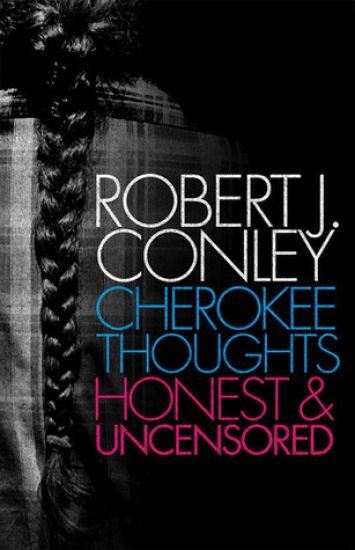
Cherokee Thoughts

Cherokee Thoughts

Robert J. Conley

University of Oklahoma Press
2008
nidottu
Gaming and chiefing. Imposters and freedmen. Distinguished novelist Robert J. Conley examines some of the most interesting facets of the Cherokee world. In 26 essays laced with humor, understatement, even open sarcasm, this popular writer takes on politics, culture, his people's history, and what it means to be Cherokee.Readers who think they know Conley will find an abundance of surprises in these pages. He reveals historical information not widely known or written about, such as Cherokee Confederate general Stand Watie's involvement in the infamous Reconstruction treaty forced upon his people in 1866, and he explains his admiration for such characters as Ned Christie and Henry Starr, whom some might consider criminals. From legendary figures Dragging Canoe and Nancy Ward to popular icons like Will Rogers to contemporary ""Cherokee Wannabes"" - people seeking ancestral roots whether actual or fanciful - Conley traces the dogged persistence of the Cherokee people in the face of relentless incursions upon their land and culture.""Cherokees are used to controversy,"" observes Conley; ""in fact, they enjoy it."" As provocative as it is entertaining, Cherokee Thoughts will intrigue tribal members and anyone with an interest in the Cherokee people.
Cherokee Reference Grammar

Cherokee Reference Grammar

Brad Montgomery-Anderson

University of Oklahoma Press
2015
sidottu
The Cherokees have the oldest and best-known Native American writing system in the United States. Invented by Sequoyah and made public in 1821, it was rapidly adopted, leading to nineteenth-century Cherokee literacy rates as high as 90 percent. This writing system, the Cherokee syllabary, is fully explained and used throughout this volume, the first and only complete published grammar of the Cherokee language. Although the Cherokee Reference Grammar focuses on the dialect spoken by the Cherokees in Oklahoma - the Cherokee Nation and the United Keetoowah Band of Cherokee Indians - it provides the grammatical foundation upon which all the dialects are based. In his introduction, author Brad Montgomery-Anderson offers a brief account of Cherokee history and language revitalization initiatives, as well as instructions for using this grammar. The book then delves into an explanation of Cherokee pronunciation, orthography, parts of speech, and syntax. While the book is intended as a reference grammar for experienced scholars, Montgomery-Anderson presents the information in accessible stages, moving from easier examples to more complex linguistic structures. Examples are taken from a variety of sources, including many from the Cherokee Phoenix. Audio clips of various text examples throughout can be found on the accompanying CDs. The volume also includes three appendices: a glossary keyed to the text; a typescript for the audio component; and a collection of literary texts: two traditional stories and a historical account of a search party traveling up the Arkansas River. The Cherokee Nation, as the second-largest tribe in the United States and the largest in Oklahoma, along with the United Keetoowah Band and the Eastern band of Cherokees, have a large number of people who speak their native language. Like other tribes, they have seen a sharp decline in the number of native speakers, particularly among the young, but they have responded with ambitious programs for preserving and revitalizing Cherokee culture and language. Cherokee Reference Grammar will serve as a vital resource in advancing these efforts to understand Cherokee history, language, and culture on their own terms.
Cherokee Reference Grammar

Cherokee Reference Grammar

Brad Montgomery-Anderson

University of Oklahoma Press
2016
nidottu
The Cherokees have the oldest and best-known Native American writing system in the United States. Invented by Sequoyah and made public in 1821, it was rapidly adopted, leading to nineteenth-century Cherokee literacy rates as high as 90 percent. This writing system, the Cherokee syllabary, is fully explained and used throughout this volume, the first and only complete published grammar of the Cherokee language. Although the Cherokee Reference Grammar focuses on the dialect spoken by the Cherokees in Oklahoma - the Cherokee Nation and the United Keetoowah Band of Cherokee Indians - it provides the grammatical foundation upon which all the dialects are based. In his introduction, author Brad Montgomery-Anderson offers a brief account of Cherokee history and language revitalization initiatives, as well as instructions for using this grammar. The book then delves into an explanation of Cherokee pronunciation, orthography, parts of speech, and syntax. While the book is intended as a reference grammar for experienced scholars, Montgomery-Anderson presents the information in accessible stages, moving from easier examples to more complex linguistic structures. Examples are taken from a variety of sources, including many from the Cherokee Phoenix. Audio clips of various text examples throughout can be found on the accompanying CDs. The volume also includes three appendices: a glossary keyed to the text; a typescript for the audio component; and a collection of literary texts: two traditional stories and a historical account of a search party traveling up the Arkansas River. The Cherokee Nation, as the second-largest tribe in the United States and the largest in Oklahoma, along with the United Keetoowah Band and the Eastern band of Cherokees, have a large number of people who speak their native language. Like other tribes, they have seen a sharp decline in the number of native speakers, particularly among the young, but they have responded with ambitious programs for preserving and revitalizing Cherokee culture and language. Cherokee Reference Grammar will serve as a vital resource in advancing these efforts to understand Cherokee history, language, and culture on their own terms.