The first monograph on the intricately worked abstract sculptures of Christiane BlattmannThis monograph presents a selection of works by German artist Christiane Blattmann (born 1983), with illustrations of her sculptures, exhibitions and her studio alongside essays and previously unpublished fiction.
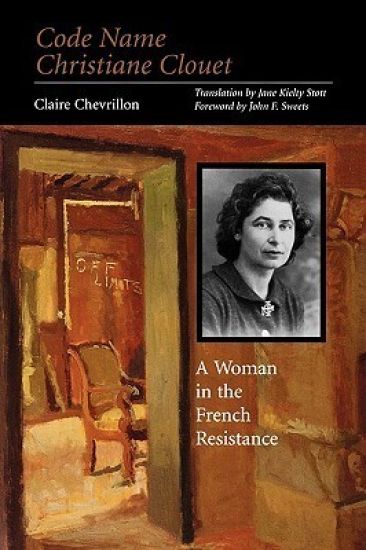
In 1943 Claire Chevrillon (code named Christiane Clouet) became head of the Code Service in Paris for General de Gaulle's Delegation and served as the main link in the lines of communication flowing between the Free French Government in London and the Delegation (Provisional Government) in France. It was Chevrillon and her team who coded many of the telegrams in Is Paris Burning? Until now, little has been published about this unglamorous but vital aspect of the French Resistance. Chevrillon's memoir gives abundant detail about what daily life was like for the French elite during the German occupation. Her father, a scholar and literary critic who had been raised by his celebrated uncle, philosopher-historian Hippolyte Taine, put her in contact with the upper circles of French culture. Her mother, who was from a large, assimilated Jewish family, gave her first-hand knowledge of the persecution of French Jews. Her story vividly portrays the wartime experience of private lives and public events, including the tedious backroom work of the Resistance and four months she spent captive in Paris's dreaded Fresnes prison. The way Chevrillon tells her story is almost as remarkable as the story itself. Evenhandedly and without embellishment, she relives the days of the occupation, the arrest and deportation of her prominent Jewish relatives, her own role in the underground network, and the eventual liberation of France. The straightforward, even brisk, style with which Chevrillon writes, together with the breadth of her experience and her extensive contacts in French society, give a perspective not often encountered in stories of the World War II underground. Perhaps most important, Chevrillon demonstrates that heroism can take quiet, hidden forms.
Zu "Lebensweisheit" will Praktische Theologie in kirchlicher Arbeit wie in theologischer Lehre anleiten. Die akademische Lehre hat in ihrer Beschaftigung mit Gottesdienst und Verkundigung, Seelsorge und Spiritualitat langst die Weisheit als ihr ureigenes Thema wiederentdeckt: Christiane Burbachs Beschaftigung mit der Weisheit und die weiter anhaltende Debatte um die Lebenskunst in Theologie und Philosophie haben die Autorinnen und Autoren dieses Bandes bewogen, sich Themen der Praktischen Theologie mit dem Paradigma der Weisheit zu nahern. Sie verstehen mit Christiane Burbach Praktische Theologie als eine Wissenschaft und eine Praxis in der "Kraft der Weisheit".Den je eigenen Beitragen gelingt es, die Weisheit als lebensbegleitendes, als lebenserschliessendes und orientierendes Wissen aufzuzeigen. Sie aussern sich zu Verkundigung und Kirche, Seelsorge und Pastoralpsychologie und Spiritualitat, Erkenntnis und Erinnerung.Beitrager sind Annette Behnken, Hartmut Burbach, Sonja Domrose, F. Heckmann, T. Kingreen, M. Klessmann, J. von Lupke, M. Schultz, A. Steinmeier, Susanne Wendorf-von Blumroder, N. Ruckert und D. Weber.
B rgermeisterin Josefine B r droht das Aus ihrer politischen Karriere. Von der eigenen Partei fallengelassen, kandidiert sie bei der n chsten Kommunalwahl mit einer neuen Gruppierung gegen ihren Erzrivalen. Unverhofft bekommt sie Unterst tzung von Tamy Stein. Die erfolgreiche Musikerin ist in ihre Heimatstadt zur ckgekehrt, um ihren Bruder im familieneigenen Hotel vor bergehend zu entlasten. Josefine ergreift die Chance - wohlwissend, dass Tamy auf der Wahlkampfb hne ihre eigenen Ziele verfolgt und das Thema "sexuelle Orientierung" zum Gegenstand der ffentlichen Auseinandersetzung werden k nnte. Genau das, wovor Josefine am meisten Angst hat. Wird ihr die Zusammenarbeit mit der faszinierenden Musikerin zum Verh ngnis?