
Kirjahaku
Etsi kirjoja tekijän nimen, kirjan nimen tai ISBN:n perusteella.
1000 tulosta hakusanalla Christina Weidmann; Ralf Kohlhepp

Who says life is perfect? Christina Marie Montgomery had it all until her Friday night dinners at Red Lobster opened another chapter in her life that she was not expecting. Nicholas Banks, a college dropout and self-taught chef, won Christinas heart. Follow their journeys ups and downs with surprising twists and turns through all lifes trails.

Who says life is perfect? Christina Marie Montgomery had it all until her Friday night dinners at Red Lobster opened another chapter in her life that she was not expecting. Nicholas Banks, a college dropout and self-taught chef, won Christinas heart. Follow their journeys ups and downs with surprising twists and turns through all lifes trails.

No Available information at this time. Author will provide once available.

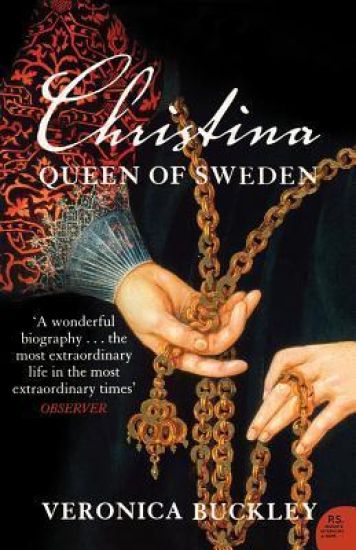
The groundbreaking biography of one of the most progressive, influential and entertaining women of the seventeenth century, Christina Alexandra, Queen of Sweden. In 1654, to the astonishment and dismay of her court, Christina Alexandra announced her abdication in favour of her cousin, Charles. Instrumental in bringing the Thirty Years War to a close at the age of 22, Christina had become one of the most powerful monarchs in Europe. She had also become notorious for her extravagant lifestyle. Leaving the narrow confines of her homeland behind her, Christina cut a remarkable path across Europe. She acted as mediator in the Franco-Spanish War and, in return for financial support, was received into the Roman Catholic Church despite the fierce condemnation of her protestant countrymen. Christina settled in Rome at the luxurious Palazzo Farnese where she established a lavish salon for Rome's artists and intellectuals. More than once she was forced to leave Rome while one scandal or another died down; she was painted a lesbian, a prostitute and even a hermaphrodite. Her most impassioned affair was with a well-connected Cardinal. Later, when financial support from the Pope and the Spanish crown dried up, Christina began to court French favour, eventually even plotting with them to overthrow the Spanish at Naples, where she hoped to be installed as queen. Despite her political vacillations and a lifelong refusal to restrain her appetites, Christina ended her days in Rome relatively free from disfavour and financial strife. At the express order of the Pope, she was buried, with full ceremony, in the walls of St Peter's Basilica, one of only two women to be so honoured. Reminiscent of Amanda Foreman's Georgiana, Duchess of Devonshire and Claire Tomalin's Jane Austen: A Life, Buckley combines a personal approach with a lively interest in the social and historical world of seventeenth-century Europe to bring this remarkable personality to life.
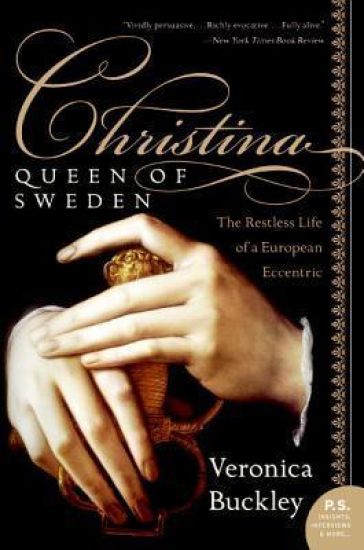
Christina, Queen of Sweden: The Restless Life of a European Eccentric
Veronica Buckley
HARPER PERENNIAL
2005
nidottu
A portrait of the seventeenth-century monarch discusses her pivotal role in ending the Thirty Years War, her 1654 abdication from the throne, her estrangements from such former supporters as the pope and the king of Spain, and the reckless ambition and character aspersions that would erupt in an international incident. Reprint. 20,000 first printing.

Christina Rossetti (1830-94) is regarded as one of the greatest Christian poets to write in English. While Rossetti has firmly secured her place in the canon, her religious poetry was for a long time either overlooked or considered evidence of a melancholic disposition burdened by faith. Recent scholarship has redressed reductive readings of Christian theology as repressive by rethinking it as a form of compassionate politics. This shift has enabled new readings of Rossetti's work, not simply as a body of significant nineteenth-century devotional literature, but also as a marker of religion's relevance to modern concerns through its reflections on science and materialism, as well as spirituality and mysticism. Emma Mason offers a compelling study of Christina Rossetti, arguing that her poetry, diaries, letters, and devotional commentaries are engaged with both contemporary theological debate and an emergent ecological agenda. In chapters on the Catholic Revival, Pre-Raphaelite Brotherhood, contemporary debates on plant and animal being, and the relationship between grace and apocalypse, Mason reads Rossetti's theology as an argument for spiritual materialism and ecological transformation. She ultimately suggests that Rossetti's life and work captures the experience of faith as one of loving intimacy with the minutiae of creation, a divine body in which all things, material and immaterial, human and nonhuman, divine and embodied, are interconnected.
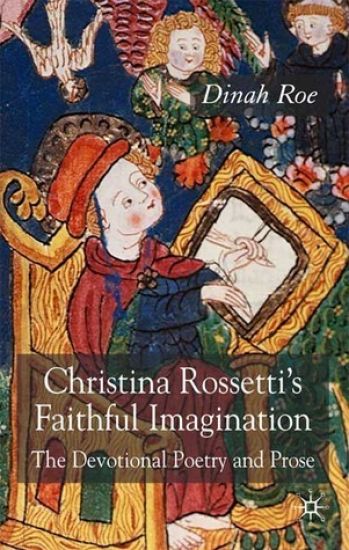
This new study focuses on the critically neglected area of Rossetti's devotional poetry and her prose, offering a critical intervention in the feminist construction of an important Victorian woman poet.

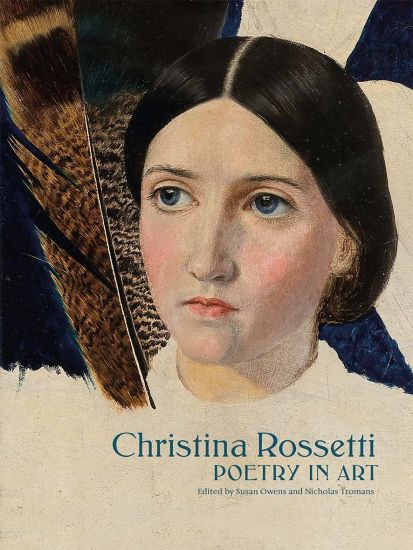
The first art book to explore Rossetti's art and poetry together, including her own artworks, illustrations to her writing, and art inspired by her Christina Rossetti (1830–1894) is among the greatest of English Victorian poets. The intensity of her vision, her colloquial style, and the lyrical quality of her verse still speak powerfully to us today, while her striking imagery has always inspired artists. Rossetti lived in an exceptionally visual environment: her brother, Dante Gabriel Rossetti, was the leading member of the avant-garde Pre-Raphaelite Brotherhood, and she became a favorite model for the group. She sat for the face of Christ in William Holman Hunt’s The Light of the World, while both John Everett Millais and Frederick Sandys illustrated her poetry. Later on, the pioneering photographer Julia Margaret Cameron and the great Belgian Symbolist Fernand Khnopff were inspired by Rossetti’s enigmatic verses. This engaging book explores the full artistic context of Rossetti’s life and poetry: her own complicated attitude to pictures; the many portraits of her by artists, including her brother, John Brett, and Lewis Carroll; her own intriguing and virtually unknown drawings; and the wealth of visual images inspired by her words.Published in association with Watts GalleryExhibition Schedule:Watts Gallery, Guildford, Surrey (11/13/18–03/17/19)
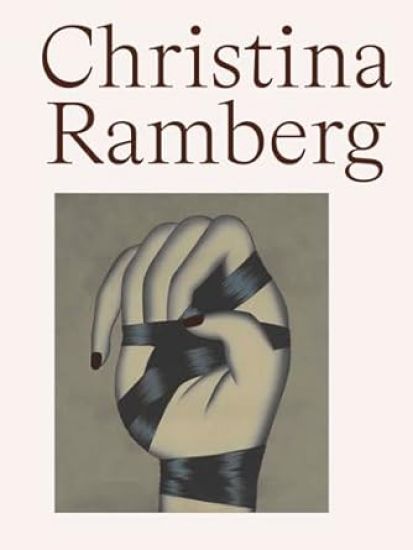
Christina Ramberg
Art Institute of Chicago
2024
sidottu
A deep look at Christina Ramberg’s life and work, the origins of her influential investigations of form and femininity, and the evolution of her artistic vision Christina Ramberg (1946–1995) first gained renown for her acrylic-on-board paintings from the 1960s and 1970s that feature stylized fragments of female figures. Often associated with Chicago Imagism, Ramberg’s distinct linear approach was informed by a wide range of popular and art-historical sources, resulting in works that are both highly polished and grippingly enigmatic. The first comprehensive consideration of the artist since her death, this study considers the full scope of her practice—from her intimate early scrapbooks and drawings to her late-career geometric abstractions—and includes the first substantive discussion of her often-overlooked quiltmaking. Essays from both scholars and artists situate Ramberg within her Chicago-based network of colleagues and approach her work from a variety of perspectives, such as gender and sexual identity, the body and disability studies, artistic craft, canon formation, and pedagogical practice. Featuring never-before-published diaries, sketchbooks, slides, and ephemera, this lavishly illustrated volume provides an unprecedentedly full picture of Ramberg’s lifelong fascination with patterns and formal variation and her impact on the art of the twentieth century. Distributed for The Art Institute of Chicago Exhibition schedule: The Art Institute of Chicago (April 20–August 11, 2024) Hammer Museum, Los Angeles (October 6, 2024–January 5, 2025) Philadelphia Museum of Art (February 8–June 1, 2025)
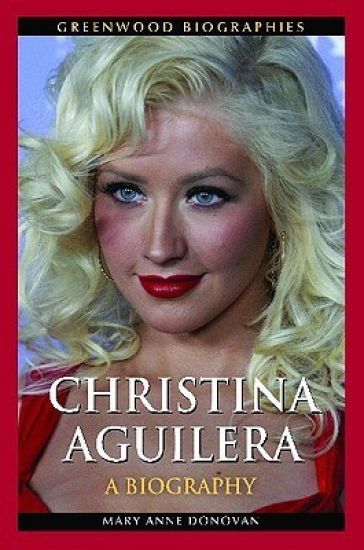
Meet Christina Aguilera through a thorough and honest portrayal of her life and career and the things that have influenced both. Christina Aguilera appeared on Star Search when she was eight years old and hasn't stopped performing since. Christina Aguilera: A Biography traces the life and career of this exceptional performer, looking also at the historical, political, and philosophical influences that have affected and motivated her. Readers will learn about the little girl who used music to drown the horrors of domestic abuse, about the young television star who wowed audiences with a voice that spanned four octaves, and, of course, about the wildly successful artist of today. Offering a complete and balanced portrayal, the book begins with Aguilera's childhood and ends with her current activities. It discusses early influences on her music, her father's role in fostering her interests, her evolution from squeaky-clean singer to sexy siren, and her maturation as a performer. In addition, readers will learn about her many awards and accomplishments, her generosity, and the importance of Latin culture to her work.
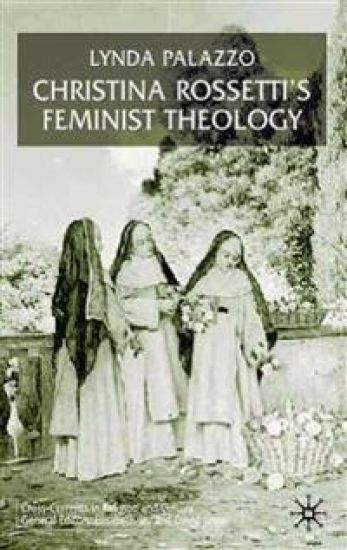
This volume disputes the assumption that Rossetti was a follower of Keble and Pusey, and shows how her dissatisfaction with the male-dominated call to celibacy led her to reject their notions of worldliness, and to form a closer bond with the physical world and the body.
Christina Rossetti’s Environmental Consciousness takes a cognitive ecocritical approach to Rossetti’s writing as it developed throughout her career. This study provides a unique understanding of Rossetti’s identity as an artist through a cognitive model while also engaging significantly with her spiritual relationship to the nonhuman world. Rossetti was a deliberate and conscious creator who used her writing for therapeutic purposes to create, contemplate, maintain, verify, and, revise her identity. Her understanding of her autobiographical self and her place in the world often comes through observations and poetic treatments of the nonhuman. Rossetti, her speakers, and her characters seek spiritual knowledge in the natural world and share this knowledge with an audience. In nature, Rossetti finds evidence for and guidance from a loving God who offers salvation. Her work places a high value on nature from a Christian perspective that puts conservation over renunciation. She frequently uses strategies that have now been identified by Christian environmentalist such as retrieval, ecojustice, stewardship, and ecological spirituality. With new readings of popular works like "Goblin Market" and "A Birthday," along with treatments of largely neglected works like Verses (1847) and Rossetti’s devotional writings, Christina Rossetti’s Environmental Consciousness offers an understanding of Rossetti’s processes and purposes as a writer and displays new potential for her work in the face of twenty-first-century environmental issues.
Christina of Markyate
Routledge
2004
sidottu
Samuel Fanous and Henrietta Leyser present a vivid interdisciplinary study devoted to the life, work and extant vita of Christina of Markyate, which draws on research from a wide range of disciplines. This fascinating and comprehensive collection surveys the life of an extraordinary medieval woman. Christina of Markyate made a vow of chastity at an early age, against the wishes of her parents who intended her to marry. When forced into wedlock, she fled in disguise and went into hiding, receiving refuge in a network of hermitages. Christina became a religious recluse and eventually founded a priory of nuns attached to St. Albans.Beautifully illustrated, this book provides students who regularly encounter Christina with a research compendium from which to begin their studies, and introduces Christina to a wider audience.
Christina of Markyate
Routledge
2004
nidottu
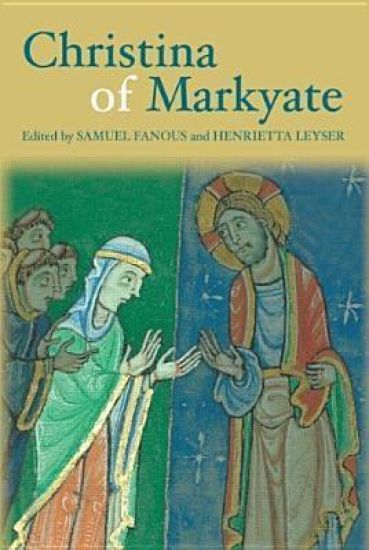
Samuel Fanous and Henrietta Leyser present a vivid interdisciplinary study devoted to the life, work and extant vita of Christina of Markyate, which draws on research from a wide range of disciplines. This fascinating and comprehensive collection surveys the life of an extraordinary medieval woman. Christina of Markyate made a vow of chastity at an early age, against the wishes of her parents who intended her to marry. When forced into wedlock, she fled in disguise and went into hiding, receiving refuge in a network of hermitages. Christina became a religious recluse and eventually founded a priory of nuns attached to St. Albans.Beautifully illustrated, this book provides students who regularly encounter Christina with a research compendium from which to begin their studies, and introduces Christina to a wider audience.
Christina Rossetti
Routledge
2018
sidottu
This long-awaited volume in the Critical Heritage series presents the reception of Christina Rossetti’s work by her Victorian readers and integrates their critical responses with the evidence of her literary life and publication history. It presents the responses in unpublished material – especially in correspondence – alongside public responses in periodicals and books, and it covers responses during the composition and publishing of her works in addition to those that follow her appearances in print. The opinions of her readers – including her brother Dante Gabriel Rossetti and her publisher Alexander Macmillan – are integrated with the evidence of Rossetti’s own letters. The volume draws on hundreds of manuscript sources unnoticed in scholarship in order to provide the most accurate available literary biography and publication history of Rossetti, illuminating many aspects of her writing life – including her involvement with the Portfolio society and her relation with Macmillan – which have been misunderstood.Christina Rossetti: The Critical Heritage sets a new foundation for the study of one of the great English poets. It will be an indispensable resource for scholars and students of Christina Rossetti and Victorian literary culture.
Christina Rossetti, one of the most remarkable poets of the 19th century, remains an enigmatic figure whose life and work continue to captivate readers. While her brother William Michael Rossetti's interpretations have dominated biographies to date, recent studies aim to uncover a deeper and more nuanced understanding of her inner world. Rossetti's poetry, rich with emotional and spiritual intensity, often reveals glimpses of a life shaped by unspoken struggles and profound passions. By examining her work and her connections, including her relationships with figures like William Bell Scott, a fresh perspective emerges, suggesting that her experiences of love and conflict deeply influenced her creative energy and personal growth. This exploration seeks to go beyond the surface of daily events to delve into the "deeper internal currents" of Christina’s life. Her poetry serves as a map to the intricate interplay of emotions and convictions that defined her as an artist and individual. Through meticulous research and a sensitive approach, this narrative reconstructs a portrait of a woman whose life was as richly textured and multifaceted as her verse. In doing so, it not only illuminates Christina Rossetti's enduring legacy but also honors her belief that truth, tempered with tenderness, is the ultimate tribute to a life fully lived. This title is part of UC Press's Voices Revived program, which commemorates University of California Press’s mission to seek out and cultivate the brightest minds and give them voice, reach, and impact. Drawing on a backlist dating to 1893, Voices Revived makes high-quality, peer-reviewed scholarship accessible once again using print-on-demand technology. This title was originally published in 1963.