Your wellness journey is uniquely yours, a beautiful unfolding of self-discovery. If you feel called to dive deeper, to explore further into your well-being and mindfulness, consider joining me in a personalised wellness coaching session. Together, we can navigate through your unique path, exploring with curiosity and unfolding each layer of your wellness journey with kindness and understanding. Your story is waiting to be unearthed, and I am here, ready to walk alongside you in every step of this transformative expedition. Let's journey together.
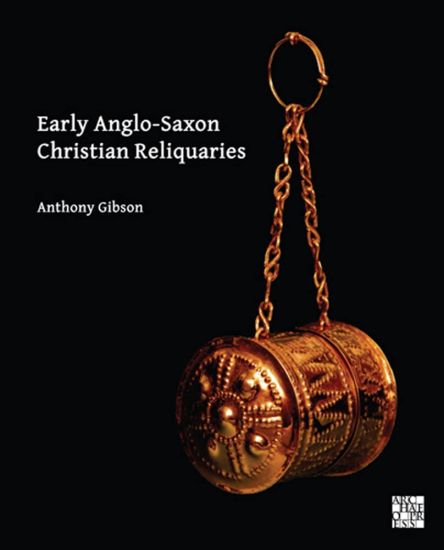
Early Anglo-Saxon Christian Reliquaries presents a corpus and discussion of a group of Anglo-Saxon copper-alloy containers dating to the seventh and possibly eighth centuries, and variously described as work boxes, needle cases, amulet containers or Christian reliquaries. Seventy-one boxes, some incomplete or fragmentary, have been recorded from forty-nine sites across Anglo-Saxon England. A typology, material specification, drawings, design and construction principles are provided, and a nomenclature applicable to these containers is outlined. Catalogue entries give details of site location, description, decorative features and references. Three box types are identified, and a concluding discussion suggests that boxes of Types I and II had a Christian function and should be considered as reliquaries. Type III boxes had a secular function, and their purpose remains enigmatic.
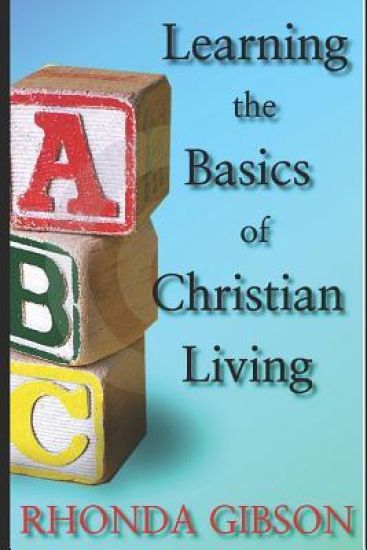
Becoming a new Christian is easy, just do the ABC's: Accept that you are a sinner, Believe that Jesus died for you, and Confess your sins and repent. Living the Christian life is hard for those who are new believers, simply because they don't always know what they've agreed to and the good ole Devil is there to tell them they are doing it wrong. Rhonda Gibson has come up with simple truths to help live the good life Jesus died to give to everyone.
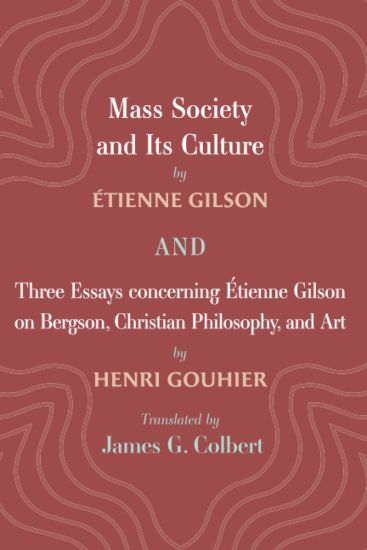
A medievalist and defender of the notion of Christian philosophy, Etienne Gilson had a lifelong interest in the philosophy of art. He questioned whether what is reproduced as art in contemporary society is art at all. This is not a simple issue. A cheap version of a novel is still a novel. A picture of a statue is not a statue, nor indeed is a photograph of a painting a painting. Recorded music has particular complications. The organizer of an industrial assembly line is neither an artist nor an artisan. Yet, thanks to such mass production, a much broader population has knowledge of artworks than would otherwise be possible. Religions must minister to mass societies and provide appropriate liturgies. But in the process, there is a danger of misrepresenting complex religious teachings. At the end of his own life, Henri Gouhier, Gilson's first doctoral student, prepared three essays on Gilson. The first, on Bergson, gives a sense of Gilson's formation in early twentieth-century French philosophy. The second reconstructs the development of the notion of Christian philosophy and the heated controversy it provoked. Finally, Gouhier presents Gilson's general philosophy of art and gives a helpful framework to Gilson's comments on art in a mass society.
A medievalist and defender of the notion of Christian philosophy, Etienne Gilson had a lifelong interest in the philosophy of art. He questioned whether what is reproduced as art in contemporary society is art at all. This is not a simple issue. A cheap version of a novel is still a novel. A picture of a statue is not a statue, nor indeed is a photograph of a painting a painting. Recorded music has particular complications. The organizer of an industrial assembly line is neither an artist nor an artisan. Yet, thanks to such mass production, a much broader population has knowledge of artworks than would otherwise be possible. Religions must minister to mass societies and provide appropriate liturgies. But in the process, there is a danger of misrepresenting complex religious teachings. At the end of his own life, Henri Gouhier, Gilson's first doctoral student, prepared three essays on Gilson. The first, on Bergson, gives a sense of Gilson's formation in early twentieth-century French philosophy. The second reconstructs the development of the notion of Christian philosophy and the heated controversy it provoked. Finally, Gouhier presents Gilson's general philosophy of art and gives a helpful framework to Gilson's comments on art in a mass society.
The 18th century was a wealth of knowledge, exploration and rapidly growing technology and expanding record-keeping made possible by advances in the printing press. In its determination to preserve the century of revolution, Gale initiated a revolution of its own: digitization of epic proportions to preserve these invaluable works in the largest archive of its kind. Now for the first time these high-quality digital copies of original 18th century manuscripts are available in print, making them highly accessible to libraries, undergraduate students, and independent scholars.The Age of Enlightenment profoundly enriched religious and philosophical understanding and continues to influence present-day thinking. Works collected here include masterpieces by David Hume, Immanuel Kant, and Jean-Jacques Rousseau, as well as religious sermons and moral debates on the issues of the day, such as the slave trade. The Age of Reason saw conflict between Protestantism and Catholicism transformed into one between faith and logic -- a debate that continues in the twenty-first century.++++The below data was compiled from various identification fields in the bibliographic record of this title. This data is provided as an additional tool in helping to insure edition identification: ++++Harvard University LibrariesN032867A young minister = Timothy Thomas.London: printed for James Buckland; and John Ward, 1756. xl,176p.; 12
During his long career as a strong defender of the notion of "Christian philosophy", Etienne Gilson (1884-1978) maintained a firm stance in his belief in the intrinsic, essential and constitutive influence of Christian revelation on medieval philosophy. As both an historian of medieval philosophy and as a student of St. Thomas Aquinas, Gilson believed strongly in both the formal distinction and the profound continuity, harmony and collaboration between faith and reason, philosophy and theology, and nature and grace in the doctrine of St. Thomas. In his effort to discover beyond the traditions of Thomistic commentators the personal thought of St. Thomas himself, Gilson often had to swim against a prevailing rationalistic current which sought to separate the philosophy of St. Thomas from the theology in which alone it could retain its viability and fruitfulness. But he refused to separate in the name of St. Thomas what St. Thomas himself not only did not separate but offered positive evidence against separating. There is an historical reason therefore for not separating the personal philosophy of St. Thomas from his theology. Thomas himself never did it. This erroneous tendency of separating the two sciences inevitably then leads to other, even greater and more harmful errors in both philosophy and theology, as the principle states, "Parvus error in principio magnus est in fine" (a small error in the beginning becomes a large error in the end, that is to say, when it is carried to its logical conclusion). And in Gilson's opinion, this unnatural separation is not a small error, but already a large and dangerous one.The Thomistic doctrine on the role of sacred doctrine, understood in its full transcendent sense, along with the celebrated Thomistic principle: "grace does not destroy nature but perfects it" (Summa Theologiae., I, 1, 8, ad 2), were for Gilson the central guiding principles which shed light on the relationship between faith and reason in St. Thomas. To Gilson these principles are often misunderstood and distorted by even professed followers of St. Thomas, and he believed that only by returning to their full original significance as understood and taught by St. Thomas can the unhealthy rupture between philosophy and theology be healed. And only by restoring to theology its pristine and rightful position as guiding light can philosophy attain its noble and exalted status as handmaiden within the royal kingdom of divine science.This book is an expanded version of the author's Licentiate thesis in philosophy, for which he received the highest marks possible. If you like this book or any other of the books I've written or edited, please leave a positive review, so that others may profit by them, and also that this struggling author and editor may continue to do this work for the glory of God. May He bless and protect you and yours.
A tour of an unusual history of faith and its obscure hold on people's lives. Are angels at work, or devils at play? Find Christian practices, past and present, for: - Determining what is lucky or unlucky - How to improve your fortune - Recognizing omens and clues to future events - Using your faith to cure nightmares, illnesses and fever - Ensuring a happy marriage - Dispelling demons, and removing weeds - Identifying the dates for the end of it all Do you voodoo?