Kirjojen hintavertailu. Mukana 11 244 527 kirjaa ja 12 kauppaa.

Kirjahaku

Etsi kirjoja tekijän nimen, kirjan nimen tai ISBN:n perusteella.

1000 tulosta hakusanalla Christof Herrmann

Biophysics of Computation

Biophysics of Computation

Christof Koch

Oxford University Press Inc
2004
nidottu
Neural network research often builds on the fiction that neurons are simple linear threshold units, completely neglecting the highly dynamic and complex nature of synapses, dendrites, and voltage-dependent ionic currents. Biophysics of Computation: Information processing in single neurons challenges this notion, using richly detailed experimental and theoretical findings from cellular biophysics to explain the repertoire of computational functions available to single neurons. The author shows how individual nerve cells can multiply, integrate, or delay synaptic inputs and how information can be encoded in the voltage across the membrane, in the intracellular calcium concentration, or in the timing of individual spikes. Key topics covered include the linear cable equation; cable theory as applied to passive dendritic trees and dendritic spines; chemical and electrical synapses and how to treat them from a computational point of view; nonlinear interactions of synaptic input in passive and active dendritic trees; the Hodgkin-Huxley model of action potential generation and propagation; phase space analysis; linking stochastic ionic channels to membrane-dependent currents; calcium- and potassium-currents and their role in information processing; the role of diffusion, buffering and binding of calcium, and other messenger systems in information processing and storage; short- and long-term models of synaptic plasticity; simplified models of single cells; stochastic aspects of neuronal firing; the nature of the neuronal code; and unconventional models of sub-cellular computation. This book serves as an ideal text for advanced undergraduate and graduate courses in cellular biophysics, computational neuroscience, and neural networks, and will appeal to students and professionals in neuroscience, electrical and computer engineering, and physics.
Voters and Voting in Context

Voters and Voting in Context

Christof Wolf

Oxford University Press
2017
sidottu
Voters and Voting in Context investigates the role of context in affecting political opinion formation and voting behaviour. Building on a model of contextual effects on individual-level voter behaviour, the chapters of this volume explore contextual effects in Germany in the early twenty-first century. The volume draws upon manifold combinations of individual and contextual information gathered in the German Longitudinal Election Study (GLES) framework and employ advanced methods. In substantive terms, it investigates the impact of campaign communication on political learning, effects of media coverage on the perceived importance of political problems, and the role of electoral competition on candidate strategies and perceptions. It also examines the role of social and economic contexts as well as parties' policy stances in affecting electoral turnout. The volume explores the impact of social cues on candidate voting, effects of electoral arenas on vote functions, the role of media coverage on ideological voting, and effects of campaign communication on the timing of electoral decision-making. Voters and Voting in Context demonstrates the key role of the processes of communication and politicization in bringing about contextual effects. Context thus plays a nuanced role in voting behaviour. The contingency of contextual effects suggests that they will become an important topic in research on political behaviour and democratic politics.
Protecting EU Consumers in Internet of Things Ecosystems

Protecting EU Consumers in Internet of Things Ecosystems

Christof Koolen

Oxford University Press
2025
sidottu
The number of devices being connected to the internet is growing rapidly. This trend--referred to as the Internet of Things (IoT)--reflects the gradual transformation of everyday objects into smart devices. These smart devices are capable of collecting data from their surroundings and sharing that data over the internet. As a result, the development of the IoT raises extensive legal questions from a consumer protection perspective. First, the functionality of smart devices challenges consumer autonomy and the average consumer's ability to make well-informed transactional decisions. Second, concerns remain about consumer choice as consumers can't easily switch due to interoperability limitations. Third, consumer privacy is threatened by the data-driven nature of the IoT. Protecting EU Consumers in Internet of Things Ecosystems explores solutions to these challenges by critically analyzing the interplay between EU consumer law, EU competition law, and EU data privacy law, aiming to balance innovation and consumer protection in IoT ecosystems. At a time when society must question how the benefits of IoT can be harnessed for the greater good--rather than posing a threat to consumers, businesses, and governments--this volume offers valuable insights for academics, policymakers, businesses, and anyone interested in understanding the impact of technology on our daily lives.
The Shadow War Against Hitler

The Shadow War Against Hitler

Christof Mauch

Columbia University Press
2003
sidottu
Surveying the expanding conflict in Europe during one of his famous fireside chats in 1940, President Franklin Roosevelt ominously warned that "we know of other methods, new methods of attack. The Trojan horse. The fifth column that betrays a nation unprepared for treachery. Spies, saboteurs, and traitors are the actors in this new strategy." Having identified a new type of war-a shadow war-being perpetrated by Hitler's Germany, FDR decided to fight fire with fire, authorizing the formation of the Office of Strategic Services (OSS) to organize and oversee covert operations. Based on an extensive analysis of OSS records, including the vast trove of records released by the CIA in the 1980s and '90s, as well as a new set of interviews with OSS veterans conducted by the author and a team of American scholars from 1995 to 1997, The Shadow War Against Hitler is the full story of America's far-flung secret intelligence apparatus during World War II. In addition to its responsibilities generating, processing, and interpreting intelligence information, the OSS orchestrated all manner of dark operations, including extending feelers to anti-Hitler elements, infiltrating spies and sabotage agents behind enemy lines, and implementing propaganda programs. Planned and directed from Washington, the anti-Hitler campaign was largely conducted in Europe, especially through the OSS's foreign outposts in Bern and London. A fascinating cast of characters made the OSS run: William J. Donovan, one of the most decorated individuals in the American military who became the driving force behind the OSS's genesis; Allen Dulles, the future CIA chief who ran the Bern office, which he called "the big window onto the fascist world"; a veritable pantheon of Ivy League academics who were recruited to work for the intelligence services; and, not least, Roosevelt himself. A major contribution of the book is the story of how FDR employed Hitler's former propaganda chief, Ernst "Putzi" Hanfstengl, as a private spy. More than a record of dramatic incidents and daring personalities, this book adds significantly to our understanding of how the United States fought World War II. It demonstrates that the extent, and limitations, of secret intelligence information shaped not only the conduct of the war but also the face of the world that emerged from the shadows.
The Shadow War Against Hitler

The Shadow War Against Hitler

Christof Mauch

Columbia University Press
2005
pokkari
Surveying the expanding conflict in Europe during one of his famous fireside chats in 1940, President Franklin Roosevelt ominously warned that "we know of other methods, new methods of attack. The Trojan horse. The fifth column that betrays a nation unprepared for treachery. Spies, saboteurs, and traitors are the actors in this new strategy." Having identified a new type of war-a shadow war-being perpetrated by Hitler's Germany, FDR decided to fight fire with fire, authorizing the formation of the Office of Strategic Services (OSS) to organize and oversee covert operations. Based on an extensive analysis of OSS records, including the vast trove of records released by the CIA in the 1980s and '90s, as well as a new set of interviews with OSS veterans conducted by the author and a team of American scholars from 1995 to 1997, The Shadow War Against Hitler is the full story of America's far-flung secret intelligence apparatus during World War II. In addition to its responsibilities generating, processing, and interpreting intelligence information, the OSS orchestrated all manner of dark operations, including extending feelers to anti-Hitler elements, infiltrating spies and sabotage agents behind enemy lines, and implementing propaganda programs. Planned and directed from Washington, the anti-Hitler campaign was largely conducted in Europe, especially through the OSS's foreign outposts in Bern and London. A fascinating cast of characters made the OSS run: William J. Donovan, one of the most decorated individuals in the American military who became the driving force behind the OSS's genesis; Allen Dulles, the future CIA chief who ran the Bern office, which he called "the big window onto the fascist world"; a veritable pantheon of Ivy League academics who were recruited to work for the intelligence services; and, not least, Roosevelt himself. A major contribution of the book is the story of how FDR employed Hitler's former propaganda chief, Ernst "Putzi" Hanfstengl, as a private spy. More than a record of dramatic incidents and daring personalities, this book adds significantly to our understanding of how the United States fought World War II. It demonstrates that the extent, and limitations, of secret intelligence information shaped not only the conduct of the war but also the face of the world that emerged from the shadows.

Cities in Action

Cities in Action

Christof Brandtner

Columbia University Press
2026
sidottu
As national governments and global institutions fail to address climate change, an increasing number of cities have committed to major sustainability and climate strategies. Why do some cities take bold action while others remain on the sidelines? Christof Brandtner shows that city climate action is not simply a matter of political will: It is an organizational problem. Cities do not act alone. They are embedded within both a broad institutional superstructure of professional networks and peer cities as well as a deep organizational infrastructure of civil society organizations, public agencies, and socially responsible firms. This dual embeddedness shapes cities’ capacity to plan, learn, lead, and scale sustainability solutions. Drawing on comparative research spanning fifteen years and thousands of cities around the world, Brandtner traces how environmental strategies, sustainability practices, and green building initiatives emerge, diffuse, and take hold. He uncovers the structural conditions that enable and inhibit meaningful climate action, revealing why it varies so widely across cities. By combining lenses from urban theory and organizational sociology, Cities in Action sheds light on how cities navigate their social and institutional environments to meet the climate challenge. This book offers a novel perspective for scholars, policy makers, and practitioners seeking not just to explain but also to empower city action.
Cities in Action

Cities in Action

Christof Brandtner

Columbia University Press
2026
pokkari
As national governments and global institutions fail to address climate change, an increasing number of cities have committed to major sustainability and climate strategies. Why do some cities take bold action while others remain on the sidelines? Christof Brandtner shows that city climate action is not simply a matter of political will: It is an organizational problem. Cities do not act alone. They are embedded within both a broad institutional superstructure of professional networks and peer cities as well as a deep organizational infrastructure of civil society organizations, public agencies, and socially responsible firms. This dual embeddedness shapes cities’ capacity to plan, learn, lead, and scale sustainability solutions. Drawing on comparative research spanning fifteen years and thousands of cities around the world, Brandtner traces how environmental strategies, sustainability practices, and green building initiatives emerge, diffuse, and take hold. He uncovers the structural conditions that enable and inhibit meaningful climate action, revealing why it varies so widely across cities. By combining lenses from urban theory and organizational sociology, Cities in Action sheds light on how cities navigate their social and institutional environments to meet the climate challenge. This book offers a novel perspective for scholars, policy makers, and practitioners seeking not just to explain but also to empower city action.
Consciousness

Consciousness

Christof Koch

MIT Press
2017
pokkari
In which a scientist searches for an empirical explanation for phenomenal experience, spurred by his instinctual belief that life is meaningful.What links conscious experience of pain, joy, color, and smell to bioelectrical activity in the brain? How can anything physical give rise to nonphysical, subjective, conscious states? Christof Koch has devoted much of his career to bridging the seemingly unbridgeable gap between the physics of the brain and phenomenal experience. This engaging book—part scientific overview, part memoir, part futurist speculation—describes Koch's search for an empirical explanation for consciousness. Koch recounts not only the birth of the modern science of consciousness but also the subterranean motivation for his quest—his instinctual (if "romantic") belief that life is meaningful.Koch describes his own groundbreaking work with Francis Crick in the 1990s and 2000s and the gradual emergence of consciousness (once considered a "fringy" subject) as a legitimate topic for scientific investigation. Present at this paradigm shift were Koch and a handful of colleagues, including Ned Block, David Chalmers, Stanislas Dehaene, Giulio Tononi, Wolf Singer, and others. Aiding and abetting it were new techniques to listen in on the activity of individual nerve cells, clinical studies, and brain-imaging technologies that allowed safe and noninvasive study of the human brain in action. Koch gives us stories from the front lines of modern research into the neurobiology of consciousness as well as his own reflections on a variety of topics, including the distinction between attention and awareness, the unconscious, how neurons respond to Homer Simpson, the physics and biology of free will, dogs, Der Ring des Nibelungen, sentient machines, the loss of his belief in a personal God, and sadness. All of them are signposts in the pursuit of his life's work—to uncover the roots of consciousness.
The Feeling of Life Itself

The Feeling of Life Itself

Christof Koch

MIT Press
2020
nidottu
A thought-provoking argument that consciousness—more widespread than previously assumed—is the feeling of being alive, not a type of computation or a clever hack In The Feeling of Life Itself, Christof Koch offers a straightforward definition of consciousness as any subjective experience, from the most mundane to the most exalted—the feeling of being alive. Psychologists study which cognitive operations underpin a given conscious perception. Neuroscientists track the neural correlates of consciousness in the brain, the organ of the mind. But why the brain and not, say, the liver? How can the brain—three pounds of highly excitable matter, a piece of furniture in the universe, subject to the same laws of physics as any other piece—give rise to subjective experience? Koch argues that what is needed to answer these questions is a quantitative theory that starts with experience and proceeds to the brain. In The Feeling of Life Itself, Koch outlines such a theory, based on integrated information. Koch describes how the theory explains many facts about the neurology of consciousness and how it has been used to build a clinically useful consciousness meter. The theory predicts that many, and perhaps all, animals experience the sights and sounds of life; consciousness is much more widespread than conventionally assumed. Contrary to received wisdom, however, Koch argues that programmable computers will not have consciousness. Even a perfect software model of the brain is not conscious. Its simulation is fake consciousness. Consciousness is not a special type of computation—it is not a clever hack. Consciousness is about being.
Unilateral Contact Problems

Unilateral Contact Problems

Christof Eck; Jiri Jarusek; Miroslav Krbec

CRC Press
2019
nidottu
The mathematical analysis of contact problems, with or without friction, is an area where progress depends heavily on the integration of pure and applied mathematics. This book presents the state of the art in the mathematical analysis of unilateral contact problems with friction, along with a major part of the analysis of dynamic contact problems without friction. Much of this monograph emerged from the authors' research activities over the past 10 years and deals with an approach proven fruitful in many situations. Starting from thin estimates of possible solutions, this approach is based on an approximation of the problem and the proof of a moderate partial regularity of the solution to the approximate problem. This in turn makes use of the shift (or translation) technique - an important yet often overlooked tool for contact problems and other nonlinear problems with limited regularity. The authors pay careful attention to quantification and precise results to get optimal bounds in sufficient conditions for existence theorems. Unilateral Contact Problems: Variational Methods and Existence Theorems a valuable resource for scientists involved in the analysis of contact problems and for engineers working on the numerical approximation of contact problems. Self-contained and thoroughly up to date, it presents a complete collection of the available results and techniques for the analysis of unilateral contact problems and builds the background required for further research on more complex problems in this area.
Commodity Trading, Globalization and the Colonial World
Commodity Trading, Globalization and the Colonial World: Spinning the Web of the Global Market provides a new perspective on economic globalization in the nineteenth and twentieth centuries. Instead of understanding the emergence of global markets as a mere result of supply and demand or as the effect of imperial politics, this book focuses on a global trading firm as an exemplary case of the actors responsible for conducting economic transactions in a multicultural business world. The study focuses on the Swiss merchant house Volkart Bros., which was one of the most important trading houses in British India after the late nineteenth century and became one of the biggest cotton and coffee traders in the world after decolonization.The book examines the following questions: How could European merchants establish business contacts with members of the mercantile elite from India, China or Latin America? What role did a shared mercantile culture play for establishing relations of trust? How did global business change with the construction of telegraph lines and railways and the development of economic institutions such as merchant banks and commodity exchanges? And what was the connection between the business interests of transnationally operating capitalists and the territorial aspirations of national and imperial governments?Based on a five-year-long research endeavor and the examination of 24 public and private archives in seven countries and on three continents, Commodity Trading, Globalization and the Colonial World: Spinning the Web of the Global Market goes well beyond a mere company history as it highlights the relationship between multinationally operating firms and colonial governments, and the role of business culture in establishing notions of trust, both within the firm and between economic actors in different parts of the world. It thus provides a cutting-edge history of globalization from a micro-perspective. Following an actor-theoretical perspective, the book maintains that the global market that came into being in the nineteenth century can be perceived as the consequence of the interaction of various actors. Merchants, peasants, colonial bureaucrats and industrialists were all involved in spinning the individual threads of this commercial web. By connecting established approaches from business history with recent scholarship in the fields of global and colonial history, Commodity Trading, Globalization and the Colonial World: Spinning the Web of the Global Market offers a new perspective on the emergence of global enterprise and provides an important addition to the history of imperialism and economic globalization.
Global Software and IT

Global Software and IT

Christof Ebert

John Wiley Sons Inc
2011
nidottu
Based on the author’s first-hand experience and expertise, this book offers a proven framework for global software engineering. Readers will learn best practices for managing a variety of software projects, coordinating the activities of several locations across the globe while accounting for cultural differences. Most importantly, readers will learn how to engineer a first-rate software product as efficiently as possible by fully leveraging global personnel and resources. Global Software and IT takes a unique approach that works for projects of any size, examining such critical topics as: Executing a seamless project across multiple locationsMitigating the risks of off-shoringDeveloping and implementing processes for global developmentEstablishing practical outsourcing guidelinesFostering effective collaboration and communication across continents and culture This book provides a balanced framework for planning global development, covering topics such as managing people in distributed sites and managing a project across locations. It delivers a comprehensive business model that is beneficial to anyone looking for the most cost-effective, efficient way to engineer good software products.
Canon Law and the Letters of Ivo of Chartres

Canon Law and the Letters of Ivo of Chartres

Christof Rolker

Cambridge University Press
2010
sidottu
Ivo of Chartres was one of the most learned scholars of his time, a powerful bishop and a major figure in the so-called 'Investiture Contest'. Christof Rolker here offers a major new study of Ivo, his works and the role he played in the intellectual, religious and political culture of medieval Europe around 1100 AD. Comparing Ivo's extensive correspondence to the contemporary canon law collections attributed to him, Dr Rolker provides a new interpretation of their authorship. Contrary to current assumptions, he reveals that Ivo did not compile the Panormia, showing that its compiler worked in a distinctly different mental framework from Ivo. These findings call for a reassessment of the relationship between Church reform and scholasticism and shed new light on Ivo as both a scholar and bishop.
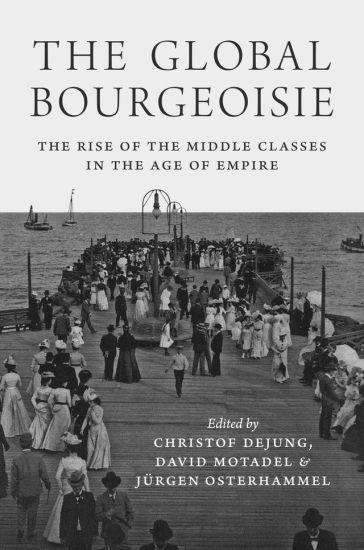
The Global Bourgeoisie

The Global Bourgeoisie

Christof Dejung; David Motadel; Jürgen Osterhammel

Princeton University Press
2019
pokkari
The first global history of the middle class While the nineteenth century has been described as the golden age of the European bourgeoisie, the emergence of the middle class and bourgeois culture was by no means exclusive to Europe. The Global Bourgeoisie explores the rise of the middle classes around the world during the age of empire. Bringing together eminent scholars, this landmark essay collection compares middle-class formation in various regions, highlighting differences and similarities, and assesses the extent to which bourgeois growth was tied to the increasing exchange of ideas and goods. The contributors indicate that the middle class was from its very beginning, even in Europe, the result of international connections and entanglements.Essays are grouped into six thematic sections: the political history of middle-class formation, the impact of imperial rule on the colonial middle class, the role of capitalism, the influence of religion, the obstacles to the middle class beyond the Western and colonial world, and, lastly, reflections on the creation of bourgeois cultures and global social history. Placing the establishment of middle-class society into historical context, this book shows how the triumph or destabilization of bourgeois values can shape the liberal world order.The Global Bourgeoisie irrevocably changes the understanding of how an important social class came to be.
The Global Bourgeoisie

The Global Bourgeoisie

Christof Dejung; David Motadel; Jürgen Osterhammel

PRINCETON UNIVERSITY PRESS
2019
sidottu
The first global history of the middle class While the nineteenth century has been described as the golden age of the European bourgeoisie, the emergence of the middle class and bourgeois culture was by no means exclusive to Europe. The Global Bourgeoisie explores the rise of the middle classes around the world during the age of empire. Bringing together eminent scholars, this landmark essay collection compares middle-class formation in various regions, highlighting differences and similarities, and assesses the extent to which bourgeois growth was tied to the increasing exchange of ideas and goods. The contributors indicate that the middle class was from its very beginning, even in Europe, the result of international connections and entanglements.Essays are grouped into six thematic sections: the political history of middle-class formation, the impact of imperial rule on the colonial middle class, the role of capitalism, the influence of religion, the obstacles to the middle class beyond the Western and colonial world, and, lastly, reflections on the creation of bourgeois cultures and global social history. Placing the establishment of middle-class society into historical context, this book shows how the triumph or destabilization of bourgeois values can shape the liberal world order.The Global Bourgeoisie irrevocably changes the understanding of how an important social class came to be.
Canon Law in the Age of Reforms (c. 1100 to C. 1150)

Canon Law in the Age of Reforms (c. 1100 to C. 1150)

Christof Rolker

THE CATHOLIC UNIVERSITY OF AMERICA PRESS
2023
sidottu
This monograph addresses the history of canon law in Western Europe between ca. 1000 and ca. 1150, specifically the collections compiled and the councils held in that time. The main part consists of an analysis of all major collections, taking into account their formal and material sources, the social and political context of their origin, the manuscript transmission, and their reception more generally. As most collections are not available in reliable editions, a considerable part of the discussion involves the analysis of medieval manuscripts. Specialized research is available for many but not all these works, but tends to be scattered across miscellaneous publications in English, German, French, Italian, and Spanish; one purpose of the book is thus to provide relatively uniform, up-to-date accounts of all major collections of the period. At the same time, the book argues that the collections are much more directly influenced by the social milieux from which they emerged, and that more groups were involved in the development of high medieval canon law than it has previously been thought. In particular, the book seeks to replace the still widely held belief that the development of canon law in the century before Gratian's Decretum (ca. 1140) was largely driven by the Reform papacy. Instead, it is crucial to take into account the contribution of bishops, monks, and other groups with often conflicting interests. Put briefly, local needs and conflicts played a considerably more important role than central (papal) 'reform', on which older scholarship has largely focused.