Kirjojen hintavertailu. Mukana 12 459 402 kirjaa ja 12 kauppaa.

Kirjahaku

Etsi kirjoja tekijän nimen, kirjan nimen tai ISBN:n perusteella.

1000 tulosta hakusanalla Christoph Ruffing

Christoph Schlingensief's Realist Theater

Christoph Schlingensief's Realist Theater

Ilinca Todorut

TAYLOR FRANCIS LTD
2024
nidottu
This book is the first study of the prolific German filmmaker, performance artist, and TV host Christoph Schlingensief (1960–2010) that identifies him as a practitioner of realism in the theater and lays out how theatrical realism can offer an aesthetic frame sturdy enough to hold together his experiments across media and genres. This volume traces Schlingensief’s developing realism through his theater work in conventional theater venues, in less conventional venues, his opera work focusing on the production of Wagner’s Parsifal at Bayreuth, and his art installations on revolving platforms called Animatographs. This book will be of great interest to scholars of theater, film, and performance art and practitioners.
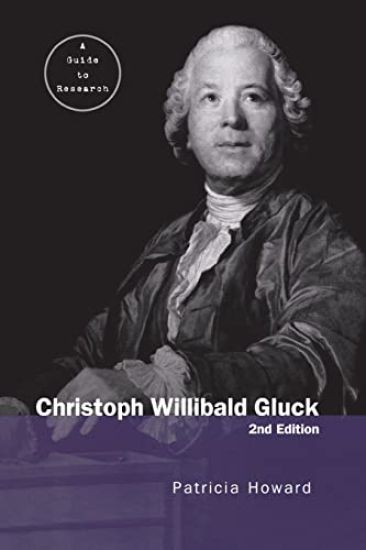
Christoph Willibald Gluck

Christoph Willibald Gluck

Patricia Howard

Routledge
2016
nidottu
Christoph Willibald Gluck composed for operas in such a way that served the story and related the poetic quality of music. He possessed a gift for creating unity between the art forms that comprise a ballet or opera. This bibliography and guide ties together the different writings on this artist, providing faster access to the information on his life and work.
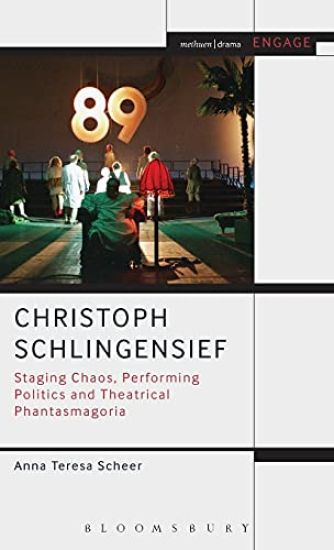
Christoph Schlingensief

Christoph Schlingensief

Anna Teresa Scheer

Methuen Drama
2018
sidottu
The first book to focus specifically on the late German artist Christoph Schlingensief’s theatre work, it subversively merges art, politics and everyday life to imbue his productions both inside and outside the theatre with a re-energized concept of the political in art. Scheer traces Schlingensief’s artistic lineage as a filmmaker with no formal training in theatre, whose work does not correspond to theoretical frameworks such as postdramatic theatre, Regietheater, or established categories of political theatre such as Brechtian, community, and agit-prop theatre. She explores how his work instead draws upon the highly performative gestures of the historical and post-Cold War avant-gardes as well the happenings and event-based practices of the sixties. Comprehensive case studies of six diverse theatrical and activist events are offered to demonstrate both the immediacy of Schlingensief’s response to contemporary social and political events and his use of a range of artistic influences and different genres: Rocky Dutschke ’68 (1996), Save Capitalism: Throw the Money Away! (1999) The Berlin Republic – or the Ring in Africa (1999) Hamlet (2001), Atta Atta – Art Has Broken Out! (2003) and the Church of Fear (2003). Key questions such as how his theatre functions as a provocation, and how an artist can insert themselves into the powerful flows of imagery produced by the perpetual global news cycle, form a coherent line of enquiry throughout each of the chapters. The significance of Schlingensief’s artistic legacy of politicized theatre-making that pioneers new modes of active, aesthetic and public engagement in the political realm remains pertinent to topical socio-political debates and is of relevance to an international audience across a diversity of disciplines.
Christoph Schlingensief

Christoph Schlingensief

Anna Teresa Scheer

Methuen Drama
2019
nidottu
The first book to focus specifically on the late German artist Christoph Schlingensief’s theatre work, it subversively merges art, politics and everyday life to imbue his productions both inside and outside the theatre with a re-energized concept of the political in art. Scheer traces Schlingensief’s artistic lineage as a filmmaker with no formal training in theatre, whose work does not correspond to theoretical frameworks such as postdramatic theatre, Regietheater, or established categories of political theatre such as Brechtian, community, and agit-prop theatre. She explores how his work instead draws upon the highly performative gestures of the historical and post-Cold War avant-gardes as well the happenings and event-based practices of the sixties. Comprehensive case studies of six diverse theatrical and activist events are offered to demonstrate both the immediacy of Schlingensief’s response to contemporary social and political events and his use of a range of artistic influences and different genres: Rocky Dutschke ’68 (1996), Save Capitalism: Throw the Money Away! (1999) The Berlin Republic – or the Ring in Africa (1999) Hamlet (2001), Atta Atta – Art Has Broken Out! (2003) and the Church of Fear (2003). Key questions such as how his theatre functions as a provocation, and how an artist can insert themselves into the powerful flows of imagery produced by the perpetual global news cycle, form a coherent line of enquiry throughout each of the chapters. The significance of Schlingensief’s artistic legacy of politicized theatre-making that pioneers new modes of active, aesthetic and public engagement in the political realm remains pertinent to topical socio-political debates and is of relevance to an international audience across a diversity of disciplines.
Christoph Martin Wieland As the Originator of Modern Travesty in German Literature
In this study the extent to which Wieland contributed to the literary genre of the travesty is established, the poet's approach to his sources as well as the nature and duality of his innovations are investigated, and the level and distribution of his travesties in relationship to the sum total of his literary work in general is appraised.