Kirjahaku
Etsi kirjoja tekijän nimen, kirjan nimen tai ISBN:n perusteella.
1000 tulosta hakusanalla Christopher B. Booker
How leaders can recast innovation’s toughest trade-offs—efficiency vs. flexibility, consistency vs. change, product vs purpose—as productive tensions.Why is leading innovation in today’s dynamic business environment so distressingly hit-or-miss? More than 90 percent of high-potential ventures don’t reach their projected targets. Surveys show that 80 percent of executives consider innovation crucial to their growth strategy, but only 6 percent are satisfied with their innovation performance. Should leaders aim for Steve Jobs-level genius, shower their projects with resources, or lean in to luck and embrace uncertainty? None of the above, say Christopher Bingham and Rory McDonald. Drawing on cutting-edge research and probing interviews with hundreds of leaders across three continents, in Productive Tensions Bingham and McDonald find that the most effective leaders and successful innovators embrace the tensions that arise from competing aims: efficiency or flexibility? consistency or change? product or purpose? Bingham and McDonald spotlight eight critical tensions that every innovator must master, and they spell out, with dozens of detailed examples of both success and failure, how to navigate them. How do you excite customers about a product they’ve never imagined? When is it wise to accept what the data is telling you, and when should you ignore the data and plow forward anyway? How can you maintain stakeholders’ trust and support during radical unforeseen course corrections? Bingham and McDonald guide readers through innovation’s thorniest tensions, using examples drawn from the experience of organizations as varied as P&G, Instagram, the US military, Honda, In-N-Out Burger, Slack, Under Armour, and the snowboarding company Burton.
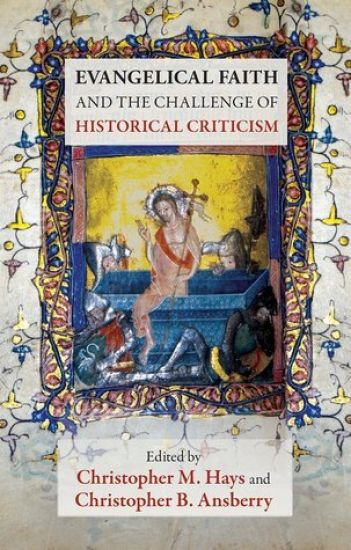
Evangelical Faith and the Challenge of Historical Criticism
Christopher B. Ansberry
SPCK Publishing
2013
nidottu
This book proposes to introduce and discuss the relationship between historical criticism and Christian theology, in the hope of addressing the relative paucity of evangelical engagement with historical-critical scholarship.
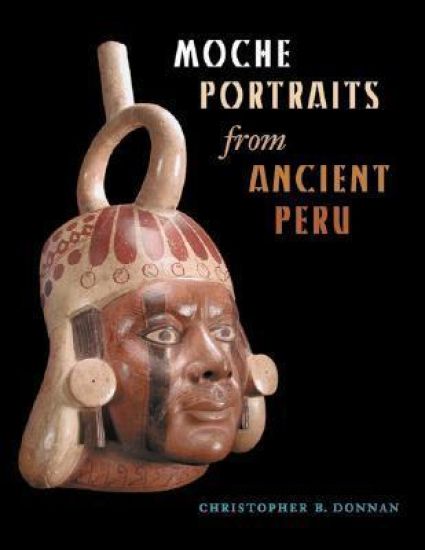
Of all the ancient civilizations that flourished in the Americas, only one perfected true portraiture of living people and produced it in quantity-the Moche who inhabited the north coast of Peru between approximately AD 100 and 800. Using the medium of three-dimensional ceramic vessels that could have contained liquid, Moche artisans typically formed the heads of the individuals they wished to portray, though sometimes they presented full figures with realistic portrait faces. Depicting an astonishing range of physical types, these portraits now allow us to meet Moche people who lived more than 1,500 years ago and to sense the nuances of their individual personalities.This pathfinding book presents the first wide-ranging, systematic study of the Moche portraits. Drawing on more than 900 examples from museums and private collections around the world-some 300 of which are illustrated here in full color-Christopher Donnan documents how the portrait tradition evolved, how the portraits were produced and distributed, who they portrayed, why they were made, and how they were used in Moche society. His analysis is supported by extensive archaeological evidence, which provides the context for portraits found in Moche tombs and midden deposits, as well as useful information for identifying the headdresses and ornaments worn by the individuals portrayed.
Ancient Burial Patterns of the Moche Valley, Peru
Christopher B. Donnan; Carol J. Mackey
University of Texas Press
1978
pokkari
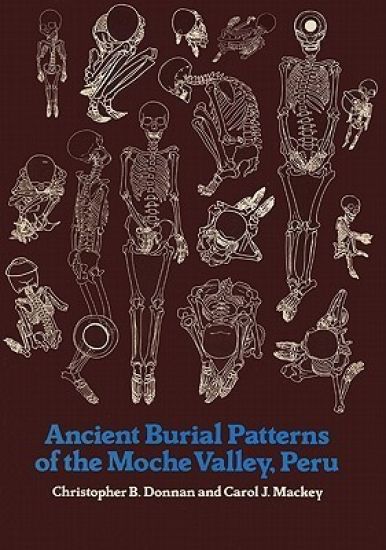
Archaeologists working in the Moche Valley of Peru have uncovered a number of tombs representing various cultures that flourished there prior to European contact. This book provides a full description of 103 such burials, spanning a period of more than 3,500 years. Each burial is documented with an accurate illustration of every artifact found, as well as details on the location, matrix, and construction of the graves, the individuals in the graves, and the placement of all the associated goods. This information constitutes an important resource for solving problems of ceramic chronology and style change. Age and sex data given for the burials will also enable scholars to establish status differences that existed in the pre-Columbian past. Finally, the authors have compared their sample with all the north coast burials previously reported, showing how their findings may be used to ascertain similarities and differences throughout the highland Andean region. Ancient Burial Patterns of the Moche Valley, Peru is the first diachronic study of burial practices for any Andean region. It not only demonstrates changes in funerary practices in the area but also provides insight into the nature of local cultural development. It will be useful to specialists in Andean and New World archaeology as well as to collectors of pre-Columbian art.
Cherokee Earth Dwellers
Christopher B. Teuton; Hastings Shade
UNIVERSITY OF WASHINGTON PRESS
2023
sidottu
Second place for the 2023 Chicago Folklore PrizeA celebration of the Cherokee cosmos through creature names, stories, cultural concepts, and reflectionsAyetli gadogv—to "stand in the middle"—is at the heart of a Cherokee perspective of the natural world. From this stance, Cherokee Earth Dwellers offers a rich understanding of nature grounded in Cherokee creature names, oral traditional stories, and reflections of knowledge holders. During his lifetime, elder Hastings Shade created booklets with over six hundred Cherokee names for animals and plants. With this foundational collection at its center, and weaving together a chorus of voices, this book emerges from a deep and continuing collaboration between Christopher B. Teuton, Hastings Shade, Loretta Shade, and others. Positioning our responsibilities as humans to our more-than-human relatives, this book presents teachings about the body, mind, spirit, and wellness that have been shared for generations. From clouds to birds, oceans to quarks, this expansive Cherokee view of nature reveals a living, communicative world and humanity's role within it.
Cherokee Earth Dwellers
Christopher B. Teuton; Hastings Shade
UNIVERSITY OF WASHINGTON PRESS
2023
pokkari
Second place for the 2023 Chicago Folklore PrizeA celebration of the Cherokee cosmos through creature names, stories, cultural concepts, and reflectionsAyetli gadogv—to "stand in the middle"—is at the heart of a Cherokee perspective of the natural world. From this stance, Cherokee Earth Dwellers offers a rich understanding of nature grounded in Cherokee creature names, oral traditional stories, and reflections of knowledge holders. During his lifetime, elder Hastings Shade created booklets with over six hundred Cherokee names for animals and plants. With this foundational collection at its center, and weaving together a chorus of voices, this book emerges from a deep and continuing collaboration between Christopher B. Teuton, Hastings Shade, Loretta Shade, and others. Positioning our responsibilities as humans to our more-than-human relatives, this book presents teachings about the body, mind, spirit, and wellness that have been shared for generations. From clouds to birds, oceans to quarks, this expansive Cherokee view of nature reveals a living, communicative world and humanity's role within it.
A fresh, deeply biblical account of God’s expanding grace and mercy, tracing how the Bible’s narrative points to the full inclusion of LGBTQ people in Christian communities “A radical new vision . . . and [an] argument that God’s plan was always to include more and more people.”—Scott Detrow, All Things Considered, NPR Discussions of the Bible and human sexuality often focus on a scattered handful of specific passages. But arguments about this same set of verses have reached an impasse, two leading biblical scholars believe; these debates are missing the forest for the trees. In this learned and beautifully written book, Richard and Christopher Hays explore a more expansive way of listening to the overarching story that scripture tells. They remind us of a dynamic and gracious God who is willing to change his mind, consistently broadening his grace to include more and more people. Those who were once outsiders find themselves surprisingly embraced within the people of God, while those who sought to enforce exclusive boundaries are challenged to rethink their understanding of God’s ways. The authors—a father and son—point out ongoing conversations within the Bible in which traditional rules, customs, and theologies are rethought. They argue that God has already gone on ahead of our debates and expanded his grace to people of different sexualities. If the Bible shows us a God who changes his mind, they say, perhaps today’s Christians should do the same. The book begins with the authors’ personal experiences of controversies over sexuality and closes with Richard Hays’s epilogue reflecting on his own change of heart and mind.
Designed for the pastor and Bible teacher, the Zondervan Exegetical Commentary on the Old Testament features today's top Old Testament scholars and brings together commentary features rarely gathered together in one volume. With careful discourse analysis and interpretation of the Hebrew text, the authors trace the flow of argument in each Old Testament book, showing that how a biblical author says something is just as important as what they say.Commentary on each passage follows a clear structure to help readers grasp the flow and meaning of the text:The Main Idea of the Passage: A one- or two-sentence summary of the key ideas the biblical author seeks to communicate.Literary Context: A brief discussion of the relationship of the specific text to the book as a whole and to its place within the broader argument.Translation and Exegetical Outline: Commentators provide their own translations of each text, formatted to highlight its discourse structure and accompanied by a coherent outline that reflects the flow and argument of the text.Structure and Literary Form: An overview of the literary structure and rhetorical style adopted by the biblical author, highlighting how these features contribute to the communication of the main idea of the passage.Explanation of the Text: A detailed commentary on the passage, paying particular attention to how the biblical authors select and arrange their materials and how they work with words, phrases, and syntax to communicate their messages.Canonical and Practical Significance: The commentary on each unit will conclude by building bridges between the world of the biblical author and other biblical authors and with reflections on the contribution made by this unit to the development of broader issues in biblical theology--particularly on how later Old Testament and New Testament authors have adapted and reused the motifs in question. The discussion also includes brief reflections on the significance of the message of the passage for readers today.The Zondervan Exegetical Commentary on the Old Testament series is the go-to resource for pastors and Bible teachers looking for deep but accessible study that equips them to connect the needs of Christians today with the biblical text.
Addressing the problem of reconciling China’s voting record in the UN on human rights and repressive policy at home, this book argues that domestic factors determine the way the Chinese government acts on wider human rights issues. China has a very active voting record in the United Nations General Assembly (UNGA) on human rights resolutions and is active internationally on such rights, something at odds with its increasing repression of human rights at home. Using rational choice’s emphasis on actors acting to advance their preferences, the author argues that it is the perceived domestic threat to the rule of the Chinese Communist Party (CCP) that determines the way the Chinese government acts on the human rights issues explored in this book. The author documents the pattern of this relationship through an in-depth examination of China’s voting in the UNGA on human rights issues, and statements made by Chinese delegates in the UN on human rights issues. This book will appeal to students of China, human rights, international relations, and international organizations, and for both state and non-state actors seeking to advance policy changes regarding China and human rights. In addition, the findings have policy implications for INGOs and states seeking to influence China’s policies.
Social Inequality and Social Stratification in US Society
Christopher B. Doob
Routledge
2019
sidottu
Social Inequality and Social Stratification in US Society uses a historical and conceptual framework to explain social stratification and social inequality. The historical scope gives context to each issue discussed and allows the reader to understand how each topic has evolved over the course of American history. The author uses qualitative data to help explain socioeconomic issues and connect related topics. Each chapter examines major concepts, so readers can see how an individual’s success in stratified settings often relies heavily on their access to valued resources—types of capital which involve finances, schooling, social networking, and cultural competence. Analyzing the impact of capital types throughout the text helps map out the prospects for individuals, families, and also classes to maintain or alter their position in social-stratification systems.
Social Inequality and Social Stratification in US Society
Christopher B. Doob
Routledge
2019
nidottu
Social Inequality and Social Stratification in US Society uses a historical and conceptual framework to explain social stratification and social inequality. The historical scope gives context to each issue discussed and allows the reader to understand how each topic has evolved over the course of American history. The author uses qualitative data to help explain socioeconomic issues and connect related topics. Each chapter examines major concepts, so readers can see how an individual’s success in stratified settings often relies heavily on their access to valued resources—types of capital which involve finances, schooling, social networking, and cultural competence. Analyzing the impact of capital types throughout the text helps map out the prospects for individuals, families, and also classes to maintain or alter their position in social-stratification systems.
When conducting research in developing countries, an ability to negotiate a bewildering array of cultural and logistical obstacles is essential. Overseas Research: A Practical Guide distills essential lessons from scores of students and scholars who have collected data and done fieldwork abroad, including how to prepare for the field, how and where to find funding for one’s fieldwork, issues of personal safety and security, and myriad logistical and relational issues. By encouraging researchers to think through the challenges of research before they begin it, Overseas Research will help prepare fieldworkers for the practical, logistical, and psychological considerations of very demanding work, help save valuable time, make the most of scarce financial resources, and enhance the quality of the field research. This third edition contains new material on social media, including representation of research subjects/collaborators, students’ digital branding and image, and representing universities abroad when posting publicly. It also covers emerging technologies such as solar panels for power in remote locations, new ways of digitally sending and receiving money, and incorporates more perspectives of women, LGBTQ+ people, and people of color researching abroad.The book will be of interest to overseas fieldworkers, and also to undergraduates in subjects such as anthropology, economics, geography, history, international studies, politics, sociology, and development studies.
Examining the interdependent nature of substance, space, and subjectivity, this book constitutes an interdisciplinary analysis of the intoxication indigenous to what has been termed "our narcotic modernity." The first section – Drug/Culture – demonstrates how the body of the addict and the social body of the city are both inscribed by "controlled" substance. Positing addiction as a "pathology (out) of place" that is specific to the (late-)capitalist urban landscape, the second section – Dope/Sick – conducts a critique of the prevailing pathology paradigm of addiction, proposing in its place a theoretical reconceptualization of drug dependence in the terms of "p/re/in-scription." Remapping the successive stages or phases of our narcotic modernity, the third section – Narco/State – delineates three primary eras of narcotic modernity, including the contemporary city of "safe"/"supervised" consumption. Employing an experimental, "intra-textual" format, the fourth section – Brain/Disease – mimics the sense, state or scape of intoxication accompanying each permutation of narcotic modernity in the interchangeable terms of drug, dream and/or disease. Tracing the parallel evolution of "addiction," the (late-)capitalist cityscape, and the pathological project of modernity, the four parts of this book thus together constitute a users’ guide to urban space.
Exploring the structural causes and consequences of inequalities based on a person’s race, class, and gender, Poverty, Racism and Sexism: The Reality of Oppression in America concentrates on this formidable set of disadvantages, demonstrating how Americans are adversely affected by just one or a combination of three social factors. Grounded in sociological thought, the text highlights unfolding stories about major social inequalities and relentless campaigns for people’s rights. Weaving together such concepts as individualism, social reproduction, social class, and intersectionality, the book provides a framework for readers to understand the vast injustices these groups encounter, where and why they originated, and why they continue to endure. Poverty, Racism and Sexism is a compact, versatile volume which will prove an invaluable resource for those studying social inequality, social problems, social stratification, contemporary American society, social change, urban sociology, and poverty and inequality.
When the Roman historian Tacitus wrote the Germania, a none-too-flattering little book about the ancient Germans, he could not have foreseen that centuries later the Nazis would extol it as “a bible” and vow to resurrect Germany on its grounds. But the Germania inspired—and polarized—readers long before the rise of the Third Reich. In this captivating history, Christopher B. Krebs, a professor of classics at Stanford University, traces the wide-ranging influence of the Germania, revealing how an ancient text rose to take its place among the most dangerous books in the world.
This book examines the key motivations for and challenges to greater regional integration in Southeast Asia. It demonstrates how security and economic concerns -domestic, regional and international - have either contributed to, or detracted from, an increased level of unity and cooperation in ASEAN. It also explores how the patterns of interaction and socialization generated by these issues, together with the nature of domestic political systems, have affected the emergence of common values, norms and interests. It covers the full range of issues confronting ASEAN at present, and the full range of ASEAN countries, and discusses both developments in ASEAN to date and also likely future developments.
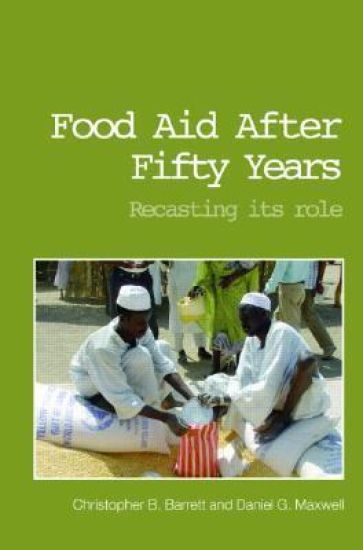
This book analyzes the impact food aid programmes have had over the past fifty years, assessing the current situation as well as future prospects. Issues such as political expediency, the impact of international trade and exchange rates are put under the microscope to provide the reader with a greater understanding of this important subject matter. This book will prove vital to students of development economics and development studies and those working in the field.