Kirjojen hintavertailu. Mukana 11 244 527 kirjaa ja 12 kauppaa.

Kirjahaku

Etsi kirjoja tekijän nimen, kirjan nimen tai ISBN:n perusteella.

1000 tulosta hakusanalla Christopher Carter

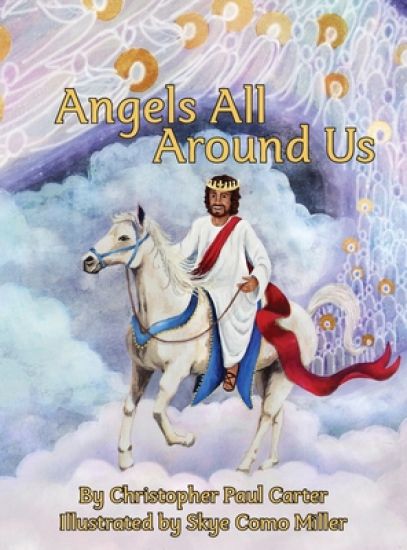
Angels All Around Us

Angels All Around Us

Christopher Paul Carter

Dwelling Place Ministries
2020
sidottu
When we united author Christopher Paul Carter with Illustrator Skye Como Miller we knew we could begin our series and their journey into the supernatural REALITY of God's Creation and Kingdom " Gorgeously illustrated angels based on Biblical and real-life angelic encounters seem to leap off the pages as the sweet, rhyming storyline carries young readers through glimpses of just of few of God's heavenly helpers. This story not only shows kids some gorgeous and powerful angels, it challenges them to talk personally to God and to Jesus about their OWN guardian angels and His plan for their young lives. The accompanying Bible verses and exercises help parents and teachers lead children further into this fascinating glimpse into God's Kingdom while grounding kids in Biblical truths that are unshakeable.
In the Palaces of Heaven

In the Palaces of Heaven

Christopher Paul Carter

Dwelling Place Ministries
2013
nidottu
Heaven. It is a Biblical promise that inspires awe and wonder, but one that seems unknowable until you leave this earth and your temporal body behind. But what if you could experience heaven now? What if you were meant to do it now? What if you could follow in the footsteps of Biblical examples like Enoch, Elijah, John, and Paul - all of whom experienced the heavenly realms firsthand? The truth is, God has made a way for us to experience and live in the realm that Jesus Himself ascended to after His resurrection. It is not off-limits. In fact, there is an open invitation. In this book, author Christopher Paul Carter shares his own heavenly journey. It wasn't a one-time event or a near-death experience. Rather, it was an introduction into an ongoing life in the heavenly places. There's no need to wait, the doors to heaven are open now, and God is inviting you in. Christopher Paul Carter was born in Houston, Texas and spent most of his formative years in the Carolinas and Pennsylvania. Having a passion for science, he went to college in Charleston, South Carolina to study Physics. It was during that time that he had an arresting encounter with God that changed the course of his life. Today, Christopher and his wife, Melissa, direct Dwelling Place Ministries.
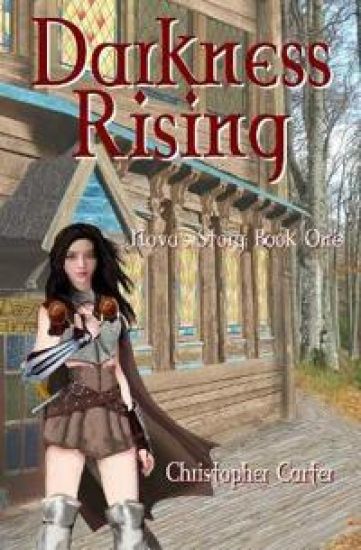
Darkness Rising

Darkness Rising

Christopher Michael Carter

Independently Published
2019
pokkari
Her father recently deceased, seventeen year old Nova finds herself summoned by her father's oldest friend. The dwarven protector of a tiny village has gathered a group of would be heroes and Nova is asked to join them. Within hours of meeting, they are sent to investigate the destruction of nearby Doogan Abbey. Together, they attempt uncover the secrets hidden beneath the rubble, as well as the strange power possessed by young Nova. As the small group discovers what lies beneath, they learn their presence has released a dark evil upon the world causing them to question why did the dwarf send them and why did he insist Nova go with them. What is the connection between Nova, the dwarf, and the darkness? As they come face to face with the evil, Nova quickly becomes the only hope of defeating the darkness.
Loose Lipped Secrets and Twinkling Lights

Loose Lipped Secrets and Twinkling Lights

Christopher Michael Carter

Supposed Crimes, LLC
2019
pokkari
Contemporary poetry about contemporary problems, love, and loss. 2.0 Give away all your possessions Cleanse yourself And order more Cut yourself off from friends And family And search for replacements online Toss out your beliefs And share someone else's Don't speak to others But like their posts Change your name Come up with something eye-catching And controversial Stop using your voice Type faster Using numbers instead of letters Peel your skin off Head to toe And download more If you're still you You're doing it wrong
Agent Phoenix

Agent Phoenix

Christopher Michael Carter

Supposed Crimes, LLC
2020
pokkari
In a near-future where heroes and villains alike have access to technological marvels, Agent Phoenix protects Carbine City.When Baxter Combs returns, intent on stealing and selling the minds of everyday citizens, Agent Phoenix comes face-to-face with his fiercest nemesis.Agent Phoenix fears his husband Victor will get caught in the crossfire of two powerful men trying to claim Carbine City as their own.
Ignite English: Student Book 1

Ignite English: Student Book 1

Jill Carter; Christopher Edge; Peter Ellison; Liz Hanton; Martin Phillips; Alison Smith; Geoff Barton

Oxford University Press
2014
nidottu
Ignite English aims to excite and motivate teachers and students by making learning relevant and supporting teachers. Addressing key concerns raised in recent Ofsted reports as well as meeting the needs of the new KS3 National Curriculum, the Student Books are structured around thematic units that cover a variety of forms as well as including unique immersive production based-units. Ignite English has a core focus on engaging students by connecting their skill development, through the theme of the unit, with Reading, Writing, Speaking and Listening skills used in a range of relevant and interesting jobs outside school.
Ignite English: Teacher Companion 1

Ignite English: Teacher Companion 1

Jill Carter; Christopher Edge; Peter Ellison; Liz Hanton; Martin Phillips; Alison Smith; Geoff Barton

Oxford University Press
2014
nidottu
Ignite English aims to excite and motivate teachers and students by making learning relevant and supporting teachers. Addressing key concerns raised in recent Ofsted reports as well as meeting the needs of the new KS3 National Curriculum, each Teacher Companion provides a range of activities and guidance that enables teachers to customise their teaching to suit individual student needs as well as sharing the thinking behind the resources.
Ignite English: Teacher Companion 3

Ignite English: Teacher Companion 3

Jill Carter; Christopher Edge; Peter Ellison; Liz Hanton; Mel Peeling; Alison Smith; Geoff Barton

Oxford University Press
2014
nidottu
Ignite English aims to excite and motivate teachers and students by making learning relevant and supporting teachers. Addressing key concerns raised in recent Ofsted reports as well as meeting the needs of the new KS3 National Curriculum, each Teacher Companion provides a range of activities and guidance that enables teachers to customise their teaching to suit individual student needs as well as sharing the thinking behind the resources.
The Great Sermon Tradition as a Fiscal Framework in 1 Corinthians
This text addresses two separate but related questions. Firstly, what is Paul's theology of material possessions, and secondly, what is the source of the apostle's thought on this subject? Carter endeavours to answer these questions by posing the hypothesis that Paul owes his pecuniary thought to the synoptic sermon tradition. Unlike other studies that investigate this link, Carter does not appeal to verbal parallels to establish this theory. Rather, he demonstrates a continuity in the broad fiscal thought of Jesus and Paul. This is accomplished by first demonstrating the plausibility of Paul's acquaintance with the dominical tradition through evidence related to the apostle's historical environment and his extant writings. The author then establishes the likelihood that Paul knew the pre-synoptic sermon tradition because of its ubiquity in early church discipleship, the judgment of form critical scholars, and its pervasive resonances in Pauline literature. From this point of embarkation, Carter moves on to articulate the broad fiscal thought of the synoptic sermons. It is found that the synoptic sermons' fiscal material has a pervasively eschatological orientation, and that in the sermons, Jesus seeks to redefine the financial worldview of Christian disciples. Having examined the synoptic sermons, their fiscal thought is compared with that expressed by Paul in 1 Corinthians. Through the course of this comparison, alternate sources in Jewish and Hellenistic literature are considered as potential explanations for any correspondences. Ultimately, the study concludes that Jesus' and Paul's financial thought evidence remarkable symmetry that cannot be explained by a shared cultural environment. Consequently, it is determined that Paul very likely depends on the dominical tradition for the contours of his financial thought.
The Great Sermon Tradition as a Fiscal Framework in 1 Corinthians
This text addresses two separate but related questions. Firstly, what is Paul's theology of material possessions, and secondly, what is the source of the apostle's thought on this subject? Carter endeavours to answer these questions by posing the hypothesis that Paul owes his pecuniary thought to the synoptic sermon tradition. Unlike other studies that investigate this link, Carter does not appeal to verbal parallels to establish this theory. Rather, he demonstrates a continuity in the broad fiscal thought of Jesus and Paul. This is accomplished by first demonstrating the plausibility of Paul's acquaintance with the dominical tradition through evidence related to the apostle's historical environment and his extant writings. The author then establishes the likelihood that Paul knew the pre-synoptic sermon tradition because of its ubiquity in early church discipleship, the judgment of form critical scholars, and its pervasive resonances in Pauline literature. From this point of embarkation, Carter moves on to articulate the broad fiscal thought of the synoptic sermons. It is found that the synoptic sermons' fiscal material has a pervasively eschatological orientation, and that in the sermons, Jesus seeks to redefine the financial worldview of Christian disciples. Having examined the synoptic sermons, their fiscal thought is compared with that expressed by Paul in 1 Corinthians. Through the course of this comparison, alternate sources in Jewish and Hellenistic literature are considered as potential explanations for any correspondences. Ultimately, the study concludes that Jesus' and Paul's financial thought evidence remarkable symmetry that cannot be explained by a shared cultural environment. Consequently, it is determined that Paul very likely depends on the dominical tradition for the contours of his financial thought.
The Long Shadow of Extraction

The Long Shadow of Extraction

Christopher L. Carter

PRINCETON UNIVERSITY PRESS
2025
sidottu
How resistance to extraction shaped Indigenous demands for autonomy, integration, or assimilationFrom the onset of colonialism, Indigenous communities have faced seizure of their land, labor, and resources by non-Indigenous actors. In The Long Shadow of Extraction, Christopher Carter argues that the native groups’ resistance to extraction took distinct forms, and that this variation explains why some communities demanded autonomy while others demanded integration or assimilation. Countering existing scholarship that assumes a universal demand for autonomy, Carter shows that some Indigenous communities in fact refused government offers to recognize their local political authority and longstanding economic institutions.Carter argues that contemporary Indigenous demands were forged in early twentieth-century efforts to resist extraction. Drawing on two emblematic Latin American cases, Peru and Bolivia, Carter shows that in communities where traditional Indigenous leaders organized resistance, ethnic mobilization occurred and gave rise to enduring demands for autonomy, or state recognition of Indigenous identities and institutions. In communities where unions and leftist parties organized resistance, class-based mobilization became the norm. This led communities to reject autonomy and demand instead integration (state recognition of Indigenous identities but not Indigenous institutions) or assimilation (state recognition of neither Indigenous identities nor institutions). Carter’s groundbreaking account of Indigenous resistance has important implications for understanding not only the historical emergence of autonomy but variations in identity-based mobilization in multiethnic democracies.