Blundell Geoffrey; Christopher Chippindale; Clottes Jean; Conkey Margaret W.; Edward B. Eastwood; Francis Julie E.; Helskog Knut; Imogene L. Lim; Loendorf Lawrence L.; Johannes Loubser; David Morris; Sven Ouzman; Neil Price; Saetersdal Tore; Benjamin Smith; Patricia Vinnicombe; Eva Walderhaug; Walker Nick; Whitley David S.
This collection focuses on David Lewis-Williams and the extent of his personal impact on the field of rock art research. It is largely through his work that San rock art has come to be understood so well, as a complex symbolic and metaphoric representation of San religious beliefs and practices. The purpose of this volume is to demonstrate the depth and wide geographical impact of Lewis-Williams' contribution, with particular emphasis on the use of theory and methodology drawn from ethnography that he has used with inspirational effect in understanding the meaning and context of rock art in various parts of the world. Seeing and Knowing explores how best archaeologists study rock art when there exist ethnographic or ethno - historic bases of insight, and how they study rock art when there do not appear to exist ethnographic or ethnohistoric bases of insight - in short, how to understand and learn from rock art with and without ethnography. Because many of the chapters are based on solid fieldwork and ethnographic research, they offer a new body of work that provides the evidence for differentiation between knowing and simply seeing.
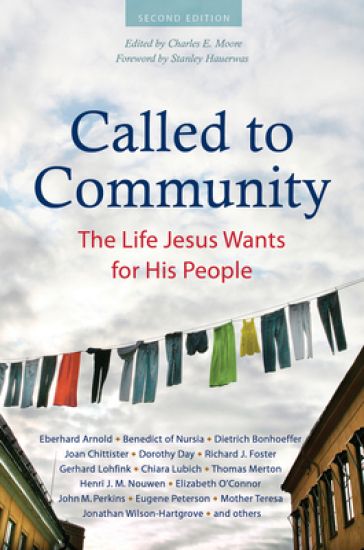
Eberhard Arnold; Dietrich Bonhoeffer; Joan Chittister; Dorothy Day; Fyodor Dostoyevsky; Richard J. Foster; Jonathan Wilson-Hartgrove; David Janzen; Søren Kierkegaard; C. S. Lewis; Chiara Lubich; Thomas Merton; Henri J. M. Nouwen; John M. Perkins; Eugene H. Peterson; Christine D. Pohl; Howard A. Snyder; Mother Teresa; Saint Benedict; Jeremiah Barker; Amy Carmichael; Hans Denck; Andreas Ehrenpreis; Thomas R Kelly; Penelope Lawson; Juan Mateos; Kathleen Norris; Thomas E Powers; Peter Riedemann; Christopher C Smith; Ulrich Stadler
Fifty-two readings on living in intentional Christian community to spark group discussion.Gold Medal Winner, 2017 Illumination Book Awards, Christian LivingSilver Medal Winner, 2017 Benjamin Franklin Award in Religion, Independent Book Publishers AssociationWhy, in an age of connectivity, are our lives more isolated and fragmented than ever? And what can be done about it? The answer lies in the hands of God’s people. Increasingly, today’s Christians want to be the church, to follow Christ together in daily life. From every corner of society, they are daring to step away from the status quo and respond to Christ’s call to share their lives more fully with one another and with others. As they take the plunge, they are discovering the rich, meaningful life that Jesus has in mind for all people, and pointing the church back to its original calling: to be a gathered, united community that demonstrates the transforming love of God.Of course, such a life together with others isn’t easy. The selections in this volume are, by and large, written by practitioners—people who have pioneered life in intentional community and have discovered in the nitty-gritty of daily life what it takes to establish, nurture, and sustain a Christian community over the long haul.Whether you have just begun thinking about communal living, are already embarking on sharing life with others, or have been part of a community for many years, the pieces in this collection will encourage, challenge, and strengthen you. The book’s fifty-two chapters can be read one a week to ignite meaningful group discussion.Contributors include: John F. Alexander, Eberhard Arnold, J. Heinrich Arnold, Johann Christoph Arnold, Alden Bass, Benedict of Nursia, Christoph Friedrich Blumhardt, Leonardo Boff, Dietrich Bonhoeffer, Joan Chittister, Stephen B. Clark, Andy Crouch, Dorothy Day, Anthony de Mello, Elizabeth Dede, Catherine de Hueck Doherty, Fyodor Dostoyevsky, Jenny Duckworth, Friedrich Foerster, Richard J. Foster, Jodi Garbison, Arthur G. Gish, Helmut Gollwitzer, Adele J Gonzalez, Stanley Hauerwas, Joseph H. Hellerman, Roy Hession, David Janzen, Rufus Jones, Emmanuel Katongole, Arthur Katz, Søren Kierkegaard, C. Norman Kraus, C.S. Lewis, Gerhard Lohfink, Ed Loring, Chiara Lubich, George MacDonald, Thomas Merton, Hal Miller, José P. Miranda, Jürgen Moltmann, Charles E. Moore, Henri J. M. Nouwen, Elizabeth O’Connor, John M. Perkins, Eugene H.Peterson, Christine D. Pohl, Chris Rice, Basilea Schlink, Howard A. Snyder, Mother Teresa, Thomas à Kempis, Elton Trueblood, and Jonathan Wilson-Hartgrove.
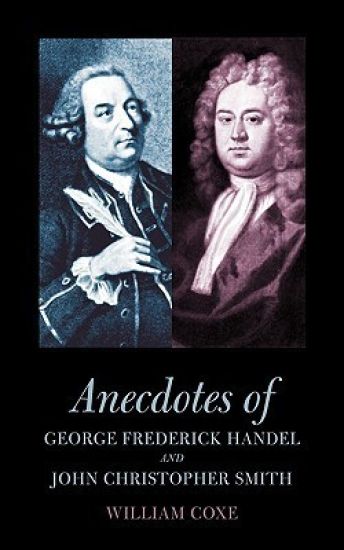
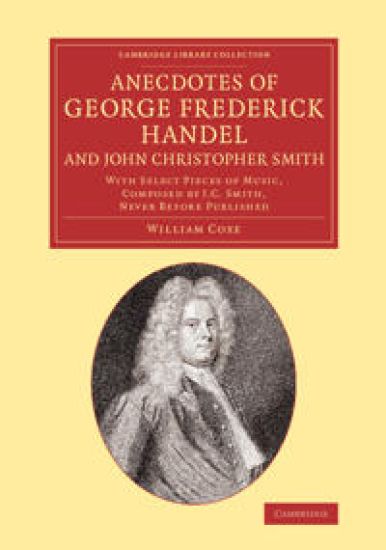
William Coxe (1748-1828) was the stepson of Handel's amanuensis, John Christopher Smith. As such, he was ideally placed to write a biography of Smith, and also of Handel. These Anecdotes are therefore important sources for the lives of both composers. It is notable that many of the subscribers were close friends of Smith. The style of the original 1799 text is refreshingly simple and unaffected, and little change has been necessary to make it accessible to the modern reader. An introduction, notes and index have been added. William Coxe was a talented writer and historian whose output include several travel books and volumes on both Robert and Horace Walpole. He died at the age of eighty in his parish of Bemerton, Wiltshire. John Sharp, in a letter to Constable, wrote that he 'died of old age, unable to contend with two helps of salmon in lobster sauce, washed down with large draughts of Perry'.
The author and clergyman William Coxe (1748–1828), noted for his travel works, was the stepson of Handel's amanuensis, German-born John Christopher Smith (1712–95). First published in 1799, the present work is a valuable source of first-hand information about two men at the heart of eighteenth-century English music: George Frideric Handel (1685–1759), whose inventive and sensitive melodic genius and exuberant brilliance in depicting the spectacular are best displayed in his Messiah and Zadok the Priest, and Smith, a composer of attractive and fashionable music, who settled in London in 1720, took lessons with Handel and later supported the great composer as his eyesight failed. Smith was also organist at the Foundling Hospital until 1770. This publication, profits from which were intended to support Smith's family, draws on the works of John Hawkins and Charles Burney, and on anecdotes claimed to be 'derived from unquestionable authority'.
The 18th century was a wealth of knowledge, exploration and rapidly growing technology and expanding record-keeping made possible by advances in the printing press. In its determination to preserve the century of revolution, Gale initiated a revolution of its own: digitization of epic proportions to preserve these invaluable works in the largest archive of its kind. Now for the first time these high-quality digital copies of original 18th century manuscripts are available in print, making them highly accessible to libraries, undergraduate students, and independent scholars.The eighteenth-century fascination with Greek and Roman antiquity followed the systematic excavation of the ruins at Pompeii and Herculaneum in southern Italy; and after 1750 a neoclassical style dominated all artistic fields. The titles here trace developments in mostly English-language works on painting, sculpture, architecture, music, theater, and other disciplines. Instructional works on musical instruments, catalogs of art objects, comic operas, and more are also included. ++++The below data was compiled from various identification fields in the bibliographic record of this title. This data is provided as an additional tool in helping to insure edition identification: ++++British LibraryT139674Anonymous. By William Coxe. Large paper issue. "Only sixty copies of this impression on imperial paper were printed, for the sole use of the subscribers" (note at the foot of the Advertisement). With a half-title and a list of subscribers and 34 numberLondon: printed by W. Bulmer and Co. Sold by Cadell and Davies; E. Harding; Birchall, music-seller; and J. Eaton, Salisbury, 1799. 8], iv,64p., plates: ports., engr.music; 4
The 18th century was a wealth of knowledge, exploration and rapidly growing technology and expanding record-keeping made possible by advances in the printing press. In its determination to preserve the century of revolution, Gale initiated a revolution of its own: digitization of epic proportions to preserve these invaluable works in the largest archive of its kind. Now for the first time these high-quality digital copies of original 18th century manuscripts are available in print, making them highly accessible to libraries, undergraduate students, and independent scholars.The eighteenth-century fascination with Greek and Roman antiquity followed the systematic excavation of the ruins at Pompeii and Herculaneum in southern Italy; and after 1750 a neoclassical style dominated all artistic fields. The titles here trace developments in mostly English-language works on painting, sculpture, architecture, music, theater, and other disciplines. Instructional works on musical instruments, catalogs of art objects, comic operas, and more are also included. ++++The below data was compiled from various identification fields in the bibliographic record of this title. This data is provided as an additional tool in helping to insure edition identification: ++++British LibraryT139675Anonymous. By William Coxe. With a half-title, and a list of subscribers and 34 numbered pages of engraved music following the text.London: printed by W. Bulmer and Co. Sold by Cadell and Davies; E. Harding; Birchall, music-seller; and J. Eaton, Salisbury, 1799. 8], iv,64p., plates: ports., engr.music; 4
The 18th century was a wealth of knowledge, exploration and rapidly growing technology and expanding record-keeping made possible by advances in the printing press. In its determination to preserve the century of revolution, Gale initiated a revolution of its own: digitization of epic proportions to preserve these invaluable works in the largest archive of its kind. Now for the first time these high-quality digital copies of original 18th century manuscripts are available in print, making them highly accessible to libraries, undergraduate students, and independent scholars.The eighteenth-century fascination with Greek and Roman antiquity followed the systematic excavation of the ruins at Pompeii and Herculaneum in southern Italy; and after 1750 a neoclassical style dominated all artistic fields. The titles here trace developments in mostly English-language works on painting, sculpture, architecture, music, theater, and other disciplines. Instructional works on musical instruments, catalogs of art objects, comic operas, and more are also included. ++++The below data was compiled from various identification fields in the bibliographic record of this title. This data is provided as an additional tool in helping to insure edition identification: ++++British LibraryT004217London: printed by W. Strahan for the author; and sold by C. Corbett, 1740. 6], xxiv, 2],9-19, 1]p.; 4
This story began a hundred years ago when a child became the inspiration for his famous father, A. A. Milne, who created one of the best known children's characters in recent history. His parents wanted a girl and to begin with treated him as one. They were initially quite distant from him and his upbringing was left to a loyal and loving nanny. Unfortunately, this left Christopher Robin Milne terminally shy and lacking in self-confidence. Unable to escape from the shadow of his fictional self, he became an object of continued interest from a non-understanding public. His salvation started with being sent away to Stowe School, going to Cambridge and joining the Army in the Second World War as a sapper. After an unhappy and directionless time immediately post-war in London, he eventually married and, very successfully, ran a bookshop in the South West for twenty-one years. His life was dominated by a love of the countryside, learned at his parents' country home, Cotchford Farm in Hartfield, East Sussex, and much later in Devon. How he turned his life round, against the odds, is the subject of this biography.
This work has been selected by scholars as being culturally important and is part of the knowledge base of civilization as we know it.This work is in the public domain in the United States of America, and possibly other nations. Within the United States, you may freely copy and distribute this work, as no entity (individual or corporate) has a copyright on the body of the work.Scholars believe, and we concur, that this work is important enough to be preserved, reproduced, and made generally available to the public. To ensure a quality reading experience, this work has been proofread and republished using a format that seamlessly blends the original graphical elements with text in an easy-to-read typeface.We appreciate your support of the preservation process, and thank you for being an important part of keeping this knowledge alive and relevant.
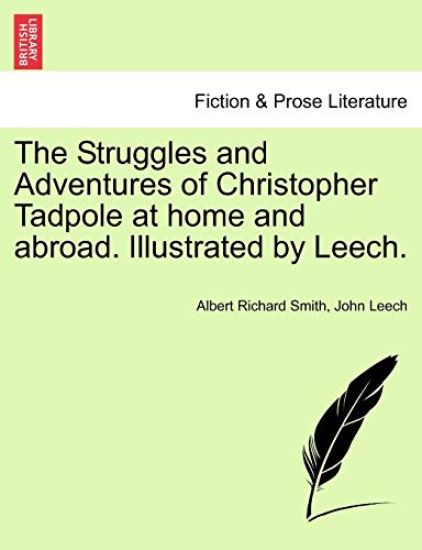
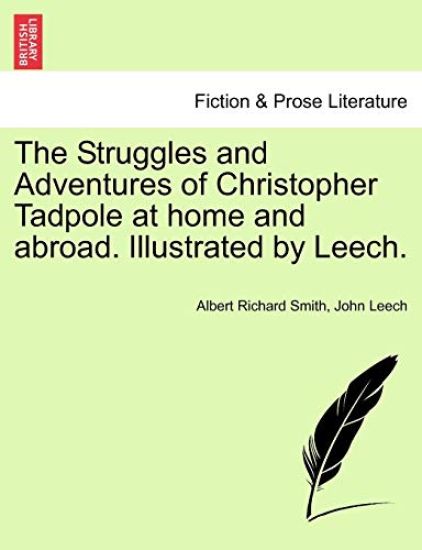
Title: The Struggles and Adventures of Christopher Tadpole at home and abroad. Illustrated by Leech.Publisher: British Library, Historical Print EditionsThe British Library is the national library of the United Kingdom. It is one of the world's largest research libraries holding over 150 million items in all known languages and formats: books, journals, newspapers, sound recordings, patents, maps, stamps, prints and much more. Its collections include around 14 million books, along with substantial additional collections of manuscripts and historical items dating back as far as 300 BC.The FICTION & PROSE LITERATURE collection includes books from the British Library digitised by Microsoft. The collection provides readers with a perspective of the world from some of the 18th and 19th century's most talented writers. Written for a range of audiences, these works are a treasure for any curious reader looking to see the world through the eyes of ages past. Beyond the main body of works the collection also includes song-books, comedy, and works of satire. ++++The below data was compiled from various identification fields in the bibliographic record of this title. This data is provided as an additional tool in helping to insure edition identification: ++++ British Library Smith, Albert Richard; Leech, John; 1848. 8 . 12620.c.23.