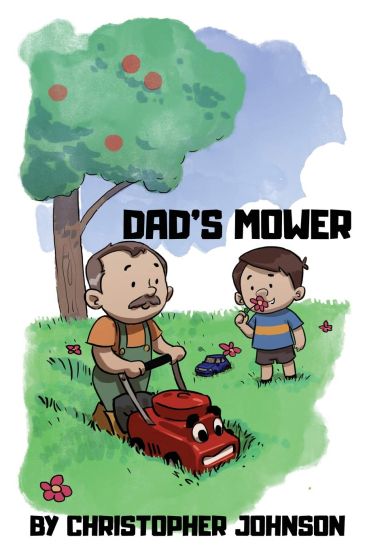
My dear reader, let me introduce you to "Dad's Mower" - a delightful children's book that tells a tale of familial love and the wonders of childhood. This beautiful story follows a young boy and his adoration for his father's beloved mower, a simple yet charming fascination that brings warmth to the heart.With hidden surprises tucked away in almost every image, "Dad's Mower" is a story that will enrapture young readers and old alike. It's a testament to the joys of childhood and the memories that shape us into the adults we become.Indeed, "Dad's Mower" is perfect for children with a fascination for the world around them, particularly those who find solace in the sounds of a push mower or the thrill of watching the grass be cut down to size. It is a tale that will ignite the imagination and stir the senses.But beyond its charming story and enchanting illustrations, "Dad's Mower" is a work of art that teaches valuable life lessons about perseverance, determination, and the bonds of family. With a downloadable audiobook, streaming video book, and downloadable coloring sheets, this book is an immersive experience that will leave a lasting impression.So if you are seeking a charming children's book that will inspire your child to embrace the wonders of life, look no further than "Dad's Mower". Written with a passion for storytelling and a love for family, it is a treasure to be cherished by generations to come.Order "Dad's Mower" today and let it transport you and your child on a journey of family, fun, and adventure, with hidden surprises to be discovered in almost every image. Trust me, dear reader, you will not be disappointed.
Set against the dramatic backdrop of the Japanese army’s ‘March toward Delhi’ during the Second World War, Box of Lions explores the little-known but extraordinary clash on the Imphal Plain. When Japanese forces targeted a critical British supply depot – codenamed Lion Box – rich in food and military resources they expected little resistance. Instead, they encountered an unlikely and determined defence. Composed not of hardened infantry but of drivers, administrators, sappers and storemen, these so-called ‘admin soldiers’ from Britain, India, Nepal and Africa were suddenly thrust into frontline combat. Over the course of three days of bitter fighting, they held off a professional invading force, buying time for the Allies to evacuate vital stores and shaking the confidence of the Japanese troops. Written by the son of a veteran who fought on the frontline, this gripping account draws on thirty years of research, first-hand interviews – including with Japanese survivors – and multiple journeys to the battlefield itself. Rich in oral history and raw with emotion, Box of Lions brings to life the courage, fear and resilience of ordinary men caught in extraordinary circumstances.
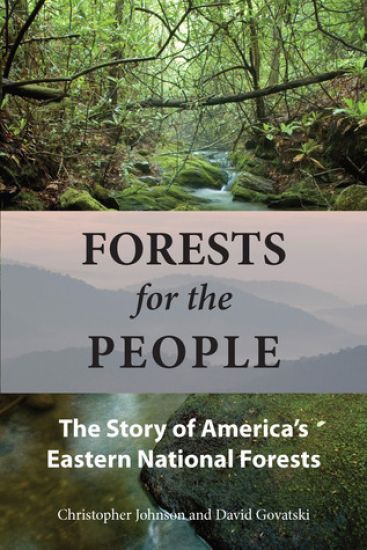
At the turn of the twentieth century, widespread clearcutting resulted in ecological ruin and devastating fires in America's Eastern forests. A coalition of citizens, organisations, and business and political leaders fought against this pattern, and in 1911, they achieved a landmark victory with the Weeks Act, which protected millions of acres of Eastern forests. "Forests of the People" tells the fascinating story of this vital legislation. While these protected forests survive today, many of the critical issues facing American forests in the twentieth century persist, and new threats have arisen - including oil shale drilling, invasive species, and development around national parks. In "Forests for the People", Christopher Johnson and David Govatski draw upon the lessons and victories of the past to examine the vital issues facing American forests today and illuminate paths to better forest management.
The two words of this concept "Pastor" and "Plus" have very distinct meanings. First, the word "Pastor" refers to those who are leading, instructing, serving, or maybe influential in their local ministries/communities. The word "Plus" refers to the additional gifts, talents, skills, or additional spheres of influence. These words are mentioned together because the name itself suggests that these two components must be thought of together and can be impactful when used to feed each other. This book helps pastors become of aware of the skill that may already be present, and points to additional skills that are transferrable to other markets.
There are many successful people who adopt this mindset of limitless living. The problem with it is they may think that there are no limits to what they can have or achieve, but sooner or later they will become overwhelmed by the fact that they cannot supply the demand for all of these areas. At some point, something will have to give. Most of the time it will be the person who has no limits or boundaries in his or her life. This book is for those who need the confidence to set clear boundaries in their lives so that they can take back their finite control.
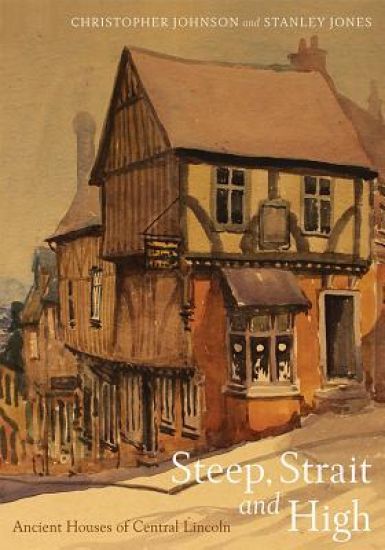
Architectural and historical surveys of many of the most important buildings in Lincoln. This volume illuminates the development of different building styles in timber, stone and brick over a period of 750 years, in one of the oldest areas of Lincoln. High quality and detailed architectural drawings are accompanied by documentary accounts which explain the historical context, and tell some of the fascinating and tragic stories of the people who lived and worked there from the mid-twelfth century until the First World War, including the medieval Jewish community. Steep Hill is already internationally regarded for the quality of its cultural environment as well as its picturesque architecture, and the Strait and the upper part of the long High Street have a wide range of different architectural styles in their buildings, of considerable interest. Steep, Strait and High forms the final volume in a series of architectural and historical surveys of the historic buildings of Lincoln, based on forty-five years of research, originally undertaken by the Survey of Ancient Houses, sponsored by the Lincoln Civic Trust, and now continued in the work of the Survey of Lincoln. Christopher Johnson, Chair of theSurvey of Lincoln, was an archivist and latterly service manager at Lincolnshire Archives prior to becoming Information and Records Manager at Lincolnshire County Council; Stanley Jones was a lecturer at Sheffield College of Art,and has been deeply involved in the Survey of Ancient Houses in Lincoln.
At the turn of the twentieth century, widespread clearcutting resulted in ecological ruin and devastating fires in America's Eastern forests. A coalition of citizens, organisations, and business and political leaders fought against this pattern, and in 1911, they achieved a landmark victory with the Weeks Act, which protected millions of acres of Eastern forests. "Forests of the People" tells the fascinating story of this vital legislation. While these protected forests survive today, many of the critical issues facing American forests in the twentieth century persist, and new threats have arisen - including oil shale drilling, invasive species, and development around national parks. In "Forests for the People", Christopher Johnson and David Govatski draw upon the lessons and victories of the past to examine the vital issues facing American forests today and illuminate paths to better forest management.
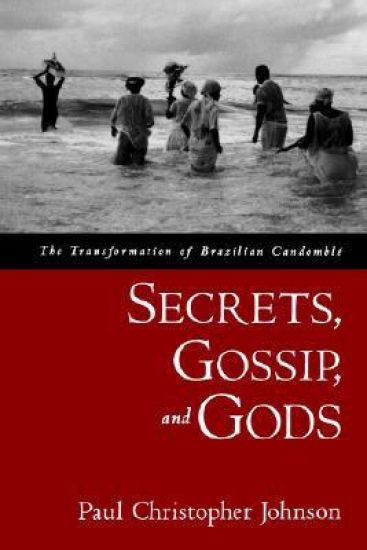
In this wide-ranging book Paul C Johnson explores the changing, hidden face of the Afro-Brazilian indigenous religion of Candomble. Despite its inportance in Brazilian Society, Candomble has received far less attention than its sister religions Vodou and Santeria. Johnson seeks to fill this void by offering a comprehensive look at the development, beliefs, and practices of Candomble and exploring its transformation from a secret society of slaves - hidden, persecuted, and marginalized - to a public religion that is very much part of Brazilian culture. Johnson traces this historical shift and locates the turning point in the creation of a Brazilian public sphere and national identity in the first half of the twentieth century. His major focus is on the ritual practice of secrecy in Candomble. Like Vodou and Santeria and the African Yoruba religion from which they are decended, Candomble features a hierarchic series if initiations, with increasing access to secret knowledge at each level. As Johnson shows, the nature and uses of secrecy evolved with the religion. First, secrecy was essential to a society that had to remain hidden from the authorities. Later, when Candomble became known and activily persecuted its secrecy became a form of resistance as well as an exotic hidden power desired by elites. Finally, as Candomble became a public relirion and a vital part of Brazilian culture, the debate increasingly turned away from the secrets themselves and towards their possessors. It is speech about secrets, and not about the content of those secrets, that is now most important in building status, legitimacy and power in Candomble. Offering many first hand accounts of the rites and rituals of contemporary Candomble, this book provides insight into this influential but little studied group, while at the same time making a valuable contribution to our understanding of the relationship between religion and society.
In this wide-ranging book Paul Christopher Johnson explores the changing, hidden face of the Afro-Brazilian indigenous religion of Candomblé. Despite its importance in Brazilian society, Candomblé has received far less attention than its sister religions Vodou and Santeria. Johnson seeks to fill this void by offering a comprehensive look at the development, beliefs, and practices of Candomblé and exploring its transformation from a secret society of slaves--hidden, persecuted, and marginalized--to a public religion that is very much a part of Brazilian culture. Johnson traces this historical shift and locates the turning point in the creation of Brazilian national identity and a public sphere in the first half of the twentieth century. His major focus is on the ritual practice of secrecy in Candomblé. Like Vodou and Santeria and the African Yoruba religion from which they are descended, Candomblé features a hierarchic series of initiations, with increasing access to secret knowledge at each level. As Johnson shows, the nature and uses of secrecy evolved with the religion. First, secrecy was essential to a society that had to remain hidden from authorities. Later, when Candomblé became known and actively persecuted, its secrecy became a form of resistance as well as an exotic hidden power desired by elites. Finally, as Candomblé became a public religion and a vital part of Brazilian culture, the debate increasingly turned away from the secrets themselves and toward their possessors. It is speech about secrets, and not the content of those secrets, that is now most important in building status, legitimacy and power in Candomblé. Offering many first hand accounts of the rites and rituals of contemporary Candomblé, this book provides insight into this influential but little-studied group, while at the same time making a valuable contribution to our understanding of the relationship between religion and society.
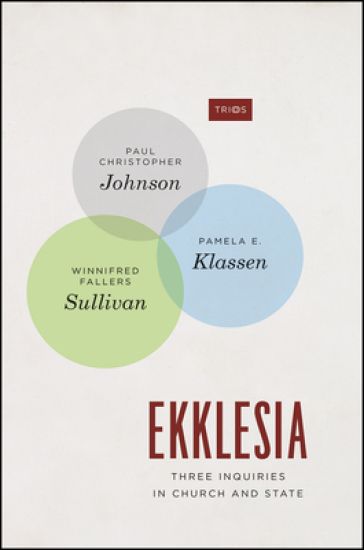
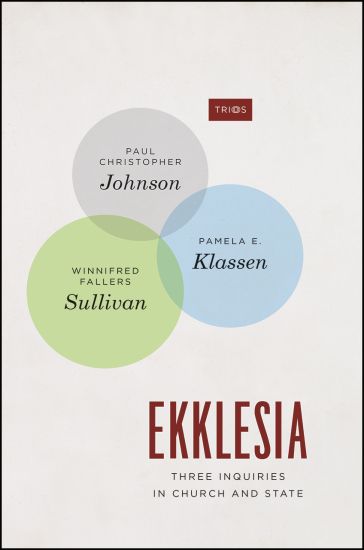
Ekklesia: Three Inquiries in Church and State offers a New World rejoinder to the largely Europe-centered academic discourse on church and state. In contrast to what is often assumed, in the Americas the relationship between church and state has not been one of freedom or separation but one of unstable and adaptable collusion. Ekklesia sees in the settler states of North and South America alternative patterns of conjoined religious and political power, patterns resulting from the undertow of other gods, other peoples, and other claims to sovereignty. These local challenges have led to a continuously contested attempt to realize a church-minded state, a state-minded church, and the systems that develop in their concert. The shifting borders of their separation and the episodic conjoining of church and state took new forms in both theory and practice. The first of a closely linked trio of essays is by Paul Johnson, and offers a new interpretation of the Brazilian community gathered at Canudos and its massacre in 1896-97, carried out as a joint church-state mission and spectacle. In the second essay, Pamela Klassen argues that the colonial church-state relationship of Canada came into being through local and national practices that emerged as Indigenous nations responded to and resisted becoming "possessions" of colonial British America. Finally, Winnifred Sullivan's essay begins with reflection on the increased effort within the United States to ban Bibles and scriptural references from death penalty courtrooms and jury rooms; she follows with a consideration of the political theological pressure thereby placed on the jury that decides between life and death. Through these three inquiries, Ekklesia takes up the familiar topos of "church and state" in order to render it strange.
Ekklesia: Three Inquiries in Church and State offers a New World rejoinder to the largely Europe-centered academic discourse on church and state. In contrast to what is often assumed, in the Americas the relationship between church and state has not been one of freedom or separation but one of unstable and adaptable collusion. Ekklesia sees in the settler states of North and South America alternative patterns of conjoined religious and political power, patterns resulting from the undertow of other gods, other peoples, and other claims to sovereignty. These local challenges have led to a continuously contested attempt to realize a church-minded state, a state-minded church, and the systems that develop in their concert. The shifting borders of their separation and the episodic conjoining of church and state took new forms in both theory and practice. The first of a closely linked trio of essays is by Paul Johnson, and offers a new interpretation of the Brazilian community gathered at Canudos and its massacre in 1896-97, carried out as a joint church-state mission and spectacle. In the second essay, Pamela Klassen argues that the colonial church-state relationship of Canada came into being through local and national practices that emerged as Indigenous nations responded to and resisted becoming "possessions" of colonial British America. Finally, Winnifred Sullivan's essay begins with reflection on the increased effort within the United States to ban Bibles and scriptural references from death penalty courtrooms and jury rooms; she follows with a consideration of the political theological pressure thereby placed on the jury that decides between life and death. Through these three inquiries, Ekklesia takes up the familiar topos of "church and state" in order to render it strange.
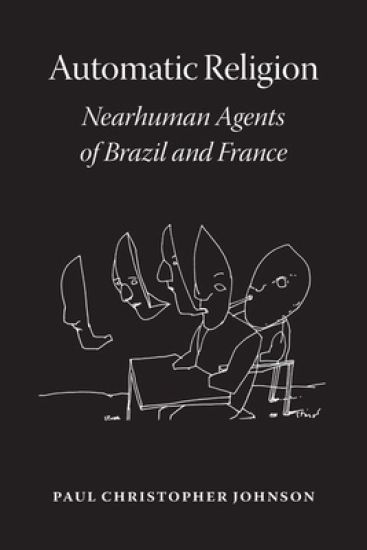
What distinguishes humans from nonhumans? Two common answers—free will and religion—are in some ways fundamentally opposed. Whereas free will enjoys a central place in our ideas of spontaneity, authorship, and deliberation, religious practices seem to involve a suspension of or relief from the exercise of our will. What, then, is agency, and why has it occupied such a central place in theories of the human?Automatic Religion explores an unlikely series of episodes from the end of the nineteenth century, when crucial ideas related to automatism and, in a different realm, the study of religion were both being born. Paul Christopher Johnson draws on years of archival and ethnographic research in Brazil and France to explore the crucial boundaries being drawn at the time between humans, “nearhumans,” and automata. As agency came to take on a more central place in the philosophical, moral, and legal traditions of the West, certain classes of people were excluded as less-than-human. Tracking the circulation of ideas across the Atlantic, Johnson tests those boundaries, revealing how they were constructed on largely gendered and racial foundations. In the process, he reanimates one of the most mysterious and yet foundational questions in trans-Atlantic thought: what is agency?
What distinguishes humans from nonhumans? Two common answers—free will and religion—are in some ways fundamentally opposed. Whereas free will enjoys a central place in our ideas of spontaneity, authorship, and deliberation, religious practices seem to involve a suspension of or relief from the exercise of our will. What, then, is agency, and why has it occupied such a central place in theories of the human?Automatic Religion explores an unlikely series of episodes from the end of the nineteenth century, when crucial ideas related to automatism and, in a different realm, the study of religion were both being born. Paul Christopher Johnson draws on years of archival and ethnographic research in Brazil and France to explore the crucial boundaries being drawn at the time between humans, “nearhumans,” and automata. As agency came to take on a more central place in the philosophical, moral, and legal traditions of the West, certain classes of people were excluded as less-than-human. Tracking the circulation of ideas across the Atlantic, Johnson tests those boundaries, revealing how they were constructed on largely gendered and racial foundations. In the process, he reanimates one of the most mysterious and yet foundational questions in trans-Atlantic thought: what is agency?
By joining a diaspora, a society may begin to change its religious, ethnic, and even racial identifications by rethinking its "pasts." This pioneering multisite ethnography explores how this phenomenon is affecting the remarkable religion of the Garifuna, historically known as the Black Caribs, from the Central American coast of the Caribbean. It is estimated that one-third of the Garifuna have migrated to New York City over the past fifty years. Paul Christopher Johnson compares Garifuna spirit possession rituals performed in Honduran villages with those conducted in New York, and what emerges is a compelling picture of how the Garifuna engage ancestral spirits across multiple diasporic horizons. His study sheds new light on the ways diasporic religions around the world creatively plot itineraries of spatial memory that at once recover and remold their histories.
We have all been angry. Did it help to wallow in that anger? If you've experienced as much in life as I have then you know that hate is like a cancer. I have found a most important friend: The Holy Spirit. As you shall read it took me quite a while to find my peace. Through the public school system in New Orleans to the crazy world of broadcast television I've lived through some trying experiences. Depending upon substances is not the way to go either, and I hope that young people learn that lesson from this book. All in all I hope that this book will answers many of the questions you may have regarding pursuing a spiritual life. Forgiveness is the key. Thank you.