Kirjojen hintavertailu. Mukana 11 699 587 kirjaa ja 12 kauppaa.

Kirjahaku

Etsi kirjoja tekijän nimen, kirjan nimen tai ISBN:n perusteella.

1000 tulosta hakusanalla Christopher R Moebs

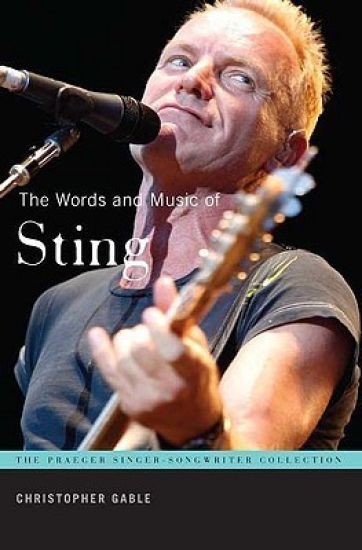
The Words and Music of Sting

The Words and Music of Sting

Christopher R. Gabel; Christopher Gable

Praeger Publishers Inc
2008
sidottu
Sting has successfully established himself as one of the most important singer-songwriters in Western popular music over the past twenty years. His affinity for collaborative work and disparate musical styles has pushed his music into an astonishing array of contexts, but no matter what the style or who the collaborator, Sting's voice always remains distinct, and this fact has earned him success amongst a correspondingly broad audience. The Words and Music of Sting subdivides Sting's life and works into rough periods of creative activity and offers a fantastic opportunity to view Sting's many stylistic changes within a coherent general framework. After analyzing Sting's musical output album by album and song by song, author Christopher Gable sums up Sting's accomplishments and places him on the continuum of influential singer-songwriters, showing how he differs and relates to other artists of the same period. Aside from his commercial success, Sting is also interesting for the use of recurring themes in his lyrics (such as family relationships, love, war, spirituality, and work) and for his use of jazz and world music to illustrate or work against the meaning of a song. Sting's life also sheds light on his music, as his working-class roots in Newcastle, England are never far removed from his international superstardom. Throughout his life, he has been musically open-minded and inquisitive, always seeking out new styles and often incorporating them into his compositions.
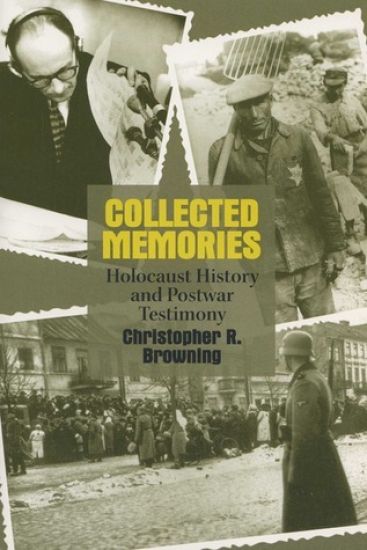
Collected Memories

Collected Memories

Christopher R. Browning

University of Wisconsin Press
2003
nidottu
Christopher R. Browning addresses some of the most heated controversies surrounding the use of postwar testimony: Hannah Arendt's uncritical acceptance of Eichmann's self-portrayal; the conviction of Ivan Demjanjuk on the basis of survivor testimony and its subsequent reversal by the Israeli Supreme Court; the debate in Poland sparked by Jan Gross's use of both survivor and communist courtroom testimony in his book Neighbors; and the conflict between Browning and Daniel Goldhagen, author of Hitler's Willing Executioners, regarding the use of pre-trial testimony. Despite these controversies and challenges, Browning delineates the ways in which the critical use of such problematic sources can provide telling evidence for writing Holocaust history.
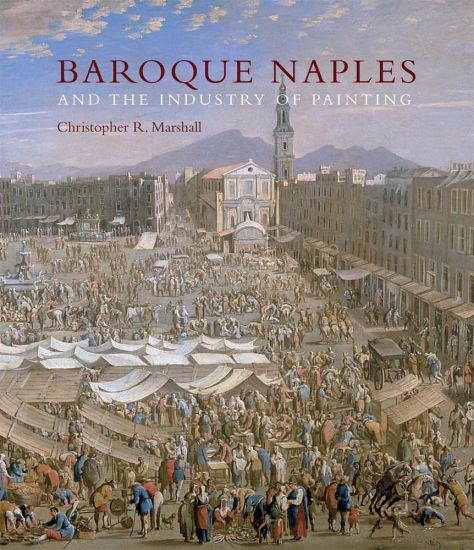
Baroque Naples and the Industry of Painting

Baroque Naples and the Industry of Painting

Christopher R. Marshall

Yale University Press
2016
sidottu
The second largest city in 17th-century Europe, Naples constituted a vital Mediterranean center in which the Spanish Habsburgs, the clergy, and Neapolitan aristocracy, together with the resident merchants, and other members of the growing professional classes jostled for space and prestige. Their competing programs of building and patronage created a booming art market and spurred painters such as Jusepe de Ribera, Massimo Stanzione, Salvator Rosa, and Luca Giordano as well as foreign artists such as Caravaggio, Domenichino, Artemisia Gentileschi, and Giovanni Lanfranco to extraordinary heights of achievement. This new reading of 17th-century Italian Baroque art explores the social, material, and economic history of painting, revealing how artists, agents, and the owners of artworks interacted to form a complex and mutually sustaining art world. Through such topics as artistic rivalry and anti-foreign labor agitation, art dealing and forgery, cultural diplomacy, and the rise of the independently arranged art exhibition, Christopher R. Marshall illuminates the rich interconnections between artistic practice and patronage, business considerations, and the spirit of entrepreneurialism in Baroque Italy.
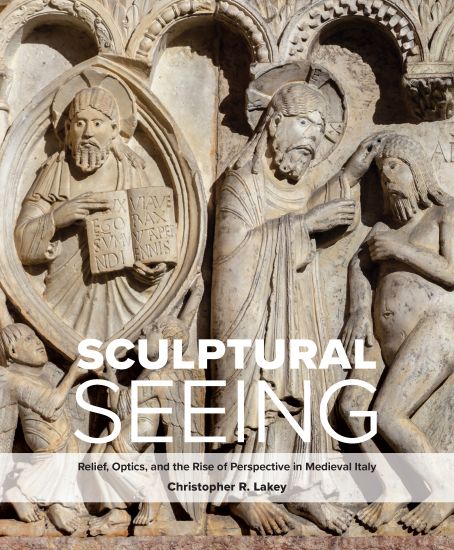
Sculptural Seeing

Sculptural Seeing

Christopher R. Lakey

Yale University Press
2018
sidottu
Although perspective has long been considered one of the essential developments of Renaissance painting, this provocative new book shifts the usual narrative back centuries, showing that medieval sculptors were already employing knowledge of optical science, geometry, and theories of vision in shaping the beholder’s experience of their work. Meticulous visual analysis is paired with close readings of medieval texts in examining a series of important relief sculptures from northern and central Italy dating from the twelfth through the fourteenth centuries, including the impressive sculptural programs at the cathedrals of Modena and Ferrara, and the pulpits by Giovanni and Nicola Pisano at Pisa and Pistoia. Demonstrating that medieval sculptors orchestrated the reception of their intended religious and political messages through the careful manipulation of points of view and architectural space, Christopher R. Lakey argues that medieval practice was well informed by visual theory and that the concepts that led to the codification of linear perspective by Renaissance painters had in fact been in use by sculptors for hundreds of years.
Theory, Justice, and Social Change

Theory, Justice, and Social Change

Christopher R. Williams; Bruce A. Arrigo

Kluwer Academic/Plenum Publishers
2004
sidottu
Throughout history, social and intellectual crises have given rise to compelling suggestions for reform steeped in various progressive sensibilities. For example, within the discipline of criminology -- particularly during the 1980’s and 1990’s -- a number of unconventional theoretical perspectives emerged that sought to challenge many of the assumptions embedded within its own mainstream discourse, and to propose alternative solutions for meaningful, sustainable change. Conceived of as "critical" in overarching orientation, these efforts to rethink the foundations of criminological verstehen can be traced to several specific theoretical and methodological strands of inquiry (e.g., anarchism, peacemaking, chaos theory, postmodernism). Though distinct in some respects, these emerging models are linked paradigmatically by their shared discontent with conventional criminological thought and by their radicalized posture toward existing and previously unexamined epistemic crises. Collectively, this is an agenda for reform that seeks to establish a more humane and just social order, particularly as citizens and society confront the institutional and communal problems posed by crime, delinquency, and deviance. Theory, Justice, and Social Change: Theoretical Integrations and Critical Applications represents a provocative series of essays that systematically reviews or extends the role of critical social theory in fostering justice and change in several relevant, though problematic, social contexts. Mindful of the need to address both conceptual exegeses and pragmatic concerns, the articles contained in this volume grapple with the ongoing "double crisis" that confronts theory and practice in the construction of knowledge. By appropriating and integrating various insights from several heterodox and critically animated lines of inquiry, each chapter deftly exposes where and how conventional sociological and criminological thought has failed toeffectively address such human social issues as homelessness, mental illness, minority rights, juvenile justice, global violence, and criminal punishment. In doing so, Theory, Justice, and Social Change provides new and much needed direction regarding theory development in the social sciences, and indicates why charting such a course of theory/action yields more enlightened prospects for justice and change in society and in our lives.
Theory, Justice, and Social Change

Theory, Justice, and Social Change

Christopher R. Williams; Bruce A. Arrigo

Kluwer Academic/Plenum Publishers
2005
nidottu
Throughout history, social and intellectual crises have given rise to compelling suggestions for reform steeped in various progressive sensibilities. For example, within the discipline of criminology -- particularly during the 1980’s and 1990’s -- a number of unconventional theoretical perspectives emerged that sought to challenge many of the assumptions embedded within its own mainstream discourse, and to propose alternative solutions for meaningful, sustainable change. Conceived of as "critical" in overarching orientation, these efforts to rethink the foundations of criminological verstehen can be traced to several specific theoretical and methodological strands of inquiry (e.g., anarchism, peacemaking, chaos theory, postmodernism). Though distinct in some respects, these emerging models are linked paradigmatically by their shared discontent with conventional criminological thought and by their radicalized posture toward existing and previously unexamined epistemic crises. Collectively, this is an agenda for reform that seeks to establish a more humane and just social order, particularly as citizens and society confront the institutional and communal problems posed by crime, delinquency, and deviance. Theory, Justice, and Social Change: Theoretical Integrations and Critical Applications represents a provocative series of essays that systematically reviews or extends the role of critical social theory in fostering justice and change in several relevant, though problematic, social contexts. Mindful of the need to address both conceptual exegeses and pragmatic concerns, the articles contained in this volume grapple with the ongoing "double crisis" that confronts theory and practice in the construction of knowledge. By appropriating and integrating various insights from several heterodox and critically animated lines of inquiry, each chapter deftly exposes where and how conventional sociological and criminological thought has failed toeffectively address such human social issues as homelessness, mental illness, minority rights, juvenile justice, global violence, and criminal punishment. In doing so, Theory, Justice, and Social Change provides new and much needed direction regarding theory development in the social sciences, and indicates why charting such a course of theory/action yields more enlightened prospects for justice and change in society and in our lives.
The Holy Spirit

The Holy Spirit

Christopher R. J. Holmes

Zondervan
2015
nidottu
Who is the Holy Spirit and how does the Spirit come to be in relation to the Father and the Son? What is the mission of the Spirit and where does it come from? Chris Holmes takes up the questions surrounding the Spirit’s procession and mission with the help of three of the church’s greatest teachers—Augustine, Thomas Aquinas, and Karl Barth.Drawing on their engagements with the Fourth Gospel, Holmes presents an account of the Spirit’s identity, origin, and acts, to show how the acts of the Spirit derive from the Spirit’s life in relation to Father and Son—and the extent to which the Spirit’s mission testifies to the Spirit’s origin.Holmes presents a way forward for pneumatology. Housed within the doctrine of the Trinity, pneumatology’s joyful task is to describe the Spirit’s acts among us in light of their source in the Spirit’s acts in God. The end of this inquiry is our beatitude—knowledge of the Trinity that yields to love of the Trinity.-ABOUT THE SERIES-New Studies in Dogmatics seeks to retrieve the riches of Christian doctrine for the sake of contemporary theological renewal. Following in the tradition of G. C. Berkouwer's Studies in Dogmatics, this series provides thoughtful, concise, and readable treatments of major theological topics, expressing the biblical, creedal, and confessional shape of Christian doctrine for a contemporary evangelical audience.The editors and contributors share a common conviction that the way forward in constructive systematic theology lies in building upon the foundations laid in the church's historic understanding of the Word of God as professed in its creeds, councils, and confessions, and by its most trusted teachers.
Unconventional Reservoir Rate-Transient Analysis

Unconventional Reservoir Rate-Transient Analysis

Christopher R. Clarkson

Gulf Publishing Company
2021
muu
Unconventional Reservoir Rate-Transient Analysis provides petroleum engineers and geoscientists with the first comprehensive review of rate-transient analysis (RTA) methods as applied to unconventional reservoirs. Volume One—Fundamentals, Analysis Methods, and Workflow is comprised of five chapters which address key concepts and analysis methods used in RTA. This volume overviews the fundamentals of RTA, as applied to low-permeability oil and gas reservoirs exhibiting simple reservoir and fluid characteristics.Volume Two—Application to Complex Reservoirs, Exploration and Development is comprised of four chapters that demonstrate how RTA can be applied to coalbed methane reservoirs, shale gas reservoirs, and low-permeability/shale reservoirs exhibiting complex behavior such as multiphase flow. Use of RTA to assist exploration and development programs in unconventional reservoirs is also demonstrated. This book will serve as a critical guide for students, academics, and industry professionals interested in applying RTA methods to unconventional reservoirs.
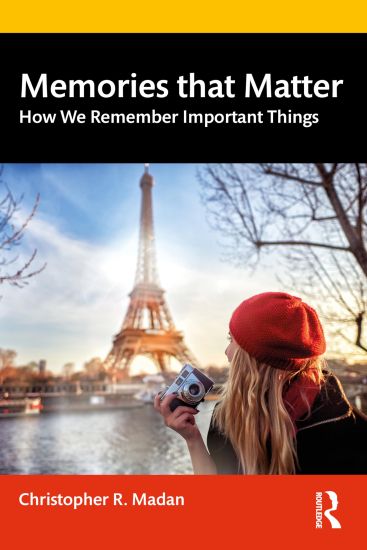
Memories That Matter

Memories That Matter

Christopher R. Madan

TAYLOR FRANCIS LTD
2024
sidottu
What makes some experiences more memorable than others? How can you better remember specific information later? Memories That Matter addresses these questions and more.The book is divided into three main parts, with each part focusing on a different aspect of memory. After the introductory first part, Part II discusses everyday uses of memory and why we remember, establishing a foundation for how memory is structured and stored in the brain. Part III dives into what makes us remember. Emotional and rewarding experiences are both more memorable than mundane experiences but are often studied using different approaches. Self-relevance and objects we can interact with are remembered better than less relevant information. The author explores these motivation-related influences on memory and considers whether a common mechanism underlies them all. Part IV changes the focus, discussing how we sometimes want to remember specific information that does not automatically capture our attention. The book considers evidence-based learning strategies and memory strategies, whilst also exploring real-world applications, with discussion of professions that accomplish amazing memory feats daily. The book concludes with a reflection on how the role of memory is changing as our world makes information increasingly accessible, particularly with the ever-expanding influence of the internet.Drawing from a variety of literatures and perspectives, this important book will be relevant for all students of memory from psychology, cognitive neuroscience, and related health backgrounds.
Memories That Matter

Memories That Matter

Christopher R. Madan

TAYLOR FRANCIS LTD
2024
nidottu
What makes some experiences more memorable than others? How can you better remember specific information later? Memories That Matter addresses these questions and more.The book is divided into three main parts, with each part focusing on a different aspect of memory. After the introductory first part, Part II discusses everyday uses of memory and why we remember, establishing a foundation for how memory is structured and stored in the brain. Part III dives into what makes us remember. Emotional and rewarding experiences are both more memorable than mundane experiences but are often studied using different approaches. Self-relevance and objects we can interact with are remembered better than less relevant information. The author explores these motivation-related influences on memory and considers whether a common mechanism underlies them all. Part IV changes the focus, discussing how we sometimes want to remember specific information that does not automatically capture our attention. The book considers evidence-based learning strategies and memory strategies, whilst also exploring real-world applications, with discussion of professions that accomplish amazing memory feats daily. The book concludes with a reflection on how the role of memory is changing as our world makes information increasingly accessible, particularly with the ever-expanding influence of the internet.Drawing from a variety of literatures and perspectives, this important book will be relevant for all students of memory from psychology, cognitive neuroscience, and related health backgrounds.
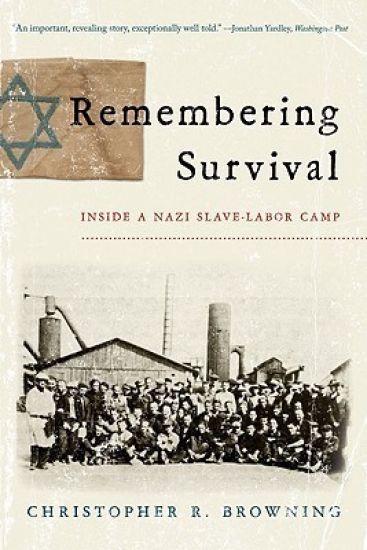
Remembering Survival

Remembering Survival

Christopher R. Browning

WW Norton Co
2011
nidottu
Employing the rich testimony of almost three hundred survivors of the slave-labor camps of Starachowice, Poland, Christopher R. Browning draws the experiences of the Jewish prisoners, the Nazi authorities, and the neighboring Poles together into a chilling history of a little-known dimension of the Holocaust. Combining harrowing detail and insightful analysis on the Starachowice camps and their role in the Holocaust, Browning’s history is indispensable scholarship and an unforgettable story of survival.
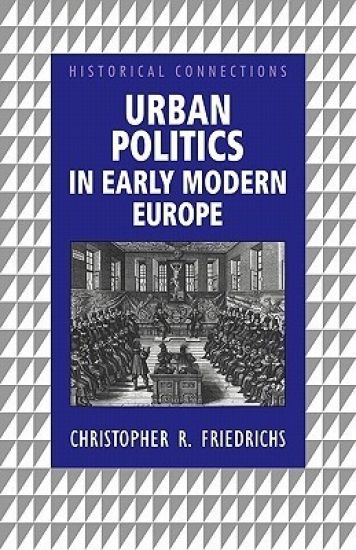
Urban Politics in Early Modern Europe

Urban Politics in Early Modern Europe

Christopher R. Friedrichs

Routledge
2000
nidottu
Urban Politics in Early Modern Europe is an important survey of the complex relationships between urban politics and regional and national politics in Europe from 1500 to 1789. In an era when the national state was far less developed than today, crucial decisions about economic, religious and social policy were often settled at the municipal level. Cities were frequently the scenes of sudden tensions or bitter conflicts between ordinary citizens and the urban elite, and the threat of civic unrest often underlay the political dynamics of early modern cities. With vivid descriptions of events in cities in central Europe, England, France, Italy and Spain, this book outlines the forms of political interaction in the early modern city. Urban Politics in Early Modern Europe takes a fascinating comparative approach to the nature of conflict and conflict resolution in early modern communities throughout Europe.
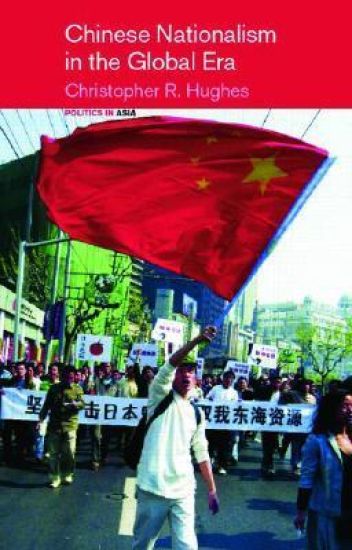
Chinese Nationalism in the Global Era

Chinese Nationalism in the Global Era

Christopher R. Hughes

Routledge
2006
sidottu
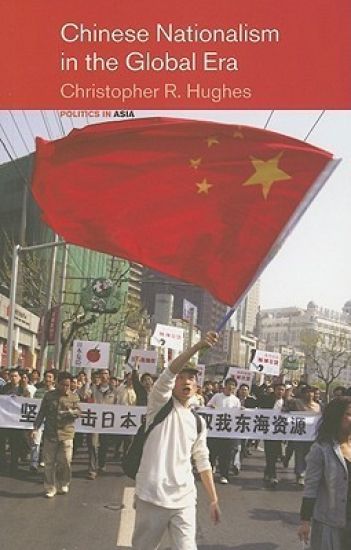
Presenting an analysis of the tension between nationalism and globalization in China since the beginning of the ‘reform and opening’ period in the late 1970s to the present day, this book makes a unique contribution to the on-going debate on the nature of Chinese nationalism. It shows how nationalism is used to link together key areas of policy-making, including economic policy, national unification and foreign policy. Hughes provides historical context to the debate by examining how nationalism became incorporated into the ideology of the Chinese Communist Party in the 1980s and the ways in which this strengthened and combined with globalization discourse through the domestic crisis of the Tiananmen Massacre and the external shock of the Cold War’s conclusion. The different perspectives towards this resulting orthodoxy are discussed, including those of the state and dissent in mainland China and the alternative views from Taiwan and Hong Kong. Based on Chinese sources throughout, this book offers a systematic treatment of Chinese nationalism, providing conceptual insights that allow the reader to grasp the complex weave of Chinese nationalist sentiment today and its implications for the future.
Chinese Nationalism in the Global Era

Chinese Nationalism in the Global Era

Christopher R. Hughes

Routledge
2006
nidottu
Presenting an analysis of the tension between nationalism and globalization in China since the beginning of the ‘reform and opening’ period in the late 1970s to the present day, this book makes a unique contribution to the on-going debate on the nature of Chinese nationalism. It shows how nationalism is used to link together key areas of policy-making, including economic policy, national unification and foreign policy. Hughes provides historical context to the debate by examining how nationalism became incorporated into the ideology of the Chinese Communist Party in the 1980s and the ways in which this strengthened and combined with globalization discourse through the domestic crisis of the Tiananmen Massacre and the external shock of the Cold War’s conclusion. The different perspectives towards this resulting orthodoxy are discussed, including those of the state and dissent in mainland China and the alternative views from Taiwan and Hong Kong. Based on Chinese sources throughout, this book offers a systematic treatment of Chinese nationalism, providing conceptual insights that allow the reader to grasp the complex weave of Chinese nationalist sentiment today and its implications for the future.
Urban Politics in Early Modern Europe

Urban Politics in Early Modern Europe

Christopher R. Friedrichs

Routledge
2000
sidottu
Urban Politics in Early Modern Europe is an important survey of the complex relationships between urban politics and regional and national politics in Europe from 1500 to 1789. In an era when the national state was far less developed than today, crucial decisions about economic, religious and social policy were often settled at the municipal level. Cities were frequently the scenes of sudden tensions or bitter conflicts between ordinary citizens and the urban elite, and the threat of civic unrest often underlay the political dynamics of early modern cities. With vivid descriptions of events in cities in central Europe, England, France, Italy and Spain, this book outlines the forms of political interaction in the early modern city. Urban Politics in Early Modern Europe takes a fascinating comparative approach to the nature of conflict and conflict resolution in early modern communities throughout Europe.
The Third Chinese Revolutionary Civil War, 1945–49
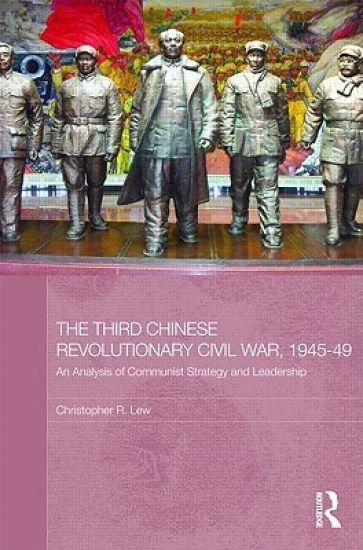
This book examines the Third Chinese Revolutionary Civil War of 1945–1949, which resulted in the victory of the Chinese Communist Party (CCP) over Chiang Kaishek and the Guomindang (GMD) and the founding of The People’s Republic of China in 1949. It provides a military and strategic history of how the CCP waged and ultimately won the war, the transformation its armed forces and how the Communist leadership interacted with each other. Whereas most explanations of the CCP’s eventual victory focus on the Sino-Japanese War of 1937–45, when the revolution was supposedly won as a result of the communists’ invention of "peasant nationalism", this book shows that the outcome of the revolution was not a foregone conclusion in 1945. It explains how the eventual victory of the communists resulted from important strategic decisions taken on both sides, in particular the remarkable transformation of the communist army from an insurgent / guerrilla force into a conventional army. The book also explores how the hierarchy of The People’s Republic of China developed during the war. It shows how Mao’s power was based as much on his military acumen as his political thought, above all his role in formulating and implementing a successful military strategy in the war of 1945–49. It also describes how other important figures, such as Lin Biao, Deng Xiaoping, Nie Rongzhen, Liu Shaoqi and Chen Yi, made their reputations during the conflict; and reveals the inner workings of the first political-military elite of the PRC. Overall, this book is an important resource for anyone seeking to understand the origins and early history of The People’s Republic of China, the Chinese Communist Party and the People’s Liberation Army.
The Third Chinese Revolutionary Civil War, 1945–49
This book examines the Third Chinese Revolutionary Civil War of 1945–1949, which resulted in the victory of the Chinese Communist Party (CCP) over Chiang Kaishek and the Guomindang (GMD) and the founding of The People’s Republic of China in 1949. It provides a military and strategic history of how the CCP waged and ultimately won the war, the transformation its armed forces and how the Communist leadership interacted with each other. Whereas most explanations of the CCP’s eventual victory focus on the Sino-Japanese War of 1937–45, when the revolution was supposedly won as a result of the communists’ invention of "peasant nationalism", this book shows that the outcome of the revolution was not a foregone conclusion in 1945. It explains how the eventual victory of the communists resulted from important strategic decisions taken on both sides, in particular the remarkable transformation of the communist army from an insurgent / guerrilla force into a conventional army. The book also explores how the hierarchy of The People’s Republic of China developed during the war. It shows how Mao’s power was based as much on his military acumen as his political thought, above all his role in formulating and implementing a successful military strategy in the war of 1945–49. It also describes how other important figures, such as Lin Biao, Deng Xiaoping, Nie Rongzhen, Liu Shaoqi and Chen Yi, made their reputations during the conflict; and reveals the inner workings of the first political-military elite of the PRC. Overall, this book is an important resource for anyone seeking to understand the origins and early history of The People’s Republic of China, the Chinese Communist Party and the People’s Liberation Army.
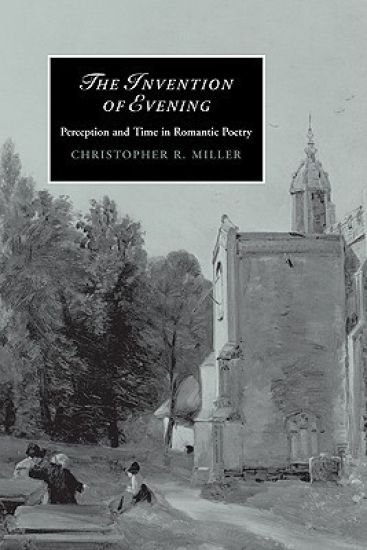
The Invention of Evening

The Invention of Evening

Christopher R. Miller

Cambridge University Press
2009
pokkari
Lyric poetry has long been considered an art form of timelessness, but Romantic poets became fascinated by one time above all others: evening, the threshold between day and night. Christopher R. Miller investigates the cultural background of this development. The tradition of evening poetry runs from the idyllic settings of Virgil to the urban twilights of T. S. Eliot, and flourished in the works of Coleridge, Wordsworth, Shelley and Keats. In fresh readings of familiar Romantic poems, Miller shows how evening settings enabled poets to represent the passage of time and to associate it with subtle movements of thought and perception. This leads to new ways of reading canonical works, and of thinking about the kinds of themes the lyric can express.