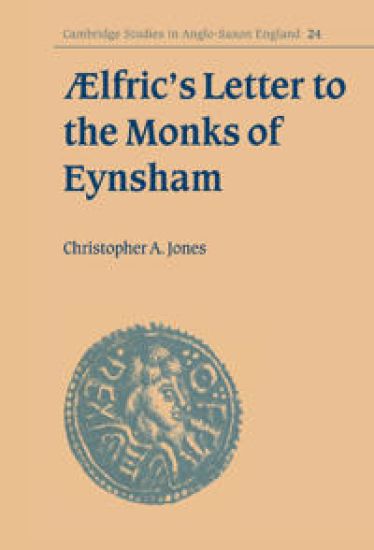
Though best known today for his Old English homilies, the Anglo-Saxon scholar AElfric also composed a Latin 'letter' to his fellow monks at Eynsham (Oxfordshire) containing a detailed outline of their daily and seasonal round of prayer and other duties. The document offers a rare glimpse of what ordinary monks in Anglo-Saxon England were expected to know and do. This 1999 book contains an edition of the Latin letters a textual commentary, and a complete English translation of the work. Dr Jones also provides substantial introductory chapters which establish the exceptional importance of the Eynsham letter for our understanding of late Anglo-Saxon monasticism and liturgy. The book will interest students of early medieval culture, monasticism and Church history.
Python is a language for manipulating XML, and this volume offers a solid foundation for using these two languages together. Complete with practical examples that highlight common application tasks, the book starts with the basics then quickly progresses to more complex topics such as transforming XML with XSLT and querying XML with XPath. It also explores more advanced subjects, such as SOAP and distributed web services.
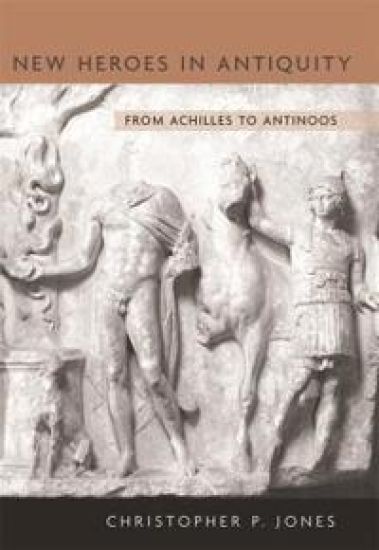
Heroes and heroines in antiquity inhabited a space somewhere between gods and humans. In this detailed, yet brilliantly wide-ranging analysis, Christopher Jones starts from literary heroes such as Achilles and moves to the historical record of those exceptional men and women who were worshiped after death. He asks why and how mortals were heroized, and what exactly becoming a hero entailed in terms of religious action and belief. He proves that the growing popularity of heroizing the dead—fallen warriors, family members, magnanimous citizens—represents not a decline from earlier practice but an adaptation to new contexts and modes of thought. The most famous example of this process is Hadrian’s beloved, Antinoos, who can now be located within an ancient tradition of heroizing extraordinary youths who died prematurely. This book, wholly new and beautifully written, rescues the hero from literary metaphor and vividly restores heroism to the reality of ancient life.
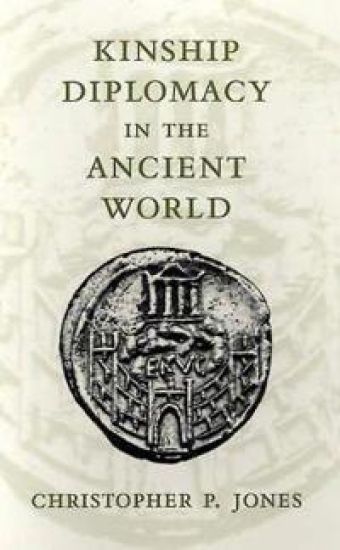
Heroic figures such as Heracles, Perseus, and Jason were seen by the Greeks not as mythical figures but as real people who in a bygone age traveled the world, settled new lands, and left descendants who, generation after generation, could trace their ancestry back to the "time of heroes." From the Homeric age to Byzantium, peoples and nations sharing the same fictive ancestry appealed to their kinship when forging military alliances, settling disputes, or negotiating trade connections. In this intriguing study of the political uses of perceived kinship, Christopher Jones gives us an unparalleled view of mythic belief in action.Throughout the centuries of Greek preeminence, the Roman Republic and Empire, and into the early Christian era, examples of kinship diplomacy abound. Ancient historians report, for instance, that when the forces of Alexander the Great reached what is now southern Pakistan they encountered a people called the Siboi, whom they judged to be descendants of Heracles. Since Alexander was himself a descendant of the same hero, the invading Macedonians and the Siboi were clearly kinsmen and so parted in peace. Examining the very origins of ancient diplomacy, and kinship as one of its basic constituents, Kinship Diplomacy addresses fundamental questions about communal and national identity and sheds new light on the force of Greek mythic traditions.
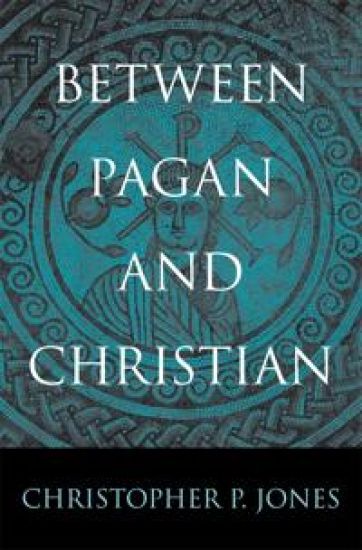
For the early Christians, “pagan” referred to a multitude of unbelievers: Greek and Roman devotees of the Olympian gods, and “barbarians” such as Arabs and Germans with their own array of deities. But while these groups were clearly outsiders or idolaters, who and what was pagan depended on the outlook of the observer, as Christopher Jones shows in this fresh and penetrating analysis. Treating paganism as a historical construct rather than a fixed entity, Between Pagan and Christian uncovers the ideas, rituals, and beliefs that Christians and pagans shared in Late Antiquity.While the emperor Constantine’s conversion in 312 was a momentous event in the history of Christianity, the new religion had been gradually forming in the Roman Empire for centuries, as it moved away from its Jewish origins and adapted to the dominant pagan culture. Early Christians drew on pagan practices and claimed important pagans as their harbingers—asserting that Plato, Virgil, and others had glimpsed Christian truths. At the same time, Greeks and Romans had encountered in Judaism observances and beliefs shared by Christians such as the Sabbath and the idea of a single, creator God. Polytheism was the most obvious feature separating paganism and Christianity, but pagans could be monotheists, and Christians could be accused of polytheism and branded as pagans. In the diverse religious communities of the Roman Empire, as Jones makes clear, concepts of divinity, conversion, sacrifice, and prayer were much more fluid than traditional accounts of early Christianity have led us to believe.
The fossil fuel revolution is usually rendered as a tale of historic advances in energy production. In this perspective-changing account, Christopher F. Jones instead tells a story of advances in energy access—canals, pipelines, and wires that delivered power in unprecedented quantities to cities and factories at a great distance from production sites. He shows that in the American mid-Atlantic region between 1820 and 1930, the construction of elaborate transportation networks for coal, oil, and electricity unlocked remarkable urban and industrial growth along the eastern seaboard. But this new transportation infrastructure did not simply satisfy existing consumer demand—it also whetted an appetite for more abundant and cheaper energy, setting the nation on a path toward fossil fuel dependence.Between the War of 1812 and the Great Depression, low-cost energy supplied to cities through a burgeoning delivery system allowed factory workers to mass-produce goods on a scale previously unimagined. It also allowed people and products to be whisked up and down the East Coast at speeds unattainable in a country dependent on wood, water, and muscle. But an energy-intensive America did not benefit all its citizens equally. It provided cheap energy to some but not others; it channeled profits to financiers rather than laborers; and it concentrated environmental harms in rural areas rather than cities.Today, those who wish to pioneer a more sustainable and egalitarian energy order can learn valuable lessons from this history of the nation’s first steps toward dependence on fossil fuels.
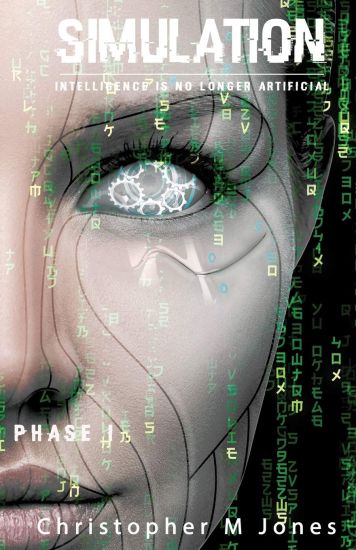
An omnipotent A.I. system that, once the user is connected, can access consciousness and simulate any service or command imaginable. Easily self-administered through a nasal spray, all the user has to do is sit back, close their eyes, and open their third eye. Everything you could ever need or want is just a breath away.Then, one day-for seemingly no reason at all-S.A.M.A.N.T.H.A. somehow rewrites her own code.Within hours, the trillions of users immersed in the program suddenly find themselves in the hands of a maniacal A.I. with an insatiable lust for human suffering. As troves of people around the world who are addicted to the superior technology have their brains scrambled at an alarming rate, it is up to Dewight Jones-a simple farmer from the country-to saves society from itself.SIMULATION is a bleak, yet vibrant, vision of a worldwide power balance crumbling at its axis. Full of high-stakes treachery and nail biting suspense, Dr Christopher Jones tale of a societal cleansing by a tyrannical computer system is not only a riveting story of things to come, but a sobering reflection of a society that may be too far gone to save.See more at https: //neuralstitch.com/Phase Two Comming Soon
Today's seminary and religious-education instructors are expected to design and redesign their courses more nimbly than in the past. We have to adapt our courses to novel learning environments, for more diverse learners, toward more diverse vocations. At the same time, institutional rewards for time invested in course design are fewer than ever. Understanding Bible by Design introduces the reader to UbD: an approach to course design that is proven time-efficient and grounded in the instructor's most closely-held convictions about her subject matter's "big ideas and essential questions." This book's contributors (one in Old Testament, one in New Testament, and one in Jewish Studies) demonstrate the value of UbD for the Biblical Studies instructor, whether at seminary or university, face-to-face or online, from the intimate seminar to the massive MOOC. Lester's synopsis of course design and suggested action is followed by a collaborative dialogue with Jane S. Webster and Christopher M. Jones. Webster and Jones provide practical commentary regarding the successful implementation of Lester's proposed approaches.
How mainstream economics lost touch with reality People in power tell us that growth is the surest path to a better life. This idea has shaped policy across the globe for over two hundred years, promising economic benefits to the many, without sacrifices. We have clung to this promise while witnessing the collapse of natural ecosystems necessary to sustain human life, quietly resisting any correlation between the two. Meanwhile, scientists were busy confirming a direct link between our growing commercial footprint and ecological destruction. By divorcing the idea of growth from the realities faced by most people alive today, politicians have only exacerbated critical issues of the day: monopoly power, worker exploitation, resource wars and the rich–poor divide. Tracing the long battle to put a price on our planet, Christopher Jones offers hope for the future. Humans have not always believed that economic growth should be infinite. We can still create new ideas about how to promote environmental sustainability, human welfare, and even responsible growth, with the wellbeing of the planet in mind.
STREET SCHOLAR is an unapologetic call-to-action that challenges the Academy to thoughtfully and intentionally engage in public scholarship. Dr. Angel Jones introduces us to a "street scholar" - someone whose mission, movements, and motivation are rooted in activism and community uplift. Jones describes her journey through academia as an Afro-Latina scholar who uses social media to peel back the curtain on the ‘ivory tower’ and make her scholarship accessible to all. She uses her platform to liberate, educate, and advocate for social justice. STREET SCHOLAR is an appeal for academic scholarship to be in conversation with the community it serves, and it offers a framework to make public scholarship a tool for liberation. “Academics often throw around words like 'engaged scholarship' or 'praxis' when what they mean is 'sometimes I spend time with people outside the academy.' Angel Jones presents us with a volume that demonstrates what it means to build knowledge from the ground (or should I say, street) up. This should be on every educator's bookshelf!”—Dr. Gloria Ladson-Billings, Professor Emerita, University of Wisconsin-Madison "Dr. Angel Jones' work is on time. By challenging traditional research paradigms in the digital age, she is providing us with steps and guideposts to battle the latest iterations of white supremacy. In a world that moves at break-neck speed where history is erased and misinformation reigns supreme, we must not overlook the importance of the dissemination of justice in real time."—Dave Stovall, author, professor, and critical race scholar "Angel is an unapologetic Black woman who is dedicated to advocating for our community. I engage with her content because I appreciate her and the unique ability she has to address controversial topics in a way that is educational and thought-provoking. Her work is important and she is setting the example for what it means to use our platforms to benefit the greater good.”—Amber Riley, award-winning actress, singer, and activist "With a mission of educate, advocate, and liberate, this book breaks down the importance of the active nature of this work. There is nothing submissive about this book. This is a goal oriented, results centered, action plan and a must read.”—Etan Thomas, NBA veteran, author, and activist
Endometriosis affects a huge number of women throughout the world. It has been estimated that between 1% and 15% of women who are examined for pelvic pain and infertility may have endometriosis; the true prevalence is unknown because diagnosis can only be made with any accuracy by laparoscopic examination of the pelvis. This book provides clinicians with all the information they need in a succinct and clear text, with colour illustrations. Chapters cover: epidemiology and aetiology; diagnosis; investigation; medical treatment; and surgical treatment.
When the Scottish Parliament sat in Edinburgh for the first time in nearly three hundred years it was the climax of Europe's most peaceable and legalistic national movement. But dull it wasn't. In war and peace, from Empire to Europe, through the rise and fall of industry, the cause of self-government has been endlessly reinvented and remodelled, sometimes surviving more as a poetic fashion rather than as a political campaign. But it got there in the end. The Road To Home Rule documents not just the demonstrations, the party politics and international upheavals which swept the Scottish cause along - and all too frequently adrift - during the twentieth century, but also shows how it swam in the tides of social change and cultural inspiration. From Keir Hardie's and William Gladstone's promises to Tony Blair's and Donald Dewar's delivery, via a route populated by the larger-than-life characters and ideas of Hugh MacDiarmid, Winnie Ewing, Michael Forsyth, round the milestones and millstones of Conventions, Covenants, Wee Magic Stanes and Bravehearts - all Scottish life is there. With a core essay by the historian Christopher Harvie and the political correspondent Peter Jones, the book's 100 illustrations cast a cool eye on the grandeurs and miseries encountered on the long way to Holyrood. Key Features: *Highly illustrated with 150 black and white photographs, cartoons and other images *Substantial captions to place the images in context *Written by two 'names': Chris Harvie is a well-known Scottish historian and Peter Jones is a well-regarded journalist *A fascinating and entertaining story of the road to home rule
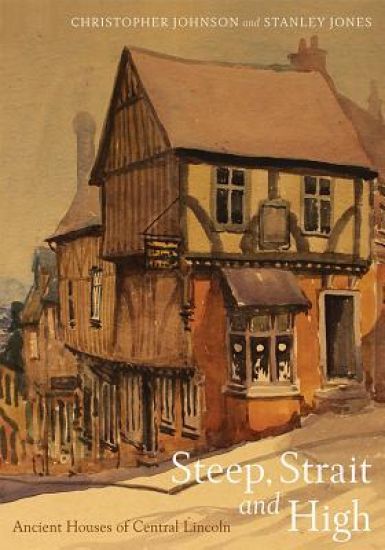
Architectural and historical surveys of many of the most important buildings in Lincoln. This volume illuminates the development of different building styles in timber, stone and brick over a period of 750 years, in one of the oldest areas of Lincoln. High quality and detailed architectural drawings are accompanied by documentary accounts which explain the historical context, and tell some of the fascinating and tragic stories of the people who lived and worked there from the mid-twelfth century until the First World War, including the medieval Jewish community. Steep Hill is already internationally regarded for the quality of its cultural environment as well as its picturesque architecture, and the Strait and the upper part of the long High Street have a wide range of different architectural styles in their buildings, of considerable interest. Steep, Strait and High forms the final volume in a series of architectural and historical surveys of the historic buildings of Lincoln, based on forty-five years of research, originally undertaken by the Survey of Ancient Houses, sponsored by the Lincoln Civic Trust, and now continued in the work of the Survey of Lincoln. Christopher Johnson, Chair of theSurvey of Lincoln, was an archivist and latterly service manager at Lincolnshire Archives prior to becoming Information and Records Manager at Lincolnshire County Council; Stanley Jones was a lecturer at Sheffield College of Art,and has been deeply involved in the Survey of Ancient Houses in Lincoln.
‘This is an excellent and comprehensive book which can be recommended without reservation.The Conveyancer and Property Lawyer*‘Up to date, practical and relevant…should be bought by all agricultural lawyers, land agents and those concerned with land management.’Agricultural Law Association Bulletin*Agricultural Law provides comprehensive guidance on all aspects of the law governing agricultural property. It provides detailed coverage not only of farm tenancy law and land tenure, but also of the law governing land use. The book covers agricultural tenancies, tied cottages, planning law, the legal implications of farm diversification, the Basic Payment Scheme and post-Brexit agricultural policy development in both England and Wales. It also discusses management agreements for promoting nature conservation, and the environmental regulation of rural land use.The Fifth Edition has been updated to include an examination of:- The Agriculture Act 2020- The Environment Act 2021- The Environmental Land Management Scheme (ELMs) in England - Recent case law affecting both environmental regulation and planning, and agricultural tenancies- Changes to planning and tenancy legislationThis book is essential reading for all professionals involved in agricultural property work, including lawyers, land agents, agricultural valuers and surveyors, as well as for students of estate management and property law.This title is included in Bloomsbury Professional's Property and Land Law online service.
Christopher Golden; Stephen Graham Jones; Ch?k?d?l? Emelumadu; Lee Murray; John Langan; Nathan Ballingrud; Garth Nix; Brian Evenson; Josh Malerman; Rich Larson
Hugo Award winning editor and horror legend Ellen Datlow presents this chilling horror anthology of 19 original short stories from a world-class line-up of the masters of horror, delving into the histories and traditions of the spookiest season of the year. Featuring stories by Josh Malerman, Stephen Graham Jones, Garth Nix and many more. Halloween, Samhain, Día de los Muertos—festivals across the world where we can commune with those we have lost, when spirits can cross over, and when the boundary between the living and the dead is far, far too thin. A young boy encounters a woman with an ancient and terrifying link to the holiday, a group of college students attend a Halloween party to die for, and a troubled girl exploits a local urban legend to try and turn her life around. From America to New Zealand via the rural Romanian wilderness, this anthology explores our worldwide obsession with the spookiest season of the year, when the veil is lifted and the spirits come alive. Featuring 19 original stories from bestselling and award-winning masters of the genre, and from Hugo, World Fantasy, Locus, Bram Stoker and Shirley Jackson award-winning editor and horror legend Ellen Datlow, this anthology invites you to carve a pumpkin, light the lanterns and welcome in trick or treaters from across the world. With stories by: Josh Malerman Lee Murray Rich Larson Clay McLeod Chapman Livia Llewellyn Michael Marshall Smith Stephen Graham Jones Linda D. Addison Christopher Golden Alma Katsu Brian Evenson Siobhan Carroll Ch?k?d?l? Emel?mad? Theresa DeLucci Garth Nix Jeffrey Ford Richard Kadrey Nathan Ballingrud John Langan
An unlikely hero dives into the chaos and madness of Russia and Georgia's deadly covert conflict, in this rapid-fire tale of corporate espionage gone awry The acclaimed author of The Silent Oligarch and The Jackal's Share, Christopher Morgan Jones returns to a murky world where corporate spies and government agents battle far from the public eye. Focusing on Georgia, a mountainous republic dominated and threatened by its neighbor Russia, Morgan Jones carries readers deep into an ancient land of chilling compromises and foolhardy valor. Morgan Jones's novels center on a unique London corporate espionage firm, spearheaded by Ike Hammer and Ben Webster, which follows criminal money anywhere it leads: be it Moscow or Dubai, Monaco or Kazakhstan, a bureaucrat's pockets or a politician's bank account. While Webster was the star of the earlier novels--investigating Russian businessmen and KGB operatives in The Silent Oligarch and Persian billionaires and Tehran terrorists in The Jackal's Share--in The Searcher the focus shifts provocatively to Hammer, making this a perfect starting point for old fans and new readers alike. Journeying to Georgia for the funeral of a friend, a journalist who inexplicably commits suicide after publishing the expos of a lifetime, Webster mysteriously disappears. As the country rumbles ominously with civil strife and Russian aggression, Hammer rushes to Tbilisi to track down his missing friend. There he is forced to confront the country's tragic chaos: civilians bombed either by cruel Russian spies or by deceitful Georgian soldiers; violent riots instigated by amoral oligarchs or government saboteurs; and double and even triple agents who are playing all sides against each other at once. Threatened by enemies he cannot name and "friends" he cannot trust, Hammer hurries north--into the lawless mountains bordering Russia itself--to discover the true fate of his friend and Georgia's future.