Kirjojen hintavertailu. Mukana 12 085 607 kirjaa ja 12 kauppaa.

Kirjahaku

Etsi kirjoja tekijän nimen, kirjan nimen tai ISBN:n perusteella.

1000 tulosta hakusanalla Clamp

Patch Clamp Electrophysiology

Patch Clamp Electrophysiology

Springer-Verlag New York Inc.
2020
sidottu
This volume describes a range of standard and novel methodological approaches used to probe ion channel function across different modalities. Chapters guide readers through methods and protocols from an introduction to the decades old patch clamp method for the ion channel neophyte to more complex, recent protocol advances, such as optogenetics. Written in the highly successful Methods in Molecular Biology series format, chapters include introductions to their respective topics, application details for both the expert and non-expert reader, and tips on troubleshooting and avoiding known pitfalls. Authoritative and practical, Patch Clamp Electrophysiology: Methods and Protocols aims to be a reference guide for current and future ion channel physiologists.
Patch Clamp Electrophysiology

Patch Clamp Electrophysiology

SPRINGER-VERLAG NEW YORK INC.
2021
nidottu
This volume describes a range of standard and novel methodological approaches used to probe ion channel function across different modalities. Chapters guide readers through methods and protocols from an introduction to the decades old patch clamp method for the ion channel neophyte to more complex, recent protocol advances, such as optogenetics. Written in the highly successful Methods in Molecular Biology series format, chapters include introductions to their respective topics, application details for both the expert and non-expert reader, and tips on troubleshooting and avoiding known pitfalls. Authoritative and practical, Patch Clamp Electrophysiology: Methods and Protocols aims to be a reference guide for current and future ion channel physiologists.
Dynamic-Clamp

Dynamic-Clamp

Springer-Verlag New York Inc.
2010
nidottu
Dynamic-clamp is a fascinating electrophysiology technique that consists of merging living neurons with computational models. The dynamic-clamp (also called “conductance injection”) allows experimentalists and theoreticians to challenge neurons (or any other type of cell) with complex conductance stimuli generated by a computer. The technique can be implemented from neural simulation environments and a variety of custom-made or commercial systems. The real-time interaction between the computer and cell also enables the design of recording paradigms with unprecedented accuracy via a computational model of the electrode. Dynamic-Clamp: From Principles to Applications contains contributions from leading researchers in the field, who investigate these paradigms at the cellular or network level, in vivo and in vitro, and in different brain regions and cardiac cells. Topics discussed include the addition of artificially-generated synaptic activity to neurons; adding, amplifying or neutralizing voltage-dependent conductances; creating hybrid networks with real and artificial cells; attaching simulated dendritic tree structures to the living cell; and connecting different neurons. This book will be of interest to experimental biophysicists, neurophysiologists, and cardiac physiologists, as well as theoreticians, engineers, and computational neuroscientists. Graduate and undergraduate students will also find up-to-date coverage of physiological problems and how they are investigated.
Patch-Clamp Applications and Protocols
E. Neher and B. Sakman were the first to monitor the opening and closing of single ion channels and membranes by conductance measurements. In 1976, they used firepolished micropipets with a tip diameter of 3-5 pm to record currents from a small patch of the membranbe of sk- etal muscles, thereby decreasing background membrane noise. In order to reduce the dominant source of background noise-the leakage shunt under the pipet rim between m- the muscle membrane had to be treated brane and gla- enzymatically. Despite these early limitations, a new te- nique was born -the patch-clamp technique. The final bre- through came in 1981 when the same authors, in collaboration with 0. P. Hamill, A. Marty, and F. J. Sigworth, developed the gigaohm seal. Not only did this improve the quality of recordings, it was now possible to gently pull the membrane patch with the attached pipet off the cell and study its trapped ion channels in isolation. Another offshoot of the gigaohm seal technique was the whole-cell patch-clamp technique, in which the patch is ruptured without breaking the seal. This technique is really a sophisticated voltage-clamp technique and also allows for the altering of cytoplasmic constituents if the experimenter so wishes. The first part of Patch-Clamp Applications and Protocols presents modern developments associated with the techn- ogy of patch-clamp electrodes, of cell-free ion channel reco- ing, and of the whole-cell patch-clamp technique.
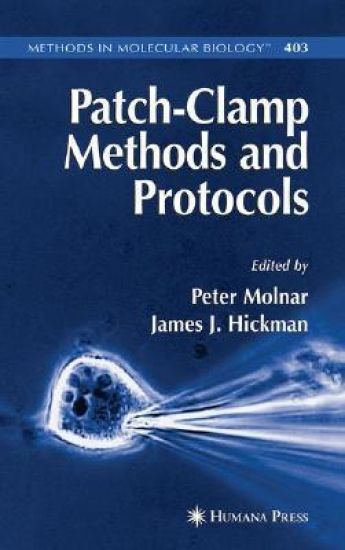
Patch-Clamp Methods and Protocols
Since its inception, patch-clamp has continued to be widely considered the gold standard method to record ion channel activity. Patch-Clamp Methods and Protocols, Second Edition, provides a comprehensive collection of new techniques for the development of automated, high-throughput screening systems for pharmacological evaluation, the use of various patch-clamp configurations together with novel molecular biological and imaging methodologies and enhanced stimulation protocols and perfusion systems. Divided into sections on pharmacology, physiology and biophysics, the chapters cover methods to generate more physiologically relevant conditions for drug application and screening technologies, recently developed applications such as optogenetic stimulation, advances in whole-cell recordings in freely-moving animals and novel technologies to create custom microelectrodes designed for reducing the access resistance and improving the rate of molecular diffusion. Patch-clamp is an indispensable technique for conducting pharmacological, physiological and biophysical research aimed at understanding crucial aspects of cellular and network function. Written in the successful Methods in Molecular Biology series format, chapters include introductions to their respective topics, lists of the necessary materials and reagents, step-by-step, readily reproducible protocols and notes on troubleshooting and avoiding known pitfalls.Authoritative and easily accessible, Patch-Clamp Methods and Protocols, Second Edition will provide a useful technical and methodological guide to diverse audiences of electrophysiologists, from students to experienced investigators.
Patch-Clamp Methods and Protocols
Since its inception, patch-clamp has continued to be widely considered the gold standard method to record ion channel activity. Patch-Clamp Methods and Protocols, Second Edition, provides a comprehensive collection of new techniques for the development of automated, high-throughput screening systems for pharmacological evaluation, the use of various patch-clamp configurations together with novel molecular biological and imaging methodologies and enhanced stimulation protocols and perfusion systems. Divided into sections on pharmacology, physiology and biophysics, the chapters cover methods to generate more physiologically relevant conditions for drug application and screening technologies, recently developed applications such as optogenetic stimulation, advances in whole-cell recordings in freely-moving animals and novel technologies to create custom microelectrodes designed for reducing the access resistance and improving the rate of molecular diffusion. Patch-clamp is an indispensable technique for conducting pharmacological, physiological and biophysical research aimed at understanding crucial aspects of cellular and network function. Written in the successful Methods in Molecular Biology series format, chapters include introductions to their respective topics, lists of the necessary materials and reagents, step-by-step, readily reproducible protocols and notes on troubleshooting and avoiding known pitfalls.Authoritative and easily accessible, Patch-Clamp Methods and Protocols, Second Edition will provide a useful technical and methodological guide to diverse audiences of electrophysiologists, from students to experienced investigators.
Patch-Clamp Methods and Protocols
Patch Clamp Methods and Protocols surveys the typical patch clamp applications and advises scientists on identifying problems and selecting the best technique in each instance. The experiments described require a basic level of electrophysiological training, and aid the researcher in pursuing new areas of electrophysiology and using the patch clamp technique effectively. Patch Clamp Methods and Protocols is organized by the major areas of patch clamp application: Pharmacology, Physiology, and Biophysics. Individual techniques are explored within the area that they are applied most often. Researchers will find this text to be an invaluable aid in the design and execution of a wide variety of patch clamp experiments, both on their own and in conjunction with other state-of-the-art methodologies.
Patch-Clamp Analysis

Patch-Clamp Analysis

Humana Press Inc.
2007
sidottu
Continuing the research of the best-selling first edition, Patch-Clamp Analysis: Advanced Techniques, Second Edition collects three more years of research in the ever-expanding study of the cell membrane. With the latest developments in the “traditional” patch techniques such as whole-cell and single channel as well as perforated patch, fast drug application, loose patch and macropatch techniques, this authoritative second edition updates the standard techniques while introducing three brand new, cutting-edge technical advances in the field. Thorough and timely, Patch-Clamp Analysis: Advanced Techniques, Second Edition is an invaluable resource for neuroscientists attempting to discover and understand the long-hidden complexities of the cell.
Patch-Clamp Methods and Protocols
Patch Clamp Methods and Protocols surveys the typical patch clamp applications and advises scientists on identifying problems and selecting the best technique in each instance. The experiments described require a basic level of electrophysiological training, and aid the researcher in pursuing new areas of electrophysiology and using the patch clamp technique effectively. Patch Clamp Methods and Protocols is organized by the major areas of patch clamp application: Pharmacology, Physiology, and Biophysics. Individual techniques are explored within the area that they are applied most often. Researchers will find this text to be an invaluable aid in the design and execution of a wide variety of patch clamp experiments, both on their own and in conjunction with other state-of-the-art methodologies.
Patch-Clamp Analysis

Patch-Clamp Analysis

Humana Press Inc.
2010
nidottu
Continuing the research of the best-selling first edition, Patch-Clamp Analysis: Advanced Techniques, Second Edition collects three more years of research in the ever-expanding study of the cell membrane. With the latest developments in the “traditional” patch techniques such as whole-cell and single channel as well as perforated patch, fast drug application, loose patch and macropatch techniques, this authoritative second edition updates the standard techniques while introducing three brand new, cutting-edge technical advances in the field. Thorough and timely, Patch-Clamp Analysis: Advanced Techniques, Second Edition is an invaluable resource for neuroscientists attempting to discover and understand the long-hidden complexities of the cell.
Patch-Clamp-Technik

Patch-Clamp-Technik

Fabian C. Roth; Markus Numberger; Andreas Draguhn; Bert Sakmann

Springer Fachmedien Wiesbaden
2023
nidottu
Die Patch-Clamp-Technik ist heute eine der wichtigsten neurophysiologischen Arbeitsmethoden. Ihre Anwendung hat in der biomedizinischen Grundlagenforschung bedeutende Erkenntnisse über die Funktion und die Eigenschaften von Ionenkanälen erbracht, und auch aus der angewandten pharmakologischen Forschung ist sie in­zwischen nicht mehr wegzudenken. Klar und praxisbezogen vermitteln die Autoren die wesentlichen Informationen, um die Methode im Labor einzuführen und erfolgreich anzuwenden. Das Buch erläutert die theoretischen Grundlagen der Messung, den detaillierten Aufbau eines Messplatzes und die praktische Durchführung typischer Messkonfigurationen. Konkrete Tipps und Tricks helfen beim „Trouble-Shooting“ und sind nicht nur für Neuanwender eine unverzichtbare Hilfe.
Patch Clamp Techniques

Patch Clamp Techniques

Springer Verlag, Japan
2012
sidottu
Channels and transporters are multi-functional proteins that mediate substrate transport and signal transmission and simultaneously act as regulators for other proteins and biosensors for environmental materials. Patch clamping is an epoch-making technique that allows researchers to perform real-time measurements of electrogenic channel/transporter functions at the single/multiple molecular level. This book describes not only the conventional patch clamp techniques but also their newly developed variations or applications, such as perforated patch, slice patch, blind patch, in vivo patch, imaging patch, smart patch, and automated patch clamping. These patch clamp techniques are now essential and are extensively used across the life sciences and in related industries. With plain and practical descriptions of patch clamping and how to carry it out, especially for beginners, the book also shows how widely and exquisitely the patch clamp techniques can be applied by expert electrophysiologists. This work serves as a useful guide for young researchers and students in training and laboratory courses as well as for senior researchers who wish to extend their repertoire of techniques.
Patch Clamp Techniques

Patch Clamp Techniques

Springer Verlag, Japan
2016
nidottu
Channels and transporters are multi-functional proteins that mediate substrate transport and signal transmission and simultaneously act as regulators for other proteins and biosensors for environmental materials. Patch clamping is an epoch-making technique that allows researchers to perform real-time measurements of electrogenic channel/transporter functions at the single/multiple molecular level. This book describes not only the conventional patch clamp techniques but also their newly developed variations or applications, such as perforated patch, slice patch, blind patch, in vivo patch, imaging patch, smart patch, and automated patch clamping. These patch clamp techniques are now essential and are extensively used across the life sciences and in related industries. With plain and practical descriptions of patch clamping and how to carry it out, especially for beginners, the book also shows how widely and exquisitely the patch clamp techniques can be applied by expert electrophysiologists. This work serves as a useful guide for young researchers and students in training and laboratory courses as well as for senior researchers who wish to extend their repertoire of techniques.
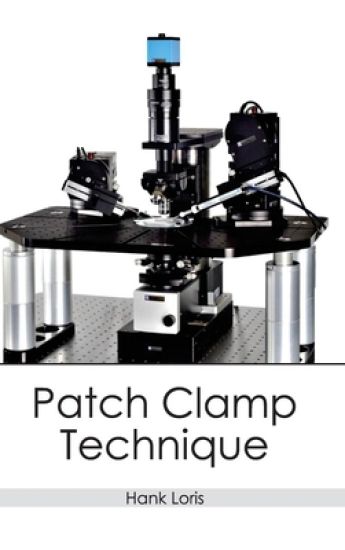
Patch Clamp Technique
This book is a stimulating and interesting addition to the collected works on Patch clamp technique. Patch Clamping is an electrophysiological technique, which measures the electric current generated by a living cell, due to the movement of ions through the protein channels present in the cell membrane. The technique was developed by two German scientists, Erwin Neher and Bert Sakmann, who received the Nobel Prize in 1991 in Physiology for this innovative work. Patch clamp technique is used for measuring drug effect against a series of diseases and to find out the mechanism of diseases in animals and plants. It is also most useful in finding out the structure function activities of compounds and drugs, and most leading pharmaceutical companies used this technique for their drugs before bringing them for clinical trial. This book deals with the understanding of endogenous mechanisms of cells and their receptors as well as advantages of using this technique. It covers the basic principles and preparation types and also deals with the latest developments in the traditional patch clamp technique. Some chapters in this book take the technique to a next level of modulation and novel approach. This book will be of good value for students of physiology, neuroscience, cell biology and biophysics.
USS Clamp (ARS-33)

USS Clamp (ARS-33)

VDM Verlag Dr. Muller Aktiengesellschaft Co. KG
2010
nidottu
Observera att förlaget som ger ut denna produkt baserar innehållet i sina produkter på fria källor som Wikipedia. Boken är med stor sannolikhet endast ett utdrag ur dessa informationskällor, alltså inte en vanlig bok i den bemärkelsen.
Voltage Clamp

Voltage Clamp

VDM Publishing House
2010
nidottu
Observera att förlaget som ger ut denna produkt baserar innehållet i sina produkter på fria källor som Wikipedia. Boken är med stor sannolikhet endast ett utdrag ur dessa informationskällor, alltså inte en vanlig bok i den bemärkelsen.
The Collected Poems of Amy Clampitt

The Collected Poems of Amy Clampitt

Amy Clampitt

Knopf Publishing Group
1999
nidottu
Now, for the first time, Clammpitt's five poetry collections are brought together in a single volume, allowing us to experience anew the distinctiveness of her voice: the brilliant language--an appealing mix of formal and everyday expression--that poured out with such passion and was shaped in rhythms and patterns entirely her own. - With a foreword by Mary Jo Salter The Collected Poems offers us a chance to consider freshly the breadth of Amy Clampitt's vision and poetic achievement. It is a volume that her many admirers will treasure and that will provide a magnificent introduction for a new generation of readers. When Amy Clampitt's first book of poems, The Kingfisher, was published in January 1983, the response was jubilant. The poet was sixty-three years old, and there had been no debut like hers in recent memory. "A dance of language," said May Swenson. "A genius for places," wrote J. D. McClatchy, and the New York Times Book Review said, "With the publication of her brilliant first book, Clampitt immediately merits consideration as one of the most distinguished contemporary poets." She went on to publish four more collections in the next eleven years, the last one, A Silence Opens, appearing in the year she died. Amy Clampitt's themes are the very American ones of place and displacement. She, like her pioneer ancestors, moved frequently, but she wrote with lasting and deep feeling about all sorts of landscapes--the prairies of her Iowa childhood, the fog-wrapped coast of Maine, and places she visited in Europe, from the western isles of Scotland to Italy's lush countryside. She lived most of her adult life in New York City, and many of her best-known poems, such as "Times Square Water Music" and "Manhattan Elegy," are set there. She did not hesitate to take on the larger upheavals of the twentieth century--war, Holocaust, exile--and poems like "The Burning Child" and "Sed de Correr" remind us of the dark nightmare lurking in the interstices of our daily existence. It is impossible to speak of Amy Clampitt's poetry without mentioning her immense, lifelong love of birds and wildflowers, a love that produced some of her most profound images--like the kingfisher's "burnished plunge, the color / of felicity afire," which came "glancing like an arrow / through landscapes of untended memory" to remind her of the uninhabitable sorrow of an affair gone wrong; or the sun underfoot among the sundews, "so dazzling / . . . that, looking, / you start to fall upward."