
Kirjahaku
Etsi kirjoja tekijän nimen, kirjan nimen tai ISBN:n perusteella.
1000 tulosta hakusanalla Claudian
The Rape of Proserpine, from Claudian. in Three Books. with the Episode of Sextus and Erichtho, from Lucan's Pharsalia, Book VI. Translated by Mr. Jabez Hughes. the Second Edition, Corrected, and Enlarg'd with Notes.
Claudius Claudianus
Gale Ecco, Print Editions
2010
pokkari
The Rape of Proserpine, from Claudian. in Three Books. with the Story of Sextus and Erichtho, from Lucan's Pharsalia, Book 6. Translated by Mr. Jabez Hughes.
Claudius Claudianus
Gale Ecco, Print Editions
2010
pokkari

'The dark, unrelenting Tiberius, the furious Caligula, the feeble Claudius, the profligate and cruel Nero..are condemned to everlasting Infamy', wrote Gibbon. This 'infamy' has inspired the work of historians and novelists from Roman times to the present. This book summarises political events during the reigns of Tiberius, Caligula, Claudius and Nero, and the civil wars of the 'year of four emperors'. It considers too the extent to which social factors influenced the imperial household. Assuming no knowledge of Latin and drawing on material including inscriptions and coins, literary history and the latest historical interpretations, the author presents a coherent account of the often apparently erratic actions of these emperors.
Claudii Claudiani Opera, Quae Exstant, Omnia, Ad Membranarum Veterum Fidem Castigata
Claudius Claudianus
Kessinger Pub
2009
pokkari

Opere Di Claudio Claudiano (1716)
Claudius Claudianus; Niccola Beregani
KESSINGER PUBLISHING, LLC
2009
pokkari

Aetas Claudianea
de Gruyter
2004
sidottu
The late-antique Roman poet Claudian has enjoyed an upsurge of interest in his work for some thirty years. In spite of increasing appreciation for his artistry, Claudian's position within the history of Latin literature has not been clearly defined. This volume presents the results of the first symposium ever devoted to Claudian and Latin literature. Well-known scholars such as Franca Ela Consolino, Manfred Fuhrmann, Siegmar Dopp, Isabella Gualandri, Jacqueline Long, and Peter Lebrecht Schmidt join several younger scholars to cast new light on the literary and cultural context of Claudian's works, on his themes and preoccupations, his aesthetics, and on the later reception of his work. The different contributions together give a sense not only of unity within the varied corpus of Claudian's poetry, which comprises political and mythological epic, epigrams, and elegies, but also of how much Claudian is representative of the major trends of his times. Finally, the book shows how far modern criticism has advanced towards an integrated understanding of Claudian's work."
Claudius Claudianus. L'epitalamio per Palladio e Celerina
Chiara Pfisterer
Peter Lang AG
2018
sidottu
Il commento per "c.m." 25 nasce dal desiderio di studiare l'epitalamio meno noto di Claudiano e di attribuirgli un ruolo nel "corpus Claudianeum". L'interpretazione del carme alla luce della tradizione letteraria precedente e alla base di questo studio che, servendosi del metodo intertestuale, rivela un risultato inaspettato per quanto riguarda la combinazione di nuovi elementi e l'accentuazione del carattere panegirico. L'apparato mitologico suscita interesse e simpatia nelle figure di una Venere pronuba, oziosa e sensuale e un Imeneo poeta bucolico. Claudiano, che in c.10 era vincolato da ragioni politiche, puo soddisfare qui le sue esigenze poetiche e affrontare, in occasione delle nozze di Palladio e Celerina, il tema del matrimonio da un punto di vista diverso da quello tradizionale.
This volume offers a modern, accurate, and accessible translation of Claudian’s work, published in English for the first time since 1922, and accompanied by detailed notes and a comprehensive glossary.Claudian (active 395–404 CE) was the last of the great classical Latin poets. His best-known work, The Rape of Proserpina, continues to inspire numerous retellings and adaptations. Claudian also wrote poems in praise of rulers, including the emperor Honorius and the regent Flavius Stilicho, which are essential sources for reconstructing politics and society in the late Roman empire. These poems and others are translated here, alongside an introduction offering an overview of Claudian’s career, the wider historical and political context of the period, and the poetic traditions in which Claudian wrote: mythological epic, panegyric, invective, and epithalamium. The translations, with explanatory notes, include: The Rape of Proserpina, Panegyric on Olybrius and Probinus’s Consulship, Panegyrics on Honorius’s Third, Fourth, and Sixth Consulships, Invective Against Rufinus, Fescennines and Epithalamium for Honorius and Maria, The War With Gildo, Panegyric on Manlius Theodorus’s Consulship, Invective Against Eutropius, Stilicho’s Consulship, The Gothic War, and shorter poems.The Complete Works of Claudian is a vital resource for students and scholars working on late antique literature, particularly Claudian’s work, as well as those studying the history and culture of the western Roman Empire in this period. This accessible volume is also suitable for the general reader interested in the works of Claudian and this period more broadly.
This volume offers a modern, accurate, and accessible translation of Claudian’s work, published in English for the first time since 1922, and accompanied by detailed notes and a comprehensive glossary.Claudian (active 395–404 CE) was the last of the great classical Latin poets. His best-known work, The Rape of Proserpina, continues to inspire numerous retellings and adaptations. Claudian also wrote poems in praise of rulers, including the emperor Honorius and the regent Flavius Stilicho, which are essential sources for reconstructing politics and society in the late Roman empire. These poems and others are translated here, alongside an introduction offering an overview of Claudian’s career, the wider historical and political context of the period, and the poetic traditions in which Claudian wrote: mythological epic, panegyric, invective, and epithalamium. The translations, with explanatory notes, include: The Rape of Proserpina, Panegyric on Olybrius and Probinus’s Consulship, Panegyrics on Honorius’s Third, Fourth, and Sixth Consulships, Invective Against Rufinus, Fescennines and Epithalamium for Honorius and Maria, The War With Gildo, Panegyric on Manlius Theodorus’s Consulship, Invective Against Eutropius, Stilicho’s Consulship, The Gothic War, and shorter poems.The Complete Works of Claudian is a vital resource for students and scholars working on late antique literature, particularly Claudian’s work, as well as those studying the history and culture of the western Roman Empire in this period. This accessible volume is also suitable for the general reader interested in the works of Claudian and this period more broadly.

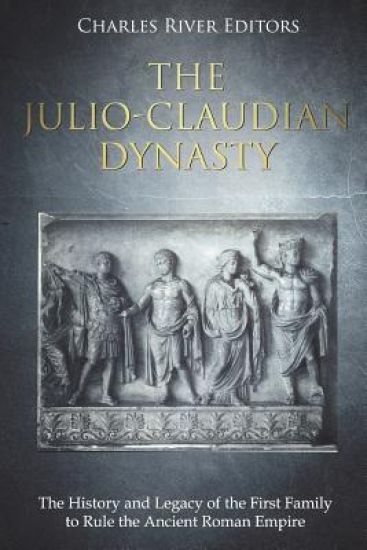
The Julio-Claudian Dynasty: The History and Legacy of the First Family to Rule the Ancient Roman Empire
Charles River
Createspace Independent Publishing Platform
2018
nidottu
*Includes pictures *Includes ancient accounts *Includes online resources and a bibliography for further reading The importance of Gaius Julius Caesar Augustus (or as he was known from birth, Gaius Octavius "Octavian" Thurinus) to the course of Western history is hard to overstate. His life, his rise to power, his political, and his social and military achievements all laid the foundations for the creation of an empire which would endure for almost five centuries, and whose traditions, laws, architecture and art continue to influence much of Europe and the world today. Octavian was the first true Roman Emperor, and the first man since the Etruscan Tarquins five centuries earlier to establish a successful hereditary ruling dynasty in what had been a proud Republic for over half a millennium. He was a canny strategist, an excellent orator, a fine writer, a generous patron of the arts and enthusiastic promoter of public works, but above all he was a master politician. Octavian's great-uncle (and adoptive father) Julius Caesar was a great general, and his rival Mark Antony was a great soldier, but as a politician Octavian outmatched them all. One of the most overlooked emperors was also one of the first, and he lived in chaotic times. Tiberius was born in 42 BCE, just as the Roman Republic was dissolving and a new Roman imperial power structure emerged under Octavian, who became Rome's first emperor as Caesar Augustus. Tiberius's life soon became caught up with Augustus's as the emperor worked to found and establish a dynasty, but it is unclear if Tiberius ever really wanted to be part of Augustus's plans or inherit imperial power - Tiberius was known as a man who schemed and planned, but he was also a scholar and showed a marked desire throughout his life to retreat and escape the demands of power. Partially due to this continual tension, Tiberius's life is enigmatic in many ways. All of Rome's poor rulers pale in comparison to Gaius Julius Caesar Augustus Germanicus, a young man remembered by posterity as Caligula. Given how bad some of Rome's emperors were, it's a testament to just how insane and reviled Caligula was that he is still remembered nearly 2,000 years later as the epitome of everything that could be wrong with a tyrant. The Romans had high hopes for him after he succeeded Tiberius in 37 CE, and by all accounts he was a noble and just ruler during his first few months in power. But after that, he suffered some sort of mysterious illness that apparently rendered him insane, and the list of Caligula's strange actions became quite lengthy in almost no time at all. Among other things, Caligula began appearing in public dressed as gods and goddesses, and his incest, sexual perversion, and thirst for blood were legendary at the time, difficult accomplishments considering Roman society was fairly accustomed to and tolerant of such things. Today, Claudius is particularly remembered for the conquest of Britain, as Roman power there had weakened since Julius Caesar had invaded nearly a century before. Beyond this, he established Roman colonies on the frontiers of the empire, annexed several territories in North Africa (including Thrace and Mauritania), and made Judea a province. Claudius's successor, Nero, ranks among the very worst of the Caesars, alongside the likes of mad Caligula, slothful Commodus, and paranoid Domitian, a figure so hated that, in many ancient Christian traditions, he is literally, without hyperbole, considered the Antichrist; according to a notable Biblical scholar, the coming of the Beast and the number 666 in the Book of Revelation are references to Nero. He was the man who, famously, "fiddled while Rome burned", an inveterate lecher, a murderous tyrant who showed little compunction in murdering his mother and who liked to use Christian martyrs as a source of illumination at night - by burning them alive.
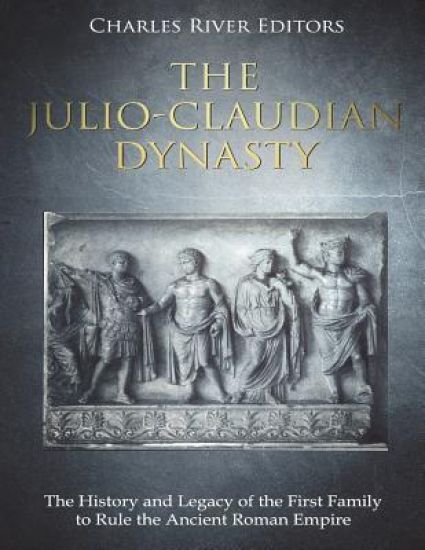
The Julio-Claudian Dynasty: The History and Legacy of the First Family to Rule the Ancient Roman Empire
Charles River
Createspace Independent Publishing Platform
2018
nidottu
*Includes pictures *Includes ancient accounts *Includes online resources and a bibliography for further reading The importance of Gaius Julius Caesar Augustus (or as he was known from birth, Gaius Octavius "Octavian" Thurinus) to the course of Western history is hard to overstate. His life, his rise to power, his political, and his social and military achievements all laid the foundations for the creation of an empire which would endure for almost five centuries, and whose traditions, laws, architecture and art continue to influence much of Europe and the world today. Octavian was the first true Roman Emperor, and the first man since the Etruscan Tarquins five centuries earlier to establish a successful hereditary ruling dynasty in what had been a proud Republic for over half a millennium. He was a canny strategist, an excellent orator, a fine writer, a generous patron of the arts and enthusiastic promoter of public works, but above all he was a master politician. Octavian's great-uncle (and adoptive father) Julius Caesar was a great general, and his rival Mark Antony was a great soldier, but as a politician Octavian outmatched them all. One of the most overlooked emperors was also one of the first, and he lived in chaotic times. Tiberius was born in 42 BCE, just as the Roman Republic was dissolving and a new Roman imperial power structure emerged under Octavian, who became Rome's first emperor as Caesar Augustus. Tiberius's life soon became caught up with Augustus's as the emperor worked to found and establish a dynasty, but it is unclear if Tiberius ever really wanted to be part of Augustus's plans or inherit imperial power - Tiberius was known as a man who schemed and planned, but he was also a scholar and showed a marked desire throughout his life to retreat and escape the demands of power. Partially due to this continual tension, Tiberius's life is enigmatic in many ways. All of Rome's poor rulers pale in comparison to Gaius Julius Caesar Augustus Germanicus, a young man remembered by posterity as Caligula. Given how bad some of Rome's emperors were, it's a testament to just how insane and reviled Caligula was that he is still remembered nearly 2,000 years later as the epitome of everything that could be wrong with a tyrant. The Romans had high hopes for him after he succeeded Tiberius in 37 CE, and by all accounts he was a noble and just ruler during his first few months in power. But after that, he suffered some sort of mysterious illness that apparently rendered him insane, and the list of Caligula's strange actions became quite lengthy in almost no time at all. Among other things, Caligula began appearing in public dressed as gods and goddesses, and his incest, sexual perversion, and thirst for blood were legendary at the time, difficult accomplishments considering Roman society was fairly accustomed to and tolerant of such things. Today, Claudius is particularly remembered for the conquest of Britain, as Roman power there had weakened since Julius Caesar had invaded nearly a century before. Beyond this, he established Roman colonies on the frontiers of the empire, annexed several territories in North Africa (including Thrace and Mauritania), and made Judea a province. Claudius's successor, Nero, ranks among the very worst of the Caesars, alongside the likes of mad Caligula, slothful Commodus, and paranoid Domitian, a figure so hated that, in many ancient Christian traditions, he is literally, without hyperbole, considered the Antichrist; according to a notable Biblical scholar, the coming of the Beast and the number 666 in the Book of Revelation are references to Nero. He was the man who, famously, "fiddled while Rome burned", an inveterate lecher, a murderous tyrant who showed little compunction in murdering his mother and who liked to use Christian martyrs as a source of illumination at night - by burning them alive.

Claudius Claudianus (ca. 370–404 n. Chr.) galt lange vor allem als panegyrischer Chronist des weströmischen Kaiserhofs ab 395 n. Chr. Auch die wohl nach seinem Tod unter dem Titel Carmina minora gesammelten kürzeren Gedichte lassen den Panegyriker Claudian erkennen, zeigen jedoch gleichzeitig einen Dichter, der besonders anhand der Beschreibung von Naturmirabilia weitere Facetten seines poetischen Programms präsentiert. Dieses Programm zeichnet sich einerseits durch eine intensive intratextuelle Bezogenheit aus, die unterschiedliche Aspekte eines ausgeprägten ars-natura-Diskurses aufzeigt, in dessen Rahmen die Erzeugnisse einer natura artifex vom poeta artifex Claudian ekphrastisch höchst raffiniert inszeniert werden. Andererseits verdeutlichen intertextuelle Bezüge zu zahlreichen griechischen und lateinischen Dichtern die Einbindung einer Tradition, die ergänzt durch typische Gestaltungsmittel spätantiker Dichtung die programmatische Bedeutung der concordia discors offenbart. Genannte Bestandteile des poetischen Programms Claudians betrachtet die vorliegende Publikation anhand detaillierter Textanalysen und leistet so einen wertvollen Beitrag zur weiteren philologischen Erschließung der Carmina minora.

Unver nderter Nachdruck der Originalausgabe von 1878.
Unver nderter Nachdruck der Originalausgabe von 1878.