This is one of a series of short, practical guides aimed at lecturers and tutors in colleges and universities, to help them get started on research. It covers all aspects of teaching methods, strategies for interactive teaching methods, small and large group teaching and student learning.
Clinton Bennett reflects on four decades of engagement with Muslims and Christian-Muslim relations as a missionary, scholar, and interfaith activist. Set in the context of his personal story, chapters discuss a series of critical questions to the Christian-Muslim relationship reprising earlier writing. Bennett asks: can Christians appreciate the prophet Muhammad as a genuine messenger from God or is this theological treason? How might Christians respond to the Muslim claim that Jesus was a prophet and is not God incarnate? Can Christians with integrity regard the Qur'ān as a word from God, and is there any possibility of rapprochement on the issue of whether Jesus died on the cross? Focusing on the United States, Bennett also describes church-sponsored Christian-Muslim initiatives and offers suggestions on how Christians can rethink their ideas about Muslims and cooperate with them in peace and justice advocacy, and social and community development. Exploring some of the causes of Islamophobia, Bennett set out to challenge Christians to keep the commandment not to bear false witness against their Muslim neighbors.
Based on lectures delivered in Chichester Cathedral, this book mirrors typical nineteenth century English attitudes toward the non-European space. This needed Christianity and European political oversight, or its people would remain backward and spiritually lost. The book shows how someone whose inclinations were liberal could look at Islam and dislike what he saw. On the other hand, the book also shows that a non-specialist scholar in the second half of the nineteenth century could write seriously if not impartially about Islam using material available in European languages. This suggests that Islam was a subject of increasing interest in Victorian England.
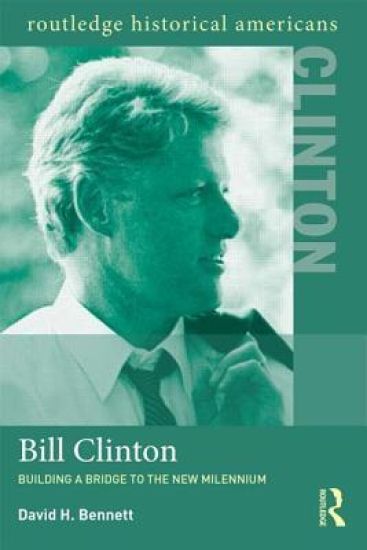
In 1993, William J. Clinton began his eight year stint as forty-second president of the United States. A key figure of change in the Democratic Party, Clinton's political and personal actions ensured his lasting status as an important if controversial leader at a critical moment in recent American history. In Bill Clinton: Building a Bridge to the New Millennium, David H. Bennett traces Clinton's life and career from childhood through his two terms in the White House. From childhood to college, state government to the executive branch, Bennett provides a concise and readable biography that places Clinton's achievements, problems, and legacy in historical context.Situating the former president in the trajectory of 20th century liberalism, Bennett draws on Clinton's life to illuminate the political landscape of America in the 1990s and the role of the U.S. in the global context of the post-Cold War world. Combining keen scholarship with accessible prose, this will be an essential resource for students and all those interested in understanding the recent history of the U.S.
In 1993, William J. Clinton began his eight year stint as forty-second president of the United States. A key figure of change in the Democratic Party, Clinton's political and personal actions ensured his lasting status as an important if controversial leader at a critical moment in recent American history. In Bill Clinton: Building a Bridge to the New Millennium, David H. Bennett traces Clinton's life and career from childhood through his two terms in the White House. From childhood to college, state government to the executive branch, Bennett provides a concise and readable biography that places Clinton's achievements, problems, and legacy in historical context.Situating the former president in the trajectory of 20th century liberalism, Bennett draws on Clinton's life to illuminate the political landscape of America in the 1990s and the role of the U.S. in the global context of the post-Cold War world. Combining keen scholarship with accessible prose, this will be an essential resource for students and all those interested in understanding the recent history of the U.S.
Forts and Forays: James A. Bennett: A Dragoon in New Mexico, 1850-1856 is a historical memoir written by James Augustus Bennett. The book chronicles Bennett's experiences as a dragoon in the United States Army stationed in the New Mexico Territory during the mid-19th century. The memoir provides a unique perspective on the conflicts between the United States Army and Native American tribes, including the Apache and Navajo. Bennett's firsthand accounts detail the daily life of a soldier in the New Mexico Territory, including the challenges of living in a harsh desert environment, the dangers of frontier warfare, and the complex relationships between soldiers and civilians. The book also explores the political and social climate of the time, including the tensions between the United States and Mexico, the impact of the California Gold Rush, and the growing divide between North and South in the lead-up to the Civil War. Forts and Forays is a valuable resource for anyone interested in the history of the American West, the United States Army, and the complex relationships between military forces and indigenous populations.This scarce antiquarian book is a facsimile reprint of the old original and may contain some imperfections such as library marks and notations. Because we believe this work is culturally important, we have made it available as part of our commitment for protecting, preserving, and promoting the world's literature in affordable, high quality, modern editions, that are true to their original work.
The Race for the White House from Reagan to Clinton provides a foundation for how the presidential nomination process and the presidential election process have changed over the past three decades by addressing a number of important questions about the nomination and electoral processes.
The Race for the White House from Reagan to Clinton provides a foundation for how the presidential nomination process and the presidential election process have changed over the past three decades by addressing a number of important questions about the nomination and electoral processes.
Born in late 1918, Clif Bennett grew up in New York City during the turbulent era of the Great Depression and the subsequent years of World War II. Witnessing the world of his times, he identified with the working people, Communists, and anarchists. Inevitably, this led to draft evasion, being hounded by the FBI, and eventually imprisonment. Gifted with both prose and poetic literary skills, he wrote extensively in both forms, expressing the mood and temper of the times as seen through his own eyes. This collection of his writings includes the variety of life in general, including such things as politics, religion, romance, children's stories, living in Africa, and the entire collection of his Yih Jing Sonnets. Collected Works presents a universality of theme and passion from one man's perspective.
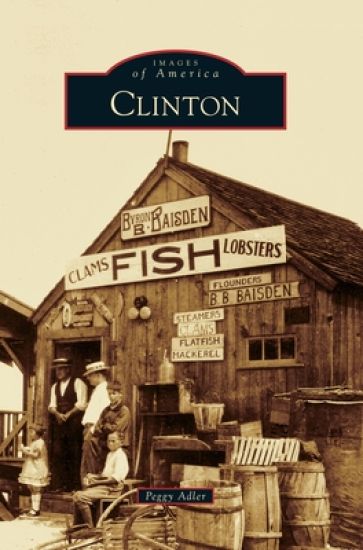
Clinton, Connecticut, is a small shoreline town situated 25 miles east of New Haven. It was founded in 1663 when a committee appointed by the General Court at Hartford laid out a settlement called the Homonoscitt Plantation. In 1838, following multiple name changes during the intervening years, it came to be known as Clinton. It is two hours by car or commuter train from New York City and two and a half hours from Boston. And for those that ski, it is three hours from Southern Vermont and New Hampshire. Clinton was the birthplace of Yale College in 1701; the hometown of choice for a family and their performing bears, who, for years, headlined with Ringling Bros. and Barnum & Bailey; and the place where Dr. Seuss spent his summers. More recently, Tony Award-winning actor Jefferson Mays and television journalist Erica Hill grew up there.
This book has been considered by academicians and scholars of great significance and value to literature. This forms a part of the knowledge base for future generations. So that the book is never forgotten we have represented this book in a print format as the same form as it was originally first published. Hence any marks or annotations seen are left intentionally to preserve its true nature.