In 2017, Scottish photographer Louie Pastore, was invited to document the first 'Punk on the Peninsula' events which took place in Dunoon, Argyll and on a Booze Cruise on the River Clyde. This book captures the spirit of the pirate-themed festival in a series of infrared photographs which transforms the company of punk rockers into the crew of a ghost ship....
Clyde Wheeler is a man with few redeeming qualities: Gambler, skirt-chaser, a used-car dealer who peddles junk to the poor and disadvantaged, a man who, according to his soon-to-be-ex trophy wife, has never done "one good thing" in his life.Looking back on a life filled with guilt and regret, Clyde's world is unraveling and his clock is ticking double-time. Haunted by a mystical encounter with a hobo preacher and aided by an Indiana farm girl with a striking resemblance to a 50's pin-up queen, Clyde embarks on a Quixotic quest to revisit the graveyard of his past and atone for his greatest wrongdoing, in a desperate attempt to do "one good thing" and perhaps reclaim his soul. But as Clyde soon learns, this is no ordinary road trip.
This book is part of the Images of Scotland series, which uses old photographs and archived images to show the history of various local areas in Scotland, through their streets, shops, pubs, and people.
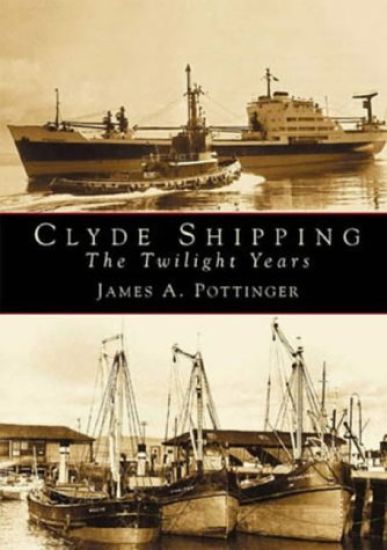
For centuries the Clyde has been synonymous with ships but in the last thirty years there has been a decline in the number of vessels using the lower reaches of the river. The shipyards that made the river famous are all but gone and the plethora of paddlers that plied their trade between the coastal towns have been replace by a few ferries. Clyde Shipping - The Twilight Years is a trip down memory lane for those who remember when the Clyde was the third most important river in Britain and its ports some of the busiest. That heyday has gone and all that we have to remind us of the greatness of the Clyde are images such as the ones contained within this book. No longer are the world's largest ocean liners built here and only a few large ships now make the journey up the river. Once busy ports like Greenock and Port Glasgow lie silent for much of the time and all that remains are photographs and the memories of those who worked on this once busy river.
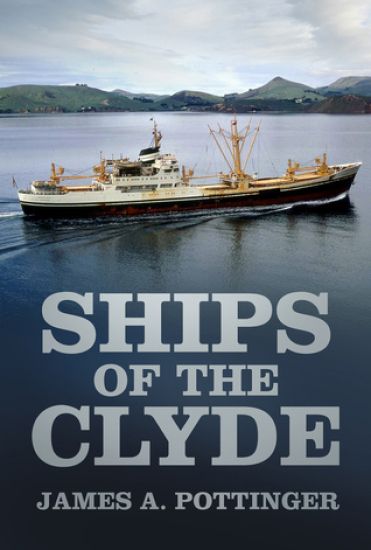
For many years the River Clyde held a premier place in the world of shipbuilding and engineering, pioneering many advances in both disciplines. Whilst these days are long gone we should never forget the great contribution made by a range of companies, from those constructing luxury passenger liners and major warships, to those building a whole range of cargo ships, including numerous specialist types, and the smaller concerns concentrating on coasters, tugs, dredgers and puffers. Such well-known companies as John Brown, Fairfield and Barclay Curle plied their trade on this river and provided employment for thousands; indeed, the local area was important to shipbuilding as the industry was to sustaining the local area. This illustrated history reveals the whole gamut of Clyde-built types constructed on the river and celebrates the glory days of times past, now sadly only living on in old photographs and the memories of those who were there.
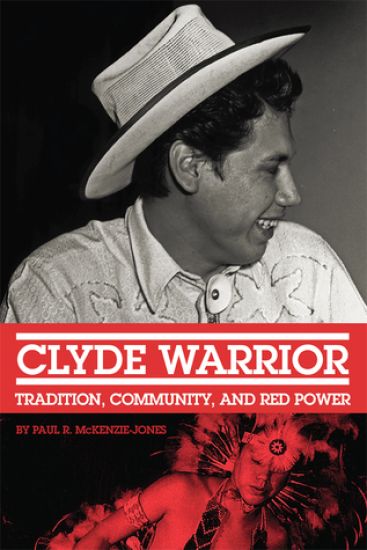
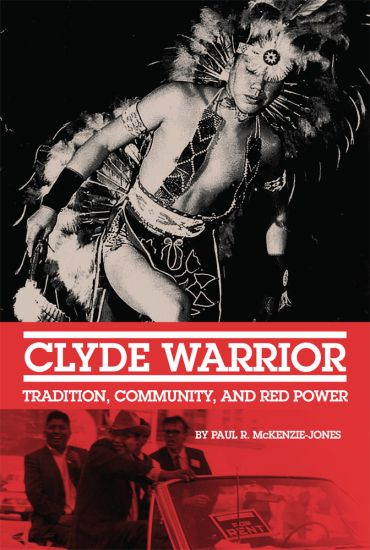
The phrase Red Power, coined by Clyde Warrior (1939-1968) in the 1960s, introduced militant rhetoric into American Indian activism. In this first-ever biography of Warrior, historian Paul R. McKenzie-Jones presents the Ponca leader as the architect of the Red Power movement, spotlighting him as one of the most significant and influential figures in the fight for Indian rights. The Red Power movement arose in reaction to centuries of oppressive federal oversight of American Indian peoples. It comprised an assortment of grassroots organizations that fought for treaty rights, tribal sovereignty, self-determination, cultural preservation, and cultural relevancy in education. A cofounder of the National Indian Youth Council, Warrior was among the movement's most prominent spokespeople. Throughout the 1960s, he blazed a trail of cultural and political reawakening in Indian Country, using a combination of ultranationalistic rhetoric and direct-action protest. McKenzie-Jones uses interviews with some of Warrior's closest associates to delineate the complexity of community, tradition, culture, and tribal identity that shaped Warrior's activism. For too many years, McKenzie-Jones maintains, Warrior's death at age twenty-nine overshadowed his intellect and achievements. Red Power has been categorized as an American Indian interpretation of Black Power that emerged after his death. This groundbreaking book brings to light, however, previously unchronicled connections between Red Power and Black Power that show the movements emerging side by side as militant, urgent calls for social change. Warrior borrowed only the slogan as a metaphor for cultural and community integrity. Descended from hereditary chiefs, Warrior was immersed in Ponca history and language from birth. McKenzie-Jones shows how this intimate experience, and the perspective gained from participating in powwows, summer workshops, and college Indian organizations, shaped Warrior's intertribal approach to Indian affairs. This long-overdue biography explores how Clyde Warrior's commitment to culture, community, and tradition formed the basis for his vision of Red Power.
The phrase Red Power, coined by Clyde Warrior (1939–1968) in the 1960s, introduced militant rhetoric into American Indian activism. In this first-ever biography of Warrior, historian Paul R. McKenzie-Jones presents the Ponca leader as the architect of the Red Power movement, spotlighting him as one of the most significant and influential figures in the fight for Indian rights. The Red Power movement arose in reaction to centuries of oppressive federal oversight of American Indian peoples. It comprised an assortment of grassroots organizations that fought for treaty rights, tribal sovereignty, self-determination, cultural preservation, and cultural relevancy in education. A cofounder of the National Indian Youth Council, Warrior was among the movement’s most prominent spokespeople. Throughout the 1960s, he blazed a trail of cultural and political reawakening in Indian Country, using a combination of ultranationalistic rhetoric and direct-action protest. McKenzie-Jones uses interviews with some of Warrior’s closest associates to delineate the complexity of community, tradition, culture, and tribal identity that shaped Warrior’s activism. For too many years, McKenzie-Jones maintains, Warrior’s death at age twenty-nine overshadowed his intellect and achievements. Red Power has been categorized as an American Indian interpretation of Black Power that emerged after his death. This groundbreaking book brings to light, however, previously unchronicled connections between Red Power and Black Power that show the movements emerging side by side as militant, urgent calls for social change. Warrior borrowed only the slogan as a metaphor for cultural and community integrity. Descended from hereditary chiefs, Warrior was immersed in Ponca history and language from birth. McKenzie-Jones shows how this intimate experience, and the perspective gained from participating in powwows, summer workshops, and college Indian organizations, shaped Warrior’s intertribal approach to Indian affairs. This long-overdue biography explores how Clyde Warrior’s commitment to culture, community, and tradition formed the basis for his vision of Red Power.
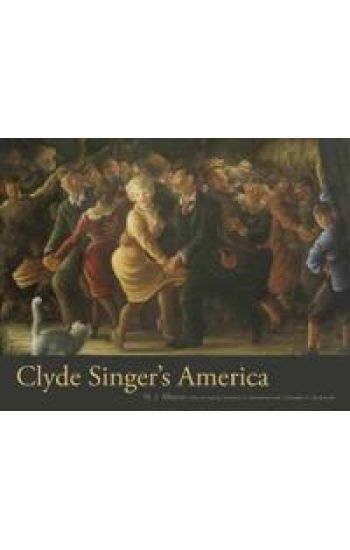
This is a richly illustrated study of the work of an Ohio artist.Clyde Singer was born in the small town of Malvern in 1908 and he grew up in the rural hills of Ohio. Educated in the local public schools, he had an early interest in art and, after high school attended the school at the Columbus Gallery of Fine Arts. In 1933, he received a scholarship to the Arts Students' League in New York City where his mentors were ""American Scene"" painters John Steuart Curry and Thomas Hart Benton. During his seven years in New York City, Singer developed a friendship with artist John Sloan, one of ""The Eight"" of the Ashcan School, a group of artists who painted gritty urban scenes and preceded the American Scene.Primarily oils and watercolors, Singer's early work focused on rural and small-town life in Ohio. Later in his career his art shifted to scenes of contemporary urban life. In 1940, Singer became the assistant director at the Butler Institute of American Art in Youngstown, Ohio, and, except for military service during World War II, remained there until his death in 1999. Singer completed more than 3,000 paintings during his career and is best known for his American Scene paintings.Singer's paintings are part of the permanent collections of many museums throughout the United States, and his work has been exhibited at the Whitney Museum, the Corcoran Gallery, the Chicago Art Institute, the National Academy of Design, the Massillon Museum, the Canton Museum of Art, and the Butler Institute of American Art. With 250 full color reproductions of his paintings, as well as photographs of the artist at work and with his friends and family Clyde Singer's America places the artist in the context of his time, and makes his work available to a new and appreciative audience.