Kirjojen hintavertailu. Mukana 11 342 296 kirjaa ja 12 kauppaa.

Kirjahaku

Etsi kirjoja tekijän nimen, kirjan nimen tai ISBN:n perusteella.

1000 tulosta hakusanalla Colin Jones

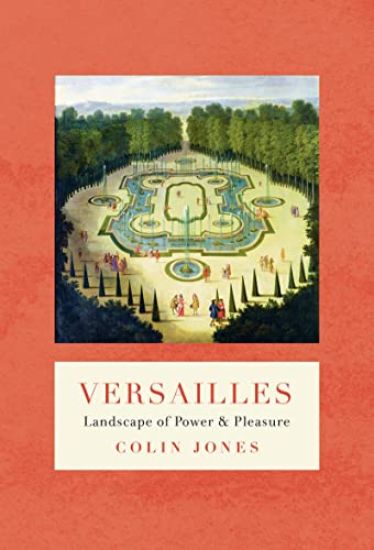
Versailles

Versailles

Colin Jones

Head of Zeus
2018
sidottu
Few buildings carry such a freight of historical symbolism as the Palace of Versailles. First built as a hunting lodge by Louis XIII in the early seventeenth century, then radically repurposed by his absolutist son Louis XIV, Versailles became the focus of that king's centralised power. Drawing on a new wave of research in recent years, particularly on the buildings and material culture of Versailles, Colin Jones, distinguished historian of early modern France, describes the various building campaigns undertaken by Louis XIV and his formal installation of his court at Versailles in 1682; the ritualized rhythms of life at the court of the Sun King; the palace's variegated fortunes under Revolution, First Empire, Restoration and July Monarchy; its return to the political stage in the Franco-Prussian War; its later role as a venue for treaty signings and proclamations; and its continuing legacy as imposing physical embodiment of the ancien régime.
How to Teach Entrepreneurship

How to Teach Entrepreneurship

Colin Jones

Edward Elgar Publishing Ltd
2019
sidottu
Just how should we teach entrepreneurship? This important book provides many of the answers to this challenging question. In developing the first signature pedagogy for entrepreneurship education, Colin Jones unites the contexts of enterprise and education at the intersection of scholarship, transformational learning and student engagement. Good teaching for entrepreneurship is shown to emerge both from the educator and the students' interest. For the educator, a process of scholarly leading is required to support student interest - from the alternate perspective, students require a willingness to welcome uncertainty and challenge the existing boundaries to effectively develop a capacity for self-negotiated action. A key guide for all entrepreneurship lecturers and tutors, written for all teaching contexts, this book will challenge you to teach 'who you are', as well as what you know.
How to Teach Entrepreneurship

How to Teach Entrepreneurship

Colin Jones

Edward Elgar Publishing Ltd
2020
nidottu
Just how should we teach entrepreneurship? This important book provides many of the answers to this challenging question. In developing the first signature pedagogy for entrepreneurship education, Colin Jones unites the contexts of enterprise and education at the intersection of scholarship, transformational learning and student engagement. Good teaching for entrepreneurship is shown to emerge both from the educator and the students' interest. For the educator, a process of scholarly leading is required to support student interest - from the alternate perspective, students require a willingness to welcome uncertainty and challenge the existing boundaries to effectively develop a capacity for self-negotiated action. A key guide for all entrepreneurship lecturers and tutors, written for all teaching contexts, this book will challenge you to teach 'who you are', as well as what you know.
Teaching Entrepreneurship to Undergraduates

Teaching Entrepreneurship to Undergraduates

Colin Jones

Edward Elgar Publishing Ltd
2011
sidottu
An experienced entrepreneur and educator, Colin Jones has written this book to help entrepreneurship educators pause and reflect upon their students’ learning, and therefore their own responsibilities as educators. He advocates a student-centric way to teach entrepreneurship and to building the curriculum. He shakes up the reader’s thinking and invites discussion on an experiential learning approach, to engage students in learning about entrepreneurship.This book is deliberatively provocative, and awakens another level of thinking on how to teach entrepreneurship. It will be required reading for entrepreneurship educators and those building a university entrepreneurship programme for years to come.
Mastering Clojure Macros

Mastering Clojure Macros

Colin Jones

The Pragmatic Programmers
2014
nidottu
Level up your skills by taking advantage of Clojure's powerful macro system. Macros make hard things possible and normal things easy. They can be tricky to use, and this book will help you deftly navigate the terrain. You'll discover how to write straightforward code that avoids duplication and clarifies your intentions. You'll learn how and why to write macros. You'll learn to recognize situations when using a macro would (and wouldn't!) be helpful. And you'll use macros to remove unnecessary code and build new language features. Clojure offers some sharp tools in its toolbox, and one of the sharpest is its macro system. This book will help you write macros using Clojure, and more importantly, recognize when you should be using macros in the first place. The Lisp "code-as-data" philosophy gives tremendous advantages to macro authors and users. You can use macros to evaluate code in other contexts, move computations to compile time, and create beautiful API layers. You don't need to wait on the Clojure language itself to add new features, you'll learn how to implement even the lowest-level features as macros. You'll step through representative samples of how to use macros in production libraries and applications, find clear details on how to construct macros, and learn pointers to avoid obstacles that often trip up macro amateurs. Clojure macros are more straightforward to use than metaprogramming features in many other languages, but they're different enough from normal programming to present challenges of their own. Mastering Clojure Macros examines some of these issues, along with alternatives to macros where they exist. By the time you finish this book, you'll be thinking like a macro professional. What You Need: The book examples have been developed under Clojure 1.6.0, although earlier and later versions of Clojure may work as well. You'll want to use Leiningen 2.x in order to follow along with the examples that use external projects.
The Soul of a Man

The Soul of a Man

Colin Jones

Diamond Legacies
2024
pokkari
'The Soul of a Man' by Colin Jones traces his journey through a difficult period in his life when he lost everything including his freedom. In those dark moments he found salvation in God's grace and blessings. The book subtitle speaks to its subject content: "A testimony to rising out of darkness to find faith and one's true calling." In this testimony, Colin traces these past years since his soul awakening and shares his insight on living his faith and following in the footsteps of Christ into God's grace.
Versailles

Versailles

Colin Jones

BASIC BOOKS
2018
sidottu
The vivid story of the creation, renovation, and enduring legacy of the most famous building in France: the palace of Versailles Nothing represents the glorious and fraught history of France quite like the Palace of Versailles. Made famous by the absolutist king Louis XIV, Versailles became legendary for the splendor of its revels -- but then, after the Revolution of 1789, it fell into disrepute as a reminder of royal excess and abuse of power. Subsequent French governments struggled with how to handle the opulent palace and grounds -- should the site be memorialized, trivialized, rehabilitated, or even destroyed outright? Drawing on a new wave of recent research, historian Colin Jones masterfully traces the evolution of Versailles as a space of royal politics and aristocratic pleasures, a building of mythic status, and one of the world's great tourist destinations. Accessible and compelling, this book is a must-read for all Francophiles.
How to Improve Your Teaching of Entrepreneurship

How to Improve Your Teaching of Entrepreneurship

Colin Jones

EDWARD ELGAR PUBLISHING LTD
2026
nidottu
This indispensable guide enables the reader to develop confidence and capacity in understanding the fundamentals of entrepreneurship education. Colin Jones provides support for those seeking continuous pedagogical development, and examines realistic solutions to contemporary educator challenges, including adapting to individual student learning contexts and designing unique learning tasks. Key Features: Outlines a clear argument and process for educator self-improvement Covers essential scholarship drawn from the learning sciences and teaching and learning literature Acknowledges the complexity of the psychology of learning, while providing empirically tested techniques for knowledge retention and active learning Aids in the application of several essential educational processes, such as constructive alignment, active learning, authentic assessment, and chunking How to Improve Your Teaching of Entrepreneurship is a crucial resource for academic instructors aspiring to take concrete steps to improve their teaching of entrepreneurship in all contexts. It is additionally beneficial to any educator hoping to explore a variety of tried and tested teaching methods.
The Smile Revolution

The Smile Revolution

Colin Jones CBE

Oxford University Press
2014
sidottu
You could be forgiven for thinking that the smile has no history; it has always been the same. However, just as different cultures in our own day have different rules about smiling, so did different societies in the past. In fact, amazing as it might seem, it was only in late eighteenth century France that western civilization discovered the art of the smile. In the 'Old Regime of Teeth' which prevailed in western Europe until then, smiling was quite literally frowned upon. Individuals were fatalistic about tooth loss, and their open mouths would often have been visually repulsive. Rules of conduct dating back to Antiquity disapproved of the opening of the mouth to express feelings in most social situations. Open and unrestrained smiling was associated with the impolite lower orders. In late eighteenth-century Paris, however, these age-old conventions changed, reflecting broader transformations in the way people expressed their feelings. This allowed the emergence of the modern smile par excellence: the open-mouthed smile which, while highlighting physical beauty and expressing individual identity, revealed white teeth. It was a transformation linked to changing patterns of politeness, new ideals of sensibility, shifts in styles of self-presentation - and, not least, the emergence of scientific dentistry. These changes seemed to usher in a revolution, a revolution in smiling. Yet if the French revolutionaries initially went about their business with a smile on their faces, the Reign of Terror soon wiped it off. Only in the twentieth century would the white-tooth smile re-emerge as an accepted model of self-presentation. In this entertaining, absorbing, and highly original work of cultural history, Colin Jones ranges from the history of art, literature, and culture to the history of science, medicine, and dentistry, to tell a unique and untold story about a facial expression at the heart of western civilization.
The Smile Revolution

The Smile Revolution

Colin Jones CBE

Oxford University Press
2017
nidottu
You could be forgiven for thinking that the smile has no history; it has always been the same. However, just as different cultures in our own day have different rules about smiling, so did different societies in the past. In fact, amazing as it might seem, it was only in late eighteenth century France that western civilization discovered the art of the smile. In the 'Old Regime of Teeth' which prevailed in western Europe until then, smiling was quite literally frowned upon. Individuals were fatalistic about tooth loss, and their open mouths would often have been visually repulsive. Rules of conduct dating back to Antiquity disapproved of the opening of the mouth to express feelings in most social situations. Open and unrestrained smiling was associated with the impolite lower orders. In late eighteenth-century Paris, however, these age-old conventions changed, reflecting broader transformations in the way people expressed their feelings. This allowed the emergence of the modern smile par excellence: the open-mouthed smile which, while highlighting physical beauty and expressing individual identity, revealed white teeth. It was a transformation linked to changing patterns of politeness, new ideals of sensibility, shifts in styles of self-presentation - and, not least, the emergence of scientific dentistry. These changes seemed to usher in a revolution, a revolution in smiling. Yet if the French revolutionaries initially went about their business with a smile on their faces, the Reign of Terror soon wiped it off. Only in the twentieth century would the white-tooth smile re-emerge as an accepted model of self-presentation. In this entertaining, absorbing, and highly original work of cultural history, Colin Jones ranges from the history of art, literature, and culture to the history of science, medicine, and dentistry, to tell a unique and untold story about a facial expression at the heart of western civilization.
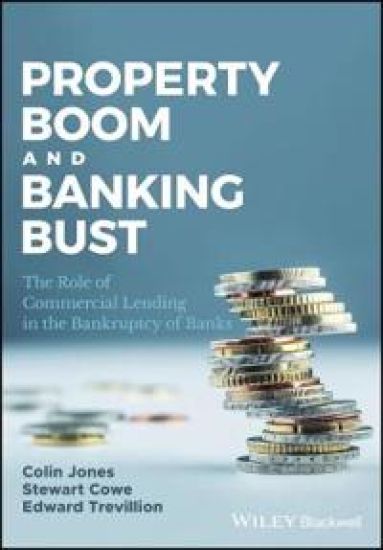
Property Boom and Banking Bust

Property Boom and Banking Bust

Colin Jones; Stewart Cowe; Edward Trevillion

Wiley-Blackwell
2017
nidottu
A fascinating analysis of the critical role commercial property investment played in the economic boom and bust during the global financial crisis The unprecedented financial boom stretching from the mid-1990s through 2008 ultimately led to the deepest recession in modern times and one of the slowest economic recoveries in history. It also resulted in the emergence of the draconian austerity policies that have swept across Europe in recent years. Property Boom and Banking Bust offers an expert insight into the complex property market dynamics that contributed to the Great Financial Crisis of 2008 and its devastating economic consequences. It is the first book to focus on a woefully underreported dimension of the crisis, namely, the significant role that lending on commercial property development played in the crisis. Among other key topics, the authors explore the philosophical and behavioral factors that propelled irresponsible bank lending and the property boom; how it led to the downfall of the banks; the impact of the credit crunch on the real estate industry generally in the wake of the financial crisis; the catastrophic effects the property bust had on property investors, both large and small; and how the financial institutions have sought to recover in the wake of the financial crisis. Provides valuable insights into what happened in previous booms and busts, particularly in the 1970s and 1980s, and how they compare with the most recent oneOffers an expert assessment of the consequences of the global financial crisis for the banking system and the commercial property industryExamines strategies banks have used to recover their positions and manage the overhang of indebtedness and bad property assetsAddresses strategies the real estate industry have used to recover from the collapse in property values Written in an accessible style, and featuring numerous insider case accounts from property bankers, Property Boom and Banking Bust disentangles the complex, tightly-woven factors that led to the Great Financial Crisis of 2008, while offering powerful lessons for property industry professionals on how to avoid having history repeat itself.
Revival: Health of Scottish Housing (2001)

Revival: Health of Scottish Housing (2001)

Colin Jones; Peter Robson

Routledge
2019
nidottu
This title was first published in 2001. Inspired by the thirtieth anniversary of Shelter Scotland, this volume provides an overview of Scottish housing policies and legislation, looks back at the changes to major tenures, eviction policies and homelessness over the past thirty years and explores the potential of the new Scottish Parliament to bring about change in this important social, political and economic arena.
Revival: Health of Scottish Housing (2001)

Revival: Health of Scottish Housing (2001)

Colin Jones; Peter Robson

Routledge
2017
sidottu
This title was first published in 2001. Inspired by the thirtieth anniversary of Shelter Scotland, this volume provides an overview of Scottish housing policies and legislation, looks back at the changes to major tenures, eviction policies and homelessness over the past thirty years and explores the potential of the new Scottish Parliament to bring about change in this important social, political and economic arena.
The Right to Buy

The Right to Buy

Colin Jones; Alan Murie

Wiley-Blackwell (an imprint of John Wiley Sons Ltd)
2006
nidottu
An evaluation of the most enduring privatisation of the Thatcher era … Written in an accessible style, this is a key reference for students and researchers in housing and planning; geography; and social policy. The book analyses the operation and impact of the right to buy policy (RTB). It includes a critique of the Housing Act and the 2001 Housing (Scotland) Act. The enactment of these changes under a Labour government affirms the continuance of the RTB. The authors take stock of its profound effect on housing policy, reversing the growth in social housing developed over the twentieth century, transforming the nation's tenure structure and revolutionising the UK housing system. The Right to Buy: analysis and evaluation of a housing policy begins with an examination of the policy background to the establishment of the RTB and the main features of the legislation. This is followed by chapters that review its take-up and the pattern of sales and their impact on social housing; a chapter examining the financial aspects of the RTB from the viewpoints of tenants, local authorities and central government; one looking at the impact of the RTB via subsequent re-sales on the open market and on the private rented sector; and a chapter drawing on the information already reviewed to consider the potential of the RTB to create sustainable and diverse communities. In the final chapters the international experience of parallel policies are considered and the future take-up of the RTB is assessed in the light of recent reforms together with alternatives.
An Autecological Theory of the Firm and its Environment

An Autecological Theory of the Firm and its Environment

Colin Jones; Gimme Walter

Edward Elgar Publishing Ltd
2017
sidottu
The ecological study of firms has often been restricted by the approaches commonly used in organizational ecology. Uniquely, Colin Jones and Gimme Walter use autecology to explain the selective survival of all manner of firms that researchers, customers and resource providers encounter daily. It is the first work to unite views on the topic previously considered 'alternative', while remaining compatible with most theories of the firm.Autecology encourages researchers to contextualize ecological processes of firms, namely, their adaptive behaviors, the structure and dynamics of the environment, and their environmental interactions. This book emancipates the firm and its actors from a host of environmental assumptions that they are thought to share with others. In doing so, the authors explain how and why firms can and should be investigated on an ecological level. Drawing upon the historical and contemporary renaissance of autecological thought, this book elevates the ecological independence of the firm and its actors' agency to solve problems in its environment. This study provides the means to consolidate the ecological study of firms and, more broadly, other forms of ecological study beyond the domain of social studies. This book will appeal to organizational and managerial researchers, sociologists, and anthropologists, given the manner in which human agency is promoted in an ecological context. Researchers interested in critical realism will also find this an engaging work.
Het Eeuwig Plan - - Geopenbaard

Het Eeuwig Plan - - Geopenbaard

Colin Jones and Owen Jones

Tektime
2024
pokkari
'Het Eeuwig Plan - Geopenbaard' is een verzameling van artikelen die door zijn Geestelijk Begeleiders zijn opgedragen aan de man die Het Blijde Medium werd genoemd, Colin Jones. Hij heeft alles vastgelegd door middel van automatisch schrijven.
Philippines - Culture Smart!

Philippines - Culture Smart!

Graham Colin-Jones; Yvonne Quahe Colin-Jones; Jorge Mojarro

Kuperard
2021
pokkari
Don't just see the sights-get to know the people. The Philippines may appear to be one of the most Westernized countries in Asia. However, the realities of Filipino life are complex; the facade of the English language does not run deep. Culture Smart! Philippines gives you the inside story of this unique and attractive country and unpacks the daily lives of its inhabitants. An explanation of the values, attitudes, and customs of the Filipinos today opens the way to a more meaningful experience, while an abundance of practical information on socializing, working, shopping, and communicating will help to make it a more enjoyable experience, too. Have a more meaningful and successful time abroad through a better understanding of the local culture. Chapters on values, attitudes, customs, and daily life will help you make the most of your visit, while tips on etiquette and communication will help you navigate unfamiliar situations and avoid faux pas.