Kirjojen hintavertailu. Mukana 11 244 527 kirjaa ja 12 kauppaa.

Kirjahaku

Etsi kirjoja tekijän nimen, kirjan nimen tai ISBN:n perusteella.

1000 tulosta hakusanalla Colonel W. F. Cody

Still Soldiers and Scholars?

Still Soldiers and Scholars?

Coumbe; Steven J Condly; Lieutenant Colonel W L Skimmyhorn

Alpha Edition
2018
pokkari
Still Soldiers and Scholars? sheds light on a neglected aspect of talent management, namely, officer accessions testing and evaluation. It does so by tracing the history of officer testing since 1900, identifying and analyzing key developments in the assessment process, and then offering recommendations about how the Army should revise its approach to officer testing. This book supplements a series of monographs written by the Army's Office of Economic and Manpower Analysis (OEMA) and published by the Strategic Studies Institute (SSI) in 2009 and 2010. In those monographs, the authors proposed an officer corps strategy based on the theory of talent management. This book is a necessary first step in reforming the Army's officer accessions effort in order to better align it with the Army's talent-based approach to officer management.
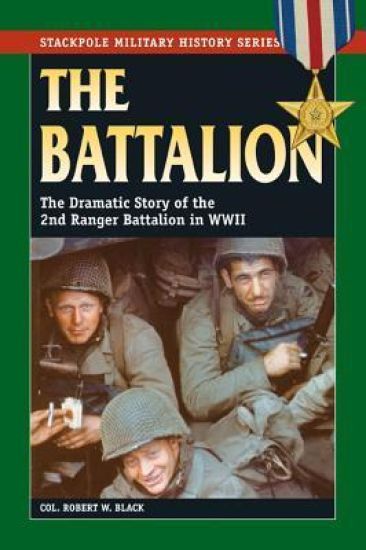
The Battalion

The Battalion

Colonel Robert W. Black

Stackpole Books
2013
nidottu
According to bestselling author Douglas Brinkley, Col. Robert W. Black “is the dean of Ranger history,” and Black proves it in this history of the U.S. 2nd Ranger Battalion in World War II. Based on original documents from Allied and German sources, after-action reports, and interviews with surviving veterans, The Battalion follows this elite unit of Rangers through eleven months of almost constant action: scaling the cliffs at Pointe du Hoc on D-Day (depicted in the movie Saving Private Ryan), battling through the hedgerows of Normandy, slogging through the Hürtgen Forest, fighting at the Battle of the Bulge, and racing to the Rhine and into Germany. Nearly a thousand men saw combat with the 2nd Rangers: 158 were killed, and 758 received Purple Hearts. From the four-man patrol that captured a German garrison of more than 800 men to the innovative combined-arms tactics that paired the Rangers with the charging metal steeds of a U.S. cavalry unit, the battalion trained, fought, and in many cases gave their lives while upholding the Ranger credo of“Rangers lead the way!”
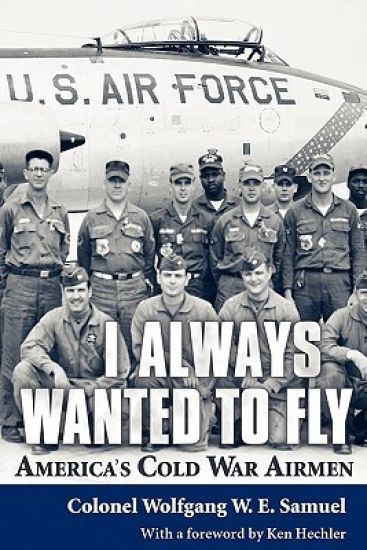
I Always Wanted to Fly

I Always Wanted to Fly

Colonel Wolfgang W.E. Samuel; Ken Hechler

University Press of Mississippi
2011
nidottu
This was the first book to cover all of Cold War air combat in the words of the men who waged it. In I Always Wanted to Fly, retired United States Air Force Colonel Wolfgang W. E. Samuel has gathered first-person memories from heroes of the cockpits and airstrips.Battling in dogfights when jets were novelties, saving lives in grueling airlifts, or flying covert and dangerous reconnaissance missions deep into Soviet and Chinese airspace, these flyers waged America's longest and most secretively conducted air war.Many of the pilots Samuel interviewed invoke the same sentiment when asked why they risked their lives in the air-""I always wanted to fly."" While young, they were inspired by barnstormers, by World War I fighter legends, by the legendary Charles Lindbergh, and often just by seeing airplanes flying overhead. With the advent of World War II, many of these dreamers found themselves in cockpits soon after high school. Of those who survived World War II, many chose to continue following their dream, flying the Berlin Airlift, stopping the North Korean army during the ""forgotten war"" in Korea, and fighting in the Vietnam War.Told in personal narratives and reminiscences, I Always Wanted to Fly renders views from pilots' seats and flight decks during every air combat flashpoint from 1945 to 1968. Drawn from long exposure to the immense stress of warfare, the stories these warriors share are both heroic and historic. The author, a veteran of many secret reconnaissance missions, evokes individuals and scenes with authority and grace. He provides clear, concise historical context for each airman's memories. In I Always Wanted to Fly, he has produced both a thrilling and inspirational acknowledgment of personal heroism and a valuable addition to our documentation of the Cold War.
The Indian Engineers, 1939-47

The Indian Engineers, 1939-47

Lieut-Colonel E W C Sandes

NAVAL MILITARY PRESS
2023
pokkari
A very thorough and readable history for the WW2 period: the work of the corps at home and overseas, and the impact of Partition. The maps, and detailed index, are exceptionally helpful.The Indian Engineers were a part of every division in the army. The Engineers corps started the war with two army troops companies, 11 field companies and one field park company. Expansion during the war took the totals of Engineers to five army troops companies, 67 field companies, six independent field squadrons, 20 field park companies and two independent field park squadrons.The Indian Army began the war, in 1939, numbering just under 200,000 men. By the end of the war it had become the largest volunteer army in history, rising to over 2.5 million men in August 1945. Serving in divisions of infantry, armour and a fledgling airborne force, they fought on three continents, in Africa, Europe and Asia. The Indian Army fought in Ethiopia against the Italian Army, in Egypt, Libya and Tunisia against both the Italian and German Army, and, after the Italian surrender, against the German Army in Italy. However, the bulk of the Indian Army was committed to fighting the Japanese Army, first during the British defeats in Malaya and the retreat from Burma to the Indian border; later, after resting and refitting for the victorious advance back into Burma, as part of the largest British Empire army ever formed.
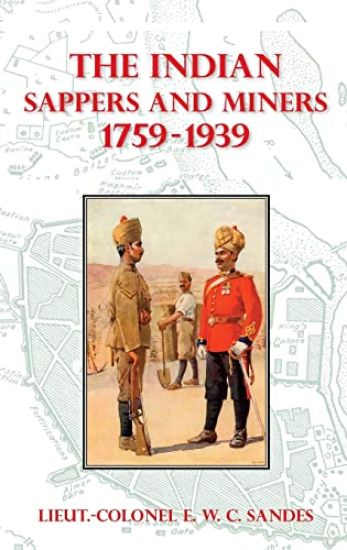
The Indian Sappers and Miners 1759-1939

The Indian Sappers and Miners 1759-1939

Lieut -Colonel E W C Sandes

NAVAL MILITARY PRESS
2023
sidottu
The great strength of this history by Sandes is that it highlights the particular ethos of the Sappers & Miners and explains their evolution and role. He covers the period 1759-1939 in uniform and meticulous detail, making numerous references to individual men and their services. The maps are exceptionally helpful.
The Indian Engineers, 1939-47

The Indian Engineers, 1939-47

Lieut-Colonel E W C Sandes

NAVAL MILITARY PRESS
2023
sidottu
A very thorough and readable history for the WW2 period: the work of the corps at home and overseas, and the impact of Partition. The maps, and detailed index, are exceptionally helpful.The Indian Engineers were a part of every division in the army. The Engineers corps started the war with two army troops companies, 11 field companies and one field park company. Expansion during the war took the totals of Engineers to five army troops companies, 67 field companies, six independent field squadrons, 20 field park companies and two independent field park squadrons.The Indian Army began the war, in 1939, numbering just under 200,000 men. By the end of the war it had become the largest volunteer army in history, rising to over 2.5 million men in August 1945. Serving in divisions of infantry, armour and a fledgling airborne force, they fought on three continents, in Africa, Europe and Asia. The Indian Army fought in Ethiopia against the Italian Army, in Egypt, Libya and Tunisia against both the Italian and German Army, and, after the Italian surrender, against the German Army in Italy. However, the bulk of the Indian Army was committed to fighting the Japanese Army, first during the British defeats in Malaya and the retreat from Burma to the Indian border; later, after resting and refitting for the victorious advance back into Burma, as part of the largest British Empire army ever formed.