Kirjahaku
Etsi kirjoja tekijän nimen, kirjan nimen tai ISBN:n perusteella.
1000 tulosta hakusanalla Connie Jordan

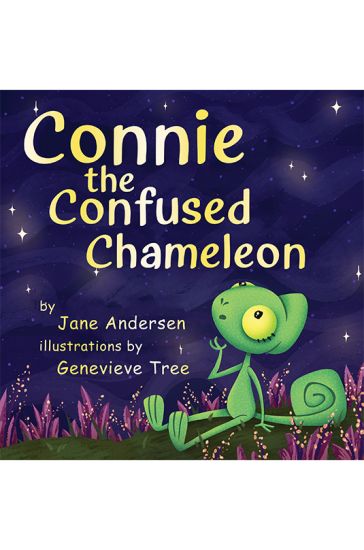
Connie's terrible fear of water is made worse by the fact that her twin baby brother and sister are taking to it like proverbial ducks! Everyone in the family tries to help Connie overcome her phobia, but when they start losing patience, there is a series of strange occurrences.
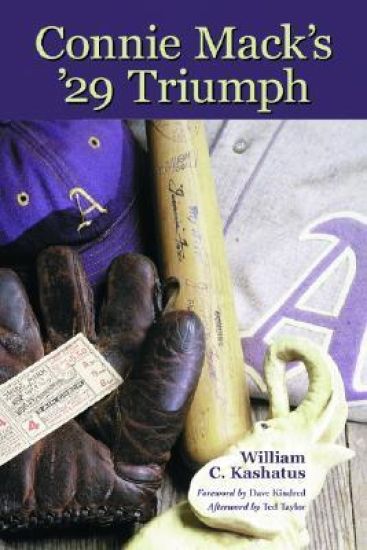
It has been said that Connie Mack managed only two kinds of teams during his half-century in the City of Brother Love--unbeatable and lousy. His teams collected nine pennants and five World Series titles, balanced by 17 last place finishes. While Mack, an enterprising businessman, had a gift for discovering talented players and molding them into a team, by the time he was well into his sixties, Philadelphians suspected that the A's skipper had lost his ability. Mack went on to disprove all doubts, however, with a second championship dynasty in 1929 that vindicated the "Tall Tactician." This work chronicles the rise and fall of the 1929 Philadelphia Athletics and their six-year rivalry with the New York Yankees, 1927 to 1932. Based primarily on newspaper accounts, the book tells the story of the "Grand Old Man of Baseball"--and the 1929 A's team that is unfairly overlooked in favor of the 1927 Yankees as baseball's greatest all-around team. This history is packed with photographs, notes and statistical appendices, and includes a foreword by The Sporting News writer Dave Kindred.

More than a century ago, the Philadelphia Athletics enjoyed a glorious five-season run under legendary manager Connie Mack, winning three World Series and four pennants from 1910 through 1914. A's stars such as Hall of Famers Eddie Plank, Eddie Collins, Albert "Chief" Bender and Frank "Home Run" Baker are well known among baseball aficionados--and this book reveals more about their lives and careers. Mack's pivotal role in founding the team and building it into a successful franchise--before he shocked the sports world by dismantling it--is covered, along with the advent of the all-but-forgotten Federal League.
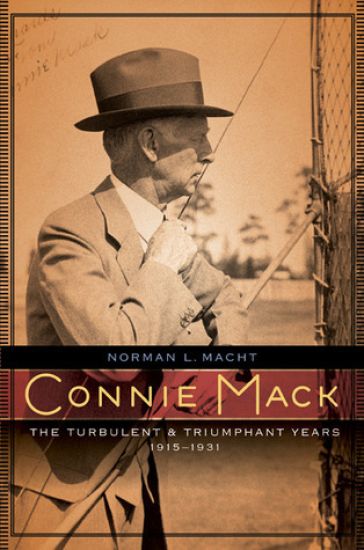
The Philadelphia Athletics dominated the first fourteen years of the American League, winning six pennants through 1914 under the leadership of their founder and manager, Connie Mack. But beginning in 1915, where volume 2 in Norman L. Macht's biography picks up the story, Mack's teams fell from pennant winners to last place and, in an unprecedented reversal of fortunes, stayed there for seven years. World War I robbed baseball of young players, and Mack's rebuilding efforts using green youngsters of limited ability made his teams the objects of public ridicule. At the age of fifty-nine and in the face of widespread skepticism and seemingly insurmountable odds, Connie Mack reasserted his genius, remade the A's, and rose again to the top, even surpassing his earlier success. Baseball biographer and historian Macht recreates what may be the most remarkable chapter in this larger-than-life story. He shows us the man and his time and the game of baseball in all its nitty-gritty glory of the 1920s, and how Connie Mack built the 1929–1931 champions of Foxx, Simmons, Cochrane, Grove, Earnshaw, Miller, Haas, Bishop, Dykes—a team many consider baseball's greatest ever.
Connie Mack and the Early Years of Baseball
Norman L. Macht; Connie Mack III
University of Nebraska Press
2007
sidottu
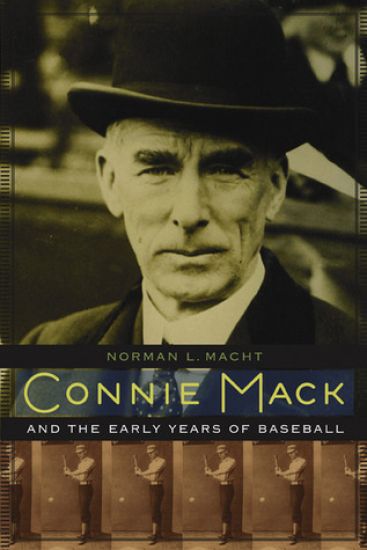
Connie Mack (1862–1956) was the Grand Old Man of baseball and one of the game's first true celebrities. This book, spanning the first fifty-two years of Mack's life, through 1914, covers his experiences as player, manager, and club owner and will stand as the definitive biography of baseball's most legendary and beloved figure. Norman L. Macht chronicles Mack's little-known beginnings. He tells how Mack, a school dropout at fourteen, created strategies for winning baseball and principles for managing men long before there were notions of defining such subjects. And he details how Mack, a key figure in the launching of the American League in 1901, won six of the league's first fourteen pennants while serving as manager, treasurer, general manager, traveling secretary, and public relations and scouting director (all at the same time) for the Philadelphia Athletics. This book brings to life the unruly origins of baseball as a sport and a business. It also provides the first complete and accurate picture of a character who was larger than life and yet little known: the tricky, rule-bending catcher; the peppery field leader and fan favorite; the hot-tempered young manager. Illustrated with family photographs never before published, it affords unique insight into a colorful personality who helped shape baseball as we know it today.

Connie Mack and the Early Years of Baseball
Norman L. Macht; Connie Mack III
University of Nebraska Press
2012
pokkari
Connie Mack (1862–1956) was the Grand Old Man of baseball and one of the game's first true celebrities. This book, spanning the first fifty-two years of Mack's life, through 1914, covers his experiences as player, manager, and club owner and will stand as the definitive biography of baseball's most legendary and beloved figure. Norman L. Macht chronicles Mack's little-known beginnings. He tells how Mack, a school dropout at fourteen, created strategies for winning baseball and principles for managing men long before there were notions of defining such subjects. And he details how Mack, a key figure in the launching of the American League in 1901, won six of the league's first fourteen pennants while serving as manager, treasurer, general manager, traveling secretary, and public relations and scouting director (all at the same time) for the Philadelphia Athletics. This book brings to life the unruly origins of baseball as a sport and a business. It also provides the first complete and accurate picture of a character who was larger than life and yet little known: the tricky, rule-bending catcher; the peppery field leader and fan favorite; the hot-tempered young manager. Illustrated with family photographs never before published, it affords unique insight into a colorful personality who helped shape baseball as we know it today.











Connie Willis’s Science Fiction
TAYLOR FRANCIS LTD
2022
sidottu
In spite of Connie Willis’s numerous science fiction awards and her groundbreaking history as a woman in the field, there is a surprising dearth of critical publication surrounding her work. Taking Doomsday Book as its cue, this collection argues that Connie Willis’s most famous novel, along with the rest of her oeuvre, performs science fiction’s task of cognitive estrangement by highlighting our human inability to read the times correctly—and yet also affirming the ethical imperative to attempt to truly observe and record our temporal location. Willis’s fiction emphasizes that doomsdays happen every day, and they risk being forgotten by some, even as their trauma repeats for others. However, disasters also have the potential to upend accepted knowledge and transform the social order for the better, and this collection considers the ways that Willis pairs comic and tragic modes to reflect these uncertainties.

Connie Willis’s Science Fiction
TAYLOR FRANCIS LTD
2024
nidottu
In spite of Connie Willis’s numerous science fiction awards and her groundbreaking history as a woman in the field, there is a surprising dearth of critical publication surrounding her work. Taking Doomsday Book as its cue, this collection argues that Connie Willis’s most famous novel, along with the rest of her oeuvre, performs science fiction’s task of cognitive estrangement by highlighting our human inability to read the times correctly—and yet also affirming the ethical imperative to attempt to truly observe and record our temporal location. Willis’s fiction emphasizes that doomsdays happen every day, and they risk being forgotten by some, even as their trauma repeats for others. However, disasters also have the potential to upend accepted knowledge and transform the social order for the better, and this collection considers the ways that Willis pairs comic and tragic modes to reflect these uncertainties.