
Kirjahaku
Etsi kirjoja tekijän nimen, kirjan nimen tai ISBN:n perusteella.
1000 tulosta hakusanalla Conrad Mbewe
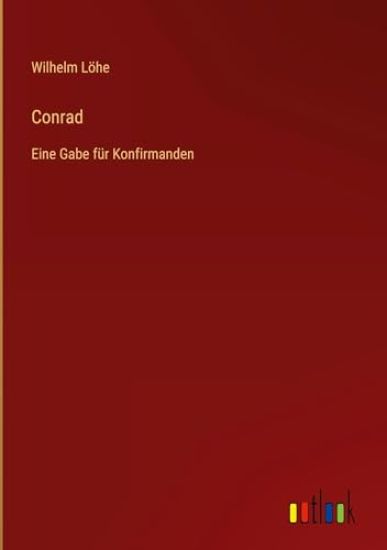
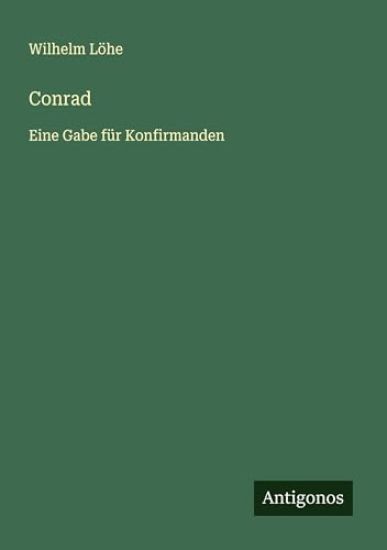
Unver nderter Nachdruck der Originalausgabe von 1880.

The riveting tale of how the wanabee aristo Conrad Black and his social-mountaineering wife Barbara gulled their way into the City, the Tory party, Wall Street and High Society. This new paperback edition will be fully updated to include details of Black’s high-profile trial for corporate fraud, sure to claim international attention. The rise and fall of the media tycoon Conrad Black is rivalled in its spectacular extravagance only by the machinations of his social-mountaineering wife, Barbara Amiel. Together their story of overweening ambition and greed is a modern-day classic of hubris. There is no bolder or better-informed chronicler of the follies of the rich and powerful than Tom Bower. Fearless in the approach which has brought him accolades for his gripping exposés of Robert Maxwell, Tiny Rowland, Mohammed Fayed and Richard Branson, Bower reveals how the Blacks financed a billionaire’s lifestyle and won friends and influence in London and New York. Born into considerable wealth in Canada, Conrad Black bought and sold (but never effectively managed) several businesses, from mining and tractors to broadcasting companies and newspapers. In 1985 he bought the Telegraph group in London, where very little was known of the controversy over his past financial dealings. In 1992 he married Barbara Amiel, who later famously said, ‘I have an extravagance that knows no bounds’. Besotted with his wife, he began living way beyond his means. Fabulous parties, jewellery, clothes, private jets and homes followed. In 2003 an independent report in America accused him of ‘outright fraud’, ‘ethical corruption’ and ‘corporate kleptocracy’ – allegations that he will vigorously deny at his trial in Chicago in 2007. This edition will be updated to include the full story of the trial in all its sensational detail. Tom Bower’s book, based on over 150 interviews with bankers, politicians, celebrities, power-brokers and close friends, is packed with intimate revelations. It is a hugely entertaining account of gullibility in high places.
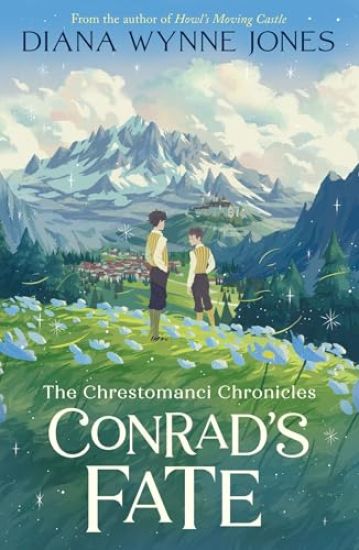
Glorious new rejacket of a Diana Wynne Jones Chrestomanci novel – now a book with extra bits! Conrad is young, good at heart, and yet is apparently suffering from the effects of such bad karma that there is nothing in his future but terrible things. Unless he can alter his circumstances – well, quite frankly, he is DOOMED. Conrad is sent in disguise to Stallery Mansion, to infiltrate the magical fortress that has power over the whole town of Stallchester, and to discover the identity of the person who is affecting his Fate so badly. Then he has to kill that person. But can any plan really be that simple and straightforward? Of course it can't! And things start to go very strangely for Conrad from the moment he meets the boy called Christopher… This is trademark DWJ – packed with laugh-aloud humour, insane logic, spot-on observations, organised chaos, and all wrapped up in a rattling good adventure which oozes magic from every seam. Literally.
From the multi-award-winning and critically acclaimed author of The Testament of Jessie Lamb comes this riveting novel about the devastating secrets revealed in the midst of a disintegrating marriage.The story of a marriage, and of two lives in science.When Conrad fails to return from a conference, Eleanor wonders if it is because of the affair she is having? Or perhaps it is because his research into transgenic monkey hearts is stalling; perhaps he is sick of having the less successful career of the two of them? She is a leading expert in stem cell research. Their grown-up children suspect Eleanor of murdering their father; El secretly fears that what has driven Con away is his discovery of their daughter Cara's parentage.While his family in Manchester, England, scrabble for clues and reasons, Conrad--alone, confused, and on the run from a crazed animal rights activist--loses himself in the cold foggy streets of Bologna. He revisits the stages of his long marriage to El, from the happiness of the year of Cara's birth to the grief and anger he now feels. Both partners are forced to re-examine their relationship, and, in the process, to move closer to an understanding of what it is that matters most to each of them.Conrad and Eleanor is a radical, remarkably nuanced look at marriage.
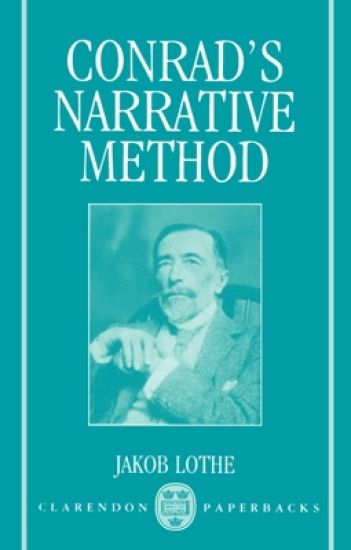
This important addition to Conrad studies, as well as to the study of narrative, is the first book-length attempt to apply recent developments in critical theory and practice to the whole canon of Conrad's works. Using a broadly structuralist approach, Dr Lothe analyses Conrad's sophisticated narrative method, focusing on his use of devices, functions, variations, and thematic effects or implications. More widely, he explores the relationship between Conrad's narrative method and the complex thematics engendered and shaped by this method. Discussing the notions of major post-structuralist critics such as Edward W. Said and J. Hillis Miller, he develops and applies a critical methodology which is flexible enough to respond to the varying interpretative problems presented by Conrad's fiction.

Supported by an enduring critical paradigm, the traditional account of Conrads career privileges his public image as man of the sea, addressing himself to a male audience and male concerns. This book challenges received assumptions by recovering Conrad's relationship to women not only in his life but in his fiction and among his readers. The existing interplay of criticism, biography, and marketing has contributed to a masculinist image associated with a narrow body of modernist texts. Instead, Susan Jones reinstates the female influences arising from his early Polish life and culture; his friendship with the French writer Marguerite Poradowska; his engagement with popular women's writing; and his experimentation with visuality as his later works appear in the visual contexts of womens pages of popular journals. By foregrounding less familiar novels such as Chance (1913) and the neglected Suspense (unfinished and published posthumously, 1925), she emphasises the range and continuity of Conrad's concerns, showing that his later discussions of gender and genre often originate in the period of the great sea tales. Conrad also emerges as an acute reader and critic of popular forms, while his unexpected entry into important contemporary debates about female identity invites us to rethink the nature of his contribution to modernism.

This book examines the philosophy of history and the subject of the nation in the literature of Joseph Conrad. It explores the importance of nineteenth-century Polish Romantic philosophy in Conrad's literary development, arguing that the Polish response to Hegelian traditions of historiography in nineteenth-century Europe influenced Conrad's interpretation of history. After investigating Conrad's early career in the context of the philosophy of history, the book analyses Nostromo (1904), The Secret Agent (1907), and Under Western Eyes (1911) in light of Conrad's writing about Poland and his sustained interest in the subject of national identity. Conrad juxtaposes his belief in an inherited Polish national identity, derived from Herder and Rousseau, with a sceptical questioning of modern nationalism in European and Latin American contexts. Nostromo presents the creation of the modern nation state of Sulaco; The Secret Agent explores the subject of 'foreigners' and nationality in England; while Under Western Eyes constitutes a systematic attempt to undermine Russian national identity. Conrad emerges as an author who examines critically the forces of nationalism and national identity that troubled Europe throughout the nineteenth century and in the period before the First World War. This leads to a consideration of Conrad's work during the Great War. In his fiction and newspaper articles during the war, Conrad found a way of dealing with a conflict that made him acutely aware of being sidelined at a turning point in both modern Polish and modern European history. Finally, this book re-evaluates Conrad's late novels The Rover (1923) and Suspense (1925), a long-neglected part of his career, investigating Conrad's sustained treatment of French history in his last years alongside his life-long fascination with the cult of Napoleon Bonaparte.

Conrad's Secrets explores a range of knowledges which would have been familiar to Conrad and his original readers. Drawing on research into trade, policing, sexual and financial scandals, changing theories of trauma and contemporary war-crimes, the book provides contexts for Conrad's fictions and produces original readings of his work.
This book traces the dialogic relation between Conrad's Eastern fiction and other histories, arguing that it is in the intersections of art and history that we locate Conrad's irony. In a direct response to the visual culture of his times, Conrad sets up his fictional world as a hallucinated mirage stressing the veracity of his own Eastern vision.


Conrad Richter: A Writer's Life is the story of an aspiring writer who failed and then, desperate for money, tried again and wrote himself out of penny-a-word pulp magazines and into a Pulitzer Prize and a National Book Award. Based upon unrestricted access to all of Richter's letters, journals, notebooks, and private papers, this biography offers an intimate account of Richter's personal struggle to achieve success in his own and in other people's terms. Johnson's biography will engage anyone interested in the art of biography and in a novelist's act of writing. Admirers of Richter's novels will also find much of interest in his life. So, too, will those who find value in the story of a man who, despite his sense of himself as an imperfect vessel for God's plan for human evolution, lived his life with as much grace, determination, and courage as he could.

Conrad Richter: A Writer's Life is the story of an aspiring writer who failed and then, desperate for money, tried again and wrote himself out of penny-a-word pulp magazines and into a Pulitzer Prize and a National Book Award. Based upon unrestricted access to all of Richter's letters, journals, notebooks, and private papers, this biography offers an intimate account of Richter's personal struggle to achieve success in his own and in other people's terms. Johnson's biography will engage anyone interested in the art of biography and in a novelist's act of writing. Admirers of Richter's novels will also find much of interest in his life. So, too, will those who find value in the story of a man who, despite his sense of himself as an imperfect vessel for God's plan for human evolution, lived his life with as much grace, determination, and courage as he could.

This timely study offers a radical re-reading of Conrad's work in the light of contemporary theories of masculinity. Drawing on gay studies, feminism, film theory and literary theory, Roberts shows how Conrad's fiction, even as it reflects certain assumptions of its day about the role of men in society, offers striking insights into the instability of the 'masculine'. The book explores the relationship of masculinity with colonialism, modernity, the visual and the body in a wide range of Conrad's major and lesser-known fiction.

Otto Bohlmann's fascinating study offers detailed and exhaustive evidence that the major philosophical aspects of Conrad's novels exhibit a powerful existential strain, foreshadowing many central concerns of twentieth-century modernism. Through both wide and close reading, Dr Bohlmann illuminates more thoroughly than any previous scholar the remarkable extent to which Conrad's fiction is replete with ideas, attitudes and even phrases reminiscent of Kierkegaard, Nietzsche, Jaspers, Marcel, Heidegger, Sartre and Camus.

This timely study offers a radical re-reading of Conrad's work in the light of contemporary theories of masculinity. Drawing on gay studies, feminism, film theory and literary theory, Roberts shows how Conrad's fiction, even as it reflects certain assumptions of its day about the role of men in society, offers striking insights into the instability of the 'masculine'. The book explores the relationship of masculinity with colonialism, modernity, the visual and the body in a wide range of Conrad's major and lesser-known fiction.