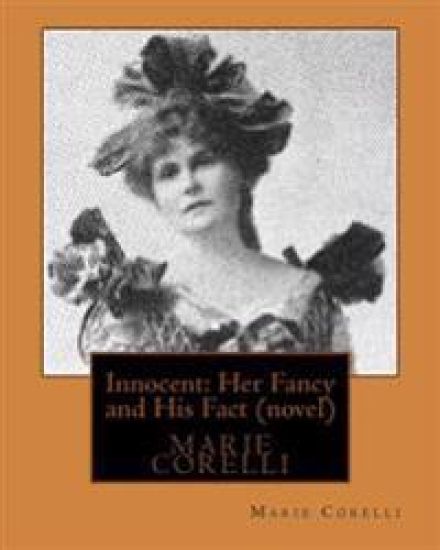
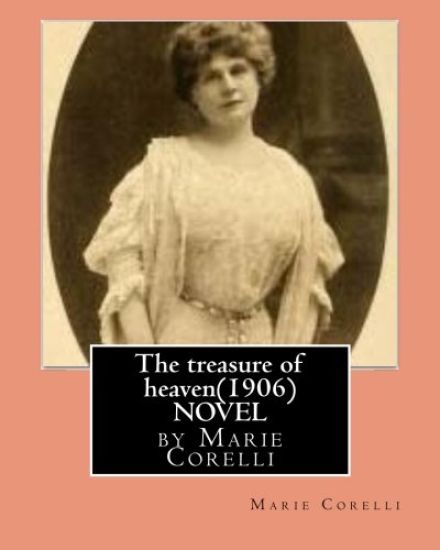
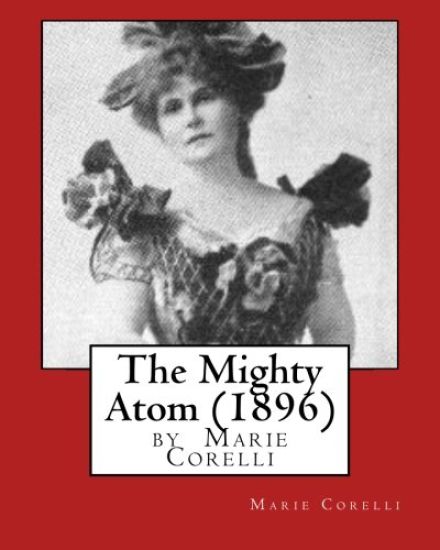
Marie Corelli was a British writer during the Victorian era. Corelli was the most popular writer of fiction during her time. This edition of Temporal Power: A Study in Supremacy (original text) Marie Corelli ( 1 May 1855 - 21 April 1924) was a British novelist. She enjoyed a period of great literary success from the publication of her first novel in 1886 until World War I. Corelli's novels sold more copies than the combined sales of popular contemporaries, including Arthur Conan Doyle, H. G. Wells, and Rudyard Kipling, although critics often derided her work as "the favourite of the common multitude."Mary Mackay was born in London to Elizabeth Mills, a servant of the Scottish poet and songwriter Dr. Charles Mackay, her biological father. 3] In 1866, eleven-year-old Mary was sent to a Parisian convent to further her education. She returned to Britain four years later in 1870. Mackay began her career as a musician, adopting the name Marie Corelli for her billing. Eventually she turned to writing and published her first novel, A Romance of Two Worlds, in 1886. In her time, she was the most widely read author of fiction. Her works were collected by Winston Churchill, Randolph Churchill, and members of the British Royal Family, among others. Mackay faced criticism from the literary elite for her overly melodramatic writing. In The Spectator, Grant Allen called her "a woman of deplorable talent who imagined that she was a genius, and was accepted as a genius by a public to whose commonplace sentimentalities and prejudices she gave a glamorous setting." James Agate represented her as combining "the imagination of a Poe with the style of an Ouida and the mentality of a nursemaid." A recurring theme in Corelli's books is her attempt to reconcile Christianity with reincarnation, astral projection, and other mystical ideas. Her books were a part of the foundation of today's New Age religion. Her portrait was painted by Helen Donald-Smith. Corelli famously had little time for the press. In 1902 she wrote to the editor of The Gentlewoman to complain that her name had been left out of a list of the guests in the Royal Enclosure at the Braemar Highland Gathering, saying she suspected this had been done intentionally. The editor replied that her name had indeed been left out intentionally, because of her own stated contempt for the press and for the snobbery of those wishing to appear in "news puffs" of society events. Both letters were published in full in the next issue. Corelli spent her final years in Stratford-upon-Avon. There, she fought hard for the preservation of Stratford's 17th-century buildings, and donated money to help their owners remove the plaster or brickwork that often covered their original timber framed facades. Novelist Barbara Comyns Carr mentions Corelli's guest appearance at an exhibition of Anglo-Saxon items found at Bidford-on-Avon in 1923. Corelli's eccentricity became well-known. She would boat on the Avon in a gondola, complete with a gondolier that she had brought over from Venice. In his autobiography, Mark Twain, who had a deep dislike of Corelli, describes visiting her in Stratford and how the meeting changed his perception. She died in Stratford and is buried there in the Evesham Road cemetery. Her house, Mason Croft, still stands on Church Street and is now the home of the Shakespeare Institute. For over forty years, Corelli lived with her companion, Bertha Vyver; when she died she left everything to her friend. Although she didn't self-identify as a lesbian, biographers and critics have noted the erotic descriptions of female beauty that appear regularly in Corelli's novels, while admitting they are expressed by men. Descriptions of the deep love between the two women by their contemporaries have added to the speculation that their relationship may have been romantic. Following Corelli's death, Sidney Walton reminisced in the Yorkshire Evening News:
A Romance of Two Worlds starts with a young heroine, in first person, telling her story of a debilitating illness that includes depression and thoughts of suicide. Her doctor is unable to help her and sends her off on a holiday where she meets a mystical character by the name of Raffello Cellini, a famous Italian artist. Cellini offers her a strange potion which immediately puts her into a tranquil slumber, in which she experiences divine visions. Upon wakening, she craves more. Later, she meets her unnamed guardian angel, who whisks her through infinite solar systems faster than a shooting star while human spirits fly by like gossamer silk. He shares the truth of religion and the secret of human destiny, but still she longs for more. She comes to understand God as pure light and pure love, but it's not enough that she should see and hear these things from the touch of an angel. She wants to master this ability on her own and seeks a oneness with God through a series of meditative disciplines while locked away in a monastery. Reception--The novel was rejected for publication by Hall Caine-an act that began a lifelong feud between Caine and Corelli. After hearing of Caine's harsh criticism, George Bentley suspected that the novel might have commercial appeal and published Corelli's first novel. Marie Corelli did not expect A Romance of Two Worlds to be so well received. She claims, in the introduction to the second printing in 1887, that, "It was not only read, but loved." Her scripture, "The Electric Principle of Christianity," included in the novel, is presented as something factual and after the publication of the book, generated a cult following, in which readers sought more information about her experience. Today, New Age devotees hail Corelli as "inspired". Many believe that the book is autobiographical, something Corelli encouraged during her lifetime.In several chapters Corelli hints that Heliobas may be the Count of St. Germain, although Rosicrucian authors identify him as an Illuminati hierophant, Count A. di Guinotti Heliobas appears in two other Corelli novels, Ardath and The Soul of Lilith. Themes--In A Romance of Two Worlds, Marie Corelli takes on an old argument between the creationists and the evolutionists. However, her insights are futuristic, including ideas about electricity, solar power, and the properties of the atom. She explains in the introduction, "in this cultivated age a wall of skepticism and cynicism is gradually being built up by intellectual thinkers of every nation against all the treats of the Supernatural and Unseen, I am aware that my narration of the events I have recently experienced will be read with incredulity. At a time when the great empire of the Christian Religion is being assailed, or politely ignored by governments and public speakers and teachers, I realize to the fullest extent how daring is any attempt to prove, even by a plain history of strange occurrences happening to one's self, the actual existence of the Supernatural around us; and the absolute certainty of a future state of being, after the passage through that brief soul-topor in which the body perishes, known to us as Death."The book is suffused with Pantheism. She also argues that Christ did not come to us as a sacrifice because God is a creator of love and beauty and could not desire "a bleeding victim as sacrifice to appease His Anger...
"Ardath": the story of a dead self--Popular Victorian-era writer Marie Corelli does it again in this epic romance imbued with supernatural and gothic themes. ... Marie Corelli (1 May 1855 - 21 April 1924) was a British novelist. She enjoyed a period of great literary success from the publication of her first novel in 1886 until World War I. Corelli's novels sold more copies than the combined sales of popular contemporaries, including Arthur Conan Doyle, H. G. Wells, and Rudyard Kipling, although critics often derided her work as "the favourite of the common multitude."Mary Mackay was born in London to Elizabeth Mills, a servant of the Scottish poet and songwriter Dr. Charles Mackay, her biological father.In 1866, eleven-year-old Mary was sent to a Parisian convent to further her education. She returned to Britain four years later in 1870. Mackay began her career as a musician, adopting the name Marie Corelli for her billing. Eventually she turned to writing and published her first novel, A Romance of Two Worlds, in 1886. In her time, she was the most widely read author of fiction. Her works were collected by Winston Churchill, Randolph Churchill, and members of the British Royal Family, among othersMackay faced criticism from the literary elite for her overly melodramatic writing. In The Spectator, Grant Allen called her "a woman of deplorable talent who imagined that she was a genius, and was accepted as a genius by a public to whose commonplace sentimentalities and prejudices she gave a glamorous setting."James Agate represented her as combining "the imagination of a Poe with the style of an Ouida and the mentality of a nursemaid."A recurring theme in Corelli's books is her attempt to reconcile Christianity with reincarnation, astral projection, and other mystical ideas. Her books were a part of the foundation of today's New Age religion. Her portrait was painted by Helen Donald-Smith.Corelli is generally accepted to have been the inspiration for at least two of E. F. Benson's characters in his Lucia series of six novels and a short story. The main character, Emmeline "Lucia" Lucas, is a vain and snobbish woman of the upper middle class with an obsessive desire to be the leading light of her community, to associate with the nobility, to see her name reported in the social columns, and a comical pretension to education and musical talent, neither of which she possesses. She also pretends to be able to speak Italian, something Corelli was known to have done. The character of Miss Susan Leg is an author of highly successful but pulpish romance novels who writes under the name of Rudolph da Vinci and first appears in Benson's work a few years after Marie Corelli's death in 1924....
The Sorrows of Satan is an 1895 Faustian novel by Marie Corelli. It is widely regarded as one of the world's first bestsellers - partly due to an upheaval in the system British libraries used to purchase their books, and partly due to its popular appeal. Roundly condemned by contemporary literary critics for Corelli's moralistic and prosaic style, 1] it nonetheless had strong supporters, including Oscar Wilde and various members of royalty. Widely ignored in literary circles, it is increasingly regarded as an influential fin de si cle text. The book is occasionally subtitled "Or the Strange Experience of One Geoffrey Tempest, Millionaire".On the surface the plot follows the story of a penniless, starving author called Geoffrey Tempest. So poor that he is behind on his rent and can barely afford light in his room, he receives three letters. The first is from a friend in Australia who has made his fortune and offers to introduce him to a good friend who might be able to lift him from poverty. The second is a note from a solicitor detailing that he has inherited a fortune from a deceased relative. The third is a letter of introduction from a foreign aristocrat called Lucio, who befriends him and proceeds to be his guide in how to best use his newfound wealth. Tempest remains blissfully unaware throughout the novel, despite warnings from people he meets, that Lucio is the earthly incarnation of the Devil. Over the course of the book, his wealth leads to misery. Eventually, when confronted with the true nature of his companion, he renounces evil and returns to society penniless but content with the chance to purify his soul.
The Sorrows of Satan is an 1895 faustian novel by Marie Corelli. It is widely regarded as one of the world's first bestsellers, partly due to an upheaval in the system British libraries used to purchase their books and partly due to its popular appeal. Roundly condemned by critics for Corelli's moralistic and prosaic style it nonetheless had strong supporters in Oscar Wilde and various members of royalty. Widely ignored in literary circles, it is increasingly regarded as an influential fin de si cle text. The book is occasionally subtitled "Or the Strange Experience of one Geoffrey Tempest, Millionaire".