Kirjahaku
Etsi kirjoja tekijän nimen, kirjan nimen tai ISBN:n perusteella.
1000 tulosta hakusanalla Craig H. Bennett
Music in the California missions was a pluralistic combination of voices and instruments, of liturgy and spectacle, of styles and functions - and even of cultures - in a new blend that was non-existent before the Franciscan friars made their way to California beginning in 1769. From Serra to Sancho explores the exquisite sacred music that flourished on the West Coast of the United States when it was under Spanish and Mexican rule, delving into the historical, cultural, biographical, and stylistic aspects of California mission music during the late eighteenth and early nineteenth centuries. Author Craig H. Russell examines how mellifluous plainchant, reverent hymns, spunky folkloric ditties, "classical" music in the style of Haydn, and even Native American drumming were interwoven into a tapestry of resonant beauty. In addition to extensive musical and cultural analysis, Russell draws upon hundreds of primary documents in California, Mexico, Madrid, Barcelona, London, and Mallorca. It is through the melding together of this information from geographically separated places that he brings the mystery of California's mission music into sharper focus. Russell's groundbreaking study sheds new light on the cultural exchange that took place in the colonial United States, as well as on the pervasive worldwide influence of Iberian music as a whole.

Water Balance Covers for Waste Containment
William H. Albright; Craig H. Benson; W. Joseph Waugh
Amer Society of Civil Engineers
2010
pokkari
Introduction to Applied Geophysics
H. Robert Burger; Anne F. Sheehan; Craig H. Jones
Cambridge University Press
2023
pokkari
Introduction to Applied Geophysics covers the fundamental methods of exploration geophysics in a depth and style both challenging and appropriate to undergraduates. Because of the increasing opportunities for students to conduct field experiments, the authors focus on methods, examples, illustrations, applications, and problem sets that emphasize shallow exploration of the Earth's surface. The textbook includes chapters on refraction seismology, electrical resistivity methods, gravity, magnetic surveying, and electromagnetic methods, including ground conductivity measurements and ground-penetrating radar. Geologic, engineering, and environmental applications are emphasized throughout. For each geophysical method, the theory and its application in exploring a given target in introduced. Each chapter includes a brief discussion of the applicable instruments, field operations, data collection and reduction, and limitations on interpretation. The textbook is supported by an extensive package of software. This edition from Cambridge University Press is a re-issue of the W.W. Norton edition, first published in 2006.
Cogito, ergo sum. ('I think, therefore I am.') When Descartes quipped this, he erroneously split thinking from feeling. He assumed thoughts emerge from a substance other than feeling. This is a historic tragedy, and it is unnecessary. It brings us to a risky end-game. When we attempt to meld preconceived thought with evoked feelings, we come to the craft of 'spin doctors.' Instead, there is a natural path for connecting thinking and feeling. It involves emotional reflection at the time that understandings are created.This book draws attention to a form of dialogue which is called design dialogue. Design dialogue constructs new meaning from the bottom up. Individuals construct new meanings through individual thinking. In design dialogue, meaning results from group thinking. Group thinking is not as simple as thinking individually while being present within a group. The design process results in a series of co-constructed learning artifacts which, ultimately, constitute a new understanding. The process is concurrently emotional and cognitive, and melding emotion and cognition is achievable with effective design dialogue methods.The first chapter introduces emotion as the catalyst for considering questions, persisting in reflection, and concluding a cycle of thought. This chapter fills in gaps with the treatment of emotion and cognition. The second chapter lays out the sequence of observation-taking, sensemaking, meaning-making, and perspective-taking that are essential steps in thinking. Frameworks for thinking in educational traditions focus not so much on the neurological mechanics of the thought process but rather on the overall internalization of a 'way' of understanding things. A third chapter presents a methodology for managing a design dialogue. Group facilitators generally invent and modify their own approaches for leading design projects. This chapter presents a codified approach that offers an advantage of supporting continuous improvement of complex design management methodology. And the final chapter considers the emergence of a sapient group-mind through the agency of design dialogue. This conjectured group-mind is considered in the context of the civic infrastructure that is needed to sustain the continual growth of the human superorganism structure.As humanity has moved from tribes, to cities, to institutions, and now to globally connected networks, each leap forward has been accompanied by profound changes in social practices and belief systems. Recent findings from the field of cognitive science have confirmed a suspicion that we have long held about each other. Individual thinking is biased and flawed. Inclusive and democratically managed discussion, deliberation and design all help to identify and dampen flawed understandings. The individual mind, an essential ingredient in the human spirit, is now, as a matter of practical necessity, bending to the wisdom of a well-informed group mind. The speed and strength of newly emerging social forces and evolving civic trends point to the conclusion that we are on the threshold for a new way of being. This book seeks to evoke reflection on how we can start communicating in a way that prepares us for life in that new future.
Clinical Neuroscience: Psychopathology and the Brain
Kelly G. Lambert; Craig H. Kinsley
Oxford University Press
2010
sidottu
Clinical Neuroscience informs students of relevant neurobiological foundations of various mental illnesses. In this book, students will begin their journey with a tour of the brain's fundamental building blocks (neuroanatomy, neurochemistry, neurophysiology, neurodevelopment) before moving to mental health challenges and illnesses (Traumatic brain injury, Parkinson's Disease, Addiction, Schizophrenia, Obsessive-Compulsive Disorder, Depression). The final section of the book includes chapters addressing topics thought to be important for building resilience against the emergence of mental illness; these chapters cover the topics of adaptive coping strategies, hunger regulation, and the nexus between mental and immune functions. Throughout the text, the value of empirical evidence is emphasized so that meaningful progress can be made toward the identification of the most effective treatment strategies. By understanding multiple neurobiological perspectives such as neuroanatomical, behavioral, evolutionary, and neurochemical approaches currently existing in the field, students will be better prepared to conceptualize the relevant components of these mental health puzzles. Features such as opening chapter vignettes (Connections), case studies (A Case in Point) and feature boxes (Brain Matters) illuminate the course content for students as they learn about the value of translational research. Instructor's Manual/Test Bank (9780199737079) to help instructors prepare for their lectures and homework assignments, with learning objectives, class activities and demonstrations, exercises, additional readings, and more. The test bank includes more than 800 questions organized topically and graded according to difficulty, with source information provided to link questions back to their respective sections in the text. Companion Website to further assist the instructor, providing PowerPoint versions of the most informative images and tables in the text
A new framework for understanding computing: a coherent set of principles spanning technologies, domains, algorithms, architectures, and designs.Computing is usually viewed as a technology field that advances at the breakneck speed of Moore's Law. If we turn away even for a moment, we might miss a game-changing technological breakthrough or an earthshaking theoretical development. This book takes a different perspective, presenting computing as a science governed by fundamental principles that span all technologies. Computer science is a science of information processes. We need a new language to describe the science, and in this book Peter Denning and Craig Martell offer the great principles framework as just such a language. This is a book about the whole of computing-its algorithms, architectures, and designs.Denning and Martell divide the great principles of computing into six categories: communication, computation, coordination, recollection, evaluation, and design. They begin with an introduction to computing, its history, its many interactions with other fields, its domains of practice, and the structure of the great principles framework. They go on to examine the great principles in different areas: information, machines, programming, computation, memory, parallelism, queueing, and design. Finally, they apply the great principles to networking, the Internet in particular.Great Principles of Computing will be essential reading for professionals in science and engineering fields with a "computational" branch, for practitioners in computing who want overviews of less familiar areas of computer science, and for non-computer science majors who want an accessible entry way to the field.
Speech Coding
Thomas P. Barnwell; Kambiz Nayebi; Craig H. Richardson
John Wiley Sons Inc
1996
nidottu
Puts a wealth of speech analysis tools at your fingertips and allows the reader to gain good intuitive sense of how modern speech coders work. Covers all the basic approaches found in speech coding and describes the algorithms in both simple parametric terms and complete equation form. The book is packed with exercises and projects for hands-on experimentation with algorithms. Plus, the accompanying user-friendly, graphical interface software helps to develop a practical, intuitive sense of how modern speech coders work.
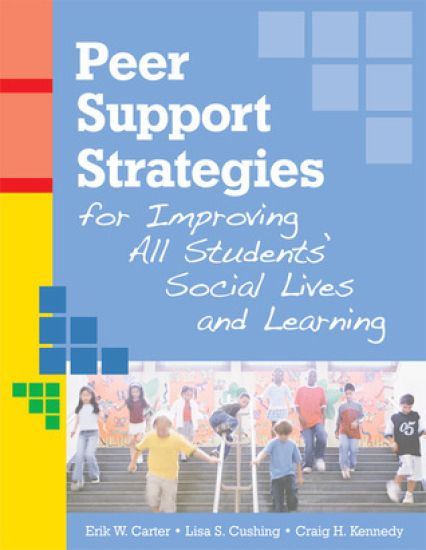
Peer Support Strategies
Erik W. Carter; Lisa S. Cushing; Craig H. Kennedy
Brookes Publishing Co
2008
nidottu
Peer supports really work: they're a great, efficient way to help all students learn, make the most of teacher/ paraprofessional time, and increase the achievement level of challenging students. This is the concise, practical guide every middle and high school needs to implement peer support strategies - including cooperative learning and peer tutoring - to benefit students with moderate to severe disabilities and their peers. With this reader-friendly, step-by-step planning guide from the foremost authorities on peer supports, educators, paraprofessionals, and other school staff will: discover how peer supports are a 'two-way street', boosting the academic outcomes, social skills, and self-esteem of students with disabilities and the peers who support them; determine which students might benefit most from peer supports; and, recruit and match the students most likely to form mutually beneficial relationships.
Robert Craig and Robert Worley have written this practical book as an aid to revitalizing church organizations, especially ones that perceive themselves as victims of outside forces. It is an excellent resource that offers guidance to congregations evaluating their current position and planning for renewal.
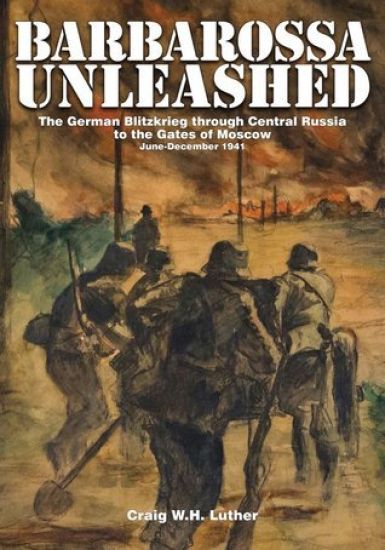
This book examines in unprecedented detail the advance of Germany's Army Group Center through central Russia, toward Moscow, in the summer of 1941, followed by brief accounts of the Battle of Moscow and subsequent winter battles into early 1942. Based on hundreds of veterans’ accounts, archival documents, and exhaustive study of the pertinent primary and secondary literature, the book offers new insights into Operation Barbarossa, Adolf Hitler’s attack on Soviet Russia in June 1941. While the book meticulously explores the experiences of the German soldier in Russia, in the cauldron battles along the Minsk-Smolensk-Moscow axis, it places their experiences squarely within the strategic and operational context of the Barbarossa campaign. Controversial subjects, such as the culpability of the German eastern armies in war crimes against the Russian people, are also examined in detail. This book is the most detailed account to date of virtually all aspects of the German soldiers’ experiences in Russia in 1941.
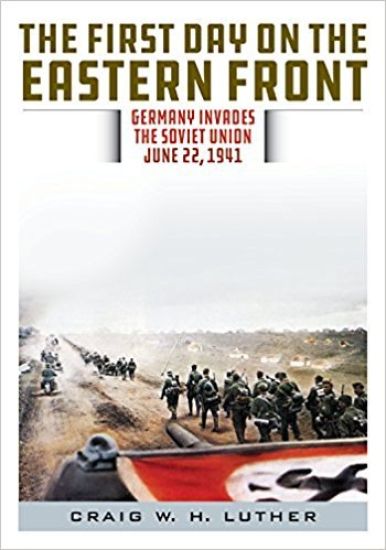
Sunday, June 22, 1941: three million German soldiers invaded the Soviet Union as part of Hitler’s long-planned Operation Barbarossa, which aimed to destroy the Soviet Union, secure its land as lebensraum for the Third Reich, and enslave its Slavic population. From launching points in newly acquired Poland, in three prongs—North, Central, South—German forces stormed western Russia, virtually from the Baltic to the Black Sea. By late fall, the invasion had foundered against Russian weather, terrain, and resistance, and by December, it had failed at the gates of Moscow, but early on, as the Germans sliced through Russian territory and soldiers with impunity, capturing hundreds of thousands, it seemed as though Russia would fall. In the spirit of Martin Middlebrook’s classic First Day on the Somme, Craig Luther narrates the events of June 22, 1941, a day when German military might was at its peak and seemed as though it would easily conquer the Soviet Union, a day the common soldiers would remember for its tension and the frogs bellowing in the Polish marshlands. It was a day when the German blitzkrieg decimated Soviet command and control within hours and seemed like nothing would stop it from taking Moscow. Luther narrates June 22—one of the pivotal days of World War II—from high command down to the tanks and soldiers at the sharp end, covering strategy as well as tactics and the vivid personal stories of the men who crossed the border into the Soviet Union that fateful day, which is the Eastern Front in microcosm, representing the years of industrial-scale warfare that followed and the unremitting hostility of Germans and Soviets.
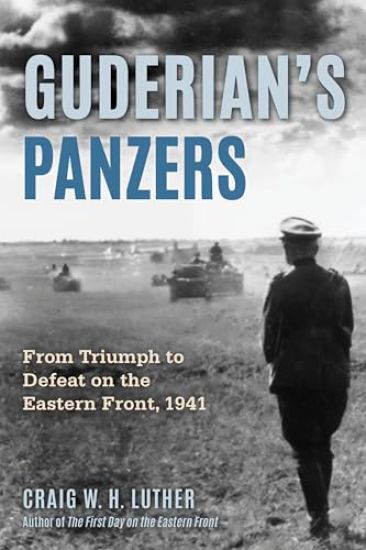
On June 22, 1941, Nazi Germany launched Operation Barbarossa, the surprise invasion of the Soviet Union that opened the Eastern Front in World War II. With lightning speed and devastating success, the German army tore through Soviet territory and rolled over the Red Army, scoring some of the most dramatic victories in military history--until the blitzkrieg bogged down during the approach on Moscow. At the spearhead of the attack was General Heinz Guderian, one of the most celebrated and controversial commanders of the war, who commanded a tank group in the center of the German front that stretched from the Baltic to the Black Sea.Guderian's Panzers reconstructs Barbarossa from the perspective of Guderian and his 2nd Panzer Group. The initial phases witnessed the German war machine at the height of its battlefield prowess. Guderian's group of 250,000 men and 1,000 tanks broke through the Soviet frontier and scarcely let up in the weeks that followed as Guderian pushed his men to the limits of endurance and plunged hundreds of miles into the Soviet Union. By early July 1941, Guderian helped seal the Minsk pocket, inflicting more than 400,000 casualties. At Smolensk, Guderian's panzer group joined the German onslaught that destroyed three Soviet armies and killed, wounded, or captured 750,000 men. In September, they participated in the Battle of Kiev, the largest battle of encirclement in history and perhaps Germany's greatest victory of World War II.But the tide was already beginning to turn. The Germans were battered, exhausted, and stretched thin. The weather was shifting, first to rain and mud, then to snow and bitter cold. And the Red Army was rebounding and resisting more and more tenaciously as the Germans approached Moscow, locking Guderian and his panzers into a war of attrition for which they were not prepared. In early December, the Soviets broke the back of the supposedly invincible German Army and won the battle for Moscow. Guderian was relieved on Christmas Day, 1941.Military historian Craig Luther draws on new material, from letters to diaries, to tell the story of Guderian's armored force during Operation Barbarossa and fleshes out the story with vivid firsthand accounts from the soldiers who slugged it out with the Red Army on the Eastern Front. The book traces the ups and downs of Guderian and his panzer group during six pivotal months of World War II and explains why and how the Germans, especially its panzers, achieved such impressive successes, only to be defeated on Moscow's doorstep.
This work has been selected by scholars as being culturally important, and is part of the knowledge base of civilization as we know it. This work was reproduced from the original artifact, and remains as true to the original work as possible. Therefore, you will see the original copyright references, library stamps (as most of these works have been housed in our most important libraries around the world), and other notations in the work.This work is in the public domain in the United States of America, and possibly other nations. Within the United States, you may freely copy and distribute this work, as no entity (individual or corporate) has a copyright on the body of the work.As a reproduction of a historical artifact, this work may contain missing or blurred pages, poor pictures, errant marks, etc. Scholars believe, and we concur, that this work is important enough to be preserved, reproduced, and made generally available to the public. We appreciate your support of the preservation process, and thank you for being an important part of keeping this knowledge alive and relevant.
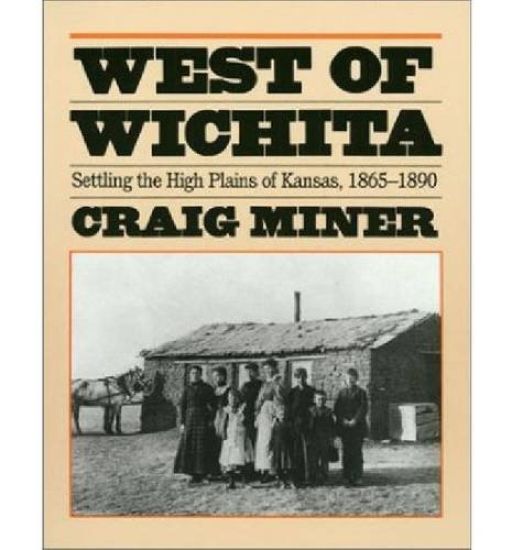
This volume, which presents a slice-of-life on the Plains during its early settlement, adds rich detail to our understanding of the struggle for survival in a harsh landscape that tested the hardiest pioneer. Miner concentrates not only on the major economic events of the period--railroad building, Indian raids, the grasshopper invasion of 1874, the blizzard of 1886--but also on the more personal experiences equally important: building sod houses, choosing crops, filing of claims, fighting varmints, and dealing with the deaths of children on the prairie.
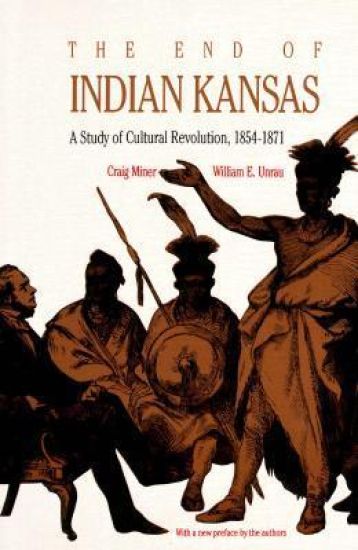
When Kansas became a U.S. territory in 1854 literally all of its land area was guaranteed by treaty to Indians. More than 10,000 Kickapoos, Delawares, Sacs, Foxes, Shawnees, Potawatomis, Kansas, Ottawas, Wyandots, and Osages, not to mention a number of smaller tribes, inhabited Kansas. By 1875 there were only a couple of bands left. The forced removal of thousands of Indians from eastern Kansas between 1854 and 1871 affected more Indians and occupied more government time than the celebrated exploits of the military against the more warlike western tribes. In this volume Miner and Unrau show Kansas at mid-century to be a moral testing ground where the drama of Indian disinheritance was played out. They relate how railroad men, land speculators, and timber operations came to be firmly entrenched on Indian land in territorial Kansas. They examine remarkable incongruities in Indian policy, land policy, law, and administration, pointing to specific cases in which legal maneuvers by the federal government--within the framework of treaties, statutes, and executive pronouncements--helped to insure the pattern of tribal destruction. Separate chapters deal with internal factionalism in the Indian tribes, the practice of government chief-making, and the Indian Ring--the sub rosa alliances influencing the treaty or sale process. The authors also include revealing portraits of the individuals, from territorial governors to railroad officials, who helped engineer the end of Indian Kansas. The reader's perception of those brave, hard-working sod-house settlers may never be the same after reading this book.--American West.
West of Highway 81, there lies another Kansas. While it accounts for two-thirds of the state's land area, it is sparsely populated and nearly desert dry. Before 1940, it was still distinctly rural - a place that some residents called the ""Edge of the World."" Several generations of the Miner family have lived and farmed in Ness County, providing Craig Miner with a rich and very personal backdrop for this heartfelt and compelling portrait of western Kansas. In ""Next Year Country"", he recounts the resilience of his fellow Kansans through two depressions and the Dust Bowl, showing how the region changed dramatically over fifty years - not for the better, some might say. In this striking regional history, Miner blends the voices of real people with writings of small-town journalists to show life as it was really lived from 1890 to 1940. He has fashioned a richly textured look at determined individuals as they confronted the vagaries of raw Nature and learned to adapt to the machine age. And he captures the drama and vitality of rural and small-town life at a time when children could die in a blizzard on their way home from school, in a place where gaping holes of cellars and wells from abandoned homesteads posed real hazards to nighttime travelers. No mere nostalgic reverie, Miner's book chronicles the hard challenges to these Kansans' ambitious efforts to create a regional economy and society based on wheat in an area once thought only marginally suitable for cereal crops. His diverse topics include the history of agricultural experiment stations, new approaches to irrigation, and the impact of the tractor and the combine; the role of women's clubs in developing culture, the growth of higher education, and the rise of the secession movement; and how people responded to pests, from prairie dogs to grasshoppers, and to radical groups, from the IWW to the KKK. ""Next Year Country"" depicts the kind of rugged individualism that is often touted in America but seldom seen anymore, a testament to how people dealt with both Nature and transformative change. It is both a love song to Kansas and the best kind of regional history, showing that life has to be taken on its own terms to understand how people really lived.