The third edition of Democratic Latin America retains its classic institutional approach to understand contemporary Latin American politics. Each chapter focuses on a different institution and compares how they are constructed differently across countries. Placing a premium on accessibility, the chapters open with a story and end with a detailed country case study, making use of contemporary examples to feed student interest in current events, with comparison-based tables and box features interspersed throughout to stimulate analysis. Every chapter finishes with a set of questions and recommended readings. This approach allows for a very practical approach to politics that encourages critical analysis.Updates to this new edition include:updated comparison-based tables and box features to stimulate analysis; new "Country in the Spotlight" to include developments unique to each country; and discussions on political change in Cuba, indigenous peoples and political power, neopopulism, impeachment procedures, transitional justice, the 2019 protests, the new militarism, the mobilization of women against violence, LGBT rights, the evangelical movement, and the Colombian peace process.A clear-eyed look at political institutions to provide a roadmap to the political activity in a country, Democratic Latin America continues to offer an original way of teaching and learning about Latin American politics.
American legal scholars have debated for some time the need for a cultural defense in criminal proceedings where minority cultural information seems perti nent to a finding of criminal responsibility in situations where a minority cultural defendant has violated a valid criminal statute. This work presents a systematic analysis of this issue. Drawing from sociological, anthropological, and philosophical materials, as well as traditional legal discussions, the authors develop a scheme that indicates when cultural factors can be used as the basis for such a defense and when they are irrelevant to a finding of criminal responsibility. The argument moves from general concerns of social justice that apply under conditions of social and cultural pluralism to practical policy recommendations for the operation of American criminal justice. It thus connects more theoretical materials with the practical concerns of jurisprudence. The justification for legal recognition of a cultural defense in American criminal law is anchored firmly in American constitutional law.
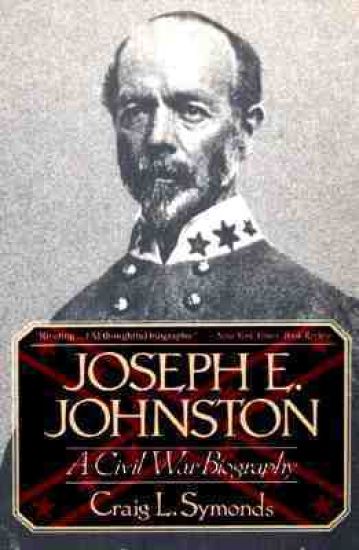
General Joseph E. Johnston was in command of Confederate forces at the South's first victory—Manassas in July 1861—and at its last—Bentonville in April 1965. Many of his contemporaries considered him the greatest southern field commander of the war; others ranked him second only to Robert E. Lee. But Johnston was an enigmatic man. His battlefield victories were never decisive. He failed to save Confederate forces under siege by Grant at Vicksburg, and he retreated into Georgia in the face of Sherman's march. His intense feud with Jefferson Davis ensured the collapse of the Confederacy's western campaign in 1864 and made Johnston the focus of a political schism within the government. Now in this rousing narrative of Johnston's dramatic career, Craig L. Symonds gives us the first rounded portrait of the general as a public and private man.
The Putting PrescriptionThe Putt Doctor's Proven Method for a Better StrokeDr. Craig L. FarnsworthAuthor of See It & Sink ItThe doctor is on the golf course Dr. Craig Farnsworth has helped more than 125 Tour pros improve their putting games from good to outstanding. Now, you can raise the level of your game using the same innovative techniques that have helped Nick Faldo, Annika S renstam, Bernhard Langer, and many others become masters of the green. Whether you suffer from sloppy setup, tight grip, pushing, pulling, or ""the yips,"" The Putting Prescription will cure what ails you ""I have worked with Craig over the years and have used and applied his prescriptions and drills myself. I particularly love the string and needles drill. All you need to do is add a bit of practice.""-Nick Faldo, six-time Majors winner on the PGA Tour, member of the World Golf Hall of Fame, and analyst for CBS and the Golf Channel""As a veteran PGA Tour player, I've studied many golf books and listened to more than my share of instructors. Dr. Farnsworth's putting method is the most complete and thorough I've read. He has helped my putting and he can help yours too.""-Scott McCarron, PGA Tour player""I have had the honor to work with the leading putting coaches in the world and Dr. Craig Farnsworth is the best of the best. His understanding of putting is by far the most comprehensive, and his ability to communicate that knowledge is second to none. I have seen him transform the game of a PGA superstar and elevate the games of 'weekend warriors.'""-Mike Adams, Golf Digest Top-50 Instructor and Golf Magazine Top-100 Teacher""Dr. Farnsworth is the premier specialist in helping golfers of all abilities become the best putters they can be. His attention to detail and creative use of drills and games are the best in the game. This book will help you get to the next level.""-Brian Mogg, Golf Magazine Top-100 Teacher""Having seen the direct benefit to my own game, it is crystal clear to me why so many PGA and LPGA players ultimately find their way to Dr. Farnsworth. He does a wonderful job of blending state-of-the-art teaching methods with the specific needs of the student. I am very cautious about referring my students to instructors. However, I enthusiastically refer my players to Dr. Farnsworth.""-Dr. Gary Brown, Golf Performance Specialist, Intelligent Golf""I have utilized Doctor Farnsworth's information in my instructional programs since meeting Doc in 1998. His knowledge has transformed my teaching and my own game, allowing me to be the Michigan PGA Teacher and Player of the Year in 2005. Following the Doc's prescriptions will help transform everyone's putting ""-John L. Dal Corobbo, Director of Instruction, The Training Academy at Prairie View
A proven way to put together a portfolio that enhances performance and reduces risk Professor Craig Israelsen of Brigham Young University is an important voice in the area of asset allocation. The reason? He keeps things simple. Now, in 7Twelve, he shows you how to do the same, and demonstrates how his approach to investing can help you grow your money as well as protect it. 7Twelve outlines a multi-asset balanced portfolio that is a logical starting point when assembling a portfolio-either as the blueprint for the entire portfolio or as a significant building block. Page by page, he will show you how to create a balanced portfolio utilizing multiple asset classes to enhance performance and reduce risk. Discusses how the 7Twelve portfolio includes seven core asset classes and utilizes twelve specific mutual funds or exchange traded fundsDetails the tax efficiency of this specific investment approachShows you how to use the 7Twelve portfolio as a pre-retirement accumulation portfolio or a post-retirement distribution portfolio If you want to build a well-balanced, multi-asset portfolio, 7Twelve is the book for you.
"Dr. Frisby focuses a bright light on issues that often remain obscured in a fog of polemics, deeply held convictions, and genuine concern for the plight of minority students. Meeting the Psychoeducational Needs of Minority Students cuts through this fog with intense, sharp, clear thinking and data-driven conclusions." ?Jeffrey P. Braden, PhD, Professor of Psychology and Dean of the College of Humanities and Social Sciences, North Carolina State University "Going beyond superficial 'feel good' or 'feel bad' ideologies to probe what really makes a difference in meeting the needs of often underserved populations, Craig Frisby provides a comprehensive, rigorous, well-written, and entertaining (honest!) work that addresses the intersection of race, ethnicity, and education." ?Betty Henry, PhD, School Psychologist, California School for the Blind "Dr. Frisby makes a perceptive and incisive assessment of much of the multicultural ideology currently propagated in professional psychology and education and directly confronts some of the major issues surrounding multiculturalism. Unlike many other critiques that have been proffered over the last few decades, however, Meeting the Psychoeducational Needs of Minority Students also provides many concrete solutions for how to begin changing the current milieu." ?A. Alexander Beaujean, PhD, Associate Professor, Baylor University A practical, research-based guide to facilitating positive educational outcomes for racial, ethnic, and language minority students This timely book is written from the perspective of contemporary school psychology for a variety of school personnel, including school psychologists, teachers, guidance counselors, and administrators, with coverage of: The problem of quack multiculturalismHome and familyContext for school learningGeneral cognitive ability, learning, and instructionTesting and assessmentSchool discipline and behavior managementCrime, delinquency, and gangsSchool district resources
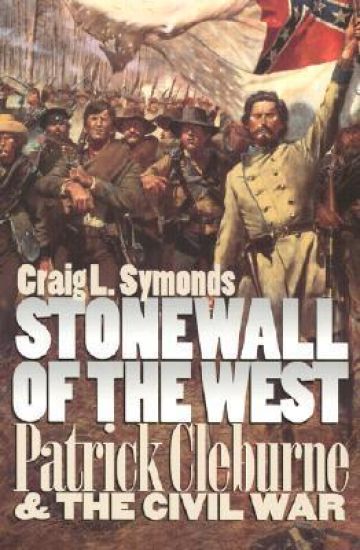
To Jefferson Davis, he was the "Stonewall of the West"; to Robert E. Lee, he was "a meteor shining from a clouded sky"; and to Braxton Bragg, he was an officer "ever alive to a success." He was Patrick Ronayne Cleburne, one of the greatest of all Confederate field commanders.An Irishman by birth, Cleburne emigrated to the United States in 1849 at the age of 21. He achieved only modest success in the peacetime South, but rose rapidly in the wartime army to become the Confederacy's finest division commander. He was admired by peers and subordinates alike for his leadership, loyalty, honesty, and fearlessness in the face of enemy fire. The valor of his command was so inspirational that his unit alone was allowed to carry its own distinctive battle flag.In Stonewall of the West, Craig Symonds offers the first full-scale critical biography of this compelling figure. He explores all the sources of Cleburne's commitment to the Southern cause, his growth as a combat leader from Shiloh to Chickamauga, and his emergence as one of the Confederacy's most effective field commanders at Missionary Ridge, Ringgold Gap, and Pickett's Mill. In addition, Symonds unravels the "mystery" of Spring Hill and recounts Cleburne's dramatic and untimely death (at the age of 36) at Franklin, Tennessee, where he charged the enemy line on foot after having two horses shot from under him.Symonds also explores Cleburne's role in the complicated personal politics of the Army of Tennessee, as well as his astonishing proposal that the decimated Confederate ranks be filled by ending slavery and arming blacks against the Union.Symonds' definitive and immensely readable narrative casts new light on Cleburne, on the Army of Tennessee, and on the Civil War in the West. It finally and firmly establishes Cleburne's rightful place in the pantheon of Southern military heroes.
Students of politics frequently confuse politics with current events and the activities of political actors. Lost in this view is a deeper understanding of politics that emphasizes the need for governmental management of many facets of social life. It proceeds first by illustrating the need for civil organization in complex social settings and then by examining the way political culture informs the nature and degree of the political organization appropriate for a polity. Focusing specifically on U.S. political culture, the work explores American political inheritance in order to expose the enduring ideals and fundamental commitments of American political life. This permits a review of American liberalism with its characteristic emphasis upon individual freedom and basic human equality. The nature of constitutionalism and democracy are also explored in order to examine their fit with traditional American liberal ideals. But politics is also about change, and the work concludes with a discussion of the challenges the U.S. must face as the demands of political management generate pressures that might seem to erode or compromise the ideals of American political culture.
Students of politics frequently confuse politics with current events and the activities of political actors. Lost in this view is a deeper understanding of politics that emphasizes the need for governmental management of many facets of social life. It proceeds first by illustrating the need for civil organization in complex social settings and then by examining the way political culture informs the nature and degree of the political organization appropriate for a polity. Focusing specifically on U.S. political culture, the work explores American political inheritance in order to expose the enduring ideals and fundamental commitments of American political life. This permits a review of American liberalism with its characteristic emphasis upon individual freedom and basic human equality. The nature of constitutionalism and democracy are also explored in order to examine their fit with traditional American liberal ideals. But politics is also about change, and the work concludes with a discussion of the challenges the U.S. must face as the demands of political management generate pressures that might seem to erode or compromise the ideals of American political culture.
"Shared Leadership offers a much-needed shift in our thinking about how leadership happens in teams and organizations. Pearce and Conger have brought together a diverse group of authors who collectively offer a comprehensive view of developing, implementing, and studying shared leadership in organizations. This volume is sure to fulfill its goal of "jump-starting" our knowledge of the shared leadership phenomenon." --Cynthia D. McCauley, Ph.D., Vice President, Leadership Development, Center for Creative Leadership"How leadership is shared in teams and organizations is an important subject, but one that has received little attention in most of the leadership literature. This timely book provides a rich and varied perspective on the subject. The highly qualified collection of scholars provide a good theoretical foundation to guide the future study of shared leadership."--Gary Yukl, State University of New York at Albany"The time is as ripe as ever for a new paradigm of leadership that the authors simply call 'shared leadership.' This timely volume effectively 'jumpstarts' our knowledge of this emerging field by presenting a number of critical perspectives examining shared leadership using conceptual, empirical, and applied lenses."--Joe Raelin, Asa. S. Knowles Chair of Practice-Oriented Education, Northeastern University, and author of Creating Leaderful Organizations: How to Bring Out Leadership in Everyone"This volume redefines the essence of leadership. Pearce and Conger have assembled a cast of 'scholar-entrepreneurs' whose pioneering work firmly establishes the theoretical foundations for the study of leadership now and well into the future. This book is a must read for anyone interested in leadership in the age of teamwork."--Henry P. Sims, University of MarylandIn recent years, scholars have argued that leadership is an activity shared or distributed among members of a group or organization. This line of thinking is gaining attention among leadership scholars, yet our understanding of the dynamics and opportunities for shared leadership is still quite primitive. Given the infancy of the field, it is timely to introduce a volume on the subject that significantly enhances our knowledge.Shared Leadership: Reframing the Hows and Whys of Leadership brings together the foremost thinkers on the subject and is the first book of its kind to address the conceptual, methodological, and practical issues for shared leadership. Its aim is to advance understanding along many dimensions of the shared leadership phenomenon: its dynamics, moderators, appropriate settings, facilitating factors, contingencies, measurement, practice implications, and directions for the future. The volume provides a realistic and practical discussion of the benefits, as well as the risks and problems, associated with shared leadership. It will serve as an indispensable guide for researchers and practicing managers in identifying where and when shared leadership may be appropriate for organizations and teams.Edited by leading authorities Craig L. Pearce and Jay A. Conger, with contributions from the top experts in the field, Shared Leadership is an ideal text for management, education, and communication courses in leadership, teamwork, organizational behavior, and small groups. In addition, practicing consultants will find this an invaluable reference in their leadership and team development programs.
In this book researchers Craig Barry and David Burt provide a fresh look at the incredible impact the English had on supplying the Confederacy and its effect on the U.S. Civil War. New research includes the discovery of lost information on many of the commercial gun makers. The book also looks at all the implements and accoutrements issued with the Enfield rifle musket, including the cap pocket, pouch, ball bags and knapsacks; right down to the muzzle stopper. Each piece of equipment is examined in great detail and is accompanied by detailed photographs and discusses most of the patterns of British equipment carried by Confederate soldiers’ and how they were supposed to be used. The book also looks at how this equipment was purchase, from where and by whom, and how it was shipped over to the Confederate States.
In hopes of impeding a young United States, the British supplied the Confederacy with arms and equipment. This book - along with Volume I - will be the definitive reference on British arms and accoutrements in Confederate service, containing full and detailed histories of newly discovered imported arms and equipment, plus lost historical details of the companies and individuals that manufactured them, including: Robert Mole & Co, Eley Bros, Francis Preston, and Arthur Warner. There are brand new sections and photographs of knapsacks, waist belts - plus all the different types of snake buckles - cap pouches, 50 round pouches, ball bags, frogs, oil bottles, sabre bayonets for the P53 Enfield, bayonet scabbards, down to snap caps and tompions. It has brand new unpublished histories on gun makers like C.W. James, Hackett, Pryse and Redman, R & W Aston, R.T. Pritchett, King & Phillips, and London Armoury Co.