Kirjojen hintavertailu. Mukana 11 244 527 kirjaa ja 12 kauppaa.

Kirjahaku

Etsi kirjoja tekijän nimen, kirjan nimen tai ISBN:n perusteella.

861 tulosta hakusanalla Creighton Halbert

General Creighton Abrams' Conduct of Design in Operational Art During the Vietnam War
General Abrams presents a sound historical example of the practical application of operational art as viewed through the lens of the Army Design Methodology. When General Abrams'; assumed command of Military Assistance Command Vietnam (MACV), he was able to frame his environment enabling him to enact measures to solve the correct problem which was, how to equip and train the ARVN while simultaneously focusing on population centric efforts in counterinsurgency--ultimately eliminating the need for U.S. presence in Vietnam. Under his authority, American forces were broken up into small units that would live with and train the South Vietnamese civilians to defend their villages from guerrilla or conventional Northern incursions. Not only did he successfully frame the problem in 1968 but he was able to re-frame in 1970 in accordance with the Nixon administration's abrupt announcement of a rapid withdrawal of forces from Vietnam. These efforts proved successful as evidenced by the ability of ARVN forces to repel a full-scale NVA Easter Offensive in 1972. This study validates the Army Design Methodology as a framework for the assessment operational art. This work has been selected by scholars as being culturally important, and is part of the knowledge base of civilization as we know it. This work was reproduced from the original artifact, and remains as true to the original work as possible. Therefore, you will see the original copyright references, library stamps (as most of these works have been housed in our most important libraries around the world), and other notations in the work. This work is in the public domain in the United States of America, and possibly other nations. Within the United States, you may freely copy and distribute this work, as no entity (individual or corporate) has a copyright on the body of the work. As a reproduction of a historical artifact, this work may contain missing or blurred pages, poor pictures, errant marks, etc. Scholars believe, and we concur, that this work is important enough to be preserved, reproduced, and made generally available to the public. We appreciate your support of the preservation process, and thank you for being an important part of keeping this knowledge alive and relevant.
A Letter, Addressed to Mr. Samuel Bradburn, Containing, Some Strictures on his Pamphlet, Entitled "The Question; are the Methodists Dissenters?" By James Creighton, A.B
The 18th century was a wealth of knowledge, exploration and rapidly growing technology and expanding record-keeping made possible by advances in the printing press. In its determination to preserve the century of revolution, Gale initiated a revolution of its own: digitization of epic proportions to preserve these invaluable works in the largest archive of its kind. Now for the first time these high-quality digital copies of original 18th century manuscripts are available in print, making them highly accessible to libraries, undergraduate students, and independent scholars.The Age of Enlightenment profoundly enriched religious and philosophical understanding and continues to influence present-day thinking. Works collected here include masterpieces by David Hume, Immanuel Kant, and Jean-Jacques Rousseau, as well as religious sermons and moral debates on the issues of the day, such as the slave trade. The Age of Reason saw conflict between Protestantism and Catholicism transformed into one between faith and logic -- a debate that continues in the twenty-first century.++++The below data was compiled from various identification fields in the bibliographic record of this title. This data is provided as an additional tool in helping to insure edition identification: ++++Huntington LibraryN020186'The question, are the Methodists Dissenters' was first published in 1792. The paper is watermarked: 1803.London, 1793 1803]. 20p.; 8
Donald Creighton

Donald Creighton

Donald Wright

University of Toronto Press
2015
pokkari
A member of the same intellectual generation as Harold Innis, Northrop Frye, and George Grant, Donald Creighton (1902–1979) was English Canada’s first great historian. The author of eleven books, including The Commercial Empire of the St. Lawrence and a two-volume biography of John A. Macdonald, Creighton wrote history as if it “had happened,” he said, “the day before yesterday.” And as a public intellectual, he advised the prime minister of Canada, the premier of Ontario, and – at least on one occasion – the British government. Yet he was, as Donald Wright shows, also profoundly out of step with his times. As the nation was re-imagined along bilingual and later multicultural lines in the 1960s and 1970s, Creighton defended a British definition of Canada at the same time as he began to fear that he would be remembered only “as a pessimist, a bigot, and a violent Tory partisan.” Through his virtuoso research into Creighton’s own voluminous papers, Wright paints a sensitive portrait of a brilliant but difficult man. Ultimately, Donald Creighton captures the twentieth-century transformation of English Canada through the life and times of one of its leading intellectuals.
Donald Creighton

Donald Creighton

Donald Wright

University of Toronto Press
2015
sidottu
A member of the same intellectual generation as Harold Innis, Northrop Frye, and George Grant, Donald Creighton (1902–1979) was English Canada’s first great historian. The author of eleven books, including The Commercial Empire of the St. Lawrence and a two-volume biography of John A. Macdonald, Creighton wrote history as if it “had happened,” he said, “the day before yesterday.” And as a public intellectual, he advised the prime minister of Canada, the premier of Ontario, and – at least on one occasion – the British government. Yet he was, as Donald Wright shows, also profoundly out of step with his times. As the nation was re-imagined along bilingual and later multicultural lines in the 1960s and 1970s, Creighton defended a British definition of Canada at the same time as he began to fear that he would be remembered only “as a pessimist, a bigot, and a violent Tory partisan.” Through his virtuoso research into Creighton’s own voluminous papers, Wright paints a sensitive portrait of a brilliant but difficult man. Ultimately, Donald Creighton captures the twentieth-century transformation of English Canada through the life and times of one of its leading intellectuals.
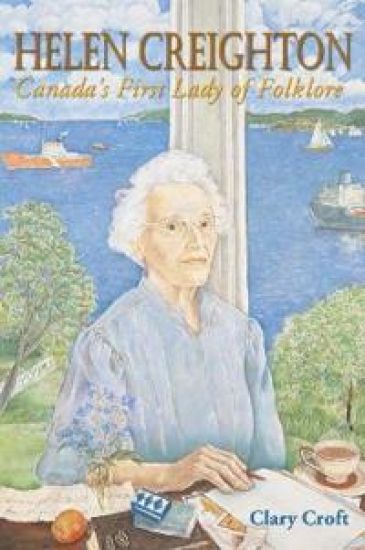
Helen Creighton

Helen Creighton

Clary Croft

Nimbus Publishing (CN)
2009
pokkari
Helen Creighton was born at the turn of the nineteenth century and until her death in 1989, she made a remarkable contribution towards retrieving the stories, songs, and legends that have shaped the culture and the people of the Maritimes. Written by her prot g and fellow folklorist, Clary Croft, this intimate biography offers both an intriguing portrait of a woman whose life was destined to become woven into the fabric of Canadian folklore, and a fascinating glimpse into the social mores of her time.
Frances Creighton: Found and Lost

Frances Creighton: Found and Lost

Kirby Porter

EnvelopeBooks
2021
nidottu
Unable to cope with the death of his girlfriend, Londoner Michael Roberts tries to find comfort in memories of another time and another place when he was in love for the first time. But that first time was as a schoolboy in Belfast, at the start of The Troubles in the late 1960s, and in a culture dominated by divides that weren’t just sectarian. To his surprise and increasing anguish his memories—long buried—prove elusive, so that finding out what had really happened and why it got suppressed becomes more and more of an obsession. As Michael gradually uncovers forgotten truths he starts to learn something that challenges everything he ever knew about himself and the person he has become. Frances Creighton: Found and Lost is a deeply felt first novel that conveys the pain of late adolescence in a community where school and religion add more layers of cruelty to the underlying instability of daily life and Northern Irish politics.
Historical Lectures and Addresses (1903) by: Mandell Creighton

Historical Lectures and Addresses (1903) by: Mandell Creighton

Mandell Creighton

Createspace Independent Publishing Platform
2018
nidottu
Mandell Creighton 5 July 1843 - 14 January 1901) was a British historian and a bishop of the Church of England. A scholar of the Renaissance papacy, Creighton was the first occupant of the Dixie Chair of Ecclesiastical History at the University of Cambridge, a professorship established around the time that history was emerging as an independent academic discipline. He was also the first editor of the English Historical Review, the oldest English language academic journal in the field of history. Creighton had a second career as a cleric in the Church of England. He served as a parish priest in Embleton, Northumberland and later, successively, as a Canon Residentiary of Worcester Cathedral, the Bishop of Peterborough and the Bishop of London. His moderation and worldliness drew praise from Queen Victoria and won notice from politicians. It was widely thought at the time that Creighton would have become the Archbishop of Canterbury had his early death, at age 57, not supervened. Creighton's historical work received mixed reviews. He was praised for scrupulous even-handedness, but criticised for not taking a stand against historical excesses. For his part, he was firm in asserting that public figures be judged for their public acts, not private ones. His preference for the concrete to the abstract diffused through his writings on the Church of England. He believed that the church was uniquely shaped by its particular English circumstances, and advocated that it reflect the views and wishes of the English people.
The Barren Hills of Creighton

The Barren Hills of Creighton

Trina L Brooks

BOOM U Press
2023
pokkari
Creighton Mine, where the innocent hide in the shadows and a killer walks free. It's 1951 in a small northern Canadian mining town. Nine-year-old Rose Boyle is convinced this is the summer she'll stop being invisible. The town she lives in, Creighton Mine is abuzz because her older sister is returning from Los Angeles and Rose expects some of her siblings glamour to rub off on her. Then excitement turns to tragedy when the first murder in living memory casts a shadow over the town. Detective Victor Lapointe expects to solve the small-town crime he's been assigned to with little effort, but it isn't long before he is faced with a murder that has no suspects or known motive. To add to his frustration something about the victim stirs up memories he'd rather keep buried. For Detective Lapointe the killing becomes a chance to redeem himself for past failures. For Rose, the murder unveils a family secret she was never meant to learn. One that has her questioning who she is, where she belongs and if she were the next victim...would anyone even care?
The History of Creighton University, 1878–2003

The History of Creighton University, 1878–2003

Dennis Mihelich

Creighton University,U.S.
2006
sidottu
Commissioned in honor of its 125th anniversary, The History of Creighton University is the first official history of Creighton University. This extensively-researched and illustrated chronicle tells the compelling story of an institution which has grown from its humble beginnings as a Jesuit college for Omaha’s Irish immigrant community to the diverse, comprehensive, and distinguished University of the present day.