Kirjojen hintavertailu. Mukana 11 244 527 kirjaa ja 12 kauppaa.

Kirjahaku

Etsi kirjoja tekijän nimen, kirjan nimen tai ISBN:n perusteella.

1000 tulosta hakusanalla Cynthia L. Rogers

Really Important Stuff My Kids Have Taught Me

Really Important Stuff My Kids Have Taught Me

Cynthia L. Copeland

Workman Publishing
2015
pokkari
Celebrate the wisdom of the sandbox—the witty, innocent, surprising, and yet completely sensible things that kids say and do. A little book with a big heart, Really Important Stuff My Kids Have Taught Me combines deceptively simple life lessons with engaging images that together not only offer insight but inspire joy. Kids see the world in a way that adults don’t, so glimpsing life through a child’s eyes offers a fresh—and often funny—perspective. Kids encourage us to be open-minded: There are a lot of different ways to get to the top of the jungle gym. To be fearless: Jump right in or you may change your mind about swimming. To aim high: Even babies grab for things just beyond their reach. To be kind to yourself: Sometimes you need a Saturday on a Wednesday. To follow your own path: If the flowers you draw don’t look like anyone else’s, that’s good. And to stay young: Go barefoot! Tune in to the chatter on the playground, and remind yourself how simple everything really is.
How Long Does It Hurt?

How Long Does It Hurt?

Cynthia L. Mather; Eliana Gil

Jossey-Bass Inc.,U.S.
2004
nidottu
Three incest survivors share their nightmarish experiences, their triumphs, and ongoing struggles to heal and live whole lives, in an updated and revised groundbreaking book that speaks directly to sexually abused teenagers. Original.
Power, Powerlessness, and the Divine

Power, Powerlessness, and the Divine

Cynthia L. Rigby

Scholars Press
2000
sidottu
Originally Published by Scholars PressNow Available from Duke University PressContributors include: Rita Nakashima Brock, Claudia V. Camp, Kimberly Chastain, Paul D. Miller, Cynthia L. Rigby, William Schweiker, Gerd Theiben, Michael Welker, Vincent L. Wimbush
Power, Powerlessness, and the Divine

Power, Powerlessness, and the Divine

Cynthia L. Rigby

Scholars Press
2000
pokkari
Originally Published by Scholars PressNow Available from Duke University PressContributors include: Rita Nakashima Brock, Claudia V. Camp, Kimberly Chastain, Paul D. Miller, Cynthia L. Rigby, William Schweiker, Gerd Theiben, Michael Welker, Vincent L. Wimbush
Mindful Crafts As Therapy

Mindful Crafts As Therapy

Cynthia L. Evetts; Suzanne M. Peloquin

F.A. Davis Company
2017
nidottu
Explore mindful crafts as an effective and efficient therapy.Arts and crafts were one of the very first therapies employed by occupational therapists. Today, crafts are still employed as effective interventions for clients with mental health disorders, physical dysfunctions, cognitive issues, and sensory concerns in hospitals, outpatient clinics, veterans' centers, schools, skilled nursing facilities, or community settings.Step by step, the authors show you how to use a wide-range of novel, and highly engaging crafts. They explain how to connect the key tasks associated with an activity to functional outcomes, and how to modify them to meet the specific needs of individual patients. They also address the issues of documentation, and reimbursement.
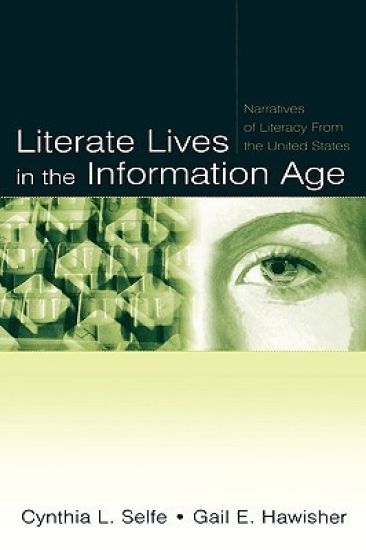
Literate Lives in the Information Age

Literate Lives in the Information Age

Cynthia L. Selfe; Gail E. Hawisher

Routledge Member of the Taylor and Francis Group
2004
sidottu
This book chronicles the development of electronic literacies through the stories of individuals with varying backgrounds and skills. Authors Cynthia L. Selfe and Gail E. Hawisher employ these stories to begin tracing technological literacy as it has emerged over the last few decades within the United States. They selected 20 case studies from the corpus of more than 350 people who participated in interviews or completed a technological literacy questionnaire during six years of their study. The book is organized into seven chapters that follow the 20 participants in their efforts to acquire varying degrees of technological literacy. Each chapter situates the participants' life-history accounts in the cultural ecology of the time, tracing major political, economic, social, and educational events, factors, and trends that may have influenced--and been influenced by--literacy practices and values. These literacy histories are richly sown with information that can help those in composition and writing studies situate the processes of acquiring the literacies of technology in specific cultural, material, educational, and familial contexts. These case studies provide initial clues about combinations of factors that affect--and are affected by--technological literacy acquisition and development. The first-hand accounts presented here offer, in abundant detail, everyday literacy experiences that can help educators, parents, policymakers, and writing teachers respond to today's students in more informed ways.
Literate Lives in the Information Age

Literate Lives in the Information Age

Cynthia L. Selfe; Gail E. Hawisher

Routledge Member of the Taylor and Francis Group
2004
nidottu
This book chronicles the development of electronic literacies through the stories of individuals with varying backgrounds and skills. Authors Cynthia L. Selfe and Gail E. Hawisher employ these stories to begin tracing technological literacy as it has emerged over the last few decades within the United States. They selected 20 case studies from the corpus of more than 350 people who participated in interviews or completed a technological literacy questionnaire during six years of their study. The book is organized into seven chapters that follow the 20 participants in their efforts to acquire varying degrees of technological literacy. Each chapter situates the participants' life-history accounts in the cultural ecology of the time, tracing major political, economic, social, and educational events, factors, and trends that may have influenced--and been influenced by--literacy practices and values. These literacy histories are richly sown with information that can help those in composition and writing studies situate the processes of acquiring the literacies of technology in specific cultural, material, educational, and familial contexts. These case studies provide initial clues about combinations of factors that affect--and are affected by--technological literacy acquisition and development. The first-hand accounts presented here offer, in abundant detail, everyday literacy experiences that can help educators, parents, policymakers, and writing teachers respond to today's students in more informed ways.
In Place of Gods and Kings

In Place of Gods and Kings

Cynthia L. Stone

University of Oklahoma Press
2017
nidottu
In Place of Gods and Kings presents a new reading of an important manuscript that has long been considered the foremost colonial-era source for information related to the indigenous inhabitants of the Mexican state of Michoacán.Drawing on recent trends in literary studies that call into question the universal validity of notions such as the unitary author and the primacy of alphabetic writing over oral and pictorial traditions, Cynthia L. Stone shows how this early relación (c. 1538-41) weaves together narrative strands representing the distinctive voices of four primary contributors.According to the Franciscan compiler, Jerónimo de Alcalá, the manuscript is a testament to enlightened colonial officials who recognized that some familiarity with native customs and beliefs would further the goals of evangelization and Spanish rule. This symbolic bridge between prehispanic and colonial times was articulated differently by the friar's indigenous collaborators, however, who refused to accept their alleged cultural inferiority or fully renounce their previous allegiances.Thus, the drawings of the indigenous painters, reproduced in this volume in both color and black and white, evoke the sacred Mesoamerican tradition of ""writing in pictures."" The epic history narrated by the former high priest pays tribute to the great regional culture hero, Taríacuri. And the account of the Spanish conquest provided by the indigenous governor converts the military defeat of his people into a moral victory and a paradigm for cultural survival.
Technology and Literacy in the Twenty-first Century

Technology and Literacy in the Twenty-first Century

Cynthia L. Selfe; Hugh Burns

Southern Illinois University Press
1999
nidottu
Part critique of existing policy and practice, part call-to-action, this work explores the complex linkage between technology and literacy that has come to characterize American culture and its public educational system at the end of the 20th century. To provide a specific case study of this complex cultural formation, Cynthia L. Selfe discusses the Technology Literacy Challenge, an official, federally sponsored literacy project begun in 1996 that has changed - at fundamentally important levels - the definition of literacy and the practices recognized as constituting literate behaviour in America. Selfe tries to identify the effects of this new literacy agenda, focusing on what she calls ""serious and shameful"" inequalities it fosters in American culture and in the public educational system: among them, the continuing presence of racism, poverty and illiteracy. She describes how the national project to expand technological literacy came about, what effects it has yielded, why the American public has supported this project, and how teachers of English, language arts, and composition have contributed to this project, despite their best intentions. A primary goal of the study is to make teachers of English and composition increasingly aware of the new literacy agenda and to suggest how they might positively influence its shape and future direction, both in the classroom and community. This awareness is an integral part of educators' larger professional responsibility to understand the way in which American culture thinks about and values literacy.
ýQue Onda?

ýQue Onda?

Cynthia L. Bejarano

University of Arizona Press
2007
nidottu
Angel was born in Arizona and is part of the in-crowd. She likes clubbing, dancing, and going to car shows. Betzayra is from Mexico City and, despite polio-related disabilities, is the confident group leader of the Mexican girls. Arturo is also from Mexico City; he dresses more fashionably than most other boys and is taunted by the Chicanos. Evelyn was born in Arizona, but her mother was from Mexico and she hangs out with Mexican kids because she thinks they?re nicer than Chicanos. How these and some two dozen other young Latinas and Latinos interact forms the basis of a penetrating new study of identity formation among Mexican-origin border youths, taking readers directly into their world to reveal the labyrinth they navigate to shape their identities. For Latina/o adolescents who already find life challenging, the borderland is a place that presents continual affirmations of and contradictions about identity?questions of who is more Mexican than American or vice versa. This book analyzes the construction of Mexicana/o and Chicana/o identities through a four-year ethnographic study in a representative American high school. It reveals how identity politics impacts young people's forms of communication and the cultural spaces they occupy in the school setting. By showing how identities are created and directly influenced by the complexities of geopolitics and sociocultural influences, it stresses the largely unexplored divisions among youths whose identities are located along a wide continuum of ?Mexicanness.? Through in-depth interviews and focus groups with both Mexicana/o and Chicana/o students, Cynthia Bejarano explores such topics as the creation of distinct styles that reinforce differences between the two groups; the use of language to further distinguish themselves from one another; and social stratification perpetuated by internal colonialism and the ?Othering? process. These and other issues are shown to complicate how Latinas/os ethnically identify as Mexicanas/os or Chicanas/os and help explain how they get to this point. In contrast to research that views identity as a reflection of immigration or educational experiences, this study embraces border theory to frame the complex and conflicted relations of adolescents as a result of their identity-making processes. This intimate glimpse into their lives provides valuable information about the diversity among youths and their constant efforts to create, define, and shape their identities according to cultural and social structures.
From Submarines to Suburbs

From Submarines to Suburbs

Cynthia L. Henthorn

Ohio University Press
2006
sidottu
During World War II, U.S. businesses devised marketing strategies that encouraged consumers to believe their country’s wartime experience would launch a better America. Advertisements and promotional articles celebrated the immense industrial output that corporations achieved during the war. These commercial messages positioned wartime technologies and corporate expertise as the means to streamline America and invent a socially hygienic future free from poverty, slums, drudgery, filth, and-for some businessmen-the New Deal administration. From Submarines to Suburbs surveys the development, strategy, and effect of these campaigns over a span of twenty pivotal years. Cynthia Lee Henthorn takes a close look at how pre-fabricated suburban houses, high-tech kitchens, and miracle products developed from war-related industries were promoted as the hygienic solutions for establishing this better America, one led by the captains of free enterprise. As Henthorn demonstrates, wartime advertising and marketing strategies tying consumer prosperity to war were easily adapted in the Cold War era, when a symbiotic relationship between military standing and standards of living intensified in a culture dependent on defense spending. Were the efforts to engineer a better America successful? Using documentary evidence in the form of numerous advertisements, From Submarines to Suburbs stands as a significant contribution to understanding how today’s “better” America evolved.
From Submarines to Suburbs

From Submarines to Suburbs

Cynthia L. Henthorn

Ohio University Press
2006
pokkari
During World War II, U.S. businesses devised marketing strategies that encouraged consumers to believe their country’s wartime experience would launch a better America. Advertisements and promotional articles celebrated the immense industrial output that corporations achieved during the war. These commercial messages positioned wartime technologies and corporate expertise as the means to streamline America and invent a socially hygienic future free from poverty, slums, drudgery, filth, and-for some businessmen-the New Deal administration. From Submarines to Suburbs surveys the development, strategy, and effect of these campaigns over a span of twenty pivotal years. Cynthia Lee Henthorn takes a close look at how pre-fabricated suburban houses, high-tech kitchens, and miracle products developed from war-related industries were promoted as the hygienic solutions for establishing this better America, one led by the captains of free enterprise. As Henthorn demonstrates, wartime advertising and marketing strategies tying consumer prosperity to war were easily adapted in the Cold War era, when a symbiotic relationship between military standing and standards of living intensified in a culture dependent on defense spending. Were the efforts to engineer a better America successful? Using documentary evidence in the form of numerous advertisements, From Submarines to Suburbs stands as a significant contribution to understanding how today’s “better” America evolved.
The Book of Urgency

The Book of Urgency

Cynthia L Knight

Onyx Gavel Publishing
2024
pokkari
Are you aware of the enemy and the depth of deception and false narratives he has created for your life?Do you want to learn the truth about it?This book will reveal what you have been missing Between two worlds, the spiritual and the secular, we find our existence. Adversaries from both realms weaponize false truths, manipulate the perception of reality and advance hidden agendas. All done in an attempt to maintain a consistent state of ignorance, pliability, and uncertainty amongst people. By keeping the masses distracted, uninformed, and disoriented, the adversary gains a significant advantage in the invisible war.The Almighty God has instructed His remnant in the Body of Christ to sound the alarm, raise their voices and warn others. By His divine authority, God has provided revelation into these deceptions that have been strategically placed "in time" to derail generations from His will.My life was radically interrupted by the revelation of these deceitful schemes that have been so subtly and purposely implemented against all people. I will share them with you, so that you too can understand the enemy and his tactics.Time is short. We must ready ourselves and prepare for what is out there and what is yet to come.
Diamond

Diamond

Cynthia L. Jordan

Emerald Eagle Productions
2015
nidottu
Corsets are out. Freedom is in. The 20's are ROARING Movies are silent and Hollywood is shaping American culture. From coast to coast young girls like Heather Smith dream of becoming a movie star. One day two men shooting a western film near San ANgelo, Texas come to Pearl's Parlor for some fun. Is this Heather's big chance? Wyatt Earp, Mae West, John Wayne, Charlie Chaplin, Louise Brooks, Barbara Stanwyck...their stories will astound you. DIAMOND reminds us that when we remove the glitzy glamour, smoke and mirrors it is our human nature and the need to be loved that makes us all the same.PROLOGUEEver since she was a little girl, Heather had dreamed of being an actress. While growing up in Illinois, the porch of the farmhouse had served as her stage, and her younger siblings, dolls and pets were her audience. Heather had spent all morning preparing for this interview. After examining herself carefully in the mirror, and after trying on seven different outfits, she had finally decided the royal blue was best. Simple and elegant, the dress showed off Heather's trim waistline, as well as the fact that this homegrown farm girl was a lady with class."I believe there must be some mistake. I was told this was an interview to set up a screen test for a part in the new western movie, Rio Concho. I am an actress and I also sing.""Listen, Sweetheart...if you wanna play in the big leagues, you gotta play by the rules Now take your clothes off "Leaning forward, the man rested his elbows on the large oak desk standing between him and his newest conquest. He knew she wanted to be a star. They all did. His eyes glared at Heather's breasts with appreciation and desire as he chewed on his smelly, unlit cigar. "Oh...I see," Heather affirmed. "May I please sit down for a minute, Mister Stein?""Ok, but just for a minute. I am a very busy man."Heather had heard the Hollywood stories of casting couches and girls being put in compromising situations. She had rehearsed this scene for months. Looking down at her soft white hands gently folded on her lap, Heather slowly bit her bottom lip. After a moment, she dramatically looked straight into the eyes of a man who had the power to make her dreams come true.With full confidence in her ability to charm, Heather smiled. Locking the man into her hypnotic gaze, she spoke slowly and deliberately. "So this is business? What are your terms? What do I get when I take off my clothes?"The man folded his arms and leaned back in his chair. "It depends on how friendly you want to be," he smirked, licking his fat lips. The man's lines had been predictable and Heather was more than ready to perform her part. Heather made her eyes big. "Don't you want me to read for you or sing you a song?" she asked with profound innocence."Take your clothes off, Missy. We'll start there.""Will you guarantee I get a part? If this is business..." "I can make you a star, Sweetheart " For a long moment Heather stared at the man behind the desk. A woman with experience, she was a master at reading a man and knowing his deepest desires. Coyly, Heather grinned and began speaking seductively in a slow, sultry voice. "All right then, Mr. Stein. Today is your lucky day. I brought a girlfriend with me. Ginger wants to be in the movies too. Can I ask her to join us? Ginger can be extremely friendly. In fact together we can give you quite a show She is waiting for me just outside the door." The man quickly laid down his slimy cigar. "Yes in-deedy Invite her in ""I'll be right back," Heather smiled.