As a ruler of the church of Alexander and president of the Third Ecumenical Council of 431, Cyril was one of the most powerful men of the fifth century. Not only did he define the concept of christological orthodoxy for the next two centuries, but he is also often regarded as an unscrupulous cleric who was responsible for the murder of the female philosopher Hypatia and for the overthrow of the archbishop Nestorius.Cyril of Alexandria presents key selections of Cyril's writings in order to make his thought accessible to students. The writings are all freshly translated and an extended introduction outlines Cyril's life and times, his scholastic method, his christology, his ecclesiology, his eucharistic doctrine, his spirituality, and his influence on the Christian tradition.
Cyril was bishop in Jerusalem from c350-351 AD until 386 AD. His writings are an important source for the history of early Christian doctrine. This book provides full English translations, with explanatory commentary, of his most important works. The introduction covers Cyril's life; his historical and archaeological context; his theology; and contemporary doctrine and practice. This will be essential reading for students and scholars of patristics, and those studying the history of the early Church and late antiquity.
Cyril was bishop in Jerusalem from c350-351 AD until 386 AD. His writings are an important source for the history of early Christian doctrine. This book provides full English translations, with explanatory commentary, of his most important works. The introduction covers Cyril's life; his historical and archaeological context; his theology; and contemporary doctrine and practice. This will be essential reading for students and scholars of patristics, and those studying the history of the early Church and late antiquity.
These thirty stories, selected and introduced by fellow crime writer and lawyer Michael Gilbert, are a terrific introduction to Cyril Hare's inventive and clever Golden Age detective fiction, which often turns on an ingenious use of the law. Born in 1900, Hare was a barrister and judge and only began writing at the age of thirty-six. Some of his first short stories were published in Punch and he went on to write nine novels including his most famous, Tragedy at Law. Two of the stories in this collection feature Francis Pettigrew, a barrister and amateur detective who appeared in several of Hare's novels and was perhaps his best-loved creation.'Dazzlingly ingenious.' Sunday Times 'Of Cyril Hare's detective stories my only complaint is, that they are too infrequent.' Tatler'A master of the short story.' Spectator'Neat, taut and sufficiently dipped in irony to give a sharp tang to the quirks of love and life.' Glasgow Herald
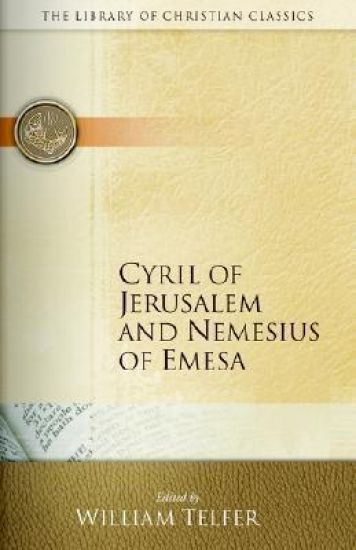
This volume in the Library of Christian Classics offers fresh translations of selected works by Cyril of Jerusalem and Nemesius of Emesa.Long recognized for the quality of its translations, introductions, explanatory notes, and indexes, the Library of Christian Classics provides scholars and students with modern English translations of some of the most significant Christian theological texts in history. Through these works--each written prior to the end of the sixteenth century--contemporary readers are able to engage the ideas that have shaped Christian theology and the church through the centuries.
`In one of tje funniest biographies I have ever read, Lewis assembles all the excellently entertaining anecdotes about this deeply loved, much mocked, sometimes reviled figure whose departure has robbed the litarary world of its social smartness and any worthwhile eccentricity . . . [An] excellent, wildly funny and informative biography. `Auberon Waugh, Literary Review. Precociously brilliant in his youth, Cyril Connolly was haunted for the rest of his life by a sense of failure and a romatic yearning to recover a lost Eden. His two great books, The Unquiet Grave and Enemies of Promise, are classics of English prose, combining wit, romanticism and merciless self-knowledge. As witty in person as he as in his prose, he was notoriously slothful and greedy; he was married three times, abd his dealings with women were bedevilled by a lifelong tendency to be in love with two or more people at once.
Cyril of Jerusalem, Bishop of the Holy City in the middle of the fourth century, delivered eighteen catechetical lectures during Lent to his candidates for baptism at Easter; actually, there were nineteen including the preliminary instruction, or Procatechesis. An earlier volume of the Fathers of the Church series contains the preliminary material and the first twelve lectures. The present volume contains Catechetical Lectures 13-18 and Cyril's five Mystagogical Catecheses, which, delivered during the week after Easter, describe and explain the rites of Baptism, Chrismation, and Eucharist, all of which Cyril's newly baptized adult listeners have just experienced. In addition, this volume includes Cyril's only extant sermon (on the paralytic of John 5) and a letter to the newly crowned Emperor Constantius, in which Cyril interprets the apparition of a shining cross in the sky over Jerusalem.
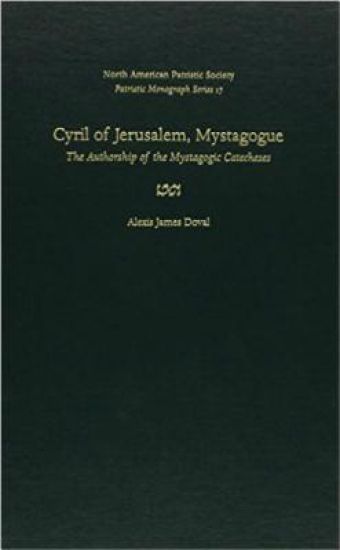
After centuries of unresolved dispute over the question of whether the Mystagogic Catecheses belongs among the works of St. Cyril of Jerusalem, this book finally settles the controversy. These post-baptismal Easter sermons are a prized witness to the way the rites of initiation (baptism, confirmation, and Eucharist) were celebrated in fourth-century. Jerusalem and for the rich sacramental theology they contain. Uncertain authorship has prevented the text from being fully appreciated as an integral part of Cyril's works. Cyril's reputation as a catechist is time-honored, and his Baptismal Catecheses has served as an invaluable source of early Church doctrine and practice. Scholars can now confidently include the mystagogic sermons in their study of Cyril's doctrinal and sacramental theology and practice. This study addresses much more than the question of authorship. A thorough examination of the Mystagogic Catecheses in conjunction with Cyril's Baptismal Catecheses provides a new view into his life and thought as both catechist and mystagogue. It begins with a survey of those aspects of Cyril's life and his Jerusalem church that are relevant to reassessing the authorship of the Mystagogic Catecheses. It then examines the text's manuscript tradition, literary tradition, and date. There follows the most extensive section, a comparative analysis of the disputed sermons and Cyril's Baptismal Catecheses in the areas of liturgical rites, theology, spirituality, and literary style. The text is then compared to the known works of the contending author, John Il of Jerusalem. Finally, the sermons are subjected to a stylometric analysis, that is, a computer-based statistical analysis of literary style. This book will be welcomed by scholars of early Christianity, especially those interested in the life and works of Cyril of Jerusalem. Of special interest is its treatment of the history and development of liturgy in the Christian East through the fourth century. This is the first volume in the Patristic Monograph Series of the North American Patristic Society to be published by the Catholic University of America Press.
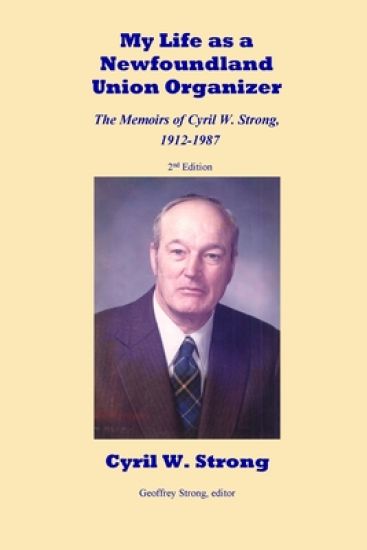
Cyril Strong started work at the Hotel Newfoundland in 1928 at the age of 16. During the war, Newfoundland's economy soared, but the hotel employees were poorly paid. He organized a union in 1942, became its President, and skilfully negotiated a wage increase and other benefits for the hotel workers. After serving on the executives of his local union, of the St. John's Trades and Labour Council, and of the Newfoundland Federation of Labour, he became the Newfoundland organizer for the American Federation of Labour (AFL-CIO) in 1948. As Federation organizer, he travelled the province from coast to coast, helping Newfoundland workers form unions. Travel in Newfoundland in the 1945-65 period was no small part of the job, and justified a separate chapter (10) in this book. With the creation of the Canadian Labour Congress in 1956, Strong became a CLC representative. Although not involved directly with the IWA, Cyril saw the dramatic events of the 1959-60 IWA organizing drive and loggers strike from the inside, a story which he recounts here. This led to him to take a brief stint at provincial politics in 1959, running for the newly-formed Newfoundland Democratic Party (NDP), a name which persuaded Tommy Douglas to adopt in 1961 in place of the federal CCF. Cyril Strong gained the respect of supporters and opponents alike during his career, and should rank among the great Newfoundlanders.
This work has been selected by scholars as being culturally important and is part of the knowledge base of civilization as we know it.This work is in the public domain in the United States of America, and possibly other nations. Within the United States, you may freely copy and distribute this work, as no entity (individual or corporate) has a copyright on the body of the work.Scholars believe, and we concur, that this work is important enough to be preserved, reproduced, and made generally available to the public. To ensure a quality reading experience, this work has been proofread and republished using a format that seamlessly blends the original graphical elements with text in an easy-to-read typeface.We appreciate your support of the preservation process, and thank you for being an important part of keeping this knowledge alive and relevant.
This work has been selected by scholars as being culturally important and is part of the knowledge base of civilization as we know it.This work is in the public domain in the United States of America, and possibly other nations. Within the United States, you may freely copy and distribute this work, as no entity (individual or corporate) has a copyright on the body of the work.Scholars believe, and we concur, that this work is important enough to be preserved, reproduced, and made generally available to the public. To ensure a quality reading experience, this work has been proofread and republished using a format that seamlessly blends the original graphical elements with text in an easy-to-read typeface.We appreciate your support of the preservation process, and thank you for being an important part of keeping this knowledge alive and relevant.
In 362/363 the Roman emperor Julian composed a treatise titled Against the Galileans in which he set forth his reasons for abandoning Christianity and returning to devotion to the traditional Greco-Roman deities. Sixty years later Cyril, bishop of Alexandria, composed a response. His resulting treatise Against Julian would dwarf the size of Julian's original work and in fact serves as our primary source for the fragments of it that have survived. Julian's treatise was the most sophisticated critique of Christianity to have been composed in antiquity and Cyril's rebuttal was equally learned. The Christian bishop not only responded directly to Julian's own words but drew upon a wide range of ancient literature, including poetry, history, philosophy, and religious works to undermine the emperor's critiques of the Christian Bible and bolster the intellectual legitimacy of Christian belief and practice. This is the first full translation of the work into English.