In Outrageous Invasions: Celebrities' Private Lives, Media, and the Law, Professor Robin D. Barnes examines the role and nature of privacy in Western democracies. Celebrities are routinely subjected to stalking, harassment, invasion of privacy, and defamation. These occurrences are often violations of their constitutional rights. Professor Barnes addresses growing concerns about the widespread immunity from liability enjoyed by United States tabloid publishers. Outrageous Invasions chronicles these experiences and the legal battles waged by celebrities in both the United States and European Union against a press corps that continuously invades their private lives. Professor Barnes analyzes doctrinal developments in cases from the United States Supreme Court and the High Courts of Europe. These cases demonstrate that American celebrities are entitled to, but not receiving, the same protections as their European counterparts. In Outrageous Invasions, Professor Barnes explains the value of the rights of the individual to democratic nations. She notes the importance of insuring appropriate protection for freedom of expression and associational freedom through meaningful regulation in the instances when speech rights collide with equally important values such as privacy and equality.
Eight-year-old ultra-fabulous Ruby Marigold Booker returns in this reissue of the Ruby and the Booker Boys series by Newbery Honor and Coretta Scott King Honor author Derrick Barnes Brought to you by Newbery Honor author Derrick Barnes, eight-year-old Ruby Booker is the baby sis of Marcellus (11), Roosevelt (10), and Tyner (9), the most popular boys on Chill Brook Ave. When Ruby isn't hanging with her friend, Theresa Petticoat, she's finding out what kind of mischief her brothers are getting into. She's sweet and sassy and every bit as tough as her older siblings.And now, look out Ruby's hosting a big pink slumber party The last time Ruby hosted a slumber party, her big brother Roosevelt played tricks on her and her friends all night long.Well, it's payback time When it comes to teaching Ro a lesson, a little lipstick and a lot of know-how can go a long way.Bottom line? Don't mess with Ruby and her crew
Eight-year-old ultra-fabulous Ruby Marigold Booker returns in this reissue of the Ruby and the Booker Boys series by Newbery Honor and Coretta Scott King Honor author Derrick Barnes Brought to you by Newbery Honor author Derrick Barnes, high-flying Ruby Booker soars to new heights After watching her big cousin Kee Kee compete in a cheerleading competition, Ruby attempts to copy some of the high-flying moves she saw earlier. This cheerleading stuff could be just the thing to bring her a ton of attention. But during practice with Marcellus, she injures her arm and must be rushed to the hospital. The doctors fit her with a hot-pink cast that turns out to be a great conversation piece. After giving a million different versions of the accident to everyone at school, she becomes the center of attention after all
As the high-ranking Bishop of Alexandria from 328 to 373, Athanasius came into conflict with no fewer than four Roman emperors—Constantine himself, his son Constantius, Julian the Apostate, and the “Arian” Valens. In this new reconstruction of Athanasius’s career, Timothy D. Barnes analyzes the nature and extent of the Bishop’s power, especially as it intersected with the policies of these emperors.Repeatedly condemned and deposed by church councils, the Bishop persistently resurfaced as a player to contend with in ecclesiastic and imperial politics. Barnes’s work reveals that Athanasius’s writings, though a significant source for this period, are riddled with deliberate misinterpretations, which historians through the ages have uncritically accepted.Untangling longstanding misconceptions, Barnes reveals the Bishop’s true role in the struggles within Christianity, and in the relations between the Roman emperor and the Church at a critical juncture.
This study of the Roman Empire in the age of Constantine offers a thoroughly new assessment of the part Christianity played in the Roman world of the third and fourth centuries.Timothy D. Barnes gives the fullest available narrative history of the reigns of Diocletian and Constantine. He analyzes Constantine’s rise to power and his government, demonstrating how Constantine’s sincere adherence to Christianity advanced his political aims. He explores the whole range of Eusebius’ writings, especially those composed before Constantine became emperor, and shows that many attitudes usually deemed typical of the “Constantinian revolution” were prevalent before the new Christian empire came into existence. This authoritative political and cultural history of the age of Constantine will prove essential to students and historians of the ancient world.
Much of what we know today of Rome in the fourth century has its source in Res Gestae, the sole surviving work of the historian Ammianus Marcellinus. The accuracy of Ammianus' reporting has come under question over the past fifty years, however, and Timothy D. Barnes here offers new grist for skepticism. This is the first book on Ammianus to place equal emphasis on the literary and historical aspects of his writing. Barnes assesses Ammianus' depiction of historical reality by investigating the Res Gestae's strengths and weaknesses, as well as its literary qualities. He examines its structure and arrangement, emphasizes its Greek and pagan features, and points out the extent to which Ammianus drew on his imagination in shaping the narrative. Ammianus, raised as a Christian, became an apostate when Julian seemed to promise a return to traditional religion and values. In Res Gestae, he expressed strongly held views, often in vivid and extreme language. Barnes explores the historian's biases and personal prejudices, documenting seemingly intentional distortions and demonstrating that Ammianus advanced a pessimistic and anti-Christian interpretation of the Roman Empire.
This book elucidates the role of brain-gut peptides in neuroendocrine regulation for understanding how these peptides interact with the reproductive neuroendocrine axis and for developing novel therapeutic agents for fertility or contraceptive therapies.
When asked by students of medicine to name a reliable, readable and adequately comprehensive text book of clinical paediatrics we have, in the past, been forced to recommend the least unsatisfactory among the large number of not quite good enough books on the market. Those available always seemed to be too long or too brief, too dogmatic or too discursive, too practical or not practical enough, too selective or too all-embracing. Despairing of this, many of us have attempted writing books of our own only to discover how difficult it is to find the right formula for the general reader seeking a text to reinforce his particular clinical experience. The paragon among books that we would all wish to lay our hands on will probably never be written, but this book, written by my colleagues in Cambridge Dr Nick Barnes and Dr Cliff Roberton, comes very close to the ideal and is certainly my best buy in its category. From it we receive succinct, convincing and helpful accounts of nearly all the conditions affecting children that matter in practice in the sense that ignorance of their existence, importance and significance would materially affect our competence. The writers are obviously extraordinarily well read in the relevant original papers; unlike many learned authors, they have a good nose for the relevant fact and a sure sense of proportion. Their tone of voice, while authoritative, is not provokingly dogmatic and does not challenge accepted truth without justification.
Latin American legislators, like legislators worldwide, are drawn from a narrow set of elites who are largely out of touch with average citizens. Despite comprising the vast majority of the labor force, working-class people represent a small slice of the legislature. Working Class Inclusion examines how the near exclusion of working-class citizens from legislatures affects citizens' evaluations of government. Combining surveys from across Latin America with novel data on legislators' class backgrounds and experiments from Argentina and Mexico, the book demonstrates voters want more workers in office, and when combined with policy representation, the presence of working-class legislators improves citizens' evaluations of government. Absent policy representation, however, workers are met with distrust and backlash. Chapters show citizens have many opportunities to learn about the presence, or absence, of workers; and the relationship between working-class representation and evaluations of government is strongest among citizens who are aware of legislators' class status.
Latin American legislators, like legislators worldwide, are drawn from a narrow set of elites who are largely out of touch with average citizens. Despite comprising the vast majority of the labor force, working-class people represent a small slice of the legislature. Working Class Inclusion examines how the near exclusion of working-class citizens from legislatures affects citizens' evaluations of government. Combining surveys from across Latin America with novel data on legislators' class backgrounds and experiments from Argentina and Mexico, the book demonstrates voters want more workers in office, and when combined with policy representation, the presence of working-class legislators improves citizens' evaluations of government. Absent policy representation, however, workers are met with distrust and backlash. Chapters show citizens have many opportunities to learn about the presence, or absence, of workers; and the relationship between working-class representation and evaluations of government is strongest among citizens who are aware of legislators' class status.
We don't grow alone, and this book ensures you don't have toScenes From A Single Mom is your squad of of sisterfriends cheering you on bytransparently sharing their experiences with love, loss and legacy to encourage you asyou grow through to become the mother and woman you were created to be. You'll beempowered to forgive yourself and others, confront and conquer your past, then dancethrough the storms and stigmas as you welcome your sunshine and successes.Prepare to laugh, cry and nod in agreement as you delve into the personal journeysthrough lovem, loss and legacy. As a mother, mother-to-be, grandmother or if you'venever considered motherhood, you'll be sure to connect with these stories at your core: Love: Our desire to love and to be loved unconditionally creates divine connectionLoss: Our determination to use our setbacks as motivation for major comeback isundeniableLegacy: Our resolve to create lasting change and impact in our homes and communitiesis unmatchedNo matter where you find yourself on your motherhood journey, equipped with this bookyou'll know you're not alone.Scenes From A Single Mom started as a blog in 2011 by Tiffany Huff when she wantedto share here journey of being more than "just a single mom". She shared transparent, up close and personal insight into her journey to balance the lies of the single mother, baby mama drama stigma with the reality of being a successful single mom on her ownterms. The blog soon grew into a community of not only single moms, but womenacross the country challenged to find and feel love, refusing to be defined by theirlosses, and determined to create lasting legacies for themselves and their families.
In democracies, power is obtained via competition. Yet, as women gain access to parliaments in record numbers, worldwide collaboration appears to be on the rise. This is puzzling: why, if politicians can secure power through competition, would we observe collaboration in Congress? Using evidence from 200 interviews with politicians from Argentina and a novel dataset from 23 Argentine legislative chambers over an 18-year period, Gendering Legislative Behavior reexamines traditional notions of competitive democracy by evaluating patterns of collaboration among legislators. Although only the majority can secure power via competition, all legislators - particularly those who do not have power - can influence the policy-making process through collaboration. Tiffany D. Barnes argues that as women have limited access to formal and informal political power, they collaborate more than men to influence policy-making. Despite the benefits of collaboration, patterns of collaboration vary among women because different legislative contexts either facilitate or constrain women's collaboration.
Drawing on recent scholarly advances and new evidence, Timothy Barnes offers a fresh and exciting study of Constantine and his life. First study of Constantine to make use of Kevin Wilkinson's re-dating of the poet Palladas to the reign of Constantine, disproving the predominant scholarly belief that Constantine remained tolerant in matters of religion to the end of his reignClearly sets out the problems associated with depictions of Constantine and answers them with great clarityIncludes Barnes' own research into the marriage of Constantine's parents, Constantine's status as a crown prince and his father's legitimate heir, and his dynastic plansHonorable Mention for 2011 Classics & Ancient History PROSE award granted by the Association of American Publishers
In democracies, power is obtained via competition. Yet, as women gain access to parliaments in record numbers, worldwide collaboration appears to be on the rise. This is puzzling: why, if politicians can secure power through competition, would we observe collaboration in Congress? Using evidence from 200 interviews with politicians from Argentina and a novel dataset from 23 Argentine legislative chambers over an 18-year period, Gendering Legislative Behavior reexamines traditional notions of competitive democracy by evaluating patterns of collaboration among legislators. Although only the majority can secure power via competition, all legislators - particularly those who do not have power - can influence the policy-making process through collaboration. Tiffany D. Barnes argues that as women have limited access to formal and informal political power, they collaborate more than men to influence policy-making. Despite the benefits of collaboration, patterns of collaboration vary among women because different legislative contexts either facilitate or constrain women's collaboration.
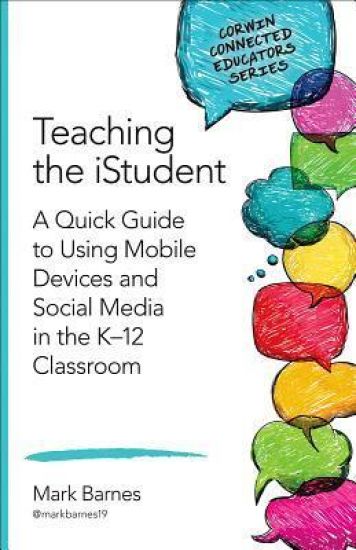
This book helps teachers understand the lives and minds of today's learners, who have grown up surrounded by iPhones, iPads, computers, and other digital forms-media that are still novelties to many educators. Many educators assume that kids are proficient in using technology, but evidence shows that students need leaders to show them how to thoughtfully and meaningfully use technology to enhance their learning. This book will give teachers:A method for effectively leading content curation through social mediaA vocabulary for discussing technology with studentsAn understanding of how digital and mobile learning is making wavesPractical ideas and activities for engaging students through devices There is also the Connected Educators Series website where readers can connect with all of the authors of the series, find more resources, and find real support for putting flipped leadership into practice.