Kirjojen hintavertailu. Mukana 12 390 323 kirjaa ja 12 kauppaa.

Kirjahaku

Etsi kirjoja tekijän nimen, kirjan nimen tai ISBN:n perusteella.

1000 tulosta hakusanalla D. H. Lawrence

D. H. Lawrence

D. H. Lawrence

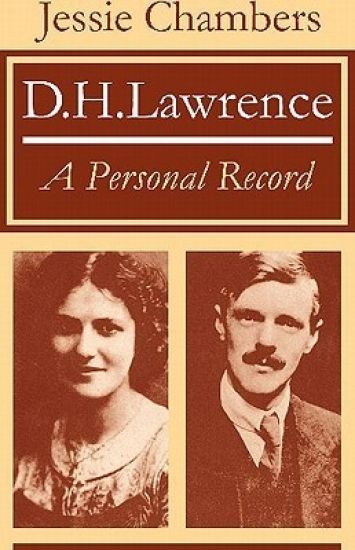
Jessie Chambers

Cambridge University Press
1980
pokkari
This is the classic account of D. H. Lawrence's childhood and youth, written by Jessie Chambers, the girl who was the model for Miriam Leivers in Sons and Lovers. It was written and published after Lawrence's death, partly in reaction to Middleton Murry's Son of Woman. Jessie Chambers wanted to present her direct and very clear understanding of Lawrence's nature, both against Murry's second-hand psychologising and against Lawrence's own account in Sons and Lovers. Chambers effectively launched Lawrence's literary career by sending his work to the English Review. Though her rejection and what she saw as his misrepresentation of her in Sons and Lovers wounded her deeply, she was large-minded enough to write this profoundly understanding account. She had written a novel under the pseudonym Eunice Temple. The name was reduced to its initials for this book, which shows a clear firm mind and a natural gift for writing.
The Selected Letters of D. H. Lawrence

The Selected Letters of D. H. Lawrence

D. H. Lawrence

Cambridge University Press
1997
sidottu
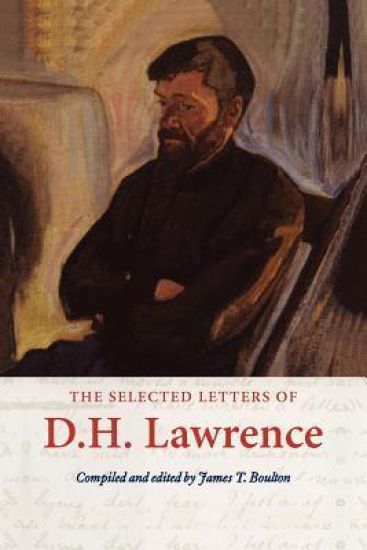
An authoritative selection of letters by one of the great English letter-writers is here published for the first time in paperback. ‘James T. Boulton, the chief editor of [the] definitive collection [of Lawrence’s letters] has now condensed from it an admirable 500-pages worth of The Selected Letters of D. H. Lawrence. Section by section introductions, summary biographies of correspondents, and illuminating explanatory footnotes equip the reader to follow the contours of Lawrence’s adult life as he progresses from teacher in Croydon to suspected German spy in Cornwall during the Great War, to wanderer in self-imposed exile in Australia, the US and Mexico, and finally consumptive, dying in Provence.’ Jonathan Bate, Sunday Telegraph ‘Five thousand letters cram the eight-volume Cambridge edition of Lawrence’s correspondence. So this selection, representing the full range of Lawrence’s influential acquaintance, is welcome. Angry, combative, scurrilous, the letters are also sometimes uniquely lyrical.’ Independent on Sunday
D. H. Lawrence: Late Essays and Articles

D. H. Lawrence: Late Essays and Articles

D. H. Lawrence

Cambridge University Press
2004
sidottu
In his last years D. H. Lawrence often wrote for newspapers; he needed the money, and clearly enjoyed the work. He also wrote several substantial essays during the same period. This meticulously-edited collection brings together major essays such as Pornography and Obscenity and Lawrence's spirited Introduction to the volume of his Paintings; a group of autobiographical pieces, two of which are published here for the first time; and the articles Lawrence wrote at the invitation of newspaper and magazine editors. There are thirty-nine items in total, thirty-five of them deriving from original manuscripts; all were written between 1926 and Lawrence's death in March 1930. They are ordered chronologically according to the date of composition; each is preceded by an account of the circumstances in which it came to be published. The volume is introduced by a substantial survey of Lawrence's career as a writer responding directly to public interests and concerns.
D. H. Lawrence

D. H. Lawrence

Alastair Niven

LIVERPOOL UNIVERSITY PRESS
1980
nidottu
In this new reading, Williams examines Lawrence's life in the context of his struggles with the dominant discourses of the day, and locates Lawrence's work as a site upon which debates around class, race and sexual identity should be discussed.
D. H. Lawrence

D. H. Lawrence

Anaïs Nin

Swallow Press
1964
pokkari
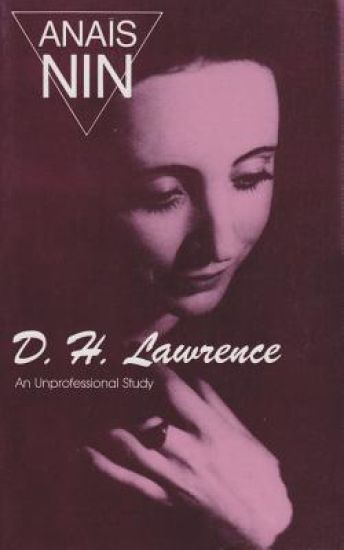
In 1932, two years after D. H. Lawrence's death, a young woman wrote a book about him and presented it to a Paris publisher. She recorded the event in her diary: "It will not be published and out by tomorrow, which is what a writer would like when the book is hot out of the oven, when it is alive within oneself. He gave it to his assistant to revise." The woman was Anaïs Nin. Nin examined Lawrence's poetry, novels, essays, and travel writing. She analyzed and explained the more important philosophical concepts contained in his writings, particularly the themes of love, death, and religion, as well as his attention to primitivism and to women. But what Anaïs Nin brought to the explication of Lawrence's writing was an understanding of the fusion of imaginative, intuitive, and intellectual elements from which he drew his characters, themes, imagery and symbolism.
D. H. Lawrence

D. H. Lawrence

Greiff Louis K.

Southern Illinois University Press
2006
nidottu
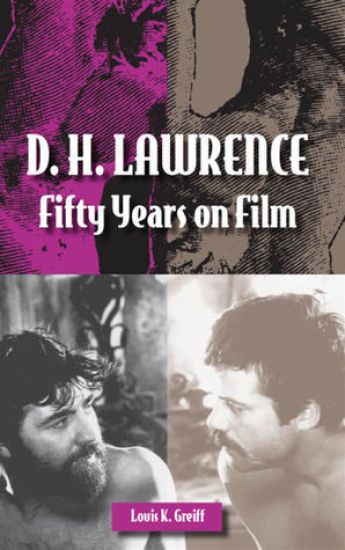
Between 1949 and 1999, the life and works of D. H. Lawrence inspired ten feature films: nine based on works of fiction and one based on biography. In ""D. H. Lawrence: Fifty Years on Film"", Louis K. Greiff examines these films as adaptations, as cultural or historical documents, and as independent works of art. Significantly, the films were not spread evenly throughout the decades but appeared in three clusters. The first group, or the ""black and white,"" appeared between 1949 and 1960. With the exception of Marc Allegret's ""L'Amant de Lady Chatterley"" (1955), all celebrate the British common man as a midcentury hero and promote an unmistakable yet never strident postwar ethos that is Marxist in spirit. The second cluster occurred during the late 1960s and early 1970s. These films show Lawrence embraced many values shared by the culture at large of the time - nonconformity, neobohemianism, sexual rebellion, war protest, and the celebration of youth. The third group answers the question, ""Why, in an un-Lawrentian decade like the 1980s, was there a revival of Lawrence's works on film?"" Greiff also deals with the contributions made by directors, Ken Russell and Christopher Miles, both of whom directed Lawrence films of the latter two clusters. He shows how Russell and, to a lesser extent, Miles were responsible for bringing mass audiences in touch with the works of Lawrence. Greiff's final and most important goal is to interpret and evaluate the Lawrence films. He looks first at the film as a visual representation of its text, then as an original act of creation and object of art.
D. H. Lawrence

D. H. Lawrence

Eliseo Vivas

Northwestern University Press
2018
nidottu
In D. H. Lawrence, Eliseo Vivas examines the aesthetic triumphs and failures of Lawrence’s major works through a literary device that he coins “the constitutive symbol.” Understanding how Lawrence uses the constitutive symbol provides new insight into his world views. Vivas covers a wide range of Lawrence's work, including Aaron’s Rod, Kangaroo, The Plumed Serpent, Lady Chatterley’s Lover, Sons and Lovers, The Rainbow, and Women in Love. Vivas was one of the first scholars to use psychological criticism to read Lawrence’s works; Vivas's and his particularly fresh reading of Lawrence’s novels continue to make this a significant literary-critical study.
D. H. Lawrence: Late Essays and Articles

D. H. Lawrence: Late Essays and Articles

D. H. Lawrence

Cambridge University Press
2014
pokkari
In his last years D. H. Lawrence often wrote for newspapers; he needed the money, and clearly enjoyed the work. He also wrote several substantial essays during the same period. This meticulously-edited collection brings together major essays such as Pornography and Obscenity and Lawrence's spirited Introduction to the volume of his Paintings; a group of autobiographical pieces, two of which are published here for the first time; and the articles Lawrence wrote at the invitation of newspaper and magazine editors. There are thirty-nine items in total, thirty-five of them deriving from original manuscripts; all were written between 1926 and Lawrence's death in March 1930. They are ordered chronologically according to the date of composition; each is preceded by an account of the circumstances in which it came to be published. The volume is introduced by a substantial survey of Lawrence's career as a writer responding directly to public interests and concerns.
D. H. Lawrence

D. H. Lawrence

J. Beer

Palgrave Macmillan
2014
sidottu
A full account of Lawrence, ranging from his talent as a young writer to the continuing genius of his later work, and concentrating on his exceptionally acute powers of observation, both human and natural.
D. H. Lawrence

D. H. Lawrence

J. Beer

Palgrave Macmillan
2014
nidottu
A full account of Lawrence, ranging from his talent as a young writer to the continuing genius of his later work, and concentrating on his exceptionally acute powers of observation, both human and natural.
D. H. Lawrence

D. H. Lawrence

Abdulla M. Al-Dabbagh

Peter Lang Publishing Inc
2011
sidottu
This book is an analysis of the social and political outlook of D.H. Lawrence as determined by the development and conflict of the social forces of his time. It discusses, specifically, the relationship between Lawrence’s ideas, as an essayist and novelist, and the ruling ideology of imperialism, reaching the conclusion that Lawrence refused to face and oppose capitalist reality. He either escaped into an imaginary, anarchic utopia, or, more frequently, «criticized» capitalist relationships from the standpoint of a fascist, militaristic division into rulers and mob, aristocrats and plebeians. Lawrence’s letters during the First World War provide the documents that reveal the genesis of his fascist outlook. The book also traces Lawrence’s attitude towards socialism throughout his literary career and concludes that anti-socialism, with varying intensity, remained an essential part of his outlook. Certain assumptions, like a contempt for man as a social being and the existential division of human beings into higher and lower creatures – into the «average» and the «exceptional» – that were basic to his outlook, are shown to be the determining factors in the writing of Lawrence’s novels. The book ends with an analysis of the historical roots of the reactionary intelligentsia and discusses Lawrence’s relationships with the various cultural and ideological trends of his time, dealing also with the different tactics used by the critics to hide the true nature of his political ideas.
D. H. Lawrence

D. H. Lawrence

Helen Corke

University of Texas Press
1965
nidottu
Croydon, England, was the setting of the famous three-way friendship of D. H. Lawrence, Jessie Chambers, and Helen Corke, all of whom made literary records of their association, and all of whom appeared as characters in Lawrence novels. Perhaps the most objective of these records were Helen Corke’s, which became difficult to acquire. Their scarcity and their continuing usefulness were the stimulus for publication of this volume, which contains in four statements Helen Corke’s “major comment on Lawrence the man and Lawrence the artist.” The “Portrait of D. H. Lawrence, 1909–1910,” a section from Corke’s unpublished autobiography, gives the reader glimpses into the earliest stages of the Lawrence-Corke friendship, when Lawrence worked to bring meaning back into Corke’s life after she had suffered a tragic loss. The “Portrait” tells of conversations before a log fire, German lessons, the reading of poetry, and sessions over Lawrence’s manuscript “Nethermere,” which the publishers renamed The White Peacock. In “Portrait,” Corke tells of working with Lawrence on revising the proofs of this book, of Lawrence’s encouragement of her own literary efforts, of their wandering together in the Kentish hill country, and of her first meeting with Jessie Chambers. “Lawrence’s ‘Princess’” continues the narrative of the triple friendship, carrying it to its sad ending, but with the focus on Jessie Chambers. Perceptively and sympathetically written, it throws a clarifying light on the psychology of Lawrence and presents with literary charm another human being-Jessie, the Miriam of Sons and Lovers. In combined narrative-critique method, Corke, in the essay “Concerning The White Peacock,” relates Lawrence’s problems in writing this novel and gives an analysis of its literary quality. Lawrence and Apocalypse is cast in the form of a “deferred conversation” in which Lawrence and Corke discuss his philosophical ideas as presented in his Apocalypse. Although the book was written to present Lawrence’s ideas, its significance reposes equally in Corke’s reaction to his thought. As a succinct statement of Lawrence’s teachings about the nature of humanity, it has unique value.