Kirjojen hintavertailu. Mukana 11 342 296 kirjaa ja 12 kauppaa.

Kirjahaku

Etsi kirjoja tekijän nimen, kirjan nimen tai ISBN:n perusteella.

1000 tulosta hakusanalla Daniel C. Fredrickson

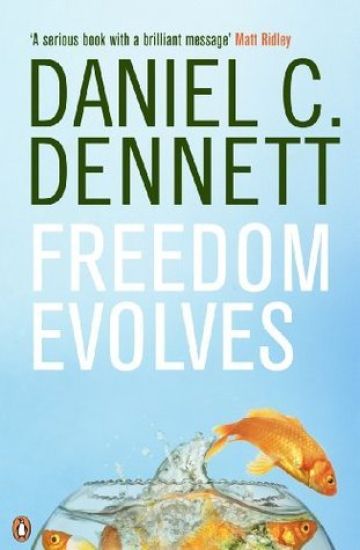
Freedom Evolves

Freedom Evolves

Daniel C. Dennett

PENGUIN BOOKS
2004
nidottu
Can there be freedom and free will in a deterministic world? Renowned philosopher Daniel Dennett emphatically answers "yes " Using an array of provocative formulations, Dennett sets out to show how we alone among the animals have evolved minds that give us free will and morality. Weaving a richly detailed narrative, Dennett explains in a series of strikingly originalarguments--drawing upon evolutionary biology, cognitive neuroscience, economics, and philosophy--that far from being an enemy of traditional explorations of freedom, morality, and meaning, the evolutionary perspective can be an indispensable ally. In Freedom Evolves, Dennett seeks to place ethics on the foundation it deserves: a realistic, naturalistic, potentially unified vision of our place in nature.
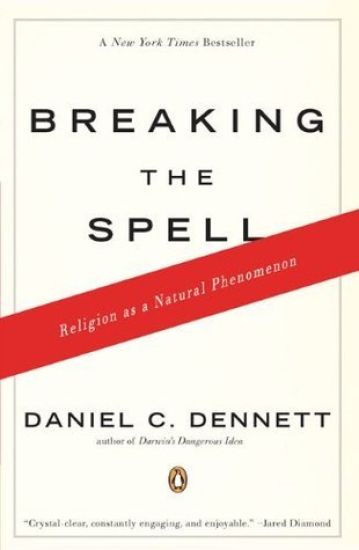
Breaking the Spell: Religion as a Natural Phenomenon
A Tufts University professor explores the nature of faith and how religion shapes everyday life and the future, addressing controversial issues about the relevance and rational qualities of faith while tracing the history of organized religion from its roots in folk beliefs to its key role in modern issues. By the author of Darwin's Dangerous Idea. Reprint. 100,000 first printing.
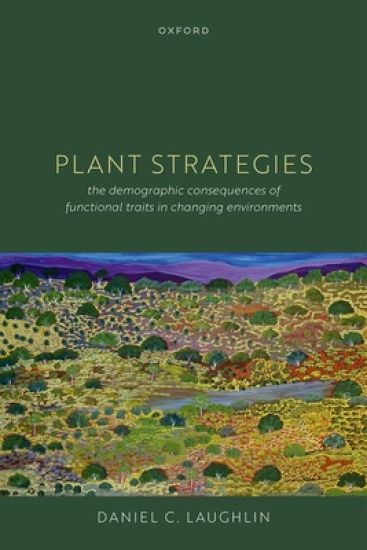
Plant Strategies

Plant Strategies

Daniel C. Laughlin

Oxford University Press
2023
sidottu
How do plants make a living? Some plants are gamblers, others are swindlers. Some plants are habitual spenders while others are strugglers and miserly savers. Plants have evolved a spectacular array of solutions to the existential problems of survival and reproduction in a world where resources are scarce, disturbances can be deadly, and competition is cut-throat. Few topics have both captured the imagination and furrowed the brows of plant ecologists, yet no topic is more important for understanding the assembly of plant communities, predicting plant responses to global change, and enhancing the restoration of our rapidly degrading biosphere. The vast array of plant strategy models that characterize the discipline now require synthesis. These models tend to emphasize either life history strategies based on demography, or functional strategies based on ecophysiology. Indeed, this disciplinary divide between demography and physiology runs deep and continues to this today. The goal of this accessible book is to articulate a coherent framework that unifies life history theory with comparative functional ecology to advance prediction in plant ecology. Armed with a deeper understanding of the dimensionality of life history and functional traits, we are now equipped to quantitively link phenotypes to population growth rates across gradients of resource availability and disturbance regimes. Predicting how species respond to global change is perhaps the most important challenge of our time. A robust framework for plant strategy theory will advance this research agenda by testing the generality of traits for predicting population dynamics.
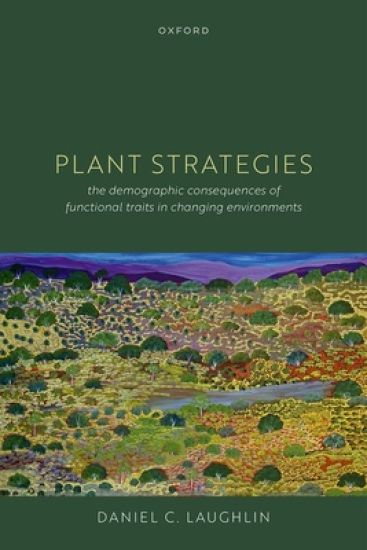
Plant Strategies

Plant Strategies

Daniel C. Laughlin

Oxford University Press
2023
nidottu
How do plants make a living? Some plants are gamblers, others are swindlers. Some plants are habitual spenders while others are strugglers and miserly savers. Plants have evolved a spectacular array of solutions to the existential problems of survival and reproduction in a world where resources are scarce, disturbances can be deadly, and competition is cut-throat. Few topics have both captured the imagination and furrowed the brows of plant ecologists, yet no topic is more important for understanding the assembly of plant communities, predicting plant responses to global change, and enhancing the restoration of our rapidly degrading biosphere. The vast array of plant strategy models that characterize the discipline now require synthesis. These models tend to emphasize either life history strategies based on demography, or functional strategies based on ecophysiology. Indeed, this disciplinary divide between demography and physiology runs deep and continues to this today. The goal of this accessible book is to articulate a coherent framework that unifies life history theory with comparative functional ecology to advance prediction in plant ecology. Armed with a deeper understanding of the dimensionality of life history and functional traits, we are now equipped to quantitively link phenotypes to population growth rates across gradients of resource availability and disturbance regimes. Predicting how species respond to global change is perhaps the most important challenge of our time. A robust framework for plant strategy theory will advance this research agenda by testing the generality of traits for predicting population dynamics.
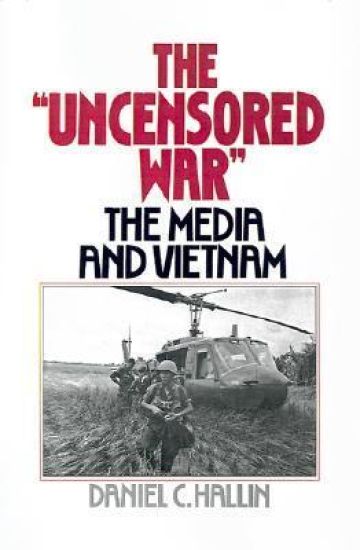
The 'Uncensored War'

The 'Uncensored War'

Daniel C. Hallin

Oxford University Press Inc
1986
sidottu
Vietnam was America's most divisive and unsuccessful foreign war. It was also the first to be televised and the first of the modern era fought without military censorship. From the earliest days of the Kennedy-Johnson escalation right up to the American withdrawal, and even today, the media's role in Vietnam has continued to be intensely controversial. The "Uncensored War" gives a richly detailed account of what Americans read and watched about Vietnam. Hallin draws on the complete body of the New York Times coverage from 1961 to 1965, a sample of hundreds of television reports from 1965-73, including television coverage filmed by the Defense Department in the early years of the war, and interviews with many of the journalists who reported it, to give a powerful critique of the conventional wisdom, both conservative and liberal, about the media and Vietnam. Far from being a consistent adversary of government policy in Vietnam, Hallin shows, the media were closely tied to official perspectives throughout the war, though divisions in the government itself and contradictions in its public relations policies caused every administration, at certain times, to lose its ability to "manage" the news effectively. As for television, it neither showed the "literal horror of war," nor did it play a leading role in the collapse of support: it presented a highly idealized picture of the war in the early years, and shifted toward a more critical view only after public unhappiness and elite divisions over the war were well advanced. The "Uncensored War" is essential reading for anyone interested in the history of the Vietnam war or the role of the media in contemporary American politics. A groundbreaking study of the media's influence on the Vietnam War BLOverturns the conventional notions about the media's role in the war BLDraws directly on a huge body of newspaper and TV coverage
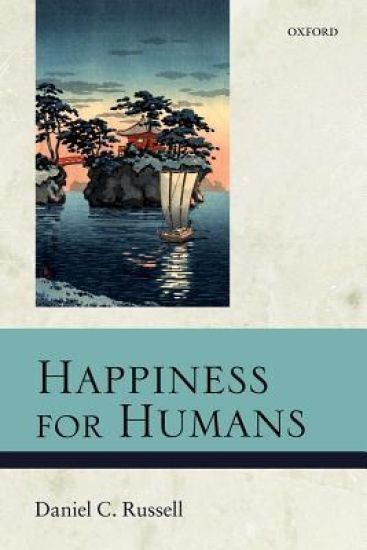
Happiness for Humans

Happiness for Humans

Daniel C. Russell

Oxford University Press
2015
nidottu
In Happiness for Humans, Daniel C. Russell takes a fresh look at happiness from a practical perspective: the perspective of someone trying to solve the wonderful problem of how to give himself a good life. From this perspective, 'happiness' is the name of a solution to that problem for practical deliberation. Russell's approach to happiness falls within a tradition that reaches back to ancient Greek and Roman philosophers--a tradition now called 'eudaimonism.' Beginning with Aristotle's seminal discussion of the role of happiness in practical reasoning, Russell asks what sort of good happiness would have to be in order to play the role in our practical economies that it actually does play. Looking at happiness from this perspective, Russell argues that happiness is a life of activity, with three main features: it is acting for the sake of ends we can live for, and living for them wisely; it is fulfilling for us, both as humans and as unique individuals; and it is inextricable from our connections with the particular persons, pursuits, and places that make us who we are. By returning to this ancient perspective on happiness, Russell finds new directions for contemporary thought about the good lives we want for ourselves.
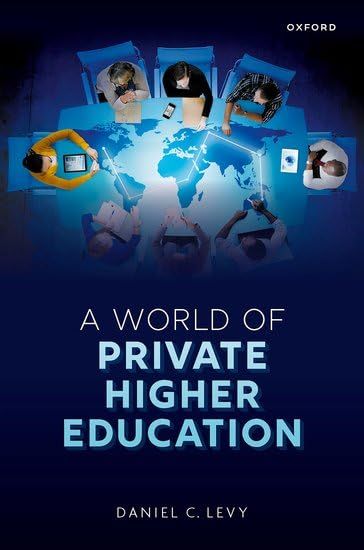
A World of Private Higher Education

A World of Private Higher Education

Daniel C. Levy

Oxford University Press
2024
sidottu
A World of Private Higher Education is the definitive treatment of a sector accounting for a third of the world's 200 million higher education enrolment--yet remaining largely unknown even to scholars of higher education and widely mis-characterized when it is considered by stakeholders or the general public. Beyond the eye-popping numbers, several inter-related thematic findings regarding the Private and the Public underscore the subject matter's importance. First, private-public differences are significant-it matters that so many students are in a sector that not long ago was only marginal in much of the world. Second, private higher education (PHE) itself is increasingly diverse, with significant and private-private differences. Third, the overlaying of the first two realities yields increasing diversity in private-public higher education distinctions. Especially for its pioneering mapping of PHE globally, regionally, and nationally, the book draws on the pioneering dataset of the pioneering scholarly program for research on PHE (Program for Research on Private Higher Education). Unprecedented in geographical scope, the dataset is unprecedented in longitudinal coverage too, dating back to 2000. Empirical methods allow for extensive analysis, and theoretical analysis draws on key private-public concepts embedded in literatures on privatization, nonprofit studies, and policy models. For the major challenge of penetrating inside the increasingly diverse private sector of higher education, Levy revises his heralded and widely employed PHE typology.
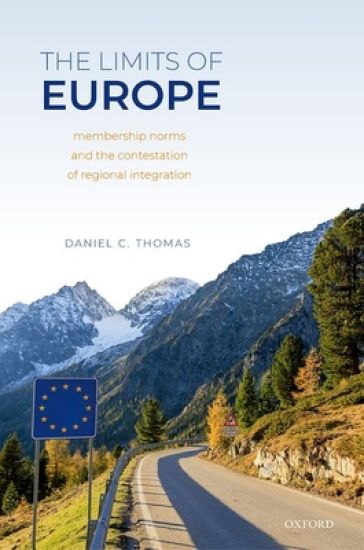
The Limits of Europe

The Limits of Europe

Daniel C. Thomas

Oxford University Press
2021
sidottu
Where does Europe begin and end? How have the European Union and its precursors decided which countries are eligible to join the community and which are not? Few issues are more hotly debated, more important for the course of European integration, or more consequential for individuals in and around the EU. As this book demonstrates, the limits of Europe are determined by the values shared at particular moments in time by the leaders of the community's member states, regardless of their particular policy preferences. These membership norms shape the community's decisions on enlargement by empowering certain political forces and disempowering others. And contrary to conventional wisdom, these norms have changed considerably over time. The Limits of Europe: Membership Norms and the Contestation of Regional Integration uses a novel combination of normative genealogy, statistical analysis and detailed tracing of EU decision-making on Greece, Spain, Turkey and Ukraine to demonstrate that changing membership norms have had a stronger impact on the community's enlargement since the 1950s than treaty rules, the location of the states seeking membership, or even the commercial or security interests of member states.
Yeti

Yeti

Daniel C. Taylor

OUP India
2017
sidottu
AS it turned out, young Daniel never outgrew the enchantment of the mysterious Yeti, the Abominable Snowman. His search for the enigmatic creature of Himalayan legends spread over many decades: from 1956 until 2015, Daniel C. Taylor visited almost all valley systems in his quest to explain the ‘Yeti’s footprints’. But to his surprise, solving the footprint mystery did not answer the Yeti question. As his quest evolved, Taylor went on to create two massive national parks around Mount Everest.Equipped with abundant knowledge of the Himalaya, Taylor tells a story that is captivating and full of surprises. He looks back at his exploration of the 2,000-mile-wide Himalaya and talks about bio resilience as a parallel dynamic to biodiversity, thus widening the scope of our understanding of ecology.Yeti:
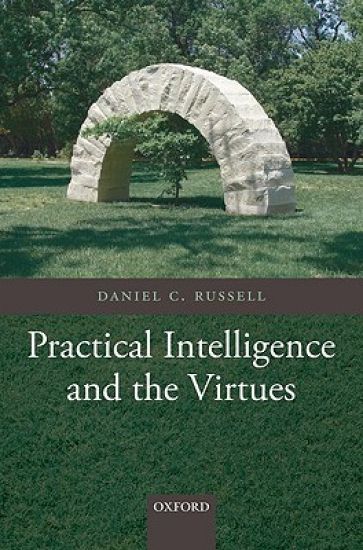
Practical Intelligence and the Virtues

Practical Intelligence and the Virtues

Daniel C. Russell

Oxford University Press
2009
sidottu
One of the most important developments in modern moral philosophy is the resurgence of interest in the virtues. In this new book, Daniel Russell explores two important hopes for such an approach to moral thought: that starting from the virtues should cast light on what makes an action right, and that notions like character, virtue, and vice should yield a plausible picture of human psychology. Russell argues that the key to each of these hopes is an understanding of the cognitive and deliberative skills involved in the virtues. If right action is defined in terms of acting generously or kindly, then these virtues must involve skills for determining what the kind or generous thing to do would be on a given occasion. Likewise, Russell argues that understanding virtuous action as the intelligent pursuit of virtuous goals yields a promising picture of the psychology of virtue. This book develops an Aristotelian account of the virtue of practical intelligence or 'phronesis'--an excellence of deliberating and making choices--which Russell argues is a necessary part of every virtue. This emphasis on the roots of the virtues in the practical intellect contrasts with ambivalence about the practical intellect in much recent work on the virtues--a trend Russell argues is ultimately perilous for virtue theory. This book also takes a penetrating look at issues like the unity of the virtues, responsibility for character, and that elusive figure, 'the virtuous person'. Written in a clear and careful manner, Practical Intelligence and the Virtues will appeal to philosophers and students alike in moral philosophy and moral psychology.
Happiness for Humans

Happiness for Humans

Daniel C. Russell

Oxford University Press
2012
sidottu
In Happiness for Humans, Daniel C. Russell takes a fresh look at happiness from a practical perspective: the perspective of someone trying to solve the wonderful problem of how to give himself a good life. From this perspective, 'happiness' is the name of a solution to that problem for practical deliberation. Russell's approach to happiness falls within a tradition that reaches back to ancient Greek and Roman philosophers--a tradition now called 'eudaimonism.' Beginning with Aristotle's seminal discussion of the role of happiness in practical reasoning, Russell asks what sort of good happiness would have to be in order to play the role in our practical economies that it actually does play. Looking at happiness from this perspective, Russell argues that happiness is a life of activity, with three main features: it is acting for the sake of ends we can live for, and living for them wisely; it is fulfilling for us, both as humans and as unique individuals; and it is inextricable from our connections with the particular persons, pursuits, and places that make us who we are. By returning to this ancient perspective on happiness, Russell finds new directions for contemporary thought about the good lives we want for ourselves.
Practical Intelligence and the Virtues

Practical Intelligence and the Virtues

Daniel C. Russell

Oxford University Press
2011
nidottu
One of the most important developments in modern moral philosophy is the resurgence of interest in the virtues. In this new book, Daniel Russell explores two important hopes for such an approach to moral thought: that starting from the virtues should cast light on what makes an action right, and that notions like character, virtue, and vice should yield a plausible picture of human psychology. Russell argues that the key to each of these hopes is an understanding of the cognitive and deliberative skills involved in the virtues. If right action is defined in terms of acting generously or kindly, then these virtues must involve skills for determining what the kind or generous thing to do would be on a given occasion. Likewise, Russell argues that understanding virtuous action as the intelligent pursuit of virtuous goals yields a promising picture of the psychology of virtue. This book develops an Aristotelian account of the virtue of practical intelligence or 'phronesis'--an excellence of deliberating and making choices--which Russell argues is a necessary part of every virtue. This emphasis on the roots of the virtues in the practical intellect contrasts with ambivalence about the practical intellect in much recent work on the virtues--a trend Russell argues is ultimately perilous for virtue theory. This book also takes a penetrating look at issues like the unity of the virtues, responsibility for character, and that elusive figure, 'the virtuous person'. Written in a clear and careful manner, Practical Intelligence and the Virtues will appeal to philosophers and students alike in moral philosophy and moral psychology.
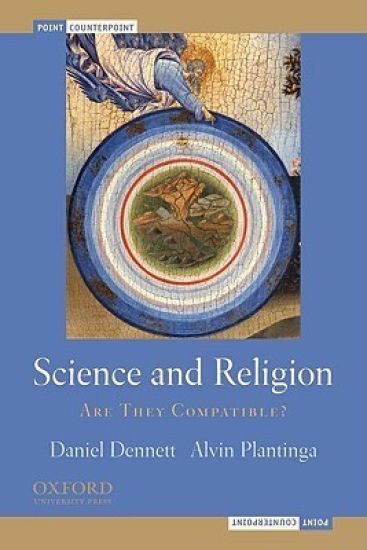
Science and Religion

Science and Religion

Daniel C. Dennett; Alvin Plantinga

Oxford University Press Inc
2011
nidottu
One of today's most controversial and heated issues is whether or not the conflict between science and religion can be reconciled. In Science and Religion: Are They Compatible?, renowned philosophers Daniel C. Dennett and Alvin Plantinga expand upon the arguments that they presented in an exciting live debate held at the 2009 American Philosophical Association Central Division conference. An enlightening discussion that will motivate students to think critically, Science and Religion: Are They Compatible? opens with Plantinga's assertion that Christianity is compatible with evolutionary theory because Christians believe that God created the living world, and it is entirely possible that God did so by using a process of evolution. Dennett vigorously rejects this argument, provoking a reply from Plantinga, another response from Dennett, and final statements from both sides. As philosophers, the authors possess expert skills in critical analysis; their arguments provide a model of dialogue between those who strongly disagree. Ideal for courses in philosophy of religion, science and religion, and philosophy of science, Science and Religion is also captivating reading for general readers.
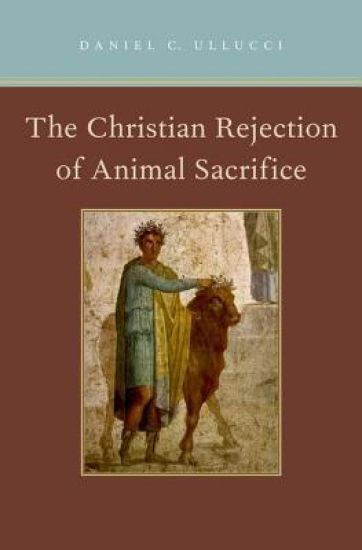
The Christian Rejection of Animal Sacrifice

The Christian Rejection of Animal Sacrifice

Daniel C. Ullucci

Oxford University Press Inc
2012
sidottu
Sacrifice dominated the religious landscape of the ancient Mediterranean world for millennia, but its role and meaning changed dramatically in the fourth and fifth centuries with the rise of Christianity. Daniel Ullucci offers a new explanation of this remarkable transformation, in the process demonstrating the complexity of the concept of sacrifice in Roman, Greek, and Jewish religion. The Christian Rejection of Animal Sacrifice challenges the predominant scholarly model, which posits a connection between so-called critiques of sacrifice in non-Christian Greek, Latin, and Hebrew texts and the Christian rejection of animal sacrifice. According to this model, pre-Christian authors attacked the propriety of animal sacrifice as a religious practice, and Christians responded by replacing animal sacrifice with a pure, ''spiritual'' 'worship. This historical construction influences prevailing views of animal sacrifice even today, casting it as barbaric, backward, and primitive despite the fact that it is still practiced in such contemporary religions as Islam and Santeria. Rather than interpret the entire history of animal sacrifice through the lens of the Christian master narrative, Ullucci shows that the ancient texts must be seen not simply as critiques but as part of an ongoing competition between elite cultural producers to define the meaning and purpose of sacrifice. He reveals that Christian authors were not merely purveyors of pure spiritual religion, but a cultural elite vying for legitimacy and influence in societies that long predated them. The Christian Rejection of Animal Sacrifice is a crucial reinterpretation of the history of one of humanity's oldest and most fascinating rituals.
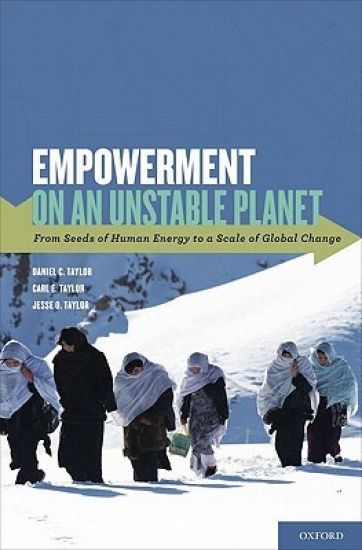
Empowerment on an Unstable Planet

Empowerment on an Unstable Planet

Daniel C. Taylor; Carl E. Taylor; Jesse O. Taylor

Oxford University Press Inc
2011
sidottu
Since World War II, development projects have invested more than two trillion dollars towards health services, poverty alleviation, education, food security, and environmental initiatives around the world. Despite these efforts, 20% of the world still lives on less than $1.50 a day and the environment within which all live declines dramatically. There are clear limits to what further investments at this rate can achieve. This book advances the thesis that a more effective and universal foundation for social change and environmental restoration is not money, but human energy. Using this approach Tibet recovered from being nearly deforested to having over 40% of its land area protected under conservation management. Using principles outlined in this book mothers in northeast India implemented a package of life-changing actions that halved child mortality. They parallel the way New York City has created a citywide conservation program over three-and-a-half centuries. Each of these examples is particular to its time and place, yet a shared set of principles is at work in all of them. Improving the quality of life for a community starts by strengthening successes already operating. It involves local knowledge and a relatively simple set of principles, tasks, and criteria designed to empower communities. This highly readable account demonstrates how a comprehensive process for social change harnesses the energy of a community and scales it up with a rising number of participants becoming invested in increasingly high-quality work. Richly illustrated with photographs and stories of innovative people and programs in communities ranging from Nepal to Afghanistan to the South Bronx, it provides practical, proven guidelines for creating profound and sustained social change that begins in individual communities and grows to scale.
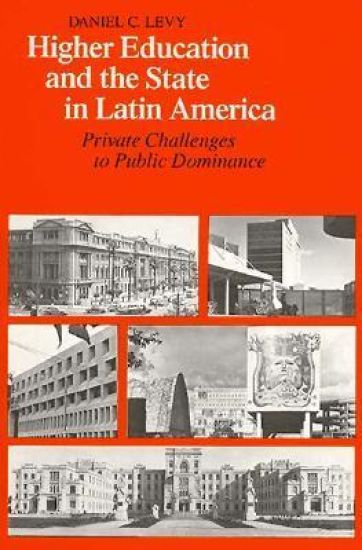
Higher Education and the State in Latin America

Higher Education and the State in Latin America

Daniel C. Levy

University of Chicago Press
1986
sidottu
Latin America higher education has undergone an astonishing transformation in recent years, highlighted by the private sector's growth from 3 to 34 percent of the region's total enrollment. In this provocative work Daniel Levy examines the sources, characteristics, and consequences of the development and considers the privatization of higher education within the broader context of state-society relationships. Levy shows how specific national circumstances cause variations and identifies three basic private-public patterns: one in which the private and public sectors are relatively similar and those in which one sector or the other is dominant. These patterns are analyzed in depth in case studies of Chile, Mexico, and Brazil. For each sector, Levy investigates origins and growth, and then who pays, who rules, and whose interests are served. In addition to providing a wealth of information, Levy offers incisive analyses of the nature of public and private institutions. Finally, he explores the implications of his findings for concepts such as autonomy, corporatism, and privatization. His multifaceted study is a major contribution to the literature on Latin American studies, comparative politics, and higher education.
Making EU Foreign Policy

Making EU Foreign Policy

Daniel C. Thomas

Palgrave Macmillan
2011
sidottu
A novel explanation of how EU member states overcome their divergent preferences to reach agreement on common foreign policies, with fourteen in-depth case studies covering diplomatic and security issues, enlargement, trade, development and environmental protection.
I've Been Thinking

I've Been Thinking

Daniel C. Dennett

PENGUIN BOOKS LTD
2023
sidottu
'A generous book written by a figure who has made a significant impact on philosophy ... Anyone interested in philosophy should read it' Nigel Warburton, Times Literary Supplement'One of today's most readable, intellectually nimble and scientifically literate philosophers' Nature'Who would have guessed that a philosopher's life could be so full of adventures?'Daniel C. Dennett, philosopher and cognitive scientist, has spent his career considering consciousness. I've Been Thinking traces the development of Dennett's own intellect and instructs us how we too can become good thinkers.Dennett's restless curiosity leads him from his childhood in Beirut to Harvard, and from Parisian jazz clubs to 'tillosophy' on his tractor in Maine. Along the way, he encounters and debates with a host of legendary thinkers, and reveals the breakthroughs and misjudgments that shaped his paradigm-shifting philosophies. Thinking, Dennett argues, is hard, and risky. In fact, all good philosophical thinking is inevitably accompanied by bafflement, frustration and self-doubt. It is only in getting it wrong that we, very occasionally, find a way to get it right.This memoir by one of the greatest philosophers of our time will speak to anyone who seeks a life of the mind with adventure and creativity.
Intuition Pumps and Other Tools for Thinking

Intuition Pumps and Other Tools for Thinking

Daniel C. Dennett

Penguin Books Ltd
2014
pokkari
In Intuition Pumps, Daniel Dennett, one of the world's leading philosophers, and author of Consciousness Explained and Freedom Evolves, offers aspiring thinkers his personal trove of mind-stretching thought experimentsThinking is hard. A few of us may be natural geniuses; others are blessed with reserves of willpower. Then there's the rest of us: not prodigies and short on time, but still aspiring to understand the world. What can we do? Daniel Dennett, one of the world's most original thinkers, reveals a collection of his favourite thinking tools, or 'intuition pumps'. From Occam's Razor to the benefit of mistakes, the 90% rule to avoiding 'deepitites', this entertaining guide will enable you to tackle life's most fundamental questions - evolution, meaning, consciousness and free will - and teach you to think truly independently and creatively.Daniel Dennett is one of the most original and provocative thinkers in the world. A brilliant polemicist and philosopher, he is famous for challenging unexamined orthodoxies. His books include Brainstorms, Brainchildren, Elbow Room, Consciousness Explained, Darwin's Dangerous Idea and Freedom Evolves. He lives in North Andover, Massachusetts.'One of the world's most original and provocative thinkers' Daily Telegraph'A master class' Guardian 'Intelligence, insight and flair ... They don't come much bigger than Daniel Dennett' Julian Baggini, Guardian'A philosopher's box of tools for the musing mind' Melvin Konner, Nature'You'll enjoy and be challenged by it'Steven Rose, Guardian'A lively primer on the radical answers Mr. Dennett has elaborated to the big questions in his nearly five decades in philosophy' Jennifer Schuessler, The New York Times'America's most important and entertaining philosopher' Observer