

Kirjahaku
Etsi kirjoja tekijän nimen, kirjan nimen tai ISBN:n perusteella.
1000 tulosta hakusanalla Daniel C. Morrison

A translation of the Kabbalah for the layperson includes a compact presentation of each primary text and features a practical analysis and vital historical information that offer insight into the various aspects of Jewish mysticism.
In Consciousness Explained, Daniel C. Dennett reveals the secrets of one of the last remaining mysteries of the universe: the human brain.Daniel C. Dennett's now-classic book blends philosophy, psychology and neuroscience - with the aid of numerous examples and thought-experiments - to explore how consciousness has evolved, and how a modern understanding of the human mind is radically different from conventional explanations of consciousness.What people think of as the stream of consciousness is not a single, unified sequence, the author argues, but 'multiple drafts' of reality composed by a computer-like 'virtual machine'. Dennett explains how science has exploded the classic mysteries of consciousness: the nature of introspection, the self or ego and its relation to thoughts and sensations, the problems posed by qualia, and the level of consciousness of non-human creatures. 'Brilliant ... a torrent of stimulating thought' Richard Dawkins 'Revolutionary ... one of the most mentally agile, intellectually resourceful books you are likely to read' Guardian 'A masterful tapestry of deep insights ... Dennett has written a profound and important book that is also clear, exciting and witty' Douglas R. Hofstadter, author of Gödel, Escher, Bach
In Darwin's Dangerous Idea: Evolution and the Meanings of Life Daniel C. Dennett argues that the theory of evolution can demystify the miracles of life without devaluing our most cherished beliefs. From the moment it first appeared, Charles Darwin's theory of evolution by natural selection has been controversial: misrepresented, abused, denied and fiercely debated. In this powerful defence of Darwin, Daniel C. Dennett explores every aspect of evolutionary thinking to show why it is so fundamental to our existence, and why it affirms - not threatens - our convictions about the meaning of life. 'Essential and pleasurable for any thinking person'Stephen Pinker 'A surpassingly brilliant book. Where creative, it lifts the reader to new intellectual heights. Where critical, it is devastating'Richard Dawkins 'A brilliant piece of persuasion, excitingly argued and compulsively readable'The Times Higher Education Supplement 'Superb ... This is the best single-author overview of all the implications of evolution by natural selection available ... deserves a place on the bookshelves of every thinking person'John Gribbin, Sunday Times 'Dennett's book brings together science and philosophy with wit, complex clarity and an infectious sense that these ideas matter, to us and the way we live now'A.S. Byatt, Sunday Times Books of the Year Daniel C. Dennett is one of the most original and provocative thinkers in the world. A brilliant polemicist and philosopher, he is famous for challenging unexamined orthodoxies, and an outspoken supporter of the Brights movement. His books include Brainstorms, Brainchildren, Elbow Room, Breaking the Spell, Darwin's Dangerous Idea, Consciousness Explained and Freedom Evolves.
Daniel C. Dennett's Freedom Evolves tackles the most important question of human existence - is there really such a thing as free will? How can humans make genuinely independent choices if we are just a cluster of cells and genes in a world determined by scientific laws? Here, Daniel Dennett provides an impassioned defense of free will. But rather than freedom being an eternal, unchanging condition of our existence, in reality, he reveals, it has evolved: just like life on the planet and the air we breathe. Evolution is the key to resolving this greatest of philosophical questions - and to understanding our place in the world as uniquely free agents. Dennett shows that far from there being an incompatibility between contemporary science and the traditional vision of freedom and morality, it is only recently that science has advanced to the point where we can see how we came to have our unique kind of freedom. 'A serious book with a brilliant message' Matt Ridley, author of The Red Queen 'Powerful and ingenious ... The definitive argument that the human mind is a product of evolution' John Gray, Independent 'A book of sparkling brio and seemingly effortless panache ... Dennett at his best is as good as it gets' Spectator Daniel C. Dennett is one of the most original and provocative thinkers in the world. A brilliant polemicist and philosopher, he is famous for challenging unexamined orthodoxies, and an outspoken supporter of the Brights movement. His books include Brainstorms, Brainchildren, Elbow Room, Breaking the Spell, Darwin's Dangerous Idea and Freedom Evolves.

What is religion and how did it evolve? Is it the product of blind evolutionary instinct or of rational choice? Is the only way to live a good life through religion? In this title, the author explores how the great ideas of religion have enthralled us for thousands of years - and whether we could (or should) break free.

'Required reading for anyone remotely curious about how they came to be remotely curious' Observer'Enthralling' Spectator What is human consciousness and how is it possible? These questions fascinate thinking people from poets and painters to physicists, psychologists, and philosophers. This is Daniel C. Dennett's brilliant answer, extending perspectives from his earlier work in surprising directions, exploring the deep interactions of evolution, brains and human culture. Part philosophical whodunnit, part bold scientific conjecture, this landmark work enlarges themes that have sustained Dennett's career at the forefront of philosophical thought. In his inimitable style, laced with wit and thought experiments, Dennett shows how culture enables reflection by installing a profusion of thinking tools, or memes, in our brains, and how language turbocharges this process. The result: a mind that can comprehend the questions it poses, has emerged from a process of cultural evolution. An agenda-setting book for a new generation of philosophers and thinkers, From Bacteria to Bach and Back is essential for anyone who hopes to understand human creativity in all its applications.
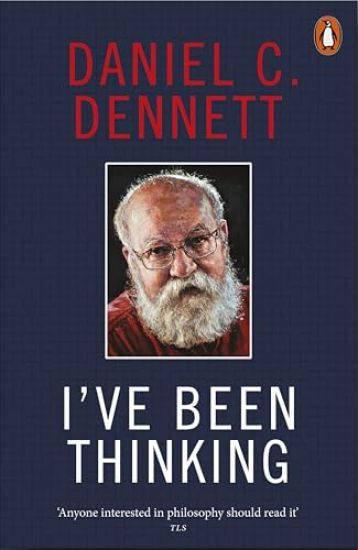
'A generous book written by a figure who has made a significant impact on philosophy ... Anyone interested in philosophy should read it' Nigel Warburton, Times Literary Supplement'One of today's most readable, intellectually nimble and scientifically literate philosophers' Nature'Who would have guessed that a philosopher's life could be so full of adventures?'Daniel C. Dennett, philosopher and cognitive scientist, has spent his career considering consciousness. I've Been Thinking traces the development of Dennett's own intellect and instructs us how we too can become good thinkers.Dennett's restless curiosity leads him from his childhood in Beirut to Harvard, and from Parisian jazz clubs to 'tillosophy' on his tractor in Maine. Along the way, he encounters and debates with a host of legendary thinkers, and reveals the breakthroughs and misjudgments that shaped his paradigm-shifting philosophies. Thinking, Dennett argues, is hard, and risky. In fact, all good philosophical thinking is inevitably accompanied by bafflement, frustration and self-doubt. It is only in getting it wrong that we, very occasionally, find a way to get it right.This memoir by one of the greatest philosophers of our time will speak to anyone who seeks a life of the mind with adventure and creativity.
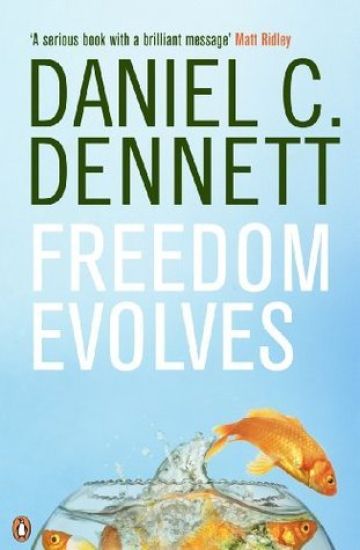
Can there be freedom and free will in a deterministic world? Renowned philosopher Daniel Dennett emphatically answers "yes " Using an array of provocative formulations, Dennett sets out to show how we alone among the animals have evolved minds that give us free will and morality. Weaving a richly detailed narrative, Dennett explains in a series of strikingly originalarguments--drawing upon evolutionary biology, cognitive neuroscience, economics, and philosophy--that far from being an enemy of traditional explorations of freedom, morality, and meaning, the evolutionary perspective can be an indispensable ally. In Freedom Evolves, Dennett seeks to place ethics on the foundation it deserves: a realistic, naturalistic, potentially unified vision of our place in nature.
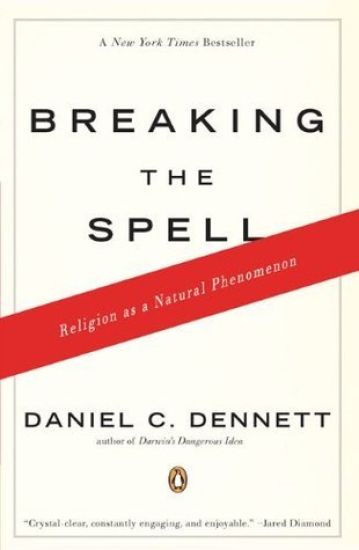
A Tufts University professor explores the nature of faith and how religion shapes everyday life and the future, addressing controversial issues about the relevance and rational qualities of faith while tracing the history of organized religion from its roots in folk beliefs to its key role in modern issues. By the author of Darwin's Dangerous Idea. Reprint. 100,000 first printing.
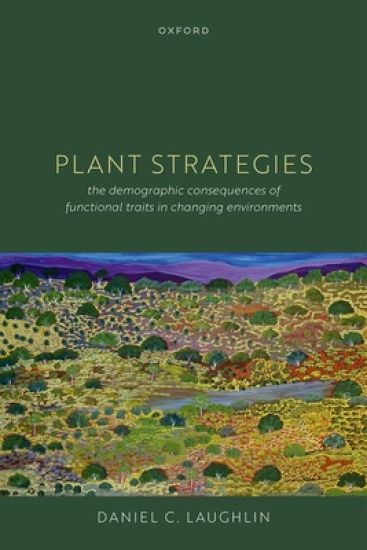
How do plants make a living? Some plants are gamblers, others are swindlers. Some plants are habitual spenders while others are strugglers and miserly savers. Plants have evolved a spectacular array of solutions to the existential problems of survival and reproduction in a world where resources are scarce, disturbances can be deadly, and competition is cut-throat. Few topics have both captured the imagination and furrowed the brows of plant ecologists, yet no topic is more important for understanding the assembly of plant communities, predicting plant responses to global change, and enhancing the restoration of our rapidly degrading biosphere. The vast array of plant strategy models that characterize the discipline now require synthesis. These models tend to emphasize either life history strategies based on demography, or functional strategies based on ecophysiology. Indeed, this disciplinary divide between demography and physiology runs deep and continues to this today. The goal of this accessible book is to articulate a coherent framework that unifies life history theory with comparative functional ecology to advance prediction in plant ecology. Armed with a deeper understanding of the dimensionality of life history and functional traits, we are now equipped to quantitively link phenotypes to population growth rates across gradients of resource availability and disturbance regimes. Predicting how species respond to global change is perhaps the most important challenge of our time. A robust framework for plant strategy theory will advance this research agenda by testing the generality of traits for predicting population dynamics.
How do plants make a living? Some plants are gamblers, others are swindlers. Some plants are habitual spenders while others are strugglers and miserly savers. Plants have evolved a spectacular array of solutions to the existential problems of survival and reproduction in a world where resources are scarce, disturbances can be deadly, and competition is cut-throat. Few topics have both captured the imagination and furrowed the brows of plant ecologists, yet no topic is more important for understanding the assembly of plant communities, predicting plant responses to global change, and enhancing the restoration of our rapidly degrading biosphere. The vast array of plant strategy models that characterize the discipline now require synthesis. These models tend to emphasize either life history strategies based on demography, or functional strategies based on ecophysiology. Indeed, this disciplinary divide between demography and physiology runs deep and continues to this today. The goal of this accessible book is to articulate a coherent framework that unifies life history theory with comparative functional ecology to advance prediction in plant ecology. Armed with a deeper understanding of the dimensionality of life history and functional traits, we are now equipped to quantitively link phenotypes to population growth rates across gradients of resource availability and disturbance regimes. Predicting how species respond to global change is perhaps the most important challenge of our time. A robust framework for plant strategy theory will advance this research agenda by testing the generality of traits for predicting population dynamics.
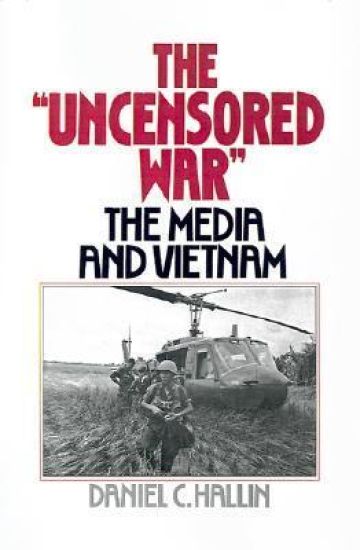
Vietnam was America's most divisive and unsuccessful foreign war. It was also the first to be televised and the first of the modern era fought without military censorship. From the earliest days of the Kennedy-Johnson escalation right up to the American withdrawal, and even today, the media's role in Vietnam has continued to be intensely controversial. The "Uncensored War" gives a richly detailed account of what Americans read and watched about Vietnam. Hallin draws on the complete body of the New York Times coverage from 1961 to 1965, a sample of hundreds of television reports from 1965-73, including television coverage filmed by the Defense Department in the early years of the war, and interviews with many of the journalists who reported it, to give a powerful critique of the conventional wisdom, both conservative and liberal, about the media and Vietnam. Far from being a consistent adversary of government policy in Vietnam, Hallin shows, the media were closely tied to official perspectives throughout the war, though divisions in the government itself and contradictions in its public relations policies caused every administration, at certain times, to lose its ability to "manage" the news effectively. As for television, it neither showed the "literal horror of war," nor did it play a leading role in the collapse of support: it presented a highly idealized picture of the war in the early years, and shifted toward a more critical view only after public unhappiness and elite divisions over the war were well advanced. The "Uncensored War" is essential reading for anyone interested in the history of the Vietnam war or the role of the media in contemporary American politics. A groundbreaking study of the media's influence on the Vietnam War BLOverturns the conventional notions about the media's role in the war BLDraws directly on a huge body of newspaper and TV coverage
Elbow Room The Varieties of Free Will Worth Wanting
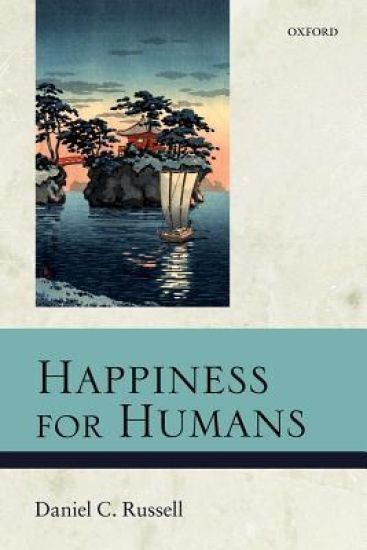
In Happiness for Humans, Daniel C. Russell takes a fresh look at happiness from a practical perspective: the perspective of someone trying to solve the wonderful problem of how to give himself a good life. From this perspective, 'happiness' is the name of a solution to that problem for practical deliberation. Russell's approach to happiness falls within a tradition that reaches back to ancient Greek and Roman philosophers--a tradition now called 'eudaimonism.' Beginning with Aristotle's seminal discussion of the role of happiness in practical reasoning, Russell asks what sort of good happiness would have to be in order to play the role in our practical economies that it actually does play. Looking at happiness from this perspective, Russell argues that happiness is a life of activity, with three main features: it is acting for the sake of ends we can live for, and living for them wisely; it is fulfilling for us, both as humans and as unique individuals; and it is inextricable from our connections with the particular persons, pursuits, and places that make us who we are. By returning to this ancient perspective on happiness, Russell finds new directions for contemporary thought about the good lives we want for ourselves.
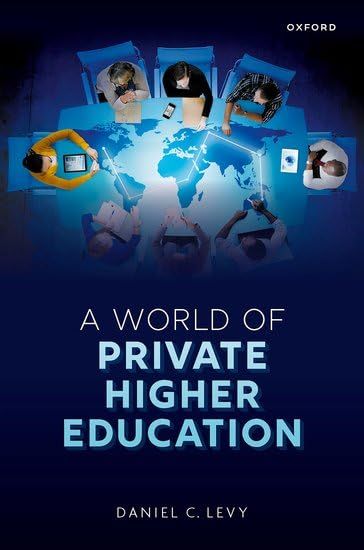
A World of Private Higher Education is the definitive treatment of a sector accounting for a third of the world's 200 million higher education enrolment--yet remaining largely unknown even to scholars of higher education and widely mis-characterized when it is considered by stakeholders or the general public. Beyond the eye-popping numbers, several inter-related thematic findings regarding the Private and the Public underscore the subject matter's importance. First, private-public differences are significant-it matters that so many students are in a sector that not long ago was only marginal in much of the world. Second, private higher education (PHE) itself is increasingly diverse, with significant and private-private differences. Third, the overlaying of the first two realities yields increasing diversity in private-public higher education distinctions. Especially for its pioneering mapping of PHE globally, regionally, and nationally, the book draws on the pioneering dataset of the pioneering scholarly program for research on PHE (Program for Research on Private Higher Education). Unprecedented in geographical scope, the dataset is unprecedented in longitudinal coverage too, dating back to 2000. Empirical methods allow for extensive analysis, and theoretical analysis draws on key private-public concepts embedded in literatures on privatization, nonprofit studies, and policy models. For the major challenge of penetrating inside the increasingly diverse private sector of higher education, Levy revises his heralded and widely employed PHE typology.
Where does Europe begin and end? How have the European Union and its precursors decided which countries are eligible to join the community and which are not? Few issues are more hotly debated, more important for the course of European integration, or more consequential for individuals in and around the EU. As this book demonstrates, the limits of Europe are determined by the values shared at particular moments in time by the leaders of the community's member states, regardless of their particular policy preferences. These membership norms shape the community's decisions on enlargement by empowering certain political forces and disempowering others. And contrary to conventional wisdom, these norms have changed considerably over time. The Limits of Europe: Membership Norms and the Contestation of Regional Integration uses a novel combination of normative genealogy, statistical analysis and detailed tracing of EU decision-making on Greece, Spain, Turkey and Ukraine to demonstrate that changing membership norms have had a stronger impact on the community's enlargement since the 1950s than treaty rules, the location of the states seeking membership, or even the commercial or security interests of member states.

AS it turned out, young Daniel never outgrew the enchantment of the mysterious Yeti, the Abominable Snowman. His search for the enigmatic creature of Himalayan legends spread over many decades: from 1956 until 2015, Daniel C. Taylor visited almost all valley systems in his quest to explain the ‘Yeti’s footprints’. But to his surprise, solving the footprint mystery did not answer the Yeti question. As his quest evolved, Taylor went on to create two massive national parks around Mount Everest.Equipped with abundant knowledge of the Himalaya, Taylor tells a story that is captivating and full of surprises. He looks back at his exploration of the 2,000-mile-wide Himalaya and talks about bio resilience as a parallel dynamic to biodiversity, thus widening the scope of our understanding of ecology.Yeti:
One of the most important developments in modern moral philosophy is the resurgence of interest in the virtues. In this new book, Daniel Russell explores two important hopes for such an approach to moral thought: that starting from the virtues should cast light on what makes an action right, and that notions like character, virtue, and vice should yield a plausible picture of human psychology. Russell argues that the key to each of these hopes is an understanding of the cognitive and deliberative skills involved in the virtues. If right action is defined in terms of acting generously or kindly, then these virtues must involve skills for determining what the kind or generous thing to do would be on a given occasion. Likewise, Russell argues that understanding virtuous action as the intelligent pursuit of virtuous goals yields a promising picture of the psychology of virtue. This book develops an Aristotelian account of the virtue of practical intelligence or 'phronesis'--an excellence of deliberating and making choices--which Russell argues is a necessary part of every virtue. This emphasis on the roots of the virtues in the practical intellect contrasts with ambivalence about the practical intellect in much recent work on the virtues--a trend Russell argues is ultimately perilous for virtue theory. This book also takes a penetrating look at issues like the unity of the virtues, responsibility for character, and that elusive figure, 'the virtuous person'. Written in a clear and careful manner, Practical Intelligence and the Virtues will appeal to philosophers and students alike in moral philosophy and moral psychology.

In Happiness for Humans, Daniel C. Russell takes a fresh look at happiness from a practical perspective: the perspective of someone trying to solve the wonderful problem of how to give himself a good life. From this perspective, 'happiness' is the name of a solution to that problem for practical deliberation. Russell's approach to happiness falls within a tradition that reaches back to ancient Greek and Roman philosophers--a tradition now called 'eudaimonism.' Beginning with Aristotle's seminal discussion of the role of happiness in practical reasoning, Russell asks what sort of good happiness would have to be in order to play the role in our practical economies that it actually does play. Looking at happiness from this perspective, Russell argues that happiness is a life of activity, with three main features: it is acting for the sake of ends we can live for, and living for them wisely; it is fulfilling for us, both as humans and as unique individuals; and it is inextricable from our connections with the particular persons, pursuits, and places that make us who we are. By returning to this ancient perspective on happiness, Russell finds new directions for contemporary thought about the good lives we want for ourselves.