

Kirjahaku
Etsi kirjoja tekijän nimen, kirjan nimen tai ISBN:n perusteella.
1000 tulosta hakusanalla Daniel Cohn-Bendit

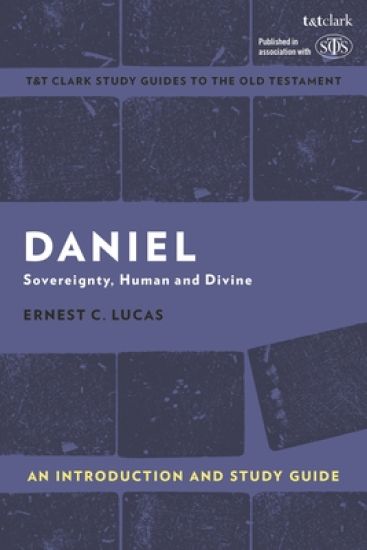
Introducing students to the Book of Daniel in the Old Testament, Ernest Lucas examines the book's structure and characteristics. He covers the latest in biblical scholarship, including historical and interpretive issues, and considers a range of scholarly approaches. Lucas shows how understanding of the book is enhanced by considering it in the context of Mesopotamian culture, literature, and religion. He also evaluates different arguments concerning the authorship, date, and provenance of the book.In particular, the guide focuses on illuminating the book’s relationship to both the tradition of Hebrew prophecy and the later development of Jewish apocalyptic literature. It also highlights the importance of understanding the Book of Daniel as "resistance literature", which intended to encourage faithful Jews to resist the pressures of conformity to the pagan culture in which they lived, and to endure through persecution if necessary.With suggestions of further reading at the end of each chapter, this guide will be an essential accompaniment to study of the Book of Daniel.

Introducing students to the Book of Daniel in the Old Testament, Ernest Lucas examines the book's structure and characteristics. He covers the latest in biblical scholarship, including historical and interpretive issues, and considers a range of scholarly approaches. Lucas shows how understanding of the book is enhanced by considering it in the context of Mesopotamian culture, literature, and religion. He also evaluates different arguments concerning the authorship, date, and provenance of the book.In particular, the guide focuses on illuminating the book’s relationship to both the tradition of Hebrew prophecy and the later development of Jewish apocalyptic literature. It also highlights the importance of understanding the Book of Daniel as "resistance literature", which intended to encourage faithful Jews to resist the pressures of conformity to the pagan culture in which they lived, and to endure through persecution if necessary.With suggestions of further reading at the end of each chapter, this guide will be an essential accompaniment to study of the Book of Daniel.

An exciting demonstration of trust and devotion, Daniel offers a positive message of hope and reassurance for the people of God in every age.

The book of Daniel is a literary rich and complex story known for its apocalyptic style. Written in both Hebrew and Aramaic, the book begins with stories of Daniel and three Jewish young men Hananiah (Shadrach), Mishael (Meshach), and Azariah (Abednego) who are exiles among the remnant from Judea in Babylon in sixth century b.c.e. It ends with Daniel's visions and dreams about the Jewish community that offer comfort and encouragement as they endure persecution and hope for deliverance into God's kingdom.Newsom's commentary offers a fresh study of Daniel in its historical context. Newsom further analyzes Daniel from literary and theological perspectives. With her expert commentary, Newsom's study will be the definitive commentary on Daniel for many years to come.The Old Testament Library provides fresh and authoritative treatments of important aspects of Old Testament study through commentaries and general surveys. The contributors are scholars of international standing. The editorial board consists of William P. Brown, Professor of Old Testament, Columbia Theological Seminary in Decatur, Georgia; Carol A. Newsom, Charles Howard Candler Professor of Old Testament, Candler School of Theology at Emory University in Atlanta, Georgia; and Brent A. Strawn, Professor of Old Testament, Candler School of Theology at Emory University in Atlanta, Georgia.
This volume, a part of the Interpretation commentary series, explores the book of Daniel.Interpretation: A Bible Commentary for Teaching and Preaching is a distinctive resource for those who interpret the Bible in the church. Planned and written specifically for teaching and preaching needs, this critically acclaimed biblical commentary is a major contribution to scholarship and ministry.
The book of Daniel imparts a message of profound hope and reassurance to people of faith throughout the ages."Daniel," writes D. S. Russell, "is a fascinating book which speaks as profoundly to our day as it did to the day it was first written. Its message declared unequivocally that the sovereign Lord God was in control not only of history but also of the end of history." An exciting demonstration of trust and devotion, Daniel offers a positive message of hope and reassurance for the people of God in every age.The Daily Study Bible series seamlessly continues the legacy of William Barclay’s renowned New Testament series by delving into the texts of the Old Testament, weaving together ancient wisdom and modern insights for a transformative reading experience. Perfectly tailored for individual study, spirited group discussions, or classroom exploration, the Daily Study Bible series offers an indispensable resource for spiritual seekers and scholars alike. Within these volumes, readers will encounter a profound exploration of the Scriptures, uncovering the profound messages they held in the past and discerning their relevance in the present.

The book of Daniel is concerned with religious persecution. Daniel's message in this apocalyptic text, however, assures that God will deliver those who trust God, refuse to worship other Gods, and keep Jewish tradition in the face of persecution. C. L. Seow examines this difficult and provocative book and explores its relevance to faith and the church today.Books in the Westminster Bible Companion series assist laity in their study of the Bible as a guide to Christian faith and practice. Each volume explains the biblical book in its original historical context and explores its significance for faithful living today. These books are ideal for individual study and for Bible study classes and groups.

The book of Daniel is a literary rich and complex story known for its apocalyptic style. Written in both Hebrew and Aramaic, the book begins with stories of Daniel and three Jewish young men Hananiah (Shadrach), Mishael (Meshach), and Azariah (Abednego) who are exiles among the remnant from Judea in Babylon in sixth century b.c.e. It ends with Daniel's visions and dreams about the Jewish community that offer comfort and encouragement as they endure persecution and hope for deliverance into God's kingdom.Newsom's commentary offers a fresh study of Daniel in its historical context. Newsom further analyzes Daniel from literary and theological perspectives. With her expert commentary, Newsom's study will be the definitive commentary on Daniel for many years to come.The Old Testament Library provides fresh and authoritative treatments of important aspects of Old Testament study through commentaries and general surveys. The contributors are scholars of international standing. The editorial board consists of William P. Brown, Professor of Old Testament, Columbia Theological Seminary in Decatur, Georgia; Carol A. Newsom, Charles Howard Candler Professor of Old Testament, Candler School of Theology at Emory University in Atlanta, Georgia; and Brent A. Strawn, Professor of Old Testament, Candler School of Theology at Emory University in Atlanta, Georgia.
The Abingdon Old Testament Commentaries series offers compact, critical commentaries on all the books of the Old Testament. In addition to providing fundamental information on and insights into Old Testament writings, these commentaries exemplify the tasks and procedures of careful, critical exegesis so as to assist students of the Old Testament in coming to an informed engagement of the biblical texts themselves. These commentaries are written with special attention to the needs and interests of theology students, but they will also be useful for students in upper-level college or university settings, as well as for pastors and other church leaders. Each volume consists of four parts: -- an introduction that addresses the key issues raised by the writing; the literary genre, structure, and character of the writing; the occasional and situational context of the writing, including its wider social and historical context; and the theological and ethical significance of the writing within these several contexts-- a commentary on the text, organized by literary units, covering literary analysis, exegetical analysis, and theological and ethical analysis-- an annotated bibliography-- a brief subject index Gowan takes full account of the most important current scholarship and secondary literature, while not attempting to engage in technical academic debate. The fundamental concern of this and every volume is analysis and discussion of the literary, sociohistorical, theological, and ethical dimensions of the biblical texts themselves. Each volume attends to issues of special concern to students of the Bible: literary genre, structure and character of the writing, occasion and situational context of the writing, wider social and historical context, the theological and ethical significance of the writing within these several contexts, and the like. Daniel--one of the most misused books of the Bible--is read in this commentary as a powerful message concerning hope and responsibility for believers who, for various reasons, have to face the theological question, "Who's in charge here?" The book of Daniel insists that the God of Israel is in charge, in spite of what circumstances may indicate; then finds ways, through story and vision, to reassure the faithful that there is a future for them after all. The commentary shows that what might be taken as just "Sunday school stories"--the lions' den and the fiery furnace--do raise issues from real life that have faced believers time and again across the centuries. It also helps readers to understand how to read Daniel's predictions of the future in a way that is most faithful to Scripture as a whole. The author explores the widely disparate meanings that have been attributed to the visions in the book. He investigates four basic interpretations that form the basis of reading the Book of Daniel.



His name meant "God is my judge," and his life bore witness to that fact. Daniel was a man who knew the Most High. An intimate friend of God, he realized simultaneously that friendship cost time kneeling in humility. He understood God's sovereignty, even in pagan Babylon where the Jews were exiled, and he refused to compromise his faith.Daniel's resolution meant sacrifice. It meant discipline in prayer, diplomacy with government leaders, and dedication to living "set apart." It meant depending on an unchanging God to give him an unwavering vision. Amid a pagan nation, an arrogant king, ravenous lions, and a blazing furnace, Daniel and his friends sought God and found Him in a way that will inspire and strengthen your journey. The same God who shut the lions' mouths and rescued His men unscathed from the flames will consecrate you to dream His dreams and do His work if only you allow Him. Do you have what it takes?

Daniel
Augsburg Fortress
1994
sidottu
The most comprehensive English-language commentary on Daniel in 65 years. Collins situates the Old Testament in its historical context and offers a full explanation of the text, especially its religious imagery.
Daniel
BAKER PUBLISHING GROUP
2026
sidottu
William Nelson's section-by-section commentary on Daniel is the newest volume in the Understanding the Bible Commentary Series. This user-friendly commentary series helps any reader navigate the sometimes difficult terrain of the Bible. These accessible volumes break down the barriers between the ancient and modern worlds so that the power and meaning of the biblical texts become clear to contemporary readers. The contributors tackle the task of interpretation using the full range of critical methodologies and practices, yet they do so as people of faith who hold the text in the highest regard. Pastors, teachers, and lay people alike will cherish the easily understandable truth found in this commentary series.

Commentaries by James Montgomery Boice explain the meaning of the biblical text verse by verse and section by section, while also relating the text to the realities of the Christian life. This new commentary will inform pastors, Bible students, and interested laypersons of Daniel's illuminating insights into history and its message of how to live for God in ungodly times.
Daniel, with an Introduction to Apocalyptic Literture is Volume XX of The Forms of the Old Testament Literature, a series that aims to present a form-critical analysis of every book and each unit in the Hebrew Bible. Fundamentally exegetical, the FOTL volumes examine the structure, genre, setting, and intention of the biblical literature in question. They also study the history behind the form-critical discussion of the material, attempt to bring consistency to the terminology for the genres and formulas of the biblical literature, and expose the exegetical process so as to enable students and pastors to engage in their own analysis and interpretation of the Old Testament texts. In his introduction to Jewish apocalyptic literature, John J. Collins examines the main characteristics and discusses the setting and intention of apocalyptic literature. Collins begins his discussion of Daniel with a survey of the book's anomalies and an examination of the bearing of form criticism on them. He goes on to discuss the book's place in the canon and the problems with its coherence and bilingualism.Collins's section-by-section commentary provides a structural analysis (verse-by-verse) of each section, as well as discussion of its genre, setting, and intention. The book includes bibliographies and a glossary of genres and formulas that offers concise definitions with examples and bibliography.