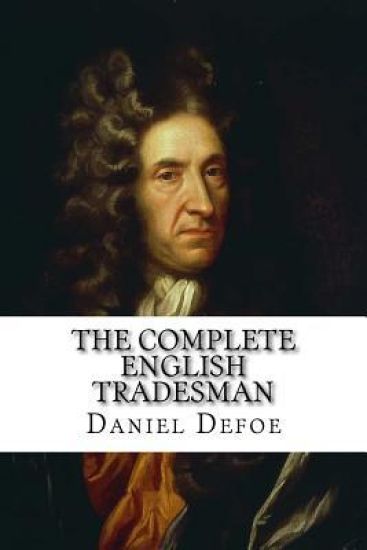
Published in the first series of English Men of Letters in 1879, a time when a complete edition of Daniel Defoe's works was yet to be collated, this biograhical account by William Minto (1845–93) was a significant achievement in literary scholarship as well as an engaging portrait of a colourful and outspoken polemicist. Himself a journalist and essayist for the pioneering Pall Mall Gazette and the Daily News, Minto combines the critical insight of a literary scholar with the empathy and understanding of a fellow writer. Spanning the novelist's entire life (c. 1659–1731), from the passions of his youth to the publication of Robinson Crusoe, his 'later journalistic labours' and the impact of literary success, this biography tells how Defoe disproved the rule that the lives of men of letters are rarely eventful.
This work has been selected by scholars as being culturally important, and is part of the knowledge base of civilization as we know it. This work was reproduced from the original artifact, and remains as true to the original work as possible. Therefore, you will see the original copyright references, library stamps (as most of these works have been housed in our most important libraries around the world), and other notations in the work.This work is in the public domain in the United States of America, and possibly other nations. Within the United States, you may freely copy and distribute this work, as no entity (individual or corporate) has a copyright on the body of the work.As a reproduction of a historical artifact, this work may contain missing or blurred pages, poor pictures, errant marks, etc. Scholars believe, and we concur, that this work is important enough to be preserved, reproduced, and made generally available to the public. We appreciate your support of the preservation process, and thank you for being an important part of keeping this knowledge alive and relevant.
This work has been selected by scholars as being culturally important, and is part of the knowledge base of civilization as we know it. This work was reproduced from the original artifact, and remains as true to the original work as possible. Therefore, you will see the original copyright references, library stamps (as most of these works have been housed in our most important libraries around the world), and other notations in the work.This work is in the public domain in the United States of America, and possibly other nations. Within the United States, you may freely copy and distribute this work, as no entity (individual or corporate) has a copyright on the body of the work.As a reproduction of a historical artifact, this work may contain missing or blurred pages, poor pictures, errant marks, etc. Scholars believe, and we concur, that this work is important enough to be preserved, reproduced, and made generally available to the public. We appreciate your support of the preservation process, and thank you for being an important part of keeping this knowledge alive and relevant.
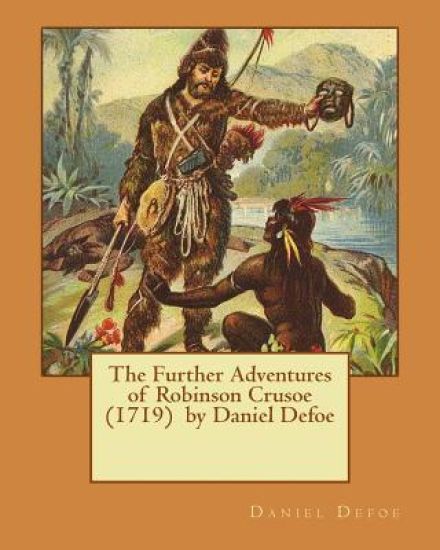
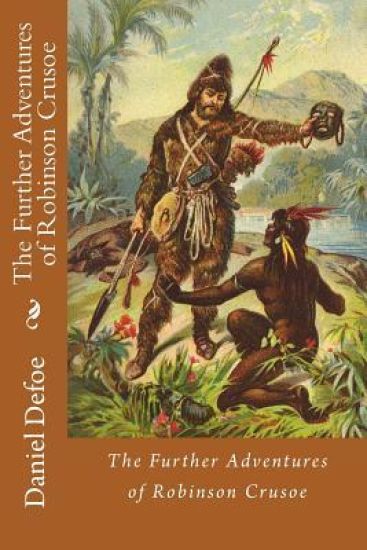
Robinson Crusoe is a novel by Daniel Defoe, first published on 25 April 1719. The first edition credited the work's protagonist Robinson Crusoe as its author, leading many readers to believe he was a real person and the book a travelogue of true incidents. It was published under the full title The Life and Strange Surprizing Adventures of Robinson Crusoe, Of York, Mariner: Who lived Eight and Twenty Years, all alone in an un-inhabited Island on the Coast of America, near the Mouth of the Great River of Oroonoque; Having been cast on Shore by Shipwreck, wherein all the Men perished but himself. With An Account how he was at last as strangely deliver'd by Pyrates. Epistolary, confessional, and didactic in form, the book is presented as an autobiography of the title character (whose birth name is Robinson Kreutznaer)-a castaway who spends thirty years on a remote tropical island near Trinidad, encountering cannibals, captives, and mutineers, before ultimately being rescued. The story has since been perceived to be based on the life of Alexander Selkirk, a Scottish castaway who lived for four years on a Pacific island called "M s a Tierra", now part of Chile, which was renamed Robinson Crusoe Island in 1966, but various literary sources have also been suggested. Despite its simple narrative style, Robinson Crusoe was well received in the literary world and is often credited as marking the beginning of realistic fiction as a literary genre. Before the end of 1719, the book had already run through four editions, and it has gone on to become one of the most widely published books in history, spawning numerous sequels and adaptations for stage, film, and television.
Robinson Crusoe is a novel by Daniel Defoe, first published on 25 April 1719. The first edition credited the work's protagonist Robinson Crusoe as its author, leading many readers to believe he was a real person and the book a travelogue of true incidents. It was published under the full title The Life and Strange Surprizing Adventures of Robinson Crusoe, Of York, Mariner: Who lived Eight and Twenty Years, all alone in an un-inhabited Island on the Coast of America, near the Mouth of the Great River of Oroonoque; Having been cast on Shore by Shipwreck, wherein all the Men perished but himself. With An Account how he was at last as strangely deliver'd by Pyrates. Epistolary, confessional, and didactic in form, the book is presented as an autobiography of the title character (whose birth name is Robinson Kreutznaer)-a castaway who spends thirty years on a remote tropical island near Trinidad, encountering cannibals, captives, and mutineers, before ultimately being rescued. The story has since been perceived to be based on the life of Alexander Selkirk, a Scottish castaway who lived for four years on a Pacific island called "M s a Tierra", now part of Chile, which was renamed Robinson Crusoe Island in 1966, but various literary sources have also been suggested.