Every day millions of people struggle with psychological and emotional problems. The Stressed Sex sets out to answer a simple, but crucial, question: are rates of psychological disorder different for men and women? The implications - for individuals and society alike - are far-reaching, and to date, this important issue has been largely ignored in all the debates raging about gender differences. Now Daniel Freeman and Jason Freeman present a ground-breaking combination of epidemiological analysis and evidence-based science to get to the bottom of what's really going on. They discover which mental health problems are more common in men, and which are seen most often in women. And, in a finding that is sure to provoke lively debate, they reveal that, in any given year, women experience higher rates of psychological disorder than men. Why might this be the case? The Stressed Sex explains current scientific thinking on the possible reasons - and considers what might be done to address the imbalance.
Over the last 25 years, evolutionary game theory has grown with theoretical contributions from the disciplines of mathematics, economics, computer science and biology. It is now ripe for applications. In this book, Daniel Friedman---an economist trained in mathematics---and Barry Sinervo---a biologist trained in mathematics---offer the first unified account of evolutionary game theory aimed at applied researchers. They show how to use a single set of tools to build useful models for three different worlds: the natural world studied by biologists; the social world studied by anthropologists, economists, political scientists and others; and the virtual world built by computer scientists and engineers. The first six chapters offer an accessible introduction to core concepts of evolutionary game theory. These include fitness, replicator dynamics, sexual dynamics, memes and genes, single and multiple population games, Nash equilibrium and evolutionarily stable states, noisy best response and other adaptive processes, the Price equation, and cellular automata. The material connects evolutionary game theory with classic population genetic models, and also with classical game theory. Notably, these chapters also show how to estimate payoff and choice parameters from the data. The last eight chapters present exemplary game theory applications. These include a new coevolutionary predator-prey learning model extending rock-paper-scissors; models that use human subject laboratory data to estimate learning dynamics; new approaches to plastic strategies and life cycle strategies, including estimates for male elephant seals; a comparison of machine learning techniques for preserving diversity to those seen in the natural world; analyses of congestion in traffic networks (either internet or highways) and the "price of anarchy "; environmental and trade policy analysis based on evolutionary games; the evolution of cooperation; and speciation. As an aid for instruction, a web site provides downloadable computational tools written in the R programming language, Matlab, Mathematica and Excel.
This book focuses on markets organized as double auctions in which both buyers and sellers can submit bids and asks for standardized units of well-defined commodities and securities. It examines evidence from the laboratory and computer simulations.
Do you feel that there’s room for a bit more happiness in your life?A lot more even?Then here’s the good news: you have much more control over your happiness than you probably think. And in this book, you’ll discover the often simple, but easily overlooked, steps you can take to reclaim more of those good feelings.What’s more, every single suggested action in this book has been scientifically proven to have a positive and lasting effect on happiness. There’s no hype here, just plenty of real hope. Better still, there’s no need for radical life change and no complicated programme to follow. Instead you’ll find a raft of small and simple steps that will, over time, add up to a life with more pleasure and meaning - and with fewer negative emotions dragging you down.Nobody else can make you happy. But you can. Here’s all the help you need.Daniel Freeman is Professor of Clinical Psychology at Oxford University.Jason Freeman is a writer and editor.
This book shows exactly how to combat worry and anxiety with helpful guidance on controlling it and how to move on from worrying to problem solving. There's also specific techniques to make worries and anxious thoughts less powerful.
This collection of essays defines and explores American theatres that consciously appealed primarily to workers. The scope of the book extends from the 1830s to the 1980s. Different authors focus on how various plays related to the audience as a class, the historically dynamic interaction between spectators and actors, and why certain plays gained popularity. The collection encompasses essays concerning New York theatre in the 1830s and 1840s, Pittsburgh theatre in the 1870s, various immigrant productions of the late nineteenth and early twentieth century, the politically radical theatre of the 1930s, a concluding section on recent and contemporary theatre for workers, and an overview of the history, politics, and aesthetics of theatres doing shows for working-class audiences today. An original and comprehensive bibliographical essay regarding the history of theatres for workers in the United States completes the volume.
This book focuses on markets organized as double auctions in which both buyers and sellers can submit bids and asks for standardized units of well-defined commodities and securities. It examines evidence from the laboratory and computer simulations.
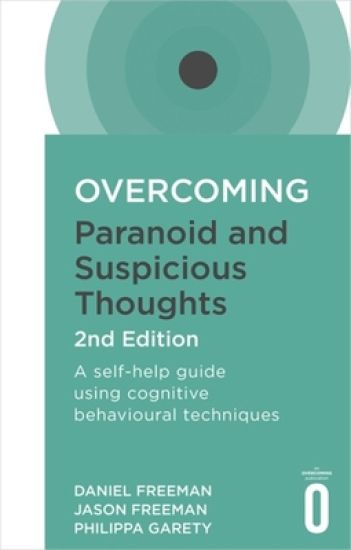
Do you often suspect the worst of others? Mild to moderate paranoia, or mistrust of other people, is on the increase, and although it may feel justifiable at the time, unfounded suspicions of this kind can make life a misery. Research says between 20 and 30 per cent of people in the UK frequently have suspicious or paranoid thoughts. This is the first self - help guide to coping with what can be a debilitating condition.
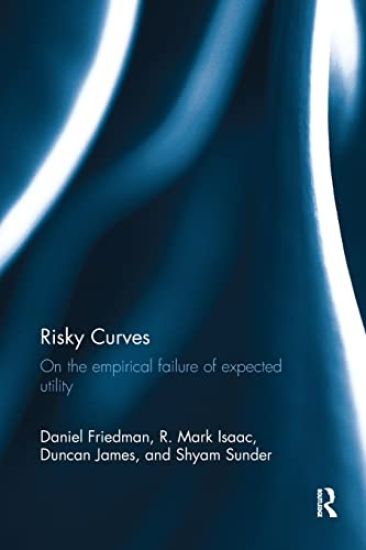
For several decades, the orthodox economics approach to understanding choice under risk has been to assume that each individual person maximizes some sort of personal utility function defined over purchasing power. This new volume contests that even the best wisdom from the orthodox theory has not yet been able to do better than supposedly naïve models that use rules of thumb, or that focus on the consumption possibilities and economic constraints facing the individual. The authors assert this by first revisiting the origins of orthodox theory. They then recount decades of failed attempts to obtain meaningful empirical validation or calibration of the theory. Estimated shapes and parameters of the "curves" have varied erratically from domain to domain (e.g., individual choice versus aggregate behavior), from context to context, from one elicitation mechanism to another, and even from the same individual at different time periods, sometimes just minutes apart.This book proposes the return to a simpler sort of scientific theory of risky choice, one that focuses not upon unobservable curves but rather upon the potentially observable opportunities and constraints facing decision makers. It argues that such an opportunities-based model offers superior possibilities for scientific advancement. At the very least, linear utility – in the presence of constraints - is a useful bar for the "curved" alternatives to clear.
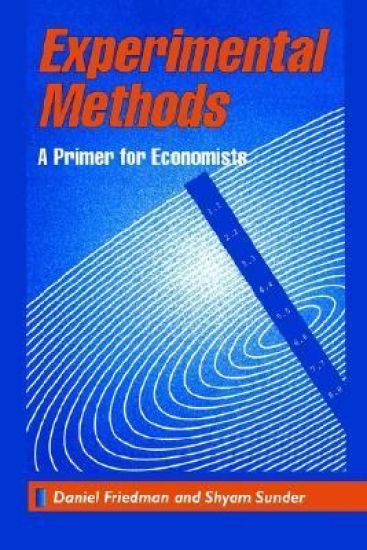
Experimental economics is a rapidly growing field of inquiry, and there currently exist several textbooks and surveys describing the results of laboratory experiments in economics. This primer, however, is the first hands-on guide to the physical aspects of actually conducting experiments in economics. It tells researchers, teachers and students in economics how to deal with human subjects, how to design meaningful laboratory environments, how to design experiments, how to conduct experiments and how to analyse and report the data. It also deals with methodological issues. It can be used to structure an undergraduate or graduate course in experimental economics.
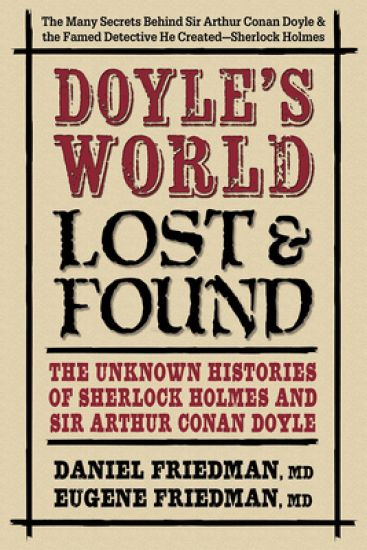
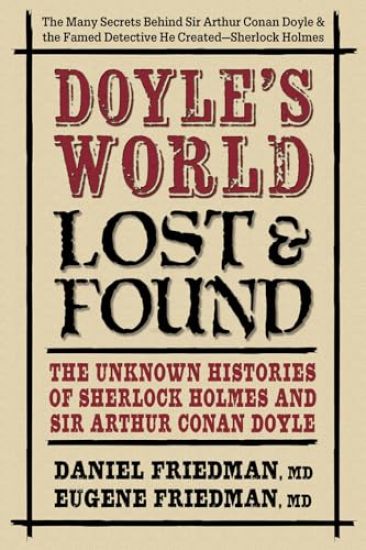
Doyle's World is no ordinary biography about one of the world's most influential writers. It is instead a work that deciphers in particular the cryptic origins and actual scientific methods used by fiction's most famous consulting detective Sherlock Holmes--and a work that provides a detailed look into the psyche and working life of Holmes' creator, Sir Arthur Conan Doyle. The book follows Doyle's entire illustrious literary career, with emphasis on the Sherlock Holmes mysteries as they evolved from the late 1880s to the early 1900s. Revealed here for the first time--by son-father writing team Daniel Friedman, MD, and Eugene Friedman, MD--are the many inspirations behind the physical, emotional, and intellectual characteristics that Doyle wove together so deftly to bring his legendary sleuth to life. Readers are in for many surprises as the Friedmans bring forth tantalizing parallels between the literary realm of both Sherlock Holmes--along with his various other fiction and nonfiction works--and the actual events from Doyle's childhood and early adulthood that served as frequent inspiration. The authors offer answers to long-debated and mysterious questions, such as: * From whom did Sherlock Holmes actually learn the art of detective work? * Why did Doyle kill off Sherlock Holmes--and how did the country of Japan inspire how he brought his famous detective back to life after nearly a decade? * What story elements did Doyle borrow from Robert Louis Stevenson's Treasure Island? * How did Doyle apply his fervent belief in Spiritualism to a variety of Holmes stories? * Who inspired Doyle to write about civil rights after a steamship journey in 1882? * How did the women in Doyle's life come to influence the relationships with women that both Sherlock Holmes and Dr. Watson have across sixty written adventures? Doyle's World is divided into three sections. The first is dedicated to the elements--both good and bad--that comprised Doyle's childhood and early adult years, and how an assemblage of persons and places and things from his life found their way into his literature. The second section emphasizes the highly complex themes and plots present in the Sherlock Holmes adventures, while it also thoroughly examines some of Doyle's strengths--and weaknesses--as a public figure of his time. The Friedmans also reveal how Doyle was able to subtly incorporate his own political, social, and religious views--in particular, his passionate and often bewildering embrace of Spiritualism--into the Holmes stories. And in the third section, the authors offer two "lost" stories they uncovered that were written by Doyle under a pseudonym--accompanied by textual analysis with which they make their case. This is a work of rich detail and in-depth scholarship that should win over both established fans of Doyle and devoted "Sherlockians" everywhere--and that will engage, and entertain, all others who enter this intriguing hall of literary mirrors.
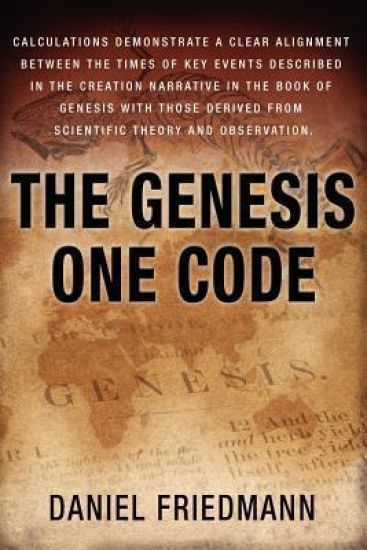
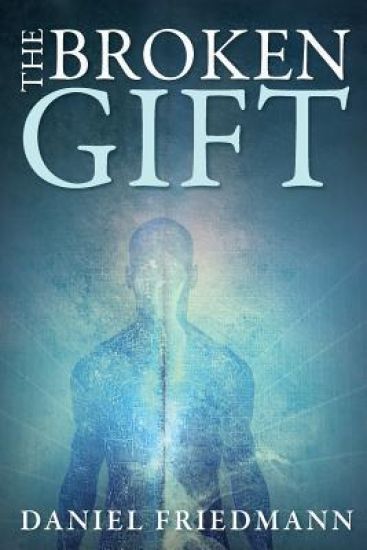
The Broken Gift: How did we get here?Was Adam the first man? Was man created by divine act in less than one day almost 6,000 years ago, as the Bible suggests?Or did man appear 200,000 years ago as the culmination of numerous human-like species that existed during a span of millions of years, as the scientific record shows?Both cannot be right. Or can they? Imagine there exist manuscripts, written centuries ago, that could help us objectively decipher Genesis and thereby extract the timeline and key events recounting the appearance and early history of our species, Homo sapiens, precisely as identified by the latest scientific evidence derived from the fossil record and genetic studies.The Broken Gift carefully examines the relationship between scientific theory and Biblical teachings. The book approaches the human origins debate from a fresh perspective informed by both scientific and scriptural research. The author demonstrates alignment between key events and their dates relating to the appearance and early history of our species as described in Genesis chapters 1 through 11 (Adam, Adam's descendants, the Flood, and the fall of Babel) with those derived from scientific observation.Could both be true? Is the evidence solid or is it sophistry? You'll have to be the judge. Read The Broken Gift and join the conversation.
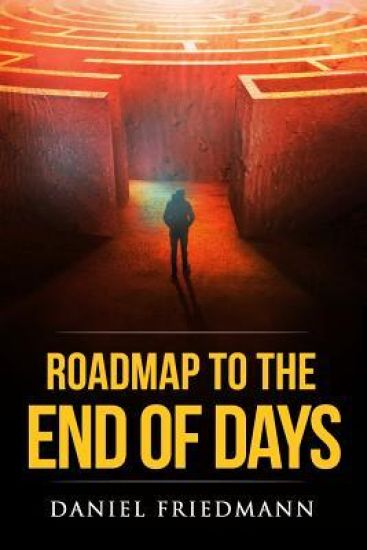
Is history a purposeful process with a beginning and an end, or is it a random series of events with neither purpose nor direction? If history is a guided process, are we near the end of the world? Have we almost completed preparations for the End of Days? What will happen next? When? Are we backseat passengers in this journey, or are we in the driver's seat?Daniel Friedmann takes you on a journey to discover what is really going on with Biblical eschatology and the end of the world, and to then glimpse the future and ponder the role you will play in it. History is a discipline that uses a narrative to examine and analyze a sequence of past events and to objectively postulate the patterns of cause and effect that determined them. Friedmann looks at history from the supernatural perspective. Every plan becomes suddenly evident when enough of it has played out. Have we reached the point in history where the Divine Plan of history is apparent? Read Roadmap to the End of Days and discover what is really going on, then glimpse the future and ponder the role you will play.In this book: -Friedmann places world history within the context of the Divine Plan, allowing listeners to understand recent past and what is in store for the future. -Learn about the Divine Plan structure in order to examine biblical history from a different perspective, with amazing accuracy. Why other experts who interpret the End of Days by deciphering prophecy alone may have it all wrong.-Put the End of Days into context by examining parallel periods of history that have already occurred. -Examining the revelations in scripture coherently and in sequence using the Divine Plan.-Learn how the cosmic placement of events, both historical and present, reveals a pattern of the future.-A bird's-eye view of where we have been and where we might go in order to bring us to a new level of understanding and a further questioning of our human origins, purpose, destiny, and ability to alter the path to the future."Friedmann has researched and composed another of his signature works deciphering the origins of the universe and decoding the unfolding apocalypse. With this seminal work, he achieves newfound heights unraveling riddles of the past and piercing the veil that obscures future events. Stellar in the stature of his reflections, supreme in the depth of his details, he has gloriously composed a mesmerizing manuscript that leaves you spellbound." -Pulitzer nominated author, David W. Menefee
For several decades, the orthodox economics approach to understanding choice under risk has been to assume that each individual person maximizes some sort of personal utility function defined over purchasing power. This new volume contests that even the best wisdom from the orthodox theory has not yet been able to do better than supposedly naïve models that use rules of thumb, or that focus on the consumption possibilities and economic constraints facing the individual. The authors assert this by first revisiting the origins of orthodox theory. They then recount decades of failed attempts to obtain meaningful empirical validation or calibration of the theory. Estimated shapes and parameters of the "curves" have varied erratically from domain to domain (e.g., individual choice versus aggregate behavior), from context to context, from one elicitation mechanism to another, and even from the same individual at different time periods, sometimes just minutes apart.This book proposes the return to a simpler sort of scientific theory of risky choice, one that focuses not upon unobservable curves but rather upon the potentially observable opportunities and constraints facing decision makers. It argues that such an opportunities-based model offers superior possibilities for scientific advancement. At the very least, linear utility – in the presence of constraints - is a useful bar for the "curved" alternatives to clear.
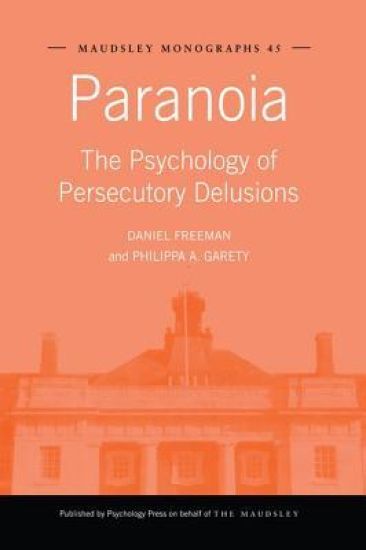
Paranoia is the suspicion that other intend to cause you harm. It is a common experience in the general population, though often overlooked. In its most severe form, paranoia occurs as persecutory delusions. Paranoia, written by leading researchers in this field, is the first cognitive psychology book to have persecutory delusions as its focus. Scholarly, comprehensive and illustrated by clinical examples throughout, this study defines the phenomena in detail and analyses the content of persecutory delusions. It reviews previous psychological writings, explores the relationship between psychosis and neurosis, reports on innovative empirical studies with patients, and highlights future essential research directions. Paranoia outlines a new theoretical model of the formation and maintenance of persecutory delusions, providing an excellent guide to this important clinical topic. It will be of great interest and use to all psychiatrists and clinical psychologists who work in this field.
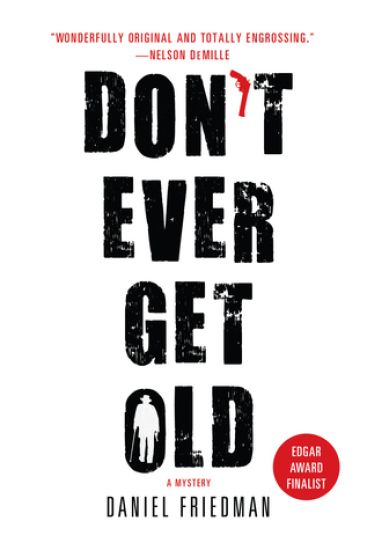
When Buck Schatz, senior citizen and retired Memphis cop, learns that an old adversary may have escaped Germany with a fortune in stolen gold, Buck decides to hunt down the fugitive and claim the loot. But a lot of people want a piece of the stolen treasure, and Buck's investigation quickly attracts unfriendly attention from a very motley (and murderous) crew in Daniel Friedman's Don't Ever Get Old, nominated for an Edgar Award for Best First Novel.
Learn how to overcome your feelings of paranoia 'This is the definitive practical guide from the leaders in the field on a hugely important topic. Written in an engaging, easy-to-understand style, the book tells how new research on paranoia is revealing how best to overcome it. The first edition helped many thousands of sufferers and the second edition promises even more.' Mark Williams, Emeritus Professor of Clinical Psychology, University of Oxford, co-author of Mindfulness: Finding Peace in a Frantic World Do you feel as if others are out to get you? Research shows that 20-30 percent of people in the UK frequently have paranoid or suspicious thoughts about other people. These feelings can make life a misery. In this fully revised and expanded new edition, the authors explain how cognitive behavioural therapy (CBT) techniques can be used to treat this disorder by changing unhelpful patterns of behaviour and thought. 'The authors of this excellent and timely book have played a major role in developing our understanding of how suspicious thoughts arise and, crucially, how we can learn to cope with them.' Nicholas Tarier, Professor of Clinical Psychology, Manchester University Overcoming self-help guides use clinically proven CBT techniques to treat long-standing and disabling conditions, both psychological and physical. Many guides in the Overcoming series are recommended by the Department of Health under the Books on Prescription scheme.